
Spicy Kung Pao Chicken Recipe for Bold Takeout Style Flavor
Fiery dried chilies, tender chicken, and a glossy savory sauce give this spicy kung pao chicken recipe the bold flavor people crave from restaurant takeout. You can make it on a busy weeknight when you want something fast, satisfying, and packed with real homemade flavor.
Timing
- Prep Time: 20 minutes
- Cook Time: 15 minutes
- Total Time: 35 minutes
- Servings: 4 servings
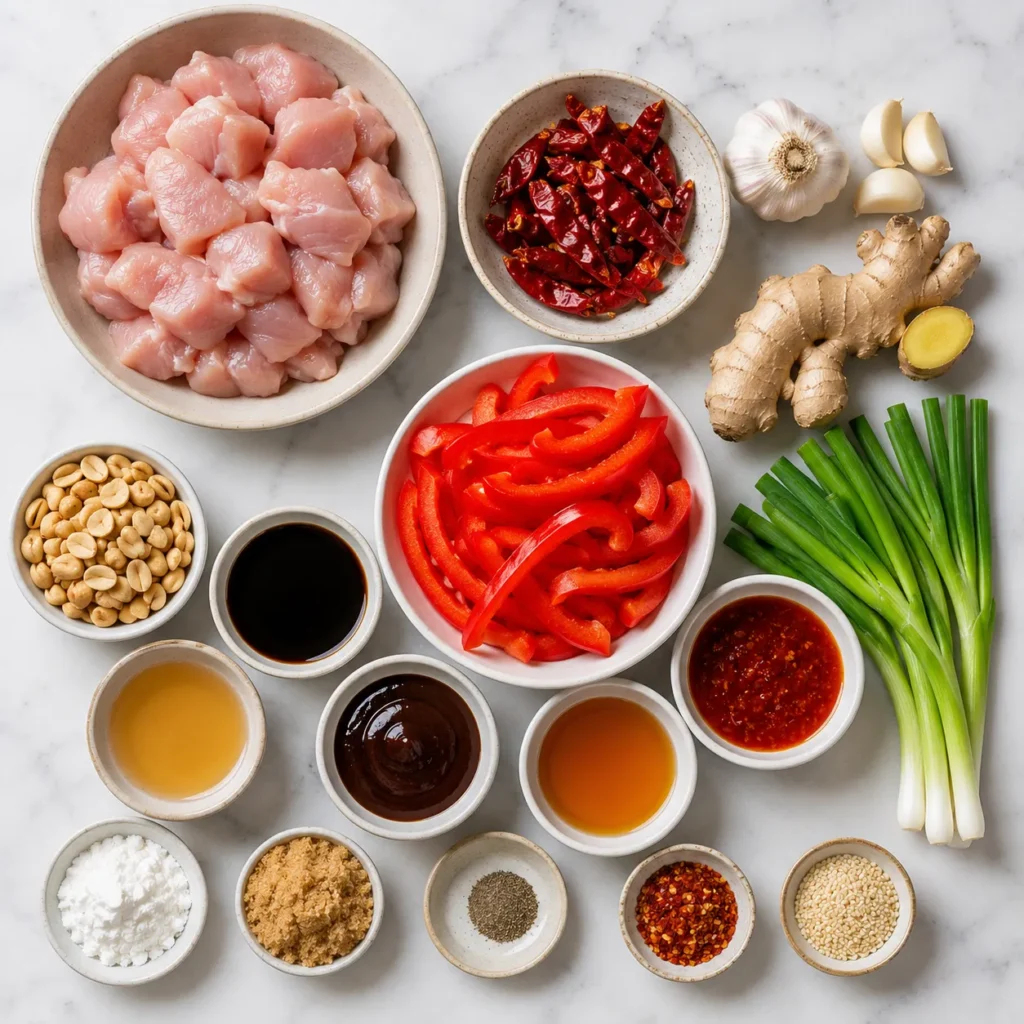
Ingredients for Kung Pao Chicken Recipe
For the Chicken Marinade
- 1 ½ pounds boneless skinless chicken thighs, cut into bite-sized pieces
- 1 tablespoon soy sauce
- 1 tablespoon cornstarch
- 1 teaspoon sesame oil
For the Kung Pao Sauce
- ¼ cup low-sodium soy sauce
- 2 tablespoons rice vinegar
- 1 tablespoon hoisin sauce
- 1 tablespoon brown sugar
- 2 teaspoons cornstarch
- 3 tablespoons water
- 1 teaspoon chili garlic sauce
For Stir Frying
- 2 tablespoons vegetable oil
- 8 dried red chilies
- 4 garlic cloves, minced
- 1 tablespoon fresh ginger, minced
- 1 red bell pepper, diced
- 3 green onions, sliced into 1-inch pieces
- ½ cup roasted unsalted peanuts
Optional Garnishes
- Extra green onions
- Sesame seeds
- Steamed white rice or brown rice
How to Make Spicy Kung Pao Chicken
Step 1: Marinate the Chicken
Place the chicken pieces in a bowl and mix them with soy sauce, cornstarch, and sesame oil. Let the chicken rest for 10 to 15 minutes while you prepare the other ingredients. This quick marinade helps the chicken stay juicy and gives it the smooth texture you usually get from restaurant-style stir fry dishes.
Chef’s Tip: Cornstarch creates a light coating around the chicken that protects it from drying out in the hot pan. Even a short marinating time makes a noticeable difference in tenderness and helps the sauce cling better later.
Step 2: Mix the Sauce
In a small bowl, whisk together soy sauce, rice vinegar, hoisin sauce, brown sugar, cornstarch, water, and chili garlic sauce until completely smooth. Set the sauce nearby because stir frying moves quickly once the pan gets hot.
Chef’s Tip: Mixing the sauce ahead of time prevents overcooking later. If you stop to measure ingredients while cooking, the garlic and chilies can burn fast and give the dish a bitter taste instead of balanced heat.
Step 3: Cook the Chicken
Heat 1 tablespoon of vegetable oil in a large skillet or wok over medium-high heat for about 1 minute. Add the chicken in a single layer and cook for 5 to 6 minutes, stirring occasionally, until browned and fully cooked. Transfer the chicken to a plate once done.
Chef’s Tip: Avoid overcrowding the pan because packed chicken releases steam instead of browning properly. Cooking in a single layer helps you develop that slightly crisp exterior that gives kung pao chicken its signature texture.
Step 4: Build the Flavor Base
Add the remaining tablespoon of oil to the same pan. Toss in the dried red chilies, garlic, and ginger, then stir constantly for about 30 seconds until fragrant. Add the bell pepper and cook for another 2 minutes until slightly softened but still crisp.
Chef’s Tip: Dried chilies flavor the oil very quickly, so keep them moving in the pan. Burned chilies create harsh bitterness, while lightly toasted chilies bring smoky heat that tastes much more balanced and authentic.
Step 5: Combine Everything
Return the cooked chicken to the pan and pour in the prepared sauce. Stir continuously for 2 to 3 minutes until the sauce thickens and coats every piece evenly. Add the green onions and peanuts right at the end so they keep their crunch and freshness.
Chef’s Tip: The sauce thickens quickly once heated because of the cornstarch. Continuous stirring prevents clumping and helps you achieve the glossy finish that makes homemade kung pao chicken look like quality takeout.
Step 6: Serve While Hot
Turn off the heat and spoon the spicy kung pao chicken over warm rice. Garnish with extra green onions and sesame seeds if desired. Serve immediately while the sauce is shiny and the vegetables still have a crisp bite.
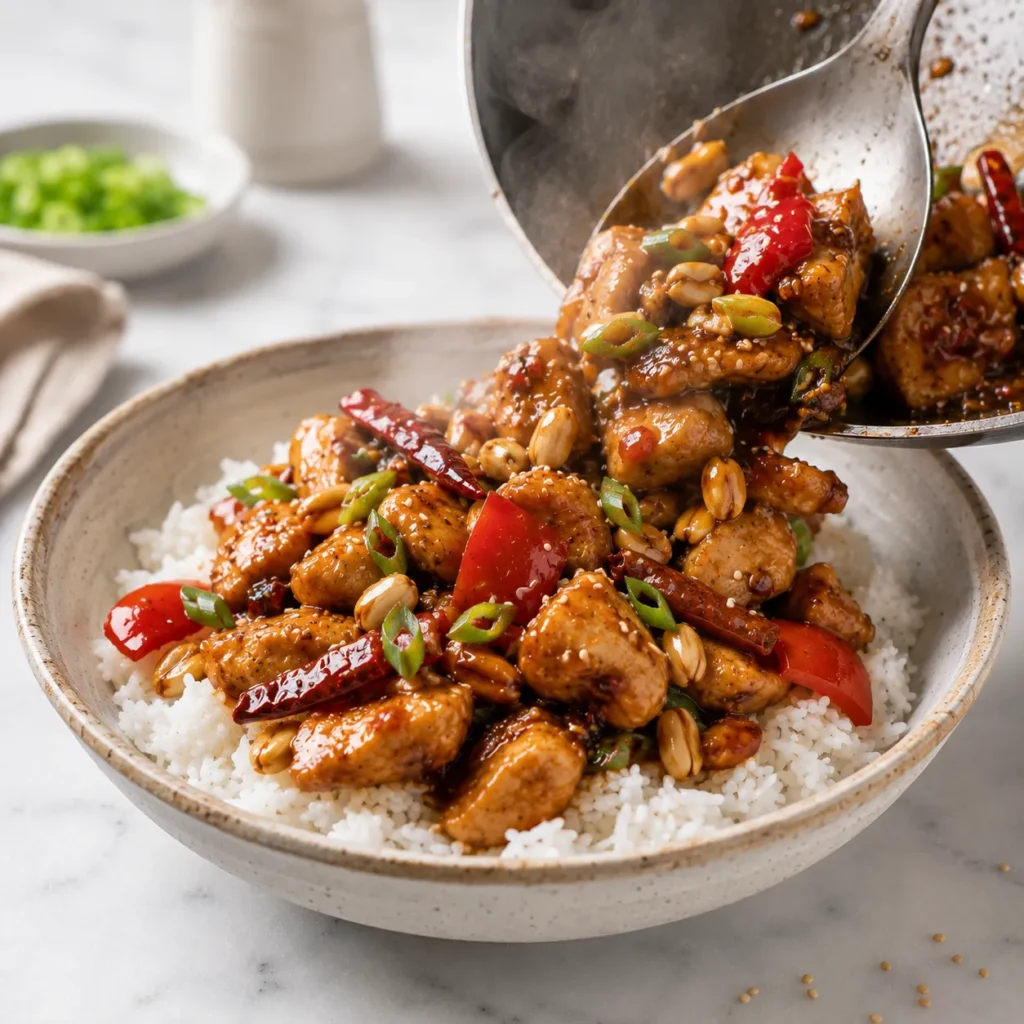
Chef’s Tip: Stir fry dishes taste best fresh from the pan because the vegetables stay vibrant and the peanuts remain crunchy. Letting the dish sit too long can soften the textures that make kung pao chicken so satisfying.
Nutrition Information
| Nutrient | Per Serving |
| Calories | 420 |
| Protein | 33g |
| Carbohydrates | 18g |
| Total Fat | 24g |
| Saturated Fat | 5g |
| Fiber | 3g |
| Sugar | 7g |
| Sodium | 890mg |
Why You’ll Love This Recipe
- You get the same bold sweet, savory, and spicy flavor combination that makes takeout kung pao chicken so popular, but you control the ingredients and spice level at home for a fresher and more balanced result.
- The recipe cooks quickly once the prep work is done, making it practical for busy weeknights when you want something homemade without spending hours in the kitchen.
- Chicken thighs stay tender and juicy during high-heat cooking, which helps beginners achieve reliable results even if they are new to stir frying.
- The crunchy peanuts, crisp peppers, and glossy sauce create layers of texture that make every bite feel satisfying and restaurant quality.
Common Mistakes to Avoid
- Using a cold pan is one of the biggest stir fry mistakes because the chicken releases moisture before browning. Always let the skillet or wok heat properly before adding oil and chicken.
- Adding too many ingredients at once lowers the pan temperature and causes steaming instead of searing. Cook in batches if necessary to maintain high heat and good texture.
- Forgetting to whisk the sauce again before pouring can leave cornstarch sitting at the bottom of the bowl, which causes uneven thickening during cooking.
- Cooking the vegetables too long removes their crunch and fresh flavor. Bell peppers should stay slightly crisp to balance the rich sauce and tender chicken.
- Burning the garlic or dried chilies creates bitterness very quickly because they cook fast in hot oil. Stir constantly and keep the heat controlled during this stage.
Serving Suggestions
- Spoon the spicy kung pao chicken over steamed jasmine rice because the fluffy rice absorbs the flavorful sauce and balances the heat from the chilies beautifully.
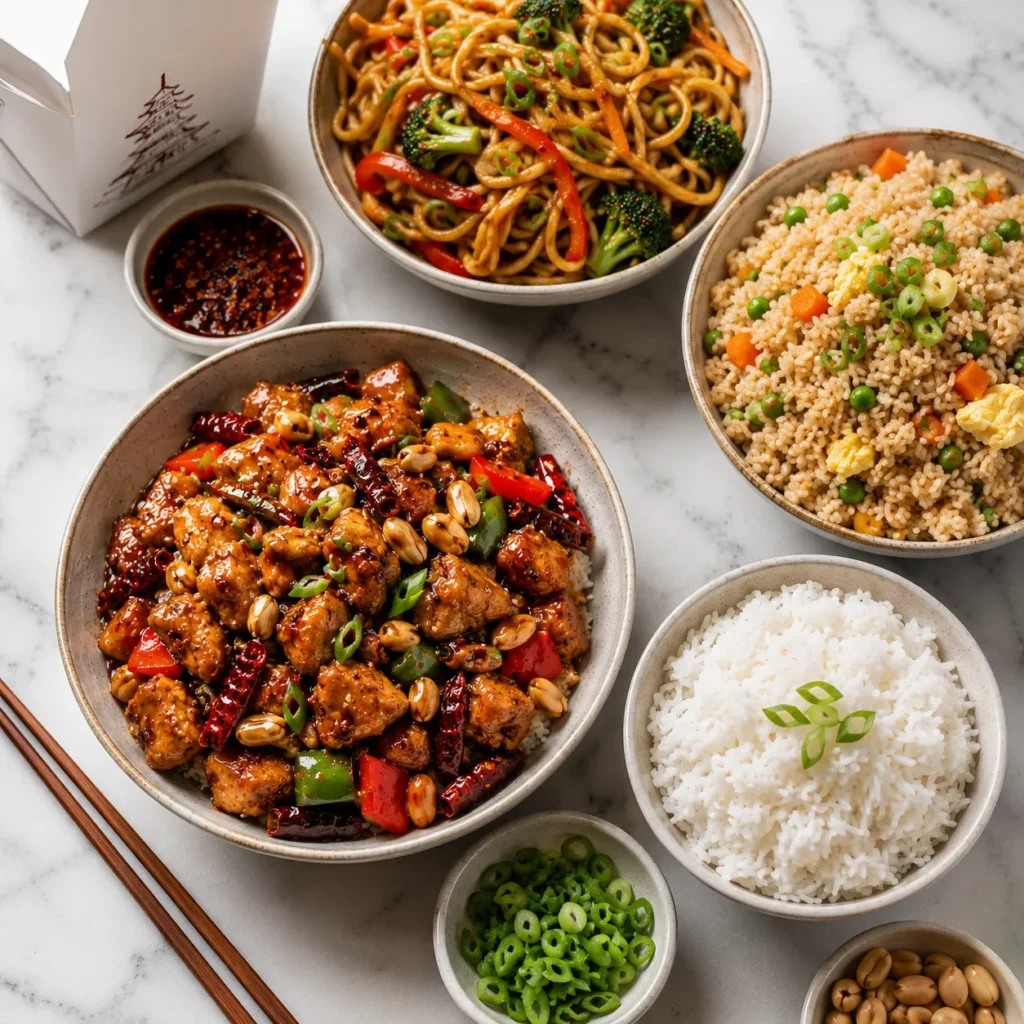
- Serve it with fried rice or vegetable noodles when you want a full takeout-style dinner spread that feels more complete and filling for family meals.
- Wrap leftovers inside lettuce cups for a lighter lunch option that still delivers plenty of texture, crunch, and bold flavor without feeling heavy.
- Pair the dish with simple steamed broccoli or bok choy because mild vegetables help balance the richness and spice of the sauce while adding freshness to the meal.
Healthier Alternatives and Ingredient Swaps
- Use chicken breast instead of thighs if you want a leaner protein option. Just be careful not to overcook it because breast meat dries out faster during stir frying.
- Replace regular soy sauce with low-sodium soy sauce to reduce salt while still keeping the deep savory flavor that gives kung pao chicken its signature taste.
- Swap brown sugar with honey or a small amount of maple syrup for a more natural sweetness that still balances the spicy and tangy sauce elements.
- Add extra vegetables such as zucchini, snap peas, or broccoli to increase fiber and make the meal more filling without dramatically increasing calories.
- Use brown rice or cauliflower rice instead of white rice for a higher-fiber serving option that works especially well for meal prep lunches.
Storage and Meal Prep Tips
- Store leftover kung pao chicken in an airtight container in the refrigerator for up to 4 days. Keeping the rice separate helps preserve the texture of both components.
- Reheat the chicken in a skillet over medium heat instead of using high microwave heat because gentle reheating keeps the sauce smooth and prevents the chicken from becoming rubbery.
- Prep all vegetables and sauce ingredients ahead of time because stir fry recipes move quickly once cooking begins. Organized ingredients make the process much easier for beginners.
- If making freezer meals, freeze the marinated raw chicken and prepared sauce separately for the best texture after thawing and cooking.
- Add peanuts fresh after reheating leftovers because storing them in the sauce for too long softens their crunch and reduces texture contrast.
Conclusion
This spicy kung pao chicken recipe gives you everything people love about classic takeout: tender chicken, crunchy peanuts, bold heat, and a rich glossy sauce that comes together surprisingly fast. Once you learn the simple stir fry method, you can easily adjust the spice level, add extra vegetables, or swap proteins to make the recipe fit your own taste and routine.