
Savory Hibachi Chicken Recipe for Japanese Steakhouse Flavor
Golden brown chicken, buttery fried vegetables, and that unmistakable garlicky soy flavor make this hibachi chicken recipe taste like it came straight from a Japanese steakhouse grill. You can make it on a flat skillet at home in under an hour, which makes it perfect for quick dinners, casual entertaining, or satisfying takeout cravings without leaving your kitchen.
Timing
- Prep Time: 15 minutes
- Cook Time: 20 minutes
- Total Time: 35 minutes
- Servings: 4 servings
Ingredients for Hibachi Chicken Recipe
For the Hibachi Chicken
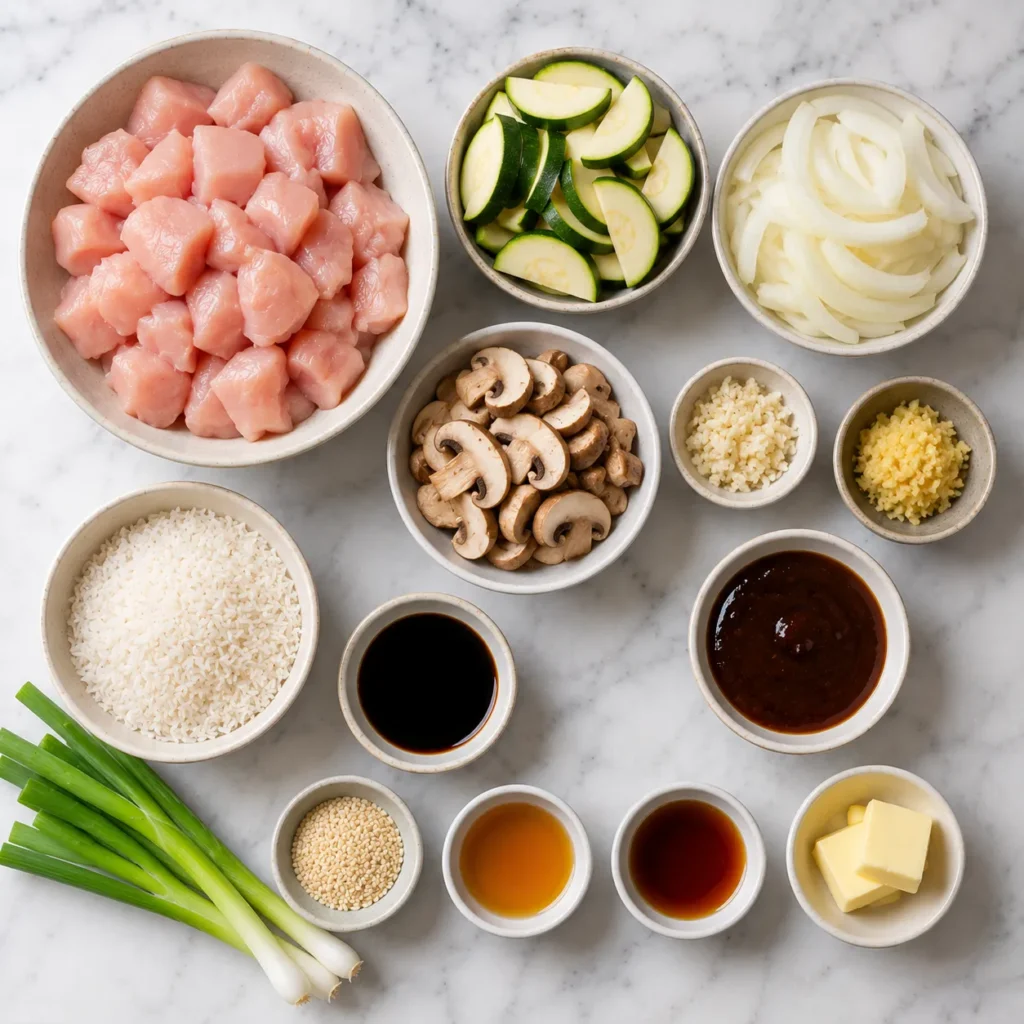
- 1 ½ pounds boneless skinless chicken breasts, cut into bite-sized pieces
- 2 tablespoons soy sauce
- 1 tablespoon teriyaki sauce
- 1 tablespoon sesame oil
- 2 tablespoons unsalted butter
- 3 garlic cloves, minced
- 1 teaspoon fresh ginger, grated
- ½ teaspoon black pepper
- ½ teaspoon salt
For the Hibachi Vegetables
- 1 zucchini, sliced into half moons
- 1 medium onion, sliced
- 1 cup mushrooms, sliced
- 1 tablespoon soy sauce
- 1 tablespoon butter
For Serving
- 3 cups cooked jasmine rice
- 2 green onions, sliced
- 1 teaspoon sesame seeds
How to Make Hibachi Chicken
Step 1: Prep the Chicken and Vegetables
Cut the chicken into evenly sized pieces so everything cooks at the same speed. Slice the vegetables and keep them grouped separately because the vegetables cook faster than the chicken. Mix the soy sauce, teriyaki sauce, sesame oil, garlic, ginger, salt, and pepper in a bowl, then toss the chicken in the mixture for about 5 minutes while the pan heats.
Chef’s Tip: Small chicken pieces cook quickly and develop better caramelization on the outside. If the pieces are uneven, some will dry out before others finish cooking, which affects both flavor and texture.
Step 2: Heat the Skillet Properly
Place a large skillet or flat griddle over medium-high heat for 2 to 3 minutes before adding anything. Melt 1 tablespoon butter in the hot pan and swirl it around. The pan should look glossy and slightly smoky but not burnt.
Chef’s Tip: A properly heated pan is what gives hibachi chicken its signature restaurant-style sear. If the pan is too cool, the chicken releases moisture and steams instead of browning.
Step 3: Cook the Chicken in Batches
Add half the chicken to the skillet in a single layer and cook for about 4 minutes without moving it too much. Flip and cook for another 3 to 4 minutes until golden brown and fully cooked. Repeat with the remaining chicken and set it aside on a plate.
Chef’s Tip: Overcrowding the skillet traps steam and prevents the chicken from getting that slightly crisp exterior. Cooking in batches takes a few extra minutes but creates a much better steakhouse-style texture.
Step 4: Sauté the Vegetables
Add another tablespoon of butter to the skillet along with the onion, zucchini, and mushrooms. Cook for 5 to 6 minutes, stirring occasionally, until the vegetables are tender but still slightly crisp. Add soy sauce during the last minute of cooking for extra savory flavor.
Chef’s Tip: Let the vegetables sit untouched for short periods while cooking. This creates light browning on the edges, which adds sweetness and depth instead of leaving the vegetables soft and bland.
Step 5: Combine and Finish the Hibachi Chicken
Return the cooked chicken to the skillet and toss everything together for 2 minutes so the flavors blend evenly. Taste and adjust seasoning if needed. Sprinkle green onions and sesame seeds over the top before serving.
Chef’s Tip: Finishing everything together in the skillet helps the sauce coat the chicken and vegetables evenly. This final step creates the glossy, flavorful finish you usually get at Japanese steakhouses.
Step 6: Serve While Hot
Spoon the hibachi chicken over warm jasmine rice and serve immediately while the chicken is juicy and the vegetables still have a slight bite. The rice absorbs the buttery garlic sauce and balances the savory flavors perfectly.
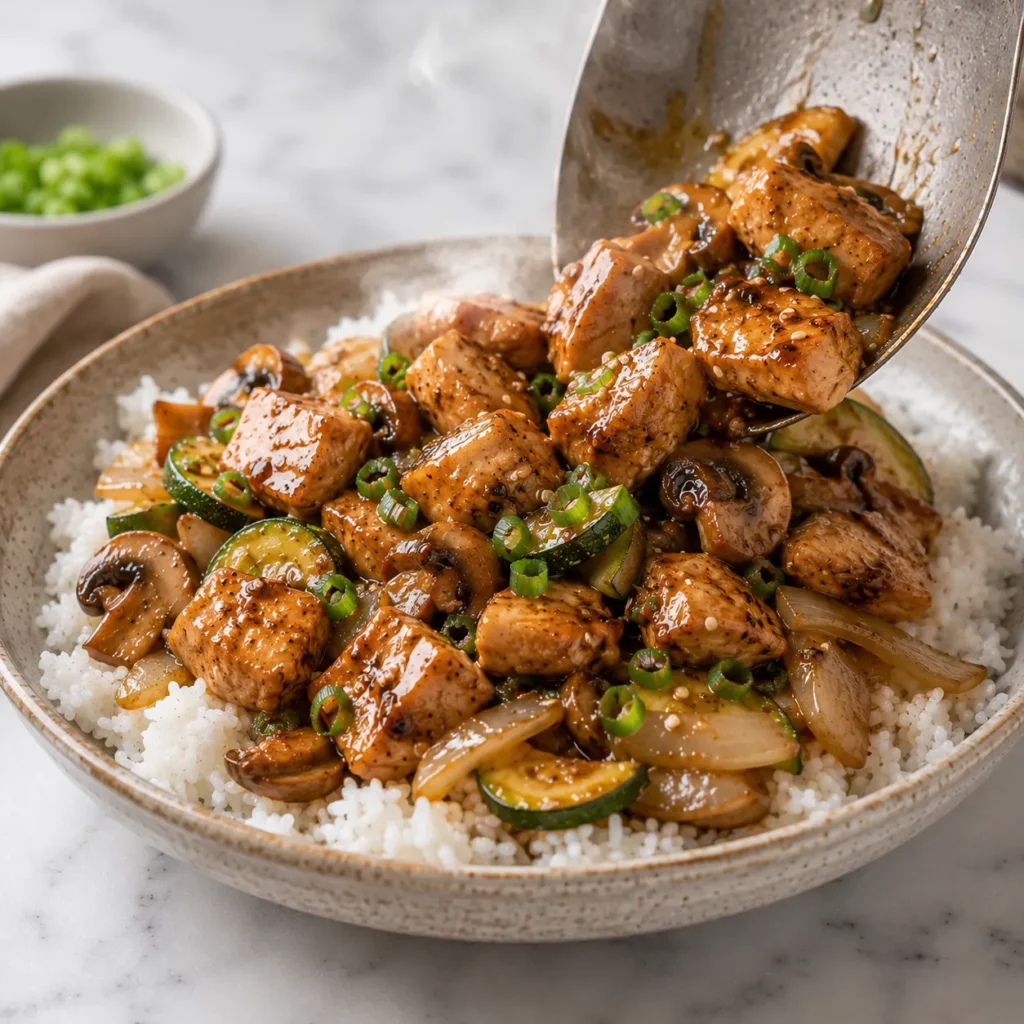
Chef’s Tip: Freshly cooked rice works best because warm rice keeps the sauce silky instead of thickening too quickly. Cold rice can make the dish feel dry even if the chicken is perfectly cooked.
Hibachi Chicken Nutrition
| Nutrient | Per Serving |
| Calories | 430 |
| Protein | 35g |
| Carbohydrates | 24g |
| Total Fat | 20g |
| Saturated Fat | 7g |
| Fiber | 3g |
| Sugar | 4g |
| Sodium | 980mg |
Why You’ll Love This Recipe
- You get authentic Japanese steakhouse flavor without needing a specialty grill or complicated cooking techniques. Everything cooks in one skillet, which keeps the process simple for beginners.
- The hibachi chicken cooks quickly, making it ideal for busy weeknights when you want something flavorful without spending hours in the kitchen.
- You can customize the vegetables and sauces easily depending on what you already have at home. That flexibility makes this recipe practical and budget-friendly.
- The buttery garlic soy sauce creates rich flavor with only a handful of pantry ingredients, so you do not need a long shopping list to make a satisfying meal.
- This recipe reheats well, which makes it excellent for meal prep lunches and easy leftovers throughout the week.
Common Mistakes to Avoid
- Using a cold pan is one of the biggest mistakes because the chicken releases moisture immediately and turns pale instead of golden brown. Always preheat the skillet properly before cooking.
- Stirring the chicken constantly prevents caramelization from forming. Let the chicken sit undisturbed for short periods so it develops color and flavor.
- Cutting the vegetables too thin causes them to become soft and watery before the chicken finishes cooking. Slightly thicker slices hold their texture better.
- Adding too much soy sauce at once can overpower the dish and make it overly salty. Start with the recommended amount and adjust gradually after tasting.
- Overcooking the chicken dries it out quickly because chicken breast cooks fast over high heat. Remove it from the skillet as soon as it reaches a golden exterior and is fully cooked inside.
Serving Suggestions
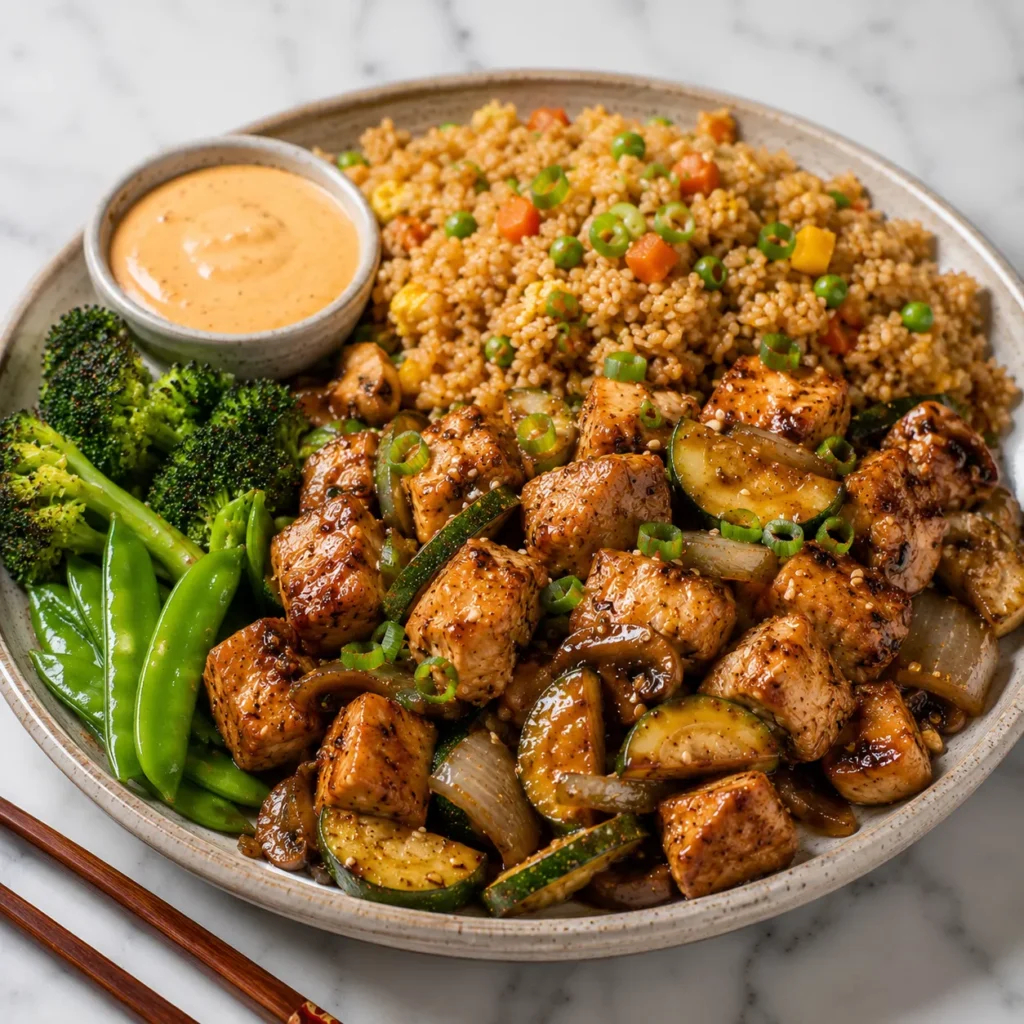
- Serve the hibachi chicken with fried rice and yum yum sauce for a full Japanese steakhouse dinner experience at home. The creamy sauce balances the savory garlic flavors beautifully.
- Pair it with steamed broccoli or snap peas if you want a more vegetable-heavy plate that still feels hearty and satisfying.
- Wrap leftovers in lettuce cups for a lighter lunch option that still keeps the bold hibachi flavor intact.
- Spoon the chicken and vegetables over noodles instead of rice when you want a slightly different texture and a more takeout-style presentation.
- Add a side of miso soup or a simple cucumber salad to create a complete restaurant-inspired meal without much extra effort.
Healthier Alternatives and Ingredient Swaps
- Swap chicken breasts for boneless skinless chicken thighs if you want juicier meat with slightly richer flavor. Thighs stay tender even if slightly overcooked.
- Use low-sodium soy sauce to reduce salt without sacrificing the savory hibachi flavor that makes this recipe so satisfying.
- Replace butter with olive oil if you prefer a lighter option with less saturated fat while still maintaining good browning in the skillet.
- Serve the hibachi chicken with cauliflower rice instead of jasmine rice for a lower-carbohydrate version that still absorbs the sauce well.
- Add extra vegetables like bell peppers, broccoli, or carrots to increase fiber and make the meal more nutrient-dense without changing the cooking method.
Storage and Meal Prep Tips
- Store leftover hibachi chicken in an airtight container in the refrigerator for up to 4 days. Keeping the rice separate helps prevent the texture from becoming mushy.
- Reheat the chicken in a skillet over medium heat instead of using high microwave heat. This keeps the chicken tender and helps the vegetables stay slightly crisp.
- Prep all the vegetables and sauce ingredients ahead of time so dinner comes together in under 20 minutes when you are ready to cook.
- Freeze cooked hibachi chicken for up to 2 months in portion-sized containers for easy future lunches or dinners.
- If meal prepping, slightly undercook the vegetables during the initial cooking stage because they soften further during reheating.
Conclusion
This hibachi chicken recipe works because it combines simple ingredients with high-heat cooking techniques that create bold Japanese steakhouse flavor at home. You get juicy chicken, caramelized vegetables, and buttery garlic sauce in one easy skillet meal that feels impressive without being difficult. Once you master the basic method, you can easily customize the vegetables, sauces, and sides to make the recipe fit your own taste and routine.