
Rich Lasagna Soup Recipe for Classic Italian Flavor
Craving the comfort of lasagna without the layering fuss? This rich lasagna soup recipe delivers everything you love, savory meat, tender pasta, and creamy cheese, in one cozy bowl, making it perfect for busy weeknights or relaxed family dinners.
Timing
- Prep Time: 15 minutes
- Cook Time: 40 minutes
- Total Time: 55 minutes
- Servings: 4–6 servings
Ingredients for Lasagna Soup Recipe
For the Soup Base
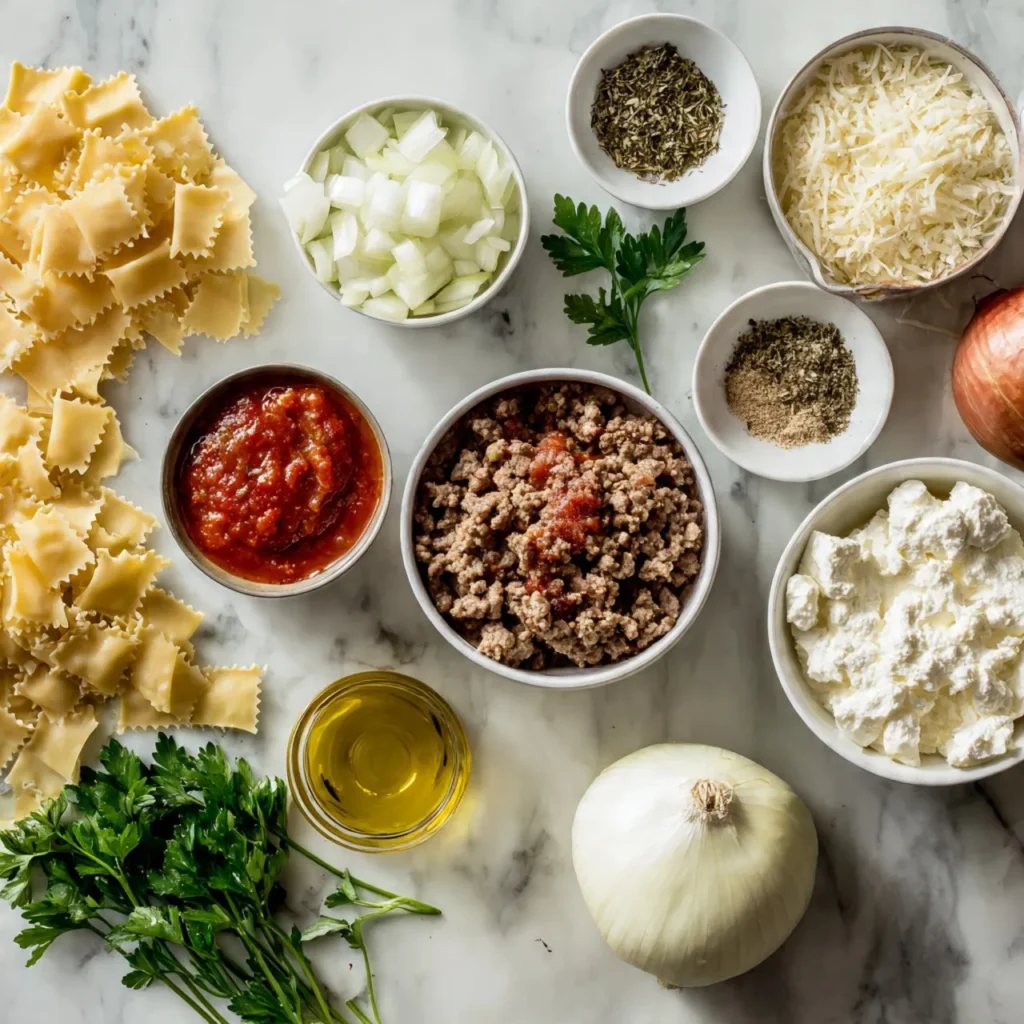
- 1 tablespoon olive oil
- 1 medium onion, finely chopped
- 3 cloves garlic, minced
- 500g ground beef (or Italian sausage)
- 2 tablespoons tomato paste
- 1 can (800g) crushed tomatoes
- 4 cups chicken or beef broth
- 1 teaspoon dried oregano
- 1 teaspoon dried basil
- ½ teaspoon red chili flakes (optional)
- Salt and black pepper to taste
For the Pasta
- 8–10 lasagna noodles, broken into bite-sized pieces
For the Cheese Topping
- 1 cup ricotta cheese
- 1 cup shredded mozzarella cheese
- ¼ cup grated Parmesan cheese
- 2 tablespoons fresh parsley, chopped
Step-by-Step Instructions
Step 1: Build a Flavorful Base (10 minutes)
Heat olive oil in a large pot over medium heat. Add chopped onion and cook until softened, about 5 minutes. Stir in garlic and cook for another minute until fragrant. This step lays the foundation of your soup’s flavor, so don’t rush it.
Chef’s Tip: Let the onions cook slowly until slightly golden rather than just translucent; this deepens the sweetness and creates a richer base for your lasagna soup.
Step 2: Brown the Meat (8–10 minutes)
Add the ground beef or sausage to the pot. Break it up with a spoon and cook until fully browned. Drain excess fat if needed. Proper browning enhances the savory depth and prevents a greasy texture.
Chef’s Tip: Allow the meat to sit undisturbed for a minute or two before stirring so it develops a slight crust, which adds extra flavor to the final dish.
Step 3: Add Tomatoes and Seasonings (5 minutes)
Stir in tomato paste and cook for 1–2 minutes to caramelize it slightly. Add crushed tomatoes, broth, oregano, basil, chili flakes, salt, and pepper. Mix well and bring to a gentle boil. This creates the rich, classic Italian-style broth.
Chef’s Tip: Cooking the tomato paste briefly before adding liquid removes its raw taste and intensifies the overall tomato flavor in your soup.
Step 4: Simmer for Depth (15 minutes)
Reduce heat and let the soup simmer uncovered for about 15 minutes. Stir occasionally. This step allows all the flavors to meld together into a cohesive, hearty broth.
Chef’s Tip: Keep the simmer gentle rather than boiling aggressively, as slow cooking helps maintain a balanced flavor without over-reducing the liquid.
Step 5: Cook the Pasta (10 minutes)
Add broken lasagna noodles directly into the soup. Cook until tender, about 10 minutes, stirring occasionally to prevent sticking. The pasta absorbs the broth, thickening the soup naturally.
Chef’s Tip: Stir frequently during the first few minutes to prevent noodles from clumping together, ensuring even cooking and a better texture.
Step 6: Prepare the Cheese Topping (5 minutes)
In a bowl, mix ricotta, mozzarella, Parmesan, and parsley. This creamy mixture mimics the signature lasagna layers in every spoonful.
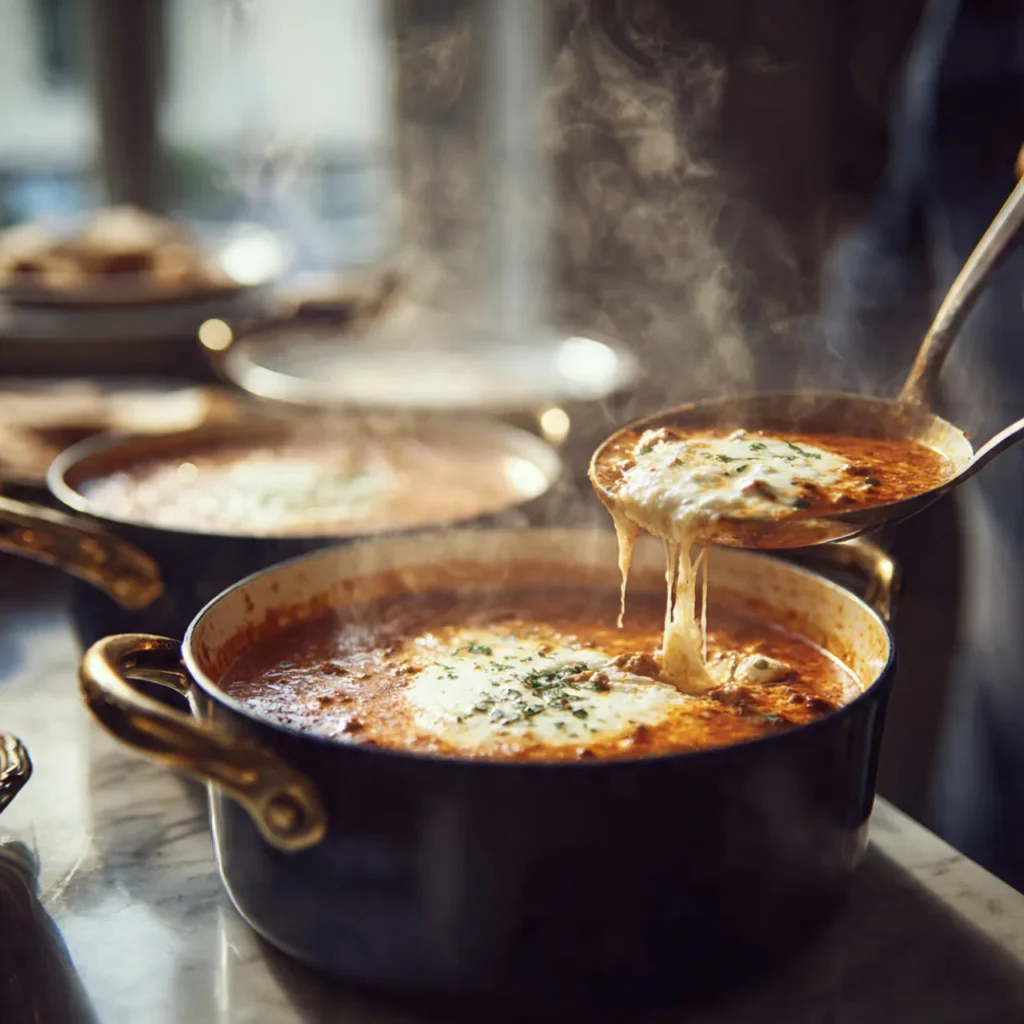
Chef’s Tip: Let the cheese mixture sit at room temperature for a few minutes before serving so it melts smoothly when added to hot soup.
Step 7: Serve and Assemble (2–3 minutes)
Ladle hot soup into bowls and top each serving with a generous scoop of the cheese mixture. The heat from the soup will slightly melt the cheese, creating a creamy finish.
Chef’s Tip: Add the cheese just before serving rather than mixing it into the pot to maintain its texture and presentation.
Nutritional Information (Per Serving)
| Nutrient | Amount |
| Calories | 420 kcal |
| Protein | 28 g |
| Carbohydrates | 35 g |
| Total Fat | 20 g |
| Fiber | 4 g |
| Sodium | 780 mg |
Why You’ll Love This Recipe
- This rich lasagna soup recipe gives you all the classic lasagna flavors without the time-consuming layering and baking, making it ideal for busy schedules.
- You get a perfectly balanced dish with protein, carbs, and comforting textures in one pot, which simplifies both cooking and cleanup.
- The customizable nature allows you to easily adjust ingredients based on what you have, making it flexible for different tastes and dietary needs.
- The cheese topping adds a creamy, indulgent finish that makes each bowl feel special and restaurant-quality.
Common Mistakes to Avoid
- Overcooking the pasta can make it mushy and overly thicken the soup, so you should monitor it closely and cook just until tender.
- Skipping the step of browning the meat properly results in a flat flavor, as this process is essential for building depth in the soup.
- Adding all the cheese directly into the pot can cause it to clump or disappear into the broth instead of providing a creamy topping.
- Using too much salt early on can overpower the dish, so it’s better to season gradually and adjust at the end.
Serving Suggestions
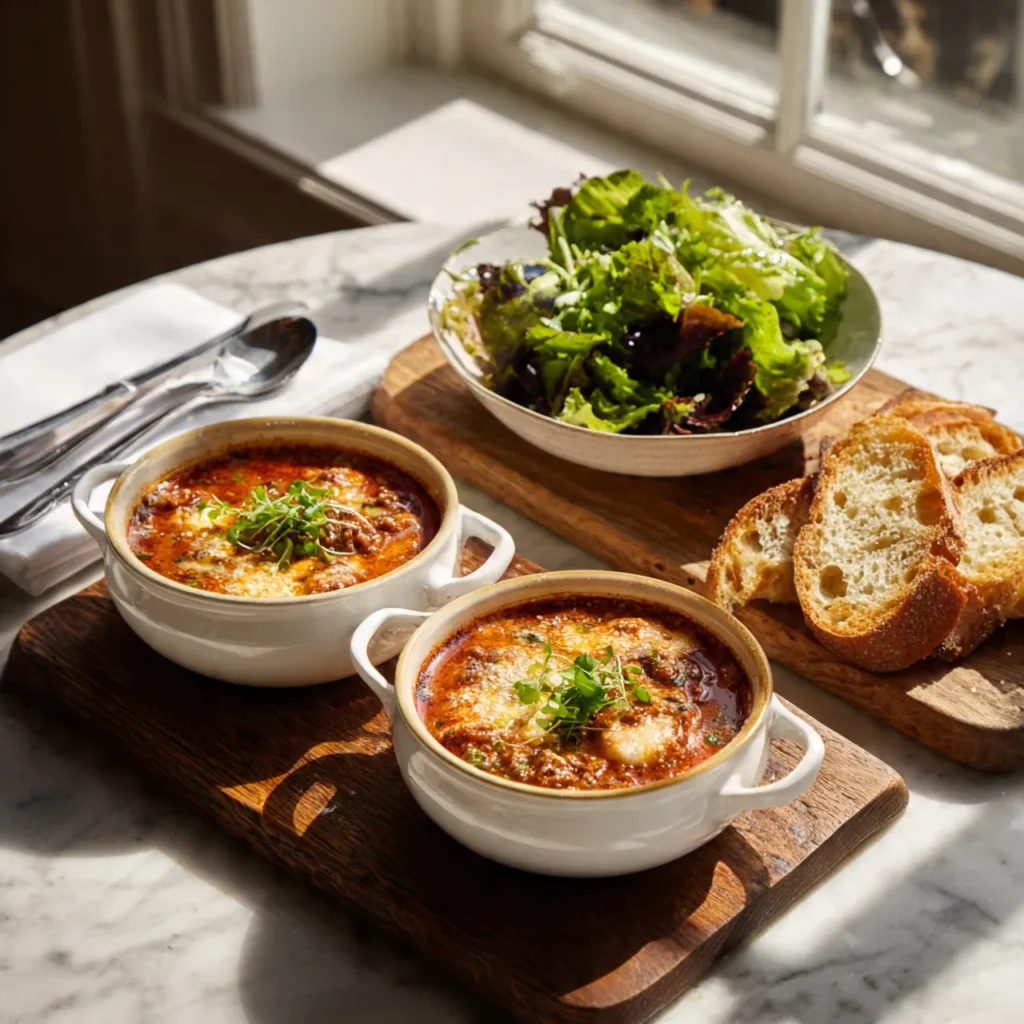
- Serve your lasagna soup with warm garlic bread or crusty baguette slices to soak up the rich tomato broth and enhance the meal experience.
- Pair it with a simple green salad dressed in a light vinaigrette to balance the richness of the soup with freshness.
- For a more elegant presentation, serve in deep bowls with extra Parmesan and fresh basil sprinkled on top.
- You can also serve smaller portions as a starter for an Italian-themed dinner, followed by lighter main dishes.
Healthier Alternatives and Ingredient Swaps
- Swap ground beef with ground turkey or chicken to reduce fat while still maintaining a hearty texture and satisfying flavor.
- Use whole wheat or high-protein pasta instead of regular lasagna noodles for added fiber and nutritional value.
- Replace ricotta with low-fat cottage cheese for a lighter yet still creamy topping option.
- Add extra vegetables like spinach, zucchini, or mushrooms to increase nutrients and make the dish more filling without extra calories.
Storage and Meal Prep Tips
- Store leftover soup in an airtight container in the refrigerator for up to 3 days, keeping the cheese mixture separate to maintain texture.
- When reheating, add a splash of broth or water to loosen the soup, as the pasta tends to absorb liquid over time.
- For meal prep, cook the soup base ahead of time and add fresh pasta when reheating to avoid soggy noodles.
- You can freeze the soup without pasta for up to 2 months, then add freshly cooked noodles when serving for the best consistency.
Conclusion
This rich lasagna soup recipe works because it transforms a classic comfort dish into something faster, easier, and just as satisfying. You still get bold tomato flavors, hearty meat, and creamy cheese in every bite, without the hassle. Once you try it, you’ll find it easy to adapt, making it truly your own signature comfort meal.
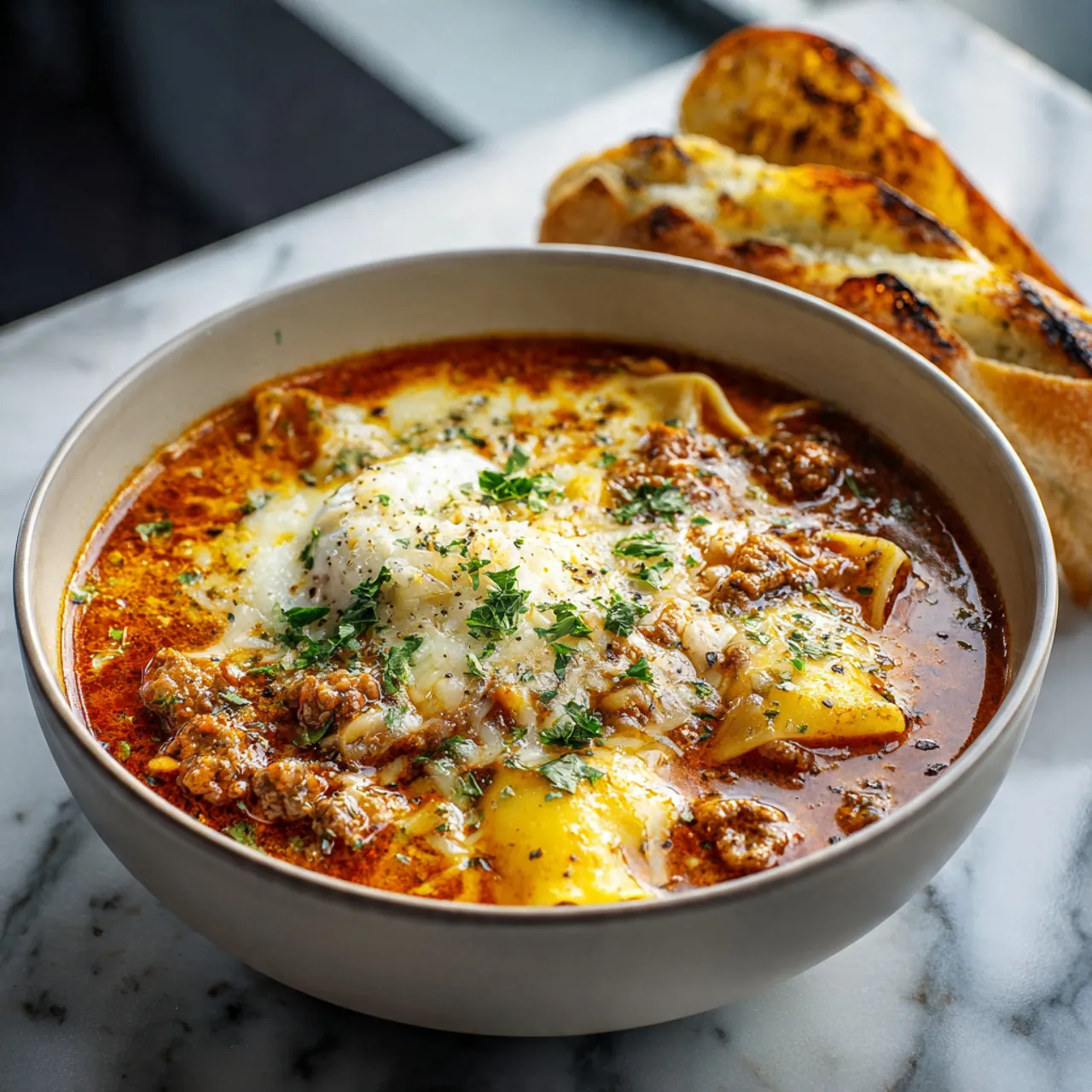
Lasagna Soup Recipe for Classic Italian Flavor
Ingredients
Method
- Heat olive oil in a large pot over medium heat and cook chopped onion until soft and lightly golden, then add garlic and cook until fragrant to build a strong flavor base.
- Add ground beef and cook until browned, breaking it apart as it cooks to ensure even texture and full flavor development.
- Stir in tomato paste and cook briefly before adding crushed tomatoes, broth, and seasonings, allowing the mixture to come together into a rich base.
- Simmer the soup gently to allow all the ingredients to meld and deepen in flavor without reducing too quickly.
- Add broken lasagna noodles and cook until just tender, ensuring they absorb flavor without becoming too soft.
- Mix ricotta, mozzarella, and Parmesan separately and use it as a topping when serving to create a creamy finish.
Notes
- Letting the onions caramelize slightly rather than rushing them creates a sweeter and more complex base for the soup.
- Browning the meat properly before stirring helps develop a richer, deeper flavor that enhances the entire dish.
- Cooking tomato paste briefly before adding liquid removes any raw taste and intensifies its richness.
- Adding pasta directly to the soup allows it to absorb flavor, but you should monitor it carefully to avoid overcooking.
- Keeping the cheese mixture separate until serving ensures a creamy, layered texture similar to traditional lasagna.