
Comforting Shrimp Noodle Soup Recipe for Light Savory Meals
A warm bowl of shrimp noodle soup gives you everything you want from a simple homemade meal: tender shrimp, silky noodles, fresh vegetables, and a deeply savory broth that feels soothing without being heavy. You can make it on busy weeknights, chilly evenings, or anytime you need a quick comforting dinner.
Timing
- Prep Time: 15 minutes
- Cook Time: 25 minutes
- Total Time: 40 minutes
- Servings: 4 servings
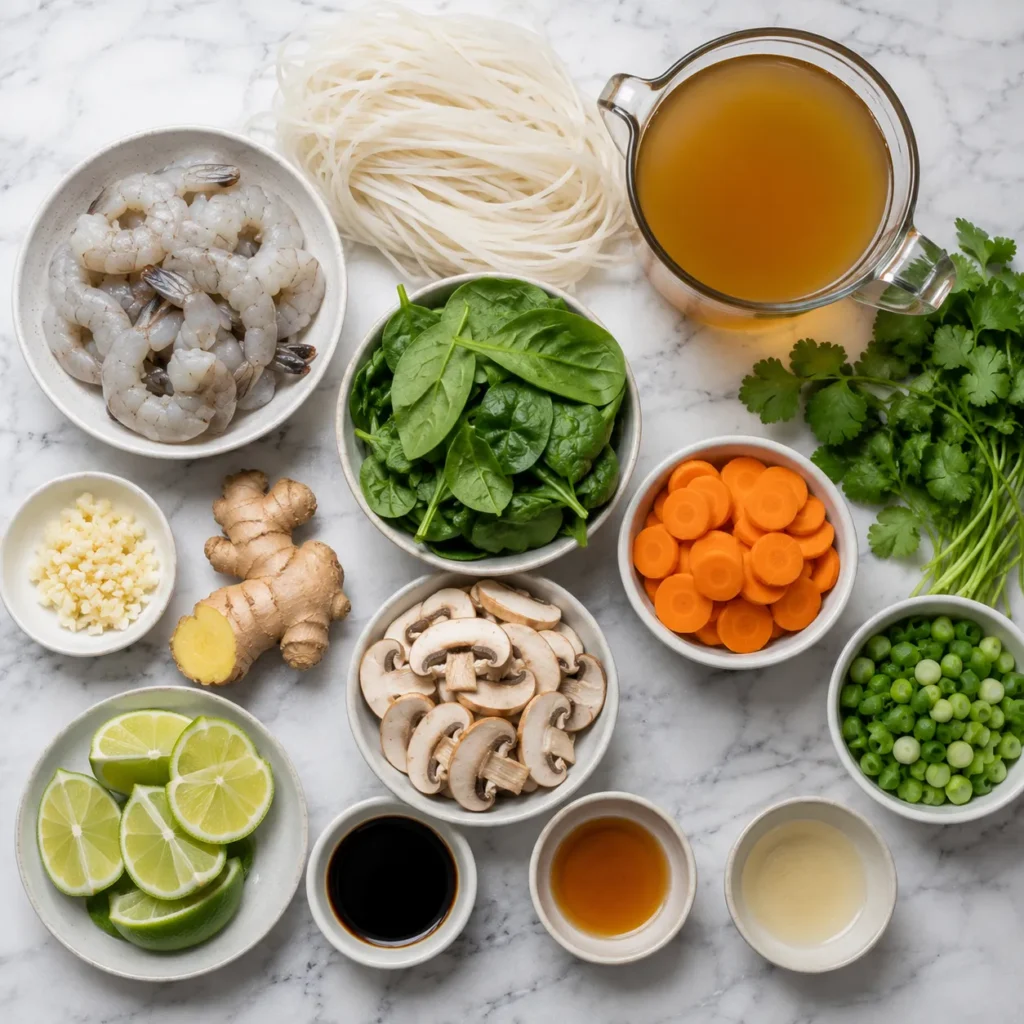
Ingredients for Shrimp Noodle Soup Recipe
For the Broth
- 1 tablespoon sesame oil
- 4 garlic cloves, minced
- 1 tablespoon fresh ginger, grated
- 6 cups low-sodium chicken broth
- 2 tablespoons soy sauce
- 1 tablespoon fish sauce
- 1 teaspoon rice vinegar
- 1 teaspoon chili paste or sriracha (optional)
For the Soup
- 8 ounces rice noodles or egg noodles
- 1 pound raw shrimp, peeled and deveined
- 1 medium carrot, thinly sliced
- 1 cup mushrooms, sliced
- 2 cups baby spinach
- 3 green onions, sliced
Garnishes
- Fresh cilantro
- Lime wedges
- Sesame seeds
- Extra chili flakes if desired
How to Make Shrimp Noodle Soup
Step 1: Build the Flavor Base
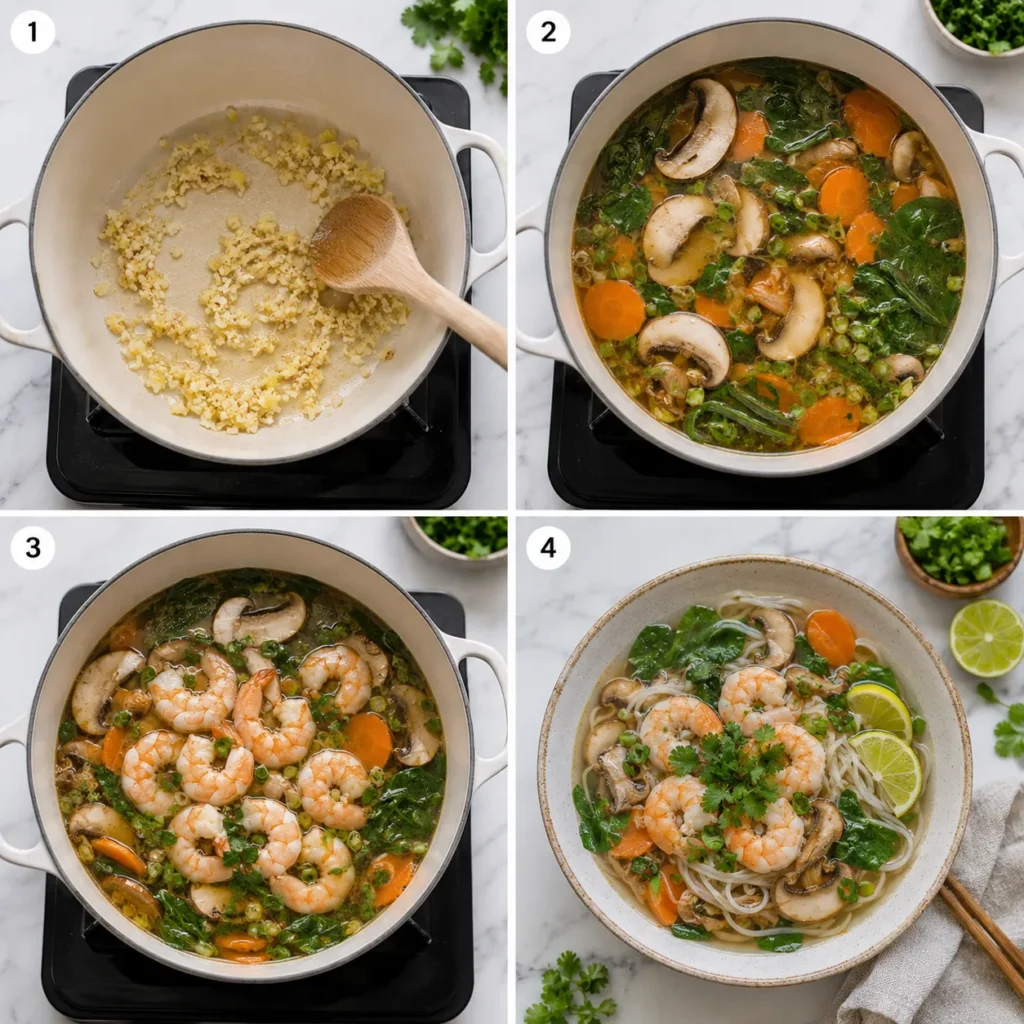
Heat the sesame oil in a large soup pot over medium heat for about 1 minute. Add the minced garlic and grated ginger, then cook for 2 to 3 minutes until fragrant and lightly golden. This step creates the foundation of the shrimp noodle soup recipe because the aromatics infuse the broth with deep savory flavor right from the start.
Chef’s Tip: Keep the heat moderate while cooking garlic and ginger because burned garlic can turn the broth bitter very quickly. Stir constantly so the aromatics soften evenly and release their natural sweetness into the oil.
Step 2: Simmer the Broth
Pour in the chicken broth, soy sauce, fish sauce, rice vinegar, and chili paste if using. Stir everything together and bring the soup to a gentle boil. Once boiling, reduce the heat and let the broth simmer for 10 minutes so the flavors blend properly and develop a richer taste.
Chef’s Tip: A gentle simmer works better than a rolling boil because it keeps the broth clear and balanced. High heat can make the flavors taste harsh instead of smooth and comforting.
Step 3: Cook the Vegetables
Add the sliced carrots and mushrooms to the broth and cook for 5 to 6 minutes until slightly tender. The vegetables should soften while still keeping a little texture so the soup feels hearty without becoming mushy.
Chef’s Tip: Slice the vegetables evenly so they cook at the same rate. Thin carrot slices soften quickly and blend naturally into the light savory broth without overpowering the shrimp.
Step 4: Prepare the Noodles
While the vegetables cook, prepare the noodles according to the package instructions in a separate pot. Drain them and lightly rinse if needed. Cooking the noodles separately prevents them from absorbing too much broth and becoming overly soft inside the soup.
Chef’s Tip: Slightly undercook the noodles by about 1 minute because they continue softening once added to the hot broth. This keeps the texture pleasantly chewy instead of soggy.
Step 5: Cook the Shrimp
Add the shrimp directly into the simmering broth and cook for 3 to 4 minutes until they turn pink and opaque. Stir gently so the shrimp cook evenly without curling too tightly. Overcooking shrimp can make them rubbery, so watch them closely.
Chef’s Tip: Medium shrimp work especially well for beginner cooks because they cook evenly and stay juicy. As soon as the shrimp lose their gray color, they are ready to serve.
Step 6: Finish and Serve
Stir in the baby spinach and cooked noodles, then let everything warm together for 1 to 2 minutes. Taste the broth and adjust with extra soy sauce, lime juice, or chili flakes if needed. Ladle the shrimp noodle soup into bowls and finish with green onions, cilantro, sesame seeds, and lime wedges.
Chef’s Tip: Add the spinach at the very end so it stays bright green and fresh-looking. Overcooking delicate greens can make the soup lose some of its fresh flavor and color contrast.
Shrimp Noodle Soup Nutrition
| Nutrient | Per Serving |
| Calories | 340 |
| Protein | 28g |
| Carbohydrates | 32g |
| Total Fat | 10g |
| Saturated Fat | 2g |
| Fiber | 3g |
| Sodium | 920mg |
| Sugar | 4g |
Why You’ll Love This Recipe
- You get a balanced combination of light broth, tender shrimp, vegetables, and noodles, making this shrimp noodle soup recipe satisfying without feeling too rich or heavy for everyday meals.
- The recipe comes together in under an hour, which makes it practical for busy weeknights when you still want something homemade and nourishing instead of takeout.
- You can easily customize the soup with different vegetables, spice levels, or noodle varieties depending on what you already have in your kitchen.
- The broth develops a comforting restaurant-style flavor using simple pantry ingredients, so you do not need complicated techniques to make the soup taste deeply savory.
- This soup reheats surprisingly well because the broth continues developing flavor over time, making leftovers especially enjoyable for lunch the next day.
Common Mistakes to Avoid
- Overcooking the shrimp is one of the most common mistakes because shrimp cook very quickly. Leaving them in the broth too long can make them rubbery and dry instead of juicy and tender.
- Adding uncooked noodles directly into the soup pot often causes the broth to become starchy and overly thick. Cooking the noodles separately helps maintain a cleaner, lighter broth texture.
- Using too much soy sauce early in the process can overpower the delicate shrimp flavor. It is better to season gradually and adjust the saltiness at the end.
- Boiling the soup aggressively instead of simmering it gently can make the vegetables overly soft and reduce the clean flavor of the broth.
- Skipping fresh garnishes like lime, cilantro, or green onions may seem minor, but these toppings brighten the soup and balance the rich savory flavors beautifully.
Serving Suggestions
- Serve the shrimp noodle soup with a side of crispy spring rolls or dumplings if you want to turn the meal into a more filling dinner for family or guests.
- A small bowl of steamed jasmine rice works surprisingly well alongside the soup because it absorbs the flavorful broth and stretches the meal further.
- You can repurpose leftover soup by adding extra vegetables and broth the next day, creating a refreshed version that tastes just as vibrant and comforting.
- For a lighter lunch serving, reduce the noodle portion slightly and add more spinach or mushrooms to keep the bowl satisfying while lowering the carbohydrate content.
- If you are serving guests, arrange the garnishes separately on the table so everyone can customize their bowl with lime, herbs, and chili flakes.
Healthier Alternatives and Ingredient Swaps
- Swap regular noodles for zucchini noodles or shirataki noodles if you want a lower-carbohydrate version that still feels filling and flavorful.
- Using low-sodium chicken broth and reduced-sodium soy sauce helps control salt levels without sacrificing the rich savory taste of the soup.
- You can replace shrimp with tofu for a vegetarian-friendly option while keeping the broth flavorful by adding a little extra mushroom and ginger.
- Brown rice noodles or whole wheat noodles provide more fiber and create a heartier texture that works especially well for meal prep lunches.
- Adding extra vegetables like bok choy, snap peas, or bell peppers increases nutrition and makes the soup feel even more colorful and fresh.
Storage and Meal Prep Tips
- Store the broth, noodles, and garnishes separately whenever possible because noodles absorb liquid over time and can become overly soft in the refrigerator.
- Refrigerate the shrimp noodle soup in airtight containers for up to 3 days. The flavors continue blending together, which often makes the broth taste even better.
- Reheat the broth gently over medium-low heat instead of boiling it rapidly because shrimp can quickly become tough during reheating.
- If you want to freeze the soup, freeze only the broth and vegetables. Freshly cooked noodles and shrimp should be added later for the best texture.
- Meal prepping the vegetables ahead of time can make this recipe extremely quick to assemble during busy weekdays while still tasting freshly made.
Conclusion
This comforting shrimp noodle soup recipe works because it balances fresh ingredients, quick cooking, and deeply savory flavor in one easy bowl. You get tender shrimp, satisfying noodles, and a light broth that feels cozy without becoming too heavy. Once you master the basic method, you can easily customize the vegetables, spice level, and noodles to make the soup completely your own.