
Fresh Salmon Recipe for Simple Healthy Meals
A fresh salmon recipe like this gives you a quick, flavorful way to build a healthy meal without overcomplicating your kitchen routine. It’s ideal for busy weeknights when you want something nutritious, satisfying, and reliably delicious.
Timing
- Prep Time: 10 minutes
- Cook Time: 12–15 minutes
- Total Time: 25 minutes
- Servings: 2 servings
Ingredients
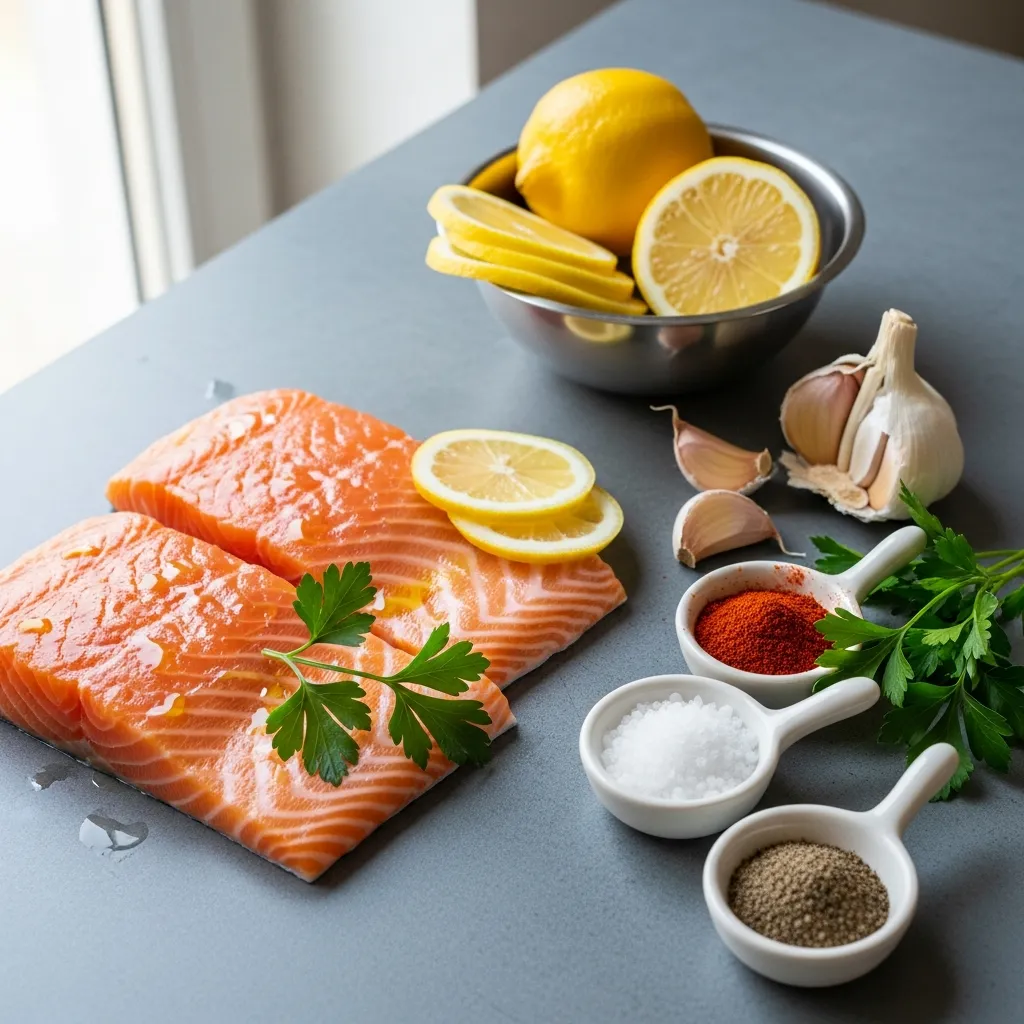
Salmon & Seasoning
- 2 fresh salmon fillets (about 180–200g each)
- 1 teaspoon salt
- ½ teaspoon black pepper
- 1 teaspoon garlic powder
- 1 teaspoon paprika
Marinade & Flavor Base
- 2 tablespoons olive oil
- 1 tablespoon lemon juice (freshly squeezed)
- 1 teaspoon lemon zest
- 2 cloves garlic, finely minced
Optional Garnish
- Fresh parsley, chopped (2 tablespoons)
- Lemon wedges (for serving)
Step-by-Step Instructions
Step 1: Prepare the Salmon
Pat the salmon fillets dry with a paper towel and place them on a plate. This step takes about 2–3 minutes and helps the seasoning stick better while ensuring the fish sears properly instead of steaming.
Chef’s Tip: Removing excess moisture is essential because water creates steam in the pan, which prevents that golden crust from forming and leaves your salmon soft rather than lightly crisp on the outside.
Step 2: Make the Marinade
In a small bowl, mix olive oil, lemon juice, lemon zest, and minced garlic. Stir well for about 1–2 minutes until the mixture is evenly combined and fragrant.
Chef’s Tip: Letting the garlic sit briefly in the lemon juice softens its sharpness and creates a more balanced flavor, so your marinade enhances the salmon instead of overpowering it.
Step 3: Season and Coat
Rub the salmon fillets with salt, pepper, garlic powder, and paprika, then brush or spoon the marinade evenly over each piece. Let the salmon sit for 5 minutes to absorb the flavors.
Chef’s Tip: Even a short resting time allows the seasoning to penetrate slightly into the fish, improving flavor depth without making the texture mushy like a long marinade might.
Step 4: Heat the Pan
Place a non-stick or cast-iron pan over medium heat and let it warm up for 2–3 minutes. Add a small drizzle of olive oil once hot.
Chef’s Tip: A properly heated pan prevents sticking and helps create a clean sear; if the pan is too cool, the salmon will release moisture and break apart when flipped.
Step 5: Cook the Salmon
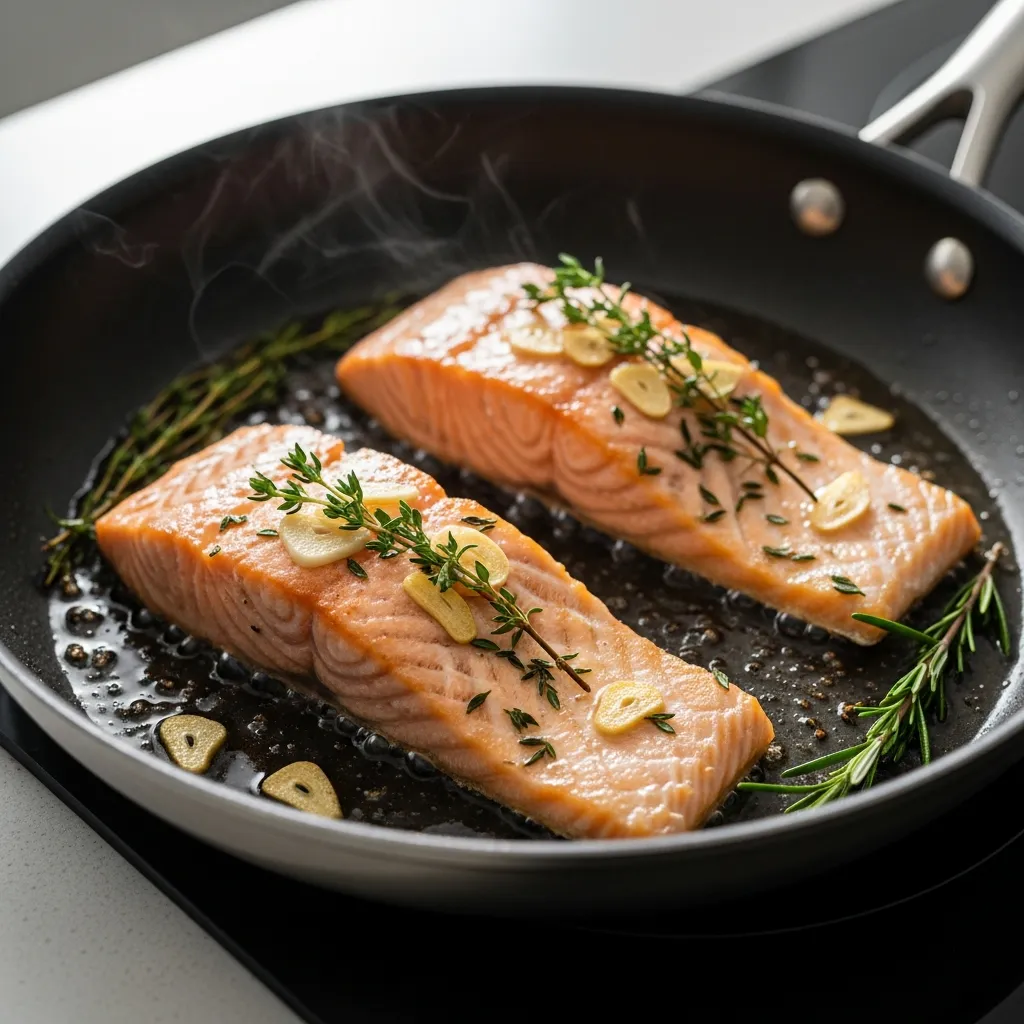
Place the salmon fillets skin-side down (if they have skin) and cook for 6–7 minutes. Flip carefully and cook for another 4–5 minutes until the fish flakes easily with a fork.
Chef’s Tip: Resist the urge to move the salmon around while cooking, as leaving it undisturbed allows a crust to form naturally, which adds both texture and flavor.
Step 6: Rest and Garnish
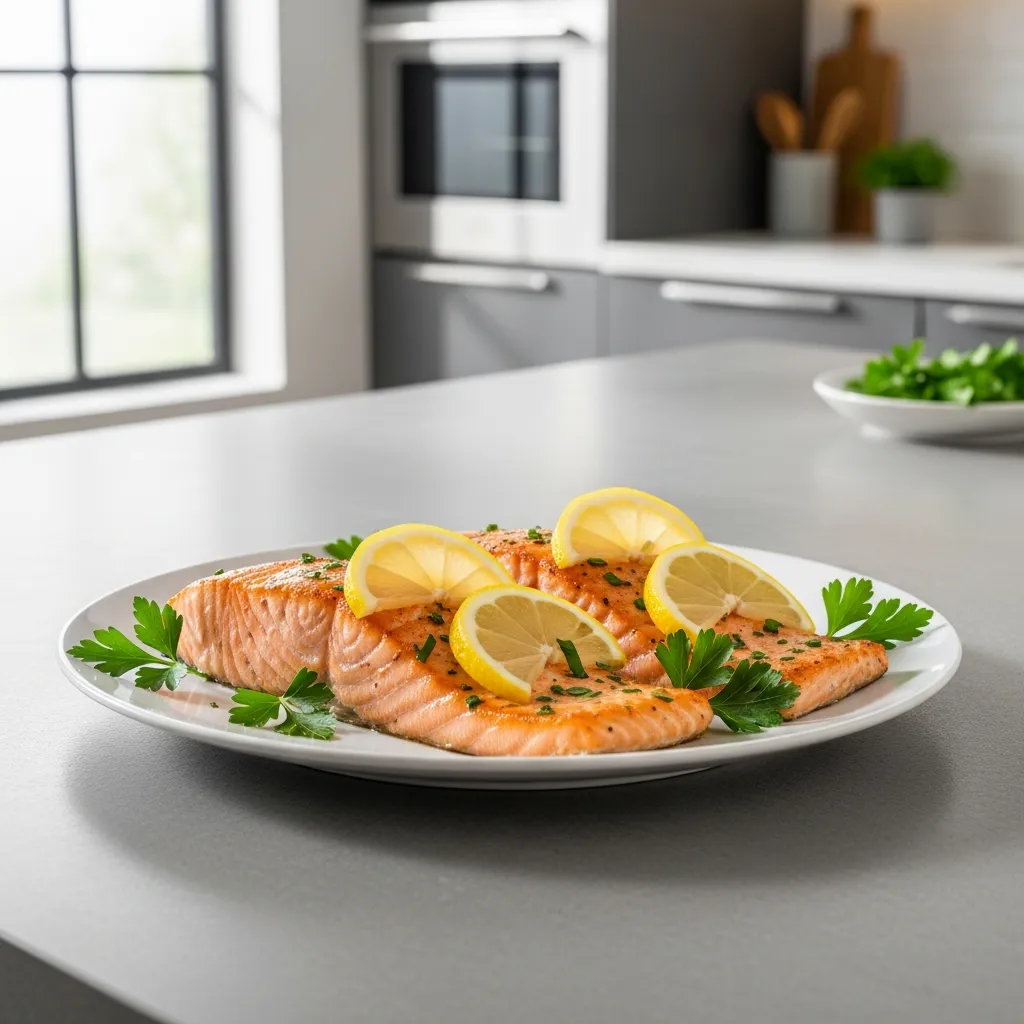
Remove the salmon from the pan and let it rest for 2–3 minutes. Sprinkle with fresh parsley and serve with lemon wedges.
Chef’s Tip: Resting the salmon allows the juices to redistribute throughout the fillet, keeping it moist and preventing dryness when you cut into it.
Nutritional Information (Per Serving)
| Nutrient | Amount |
| Calories | 367 kcal |
| Protein | 34 g |
| Carbohydrates | 2 g |
| Total Fat | 25 g |
| Saturated Fat | 4 g |
| Fiber | 0.5 g |
| Omega-3 | High |
| Sodium | 480 mg |
Why You’ll Love This Recipe
- This fresh salmon recipe keeps things simple while still delivering bold, balanced flavors, making it perfect when you want a healthy meal without complicated techniques.
- You get a high-protein, nutrient-rich dish that fits easily into everyday eating, whether you’re cooking for yourself or your family.
- The quick cooking time means you can prepare a satisfying dinner in under 30 minutes, which is ideal for busy schedules.
- The combination of lemon, garlic, and olive oil enhances the natural richness of salmon without masking its fresh taste.
Common Mistakes to Avoid
- Overcooking the salmon is one of the most common mistakes, as it quickly turns dry; always check for flakiness rather than relying only on time.
- Skipping the drying step causes the salmon to steam instead of sear, which results in a pale and less flavorful surface.
- Using too much heat can burn the outside before the inside cooks through, so maintaining medium heat ensures even cooking.
- Flipping the salmon too early often leads to sticking and breaking; allow it to naturally release from the pan before turning.
Serving Suggestions
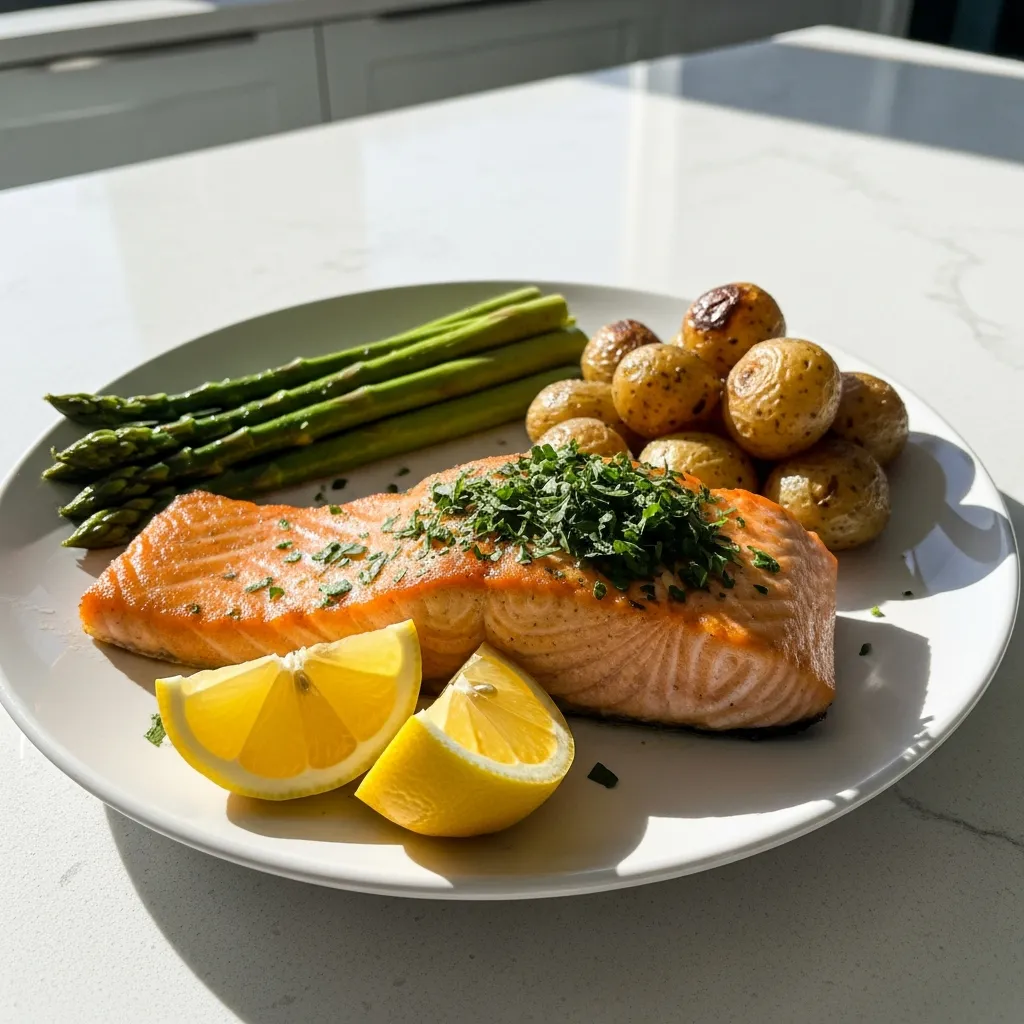
- Serve the salmon over a bed of steamed rice or quinoa to create a balanced meal with protein and healthy carbohydrates.
- Pair it with roasted vegetables like broccoli, carrots, or zucchini for a colorful, nutrient-packed plate.
- Flake leftover salmon into a fresh salad with greens, cucumbers, and a light vinaigrette for a quick lunch option.
- Add it to wraps or sandwiches with a yogurt-based sauce for a simple yet satisfying meal variation.
Healthier Alternatives and Ingredient Swaps
- Replace olive oil with avocado oil if you prefer a higher smoke point while keeping the dish heart-healthy.
- Use less salt and add herbs like dill or thyme to maintain flavor while reducing sodium intake.
- Swap paprika with smoked paprika for a deeper, slightly smoky flavor without adding extra fat.
- If you prefer a lower-fat version, reduce the oil slightly and cook the salmon in a non-stick pan to prevent sticking.
Storage and Meal Prep Tips
- Store leftover salmon in an airtight container in the refrigerator for up to 2 days to maintain freshness and flavor.
- Reheat gently in a pan over low heat or in the oven to avoid drying out the fish.
- Avoid microwaving at high power, as it can overcook the salmon and create a rubbery texture.
- Prepare the marinade in advance and store it separately so you can quickly season fresh salmon when ready to cook.
Conclusion
This fresh salmon recipe works because it focuses on simple techniques that highlight natural flavor while keeping the process easy to follow. Once you master it, you can adjust seasoning, sides, and presentation to suit your taste and make it part of your regular meal rotation.
Fresh Salmon Recipe
Ingredients
Method
- Pat the salmon fillets dry thoroughly and place them on a plate to prepare for seasoning, ensuring better texture during cooking.
- Mix olive oil, lemon juice, zest, and garlic in a bowl until fully combined to create a balanced marinade.
- Season the salmon evenly and coat it with the marinade, allowing it to sit briefly for improved flavor absorption.
- Heat a pan over medium heat and add oil only after the pan is properly warmed to prevent sticking.
- Cook the salmon undisturbed on one side before flipping, ensuring even cooking and proper searing.
- Let the salmon rest before serving and garnish for enhanced flavor and presentation.
Notes
- Always dry your salmon before cooking because moisture prevents proper searing and affects texture.
- Keep the heat moderate to ensure the inside cooks gently while the outside develops a golden crust.
- Allow the salmon to rest after cooking so it retains moisture and stays tender when served.
- Use fresh lemon juice instead of bottled for a brighter, more natural flavor profile.