
Rich Spaghetti Meat Sauce Recipe for Classic Italian Dinner
A rich spaghetti meat sauce recipe brings together savory ground beef, tomatoes, garlic, and herbs into a comforting meal that feels both hearty and satisfying. It’s a reliable dinner choice when you want classic Italian flavors without complicated cooking techniques.
Timing
- Prep Time: 15 minutes
- Cook Time: 45 minutes
- Total Time: 1 hour
- Servings: 6 servings
Ingredients for Spaghetti Meat Sauce Recipe
For the Meat Base
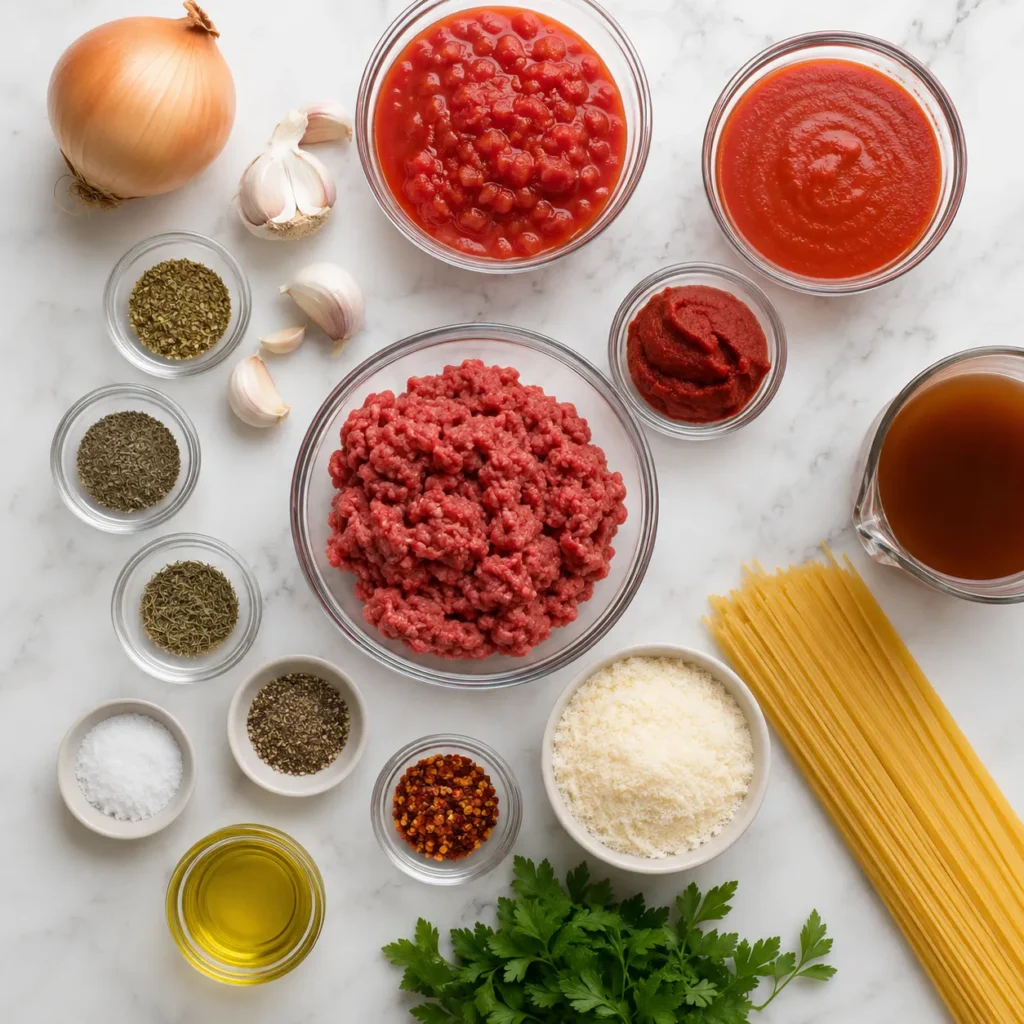
- 1 pound (450g) lean ground beef
- 1 tablespoon olive oil
- 1 medium yellow onion, finely diced
- 4 garlic cloves, minced
For the Sauce
- 1 can (28 ounces) crushed tomatoes
- 1 can (15 ounces) tomato sauce
- 2 tablespoons tomato paste
- 1 cup beef broth
- 1 teaspoon granulated sugar
Seasonings
- 1 teaspoon dried oregano
- 1 teaspoon dried basil
- ½ teaspoon dried thyme
- 1 teaspoon salt
- ½ teaspoon black pepper
- ¼ teaspoon red pepper flakes (optional)
For Serving
- 12 ounces spaghetti
- Fresh parsley, chopped
- Freshly grated Parmesan cheese
How to Make Rich Spaghetti Meat Sauce
Step 1: Sauté the Aromatics
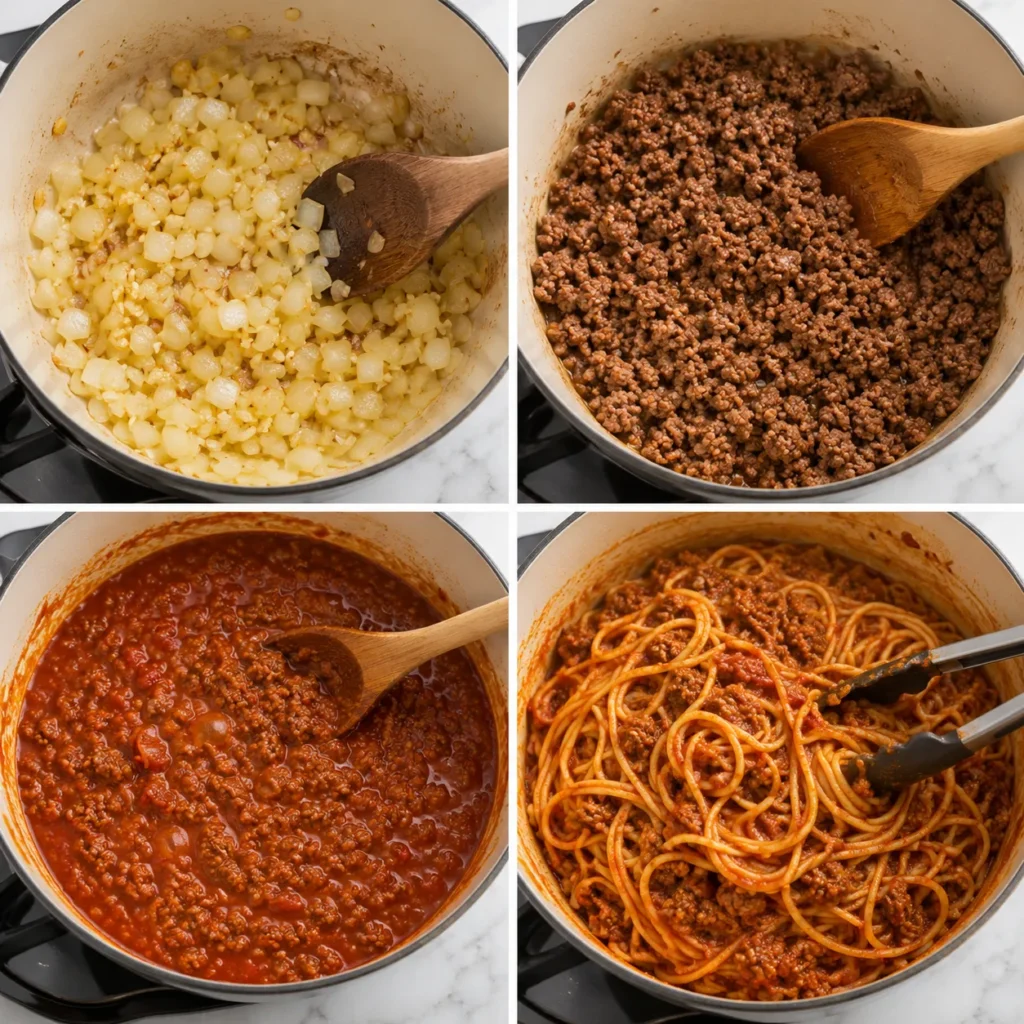
Heat the olive oil in a large pot or Dutch oven over medium heat. Add the diced onion and cook for 4–5 minutes until softened and translucent. Stir in the minced garlic and cook for another 30 seconds until fragrant.
This step creates the flavor foundation of your spaghetti meat sauce recipe and helps build depth before the meat is added.
Chef’s Tip: Allow the onions enough time to soften completely instead of rushing this step. Properly cooked onions release natural sweetness that balances the acidity of the tomatoes later in the sauce.
Step 2: Brown the Ground Beef
Add the ground beef to the pot. Break it apart with a wooden spoon and cook for 6–8 minutes until fully browned and no pink remains. Drain excess grease if necessary.
Browning develops savory flavors that give the sauce its rich and hearty character.
Chef’s Tip: Avoid stirring constantly while the beef cooks. Let portions of the meat sit against the hot pan for a minute or two so they develop a deeper brown color and more robust flavor.
Step 3: Build the Tomato Sauce
Stir in the tomato paste and cook for 1–2 minutes. Add the crushed tomatoes, tomato sauce, beef broth, and sugar. Mix thoroughly until everything is combined.
Cooking the tomato paste briefly removes its raw taste and creates a richer tomato flavor throughout the sauce.
Chef’s Tip: Stir the tomato paste directly into the meat before adding liquids. This simple technique caramelizes the paste slightly and adds noticeable depth to the finished sauce.
Step 4: Season and Simmer
Add oregano, basil, thyme, salt, black pepper, and red pepper flakes if using. Stir well and bring the mixture to a gentle simmer.
Reduce the heat to low and cook uncovered for 30–35 minutes, stirring occasionally. During this time, the sauce thickens and the flavors blend together.
Chef’s Tip: Keep the sauce at a gentle simmer rather than a rolling boil. Slow cooking allows the herbs and tomatoes to develop a smoother, more balanced flavor without becoming bitter.
Step 5: Cook the Spaghetti
About 15 minutes before the sauce finishes cooking, bring a large pot of salted water to a boil. Cook the spaghetti according to package directions until al dente, usually 8–10 minutes.
Drain the pasta but reserve about ½ cup of pasta water.
Chef’s Tip: Salt the pasta water generously because it is your only chance to season the spaghetti itself. Properly seasoned pasta enhances the overall flavor of the entire dish.
Step 6: Combine and Serve
Add the cooked spaghetti directly to the sauce or serve the sauce over the pasta. If needed, add a splash of reserved pasta water to loosen the sauce and help it coat the noodles evenly.
Garnish with chopped parsley and freshly grated Parmesan cheese before serving.
Chef’s Tip: Let the pasta sit in the sauce for one or two minutes before serving. This allows the noodles to absorb flavor and creates a more cohesive restaurant-style dish.
Nutrition Information
| Nutrient | Amount Per Serving |
| Calories | 485 |
| Protein | 28g |
| Carbohydrates | 46g |
| Total Fat | 20g |
| Saturated Fat | 7g |
| Fiber | 5g |
| Sugar | 8g |
| Sodium | 780mg |
| Cholesterol | 65mg |
Nutrition values are approximate and may vary based on ingredients used.
Why You’ll Love This Recipe
- This rich spaghetti meat sauce recipe uses simple pantry ingredients that are easy to find, making it perfect for busy weeknights when you want a homemade meal without extra shopping.
- The long simmering time creates a deep, developed flavor that tastes like it has been cooking all day, even though the recipe comes together in about an hour.
- Ground beef provides hearty texture and satisfying protein, turning a simple pasta dinner into a filling family meal.
- The sauce freezes exceptionally well, allowing you to prepare a larger batch and enjoy convenient homemade dinners later.
- The recipe is beginner-friendly because every step follows a straightforward process that does not require advanced cooking skills.
Common Mistakes to Avoid
- Avoid skipping the browning step for the beef because properly browned meat contributes significant flavor that cannot be achieved by simply simmering the meat in sauce.
- Do not add all seasonings at the very end of cooking. Herbs need time to blend with the tomatoes and meat so the flavors become balanced and well-rounded.
- Resist cooking the sauce over high heat to save time. Excessive heat can scorch the tomatoes and create bitterness that affects the entire dish.
- Avoid overcooking the spaghetti because soft pasta becomes mushy when mixed with sauce and loses the pleasant texture that makes pasta enjoyable.
- Do not forget to taste the sauce before serving. Tomatoes vary in acidity, and a small adjustment of salt can dramatically improve the final flavor.
Serving Suggestions
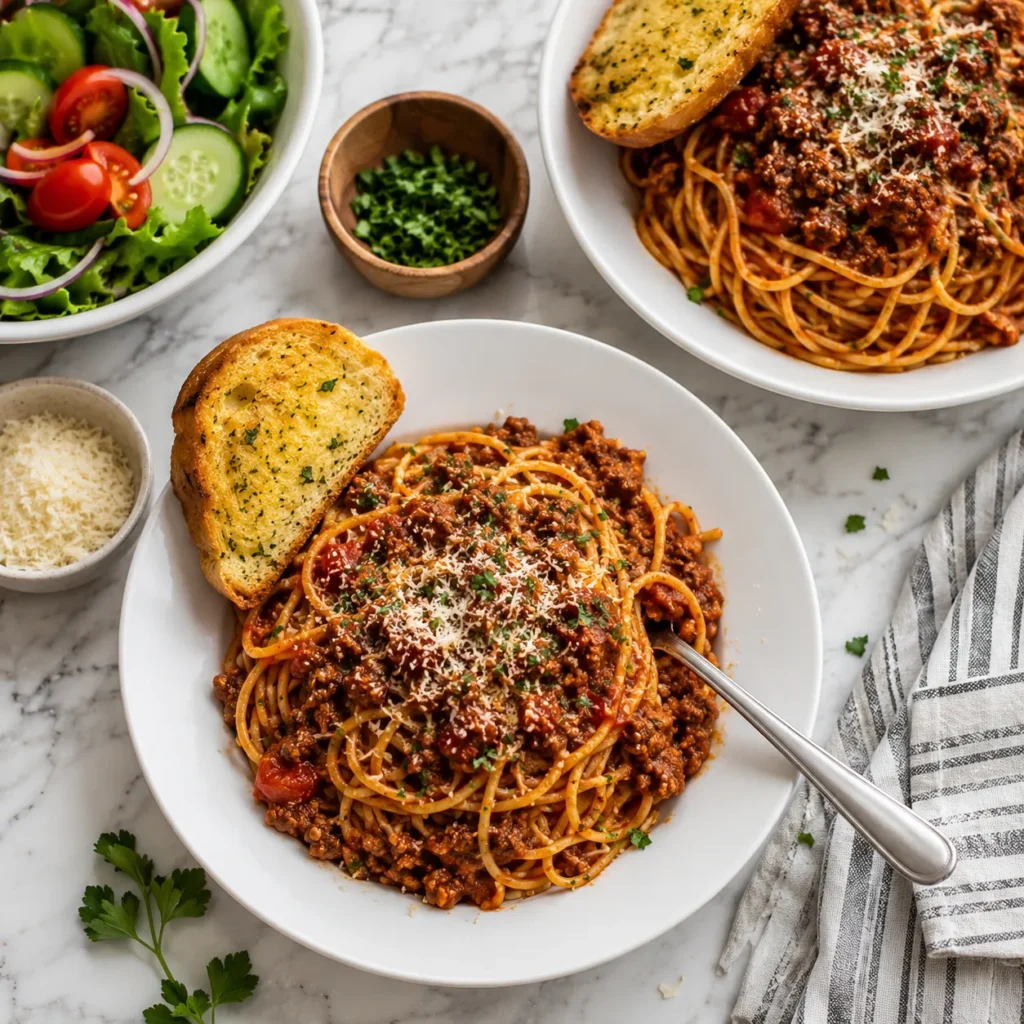
- Serve the spaghetti meat sauce with warm garlic bread and a crisp green salad for a complete Italian-inspired dinner that feels both comforting and balanced.
- Spoon the sauce over creamy polenta instead of spaghetti for a different presentation while maintaining the same rich flavors.
- Use leftover meat sauce as a filling for baked pasta dishes such as lasagna or stuffed shells to create an entirely new meal.
- Serve smaller portions alongside roasted vegetables for a lighter dinner that still delivers satisfying flavor and protein.
- Top each serving with extra Parmesan cheese, fresh basil, and cracked black pepper to create a restaurant-style presentation.
Healthier Alternatives and Ingredient Swaps
- Substitute lean ground turkey for ground beef to reduce saturated fat while still maintaining a hearty texture and satisfying taste.
- Use whole wheat spaghetti instead of traditional pasta to increase fiber content and provide longer-lasting fullness.
- Add finely diced carrots, mushrooms, or zucchini to the sauce for additional nutrients while naturally boosting volume and flavor.
- Replace some of the beef with lentils for a lighter option that still provides excellent texture and protein.
- Choose low-sodium beef broth if you are monitoring sodium intake, allowing better control over the seasoning level.
Storage and Meal Prep Tips
- Store cooled spaghetti meat sauce in an airtight container in the refrigerator for up to 4 days while maintaining excellent flavor and texture.
- Freeze the sauce in portion-sized containers for up to 3 months, making future dinners quick and convenient.
- Reheat gently on the stovetop over medium-low heat, adding a splash of water or broth if the sauce has thickened during storage.
- For meal prep, prepare the sauce ahead of time but cook fresh pasta on serving day for the best texture and quality.
- Divide the sauce into individual servings before freezing so you can thaw only the amount needed for a quick weeknight meal.
Conclusion
This rich spaghetti meat sauce recipe delivers everything you want from a classic Italian dinner: savory beef, robust tomato flavor, and comforting pasta in every bite. The straightforward method makes it approachable for beginners, while the slow simmer creates the kind of depth usually associated with restaurant-quality cooking. Once you’ve mastered the basic recipe, you can easily customize it with your favorite herbs, vegetables, or protein options to make it uniquely yours.