
Tender Slow Cooker Beef Stew Recipe for Hearty Family Meals
A good slow cooker beef stew turns simple ingredients into a rich, comforting meal with very little hands-on effort. This recipe delivers tender beef, flavorful vegetables, and a savory broth that slowly develops depth throughout the day, making it perfect for family dinners, meal prep, or cozy weekends.
Timing
- Prep Time: 20 minutes
- Cook Time: 7–8 hours on Low or 4–5 hours on High
- Total Time: 8 hours 20 minutes
- Servings: 6 servings
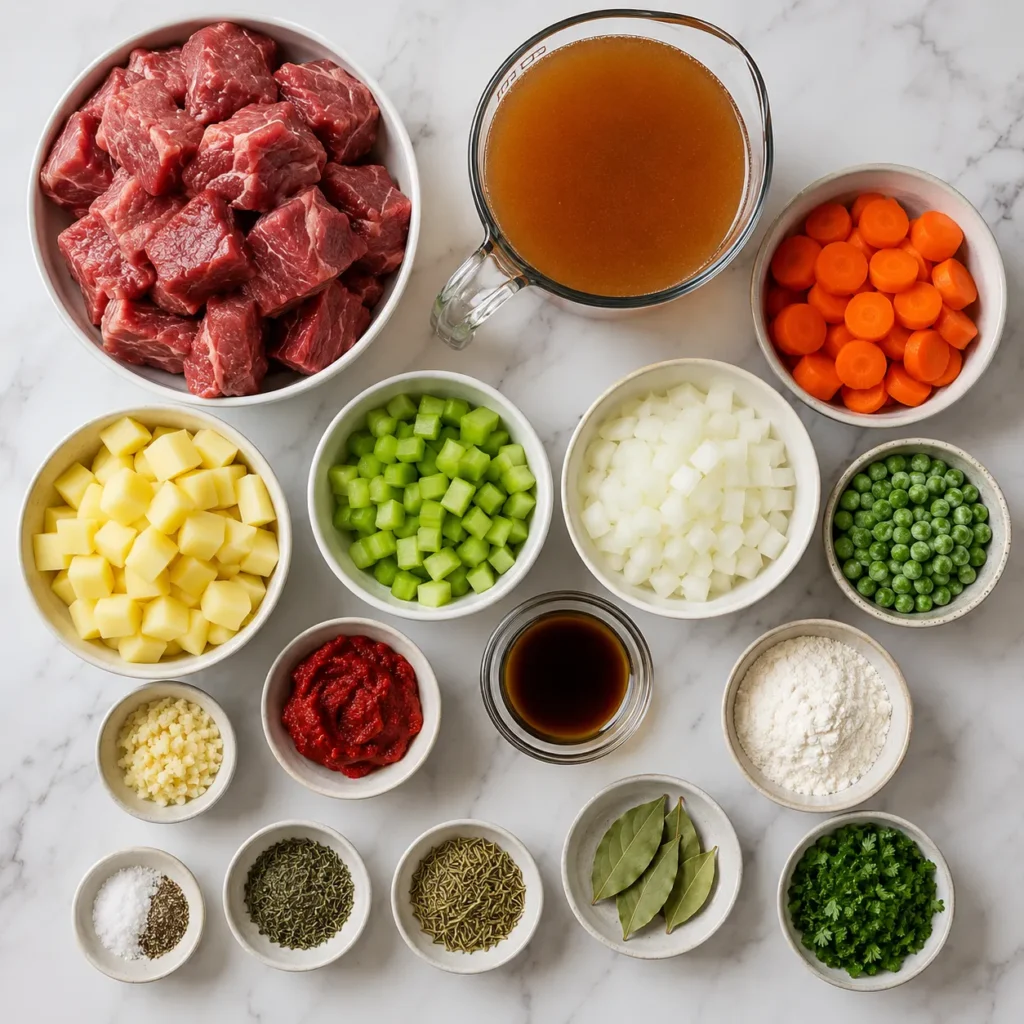
Ingredients for Slow Cooker Beef Stew Recipe
For the Beef
- 2 pounds beef chuck roast, cut into 1½-inch cubes
- 1 teaspoon salt
- ½ teaspoon black pepper
- 2 tablespoons all-purpose flour
- 2 tablespoons olive oil
For the Vegetables
- 4 medium carrots, peeled and sliced
- 4 medium Yukon Gold potatoes, diced into large chunks
- 2 celery stalks, sliced
- 1 large yellow onion, diced
- 3 garlic cloves, minced
For the Stew Broth
- 4 cups low-sodium beef broth
- 2 tablespoons tomato paste
- 1 tablespoon Worcestershire sauce
- 1 teaspoon dried thyme
- 1 teaspoon dried rosemary
- 2 bay leaves
For Finishing
- 1 cup frozen peas
- 1 tablespoon chopped fresh parsley
How to Make Slow Cooker Beef Stew
Step 1: Season and Brown the Beef
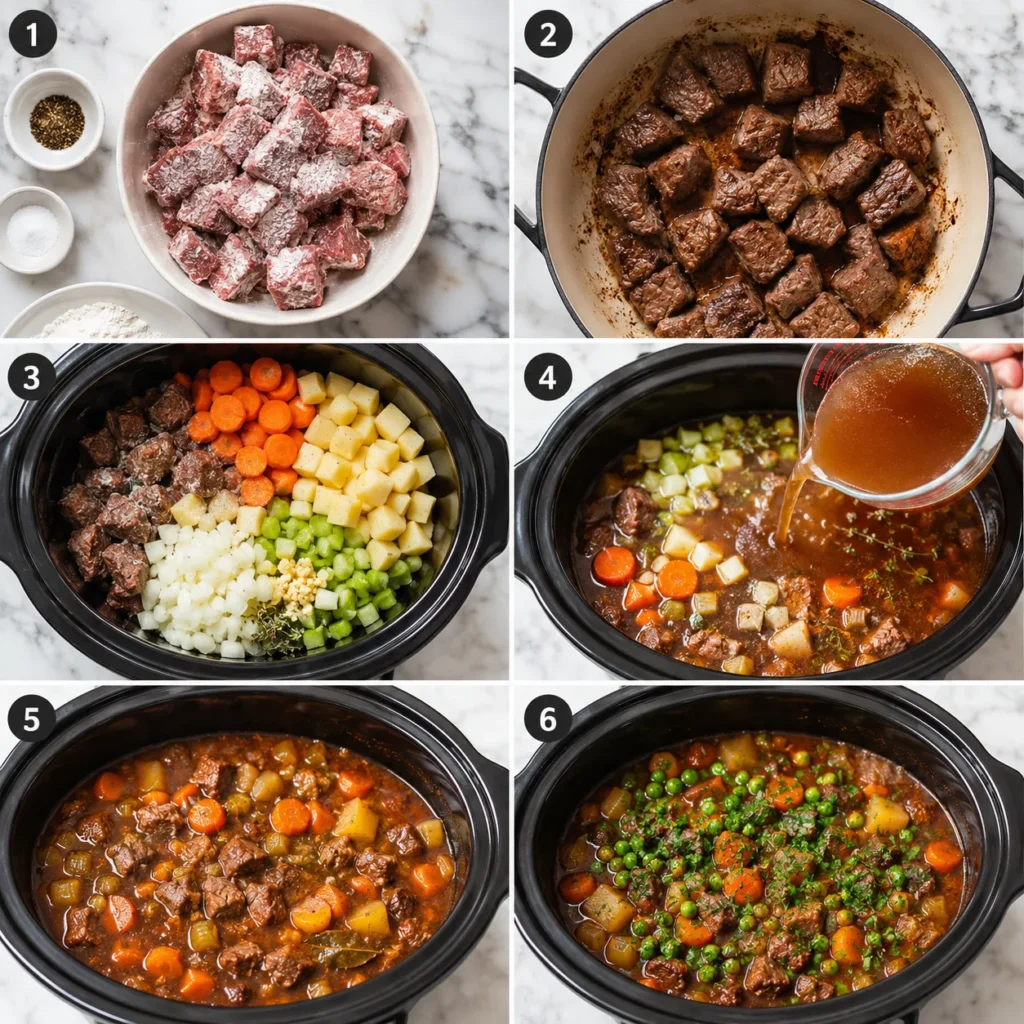
Pat the beef cubes dry with paper towels, then season them with salt and pepper. Toss them with flour until lightly coated. Heat olive oil in a large skillet over medium-high heat and brown the beef in batches for 6–8 minutes total. Transfer the browned beef to your slow cooker.
Browning creates a flavorful crust that adds richness to the finished stew and helps develop a deeper beef flavor during the long cooking process.
Chef’s Tip: Avoid crowding the skillet while browning the beef. If too many pieces are added at once, the meat will steam instead of developing the golden-brown crust that gives the stew its rich, savory flavor.
Step 2: Prepare the Vegetables
Add the carrots, potatoes, celery, onion, and garlic directly over the beef in the slow cooker. Spread them evenly so they cook consistently throughout the stew.
The vegetables release natural sweetness as they cook, helping balance the richness of the beef and broth while creating a hearty texture.
Chef’s Tip: Cut the vegetables into similarly sized pieces so they cook at the same rate. Uneven chunks can leave some vegetables overcooked while others remain too firm.
Step 3: Build the Flavorful Broth
In a medium bowl, whisk together the beef broth, tomato paste, Worcestershire sauce, thyme, and rosemary until smooth. Pour the mixture over the beef and vegetables. Add the bay leaves.
This combination creates a deeply flavored broth that slowly absorbs into every ingredient during cooking.
Chef’s Tip: Whisk the tomato paste thoroughly into the broth before adding it to the slow cooker. This prevents concentrated pockets of tomato flavor and creates a smoother, more balanced stew.
Step 4: Slow Cook Until Tender
Cover the slow cooker and cook on Low for 7–8 hours or High for 4–5 hours. The beef should become fork-tender, and the vegetables should be soft but not falling apart.
The slow cooking process gently breaks down the connective tissue in the chuck roast, transforming tougher cuts into incredibly tender bites.
Chef’s Tip: Keep the lid closed during cooking whenever possible. Each time the lid is lifted, valuable heat escapes and can extend the overall cooking time significantly.
Step 5: Add the Peas
During the final 20 minutes of cooking, stir in the frozen peas. Replace the lid and allow them to heat through.
Adding peas near the end preserves their bright color and pleasant texture while contributing a fresh, sweet flavor.
Chef’s Tip: Frozen peas work better than canned peas because they hold their shape and color during cooking, giving the finished stew a fresher appearance.
Step 6: Finish and Serve
Remove the bay leaves and stir in the chopped parsley. Taste and adjust seasoning if necessary. Ladle the stew into bowls and serve hot.
The parsley adds freshness that brightens the rich broth and helps balance the hearty ingredients.
Chef’s Tip: Let the stew rest for about 5 minutes before serving. This brief resting period allows the flavors to settle and the broth to thicken slightly.
Nutrition Information
| Nutrient | Per Serving |
| Calories | 425 |
| Protein | 35g |
| Carbohydrates | 24g |
| Total Fat | 20g |
| Saturated Fat | 7g |
| Fiber | 5g |
| Sugar | 5g |
| Sodium | 620mg |
| Iron | 20% DV |
| Potassium | 950mg |
Nutrition values are approximate and may vary based on ingredients used.
Why You’ll Love This Recipe
- The slow cooker does most of the work for you, allowing you to prepare the ingredients in the morning and return to a fully cooked meal later in the day.
- Beef chuck becomes exceptionally tender during the long cooking process, creating a texture that practically falls apart with every bite.
- The combination of vegetables and beef creates a complete one-pot meal that feels satisfying without requiring multiple side dishes.
- This recipe makes excellent leftovers because the flavors continue to develop overnight, often making the stew taste even better the next day.
- The ingredients are affordable, widely available, and easy to find at nearly any grocery store, making this recipe practical for regular family meals.
Common Mistakes to Avoid
- Skipping the browning step may save a few minutes, but it significantly reduces the depth and richness of flavor in the finished stew.
- Using lean cuts of beef can result in dry, chewy meat because they lack the connective tissue needed to become tender during slow cooking.
- Cutting potatoes too small often causes them to break down completely, creating a mushy texture instead of hearty chunks.
- Adding delicate vegetables too early can cause them to become overly soft and lose their texture by the time cooking is complete.
- Opening the slow cooker lid repeatedly releases heat and moisture, which can increase cooking time and affect the final consistency.
Serving Suggestions
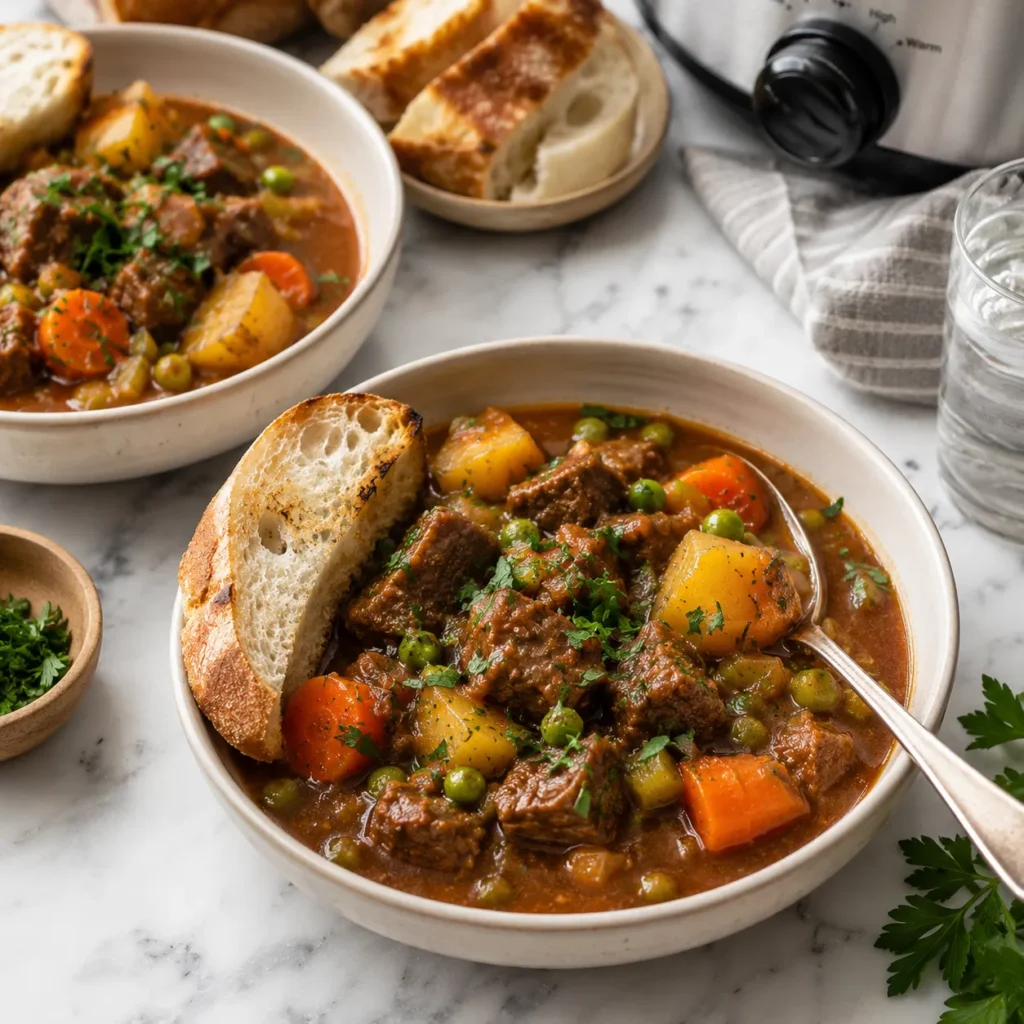
- Serve the slow cooker beef stew with warm crusty bread so you can soak up every bit of the rich, flavorful broth.
- Pair it with a simple green salad dressed with a light vinaigrette to balance the hearty nature of the stew.
- Spoon the stew over creamy mashed potatoes for an extra comforting dinner that feels perfect during colder months.
- Serve leftovers over cooked rice or buttered egg noodles to create a completely different meal using the same stew.
- Add a side of roasted vegetables for a more substantial dinner when serving guests or larger groups.
Healthier Alternatives and Ingredient Swaps
- Replace some of the potatoes with sweet potatoes for additional fiber, vitamin A, and natural sweetness.
- Use low-sodium beef broth to better control the overall salt content without sacrificing flavor.
- Increase the amount of vegetables and slightly reduce the beef quantity if you want a lighter stew with more volume.
- Substitute whole wheat flour for all-purpose flour when coating the beef to add a small boost of whole-grain nutrition.
- Add mushrooms for extra texture and savory flavor while reducing the overall calorie density of the meal.
Storage and Meal Prep Tips
- Store cooled beef stew in an airtight container in the refrigerator for up to 4 days while maintaining excellent flavor and texture.
- Freeze individual portions for up to 3 months, making future lunches and dinners quick and convenient.
- Reheat gently on the stovetop over medium-low heat, stirring occasionally to prevent sticking and ensure even warming.
- If the stew thickens too much during storage, stir in a small amount of beef broth while reheating to restore the desired consistency.
- Prepare and chop all vegetables the night before cooking to make morning assembly fast and stress-free.
Conclusion
This tender slow cooker beef stew recipe combines simple ingredients, minimal effort, and long, slow cooking to create a deeply satisfying meal. The beef becomes incredibly tender, the vegetables absorb rich flavor, and the broth develops a comforting depth that makes every bowl memorable. Once you master this classic recipe, you can easily customize it with your favorite vegetables, herbs, or seasonings to make it uniquely your own.