
Fluffy Scrambled Eggs Recipe for Easy Breakfast Mornings
Soft, creamy, and packed with protein, this fluffy scrambled eggs recipe turns a simple ingredient into a satisfying breakfast you can make in minutes. It’s a reliable choice for busy mornings, weekend brunches, or anytime you want a quick and comforting meal.
Timing
- Prep Time: 5 minutes
- Cook Time: 8 minutes
- Total Time: 13 minutes
- Servings: 2 servings
Ingredients for Scrambled Eggs Recipe
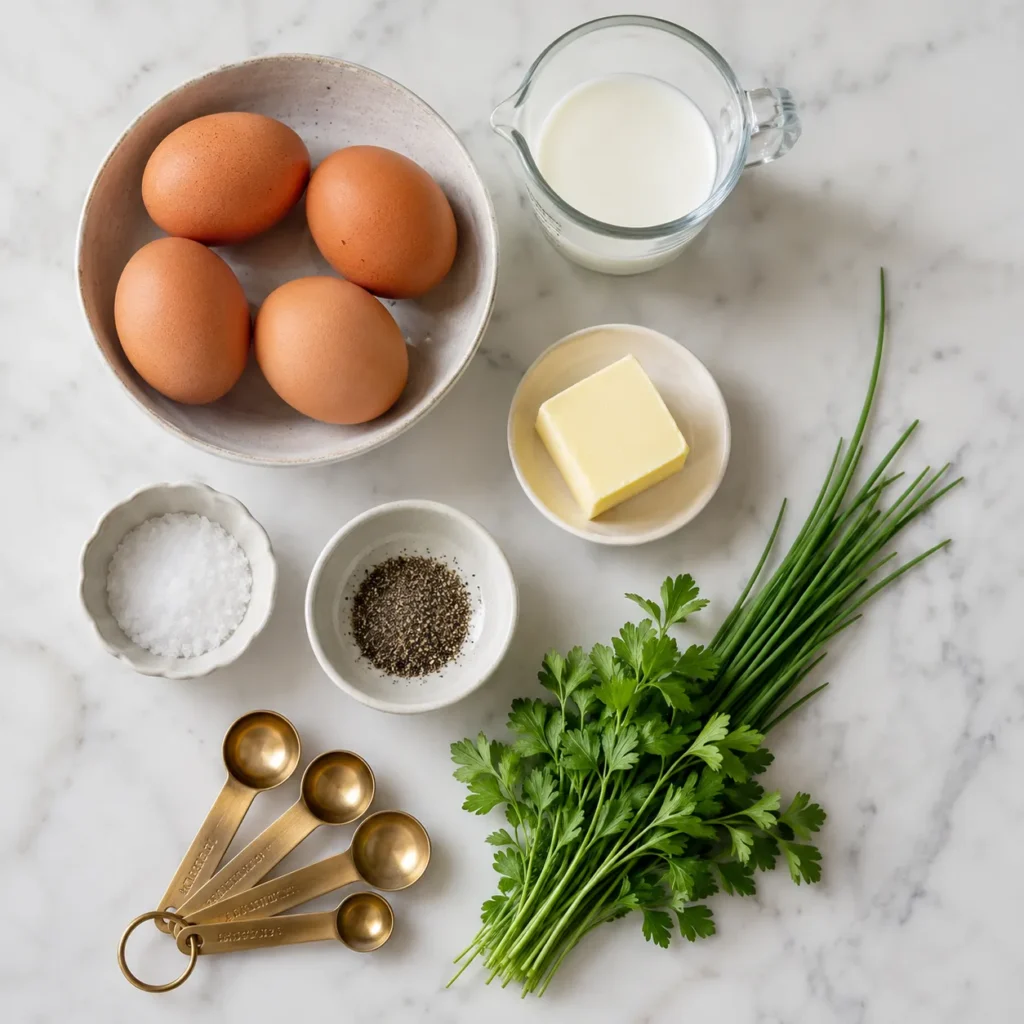
For the Scrambled Eggs
- 4 large eggs
- 2 tablespoons whole milk or cream
- 1 tablespoon unsalted butter
- ¼ teaspoon salt
- ⅛ teaspoon black pepper
Optional Garnishes
- 1 tablespoon chopped fresh chives
- 1 tablespoon chopped parsley
- Extra black pepper to taste
How to Make Fluffy Scrambled Eggs
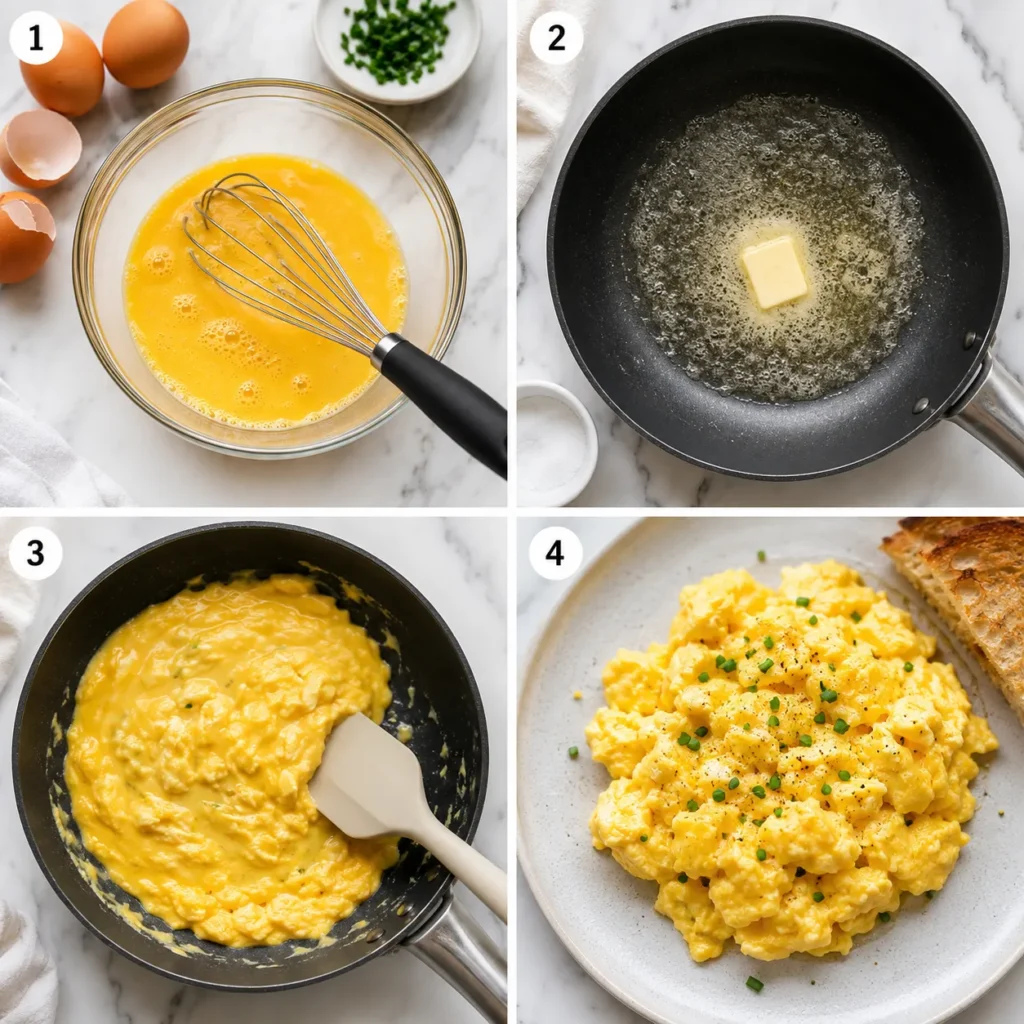
Step 1: Crack and Whisk the Eggs
Crack the eggs into a medium bowl and add the milk, salt, and black pepper. Whisk vigorously for 1–2 minutes until the mixture becomes smooth, slightly frothy, and evenly combined. Incorporating air at this stage helps create lighter, fluffier scrambled eggs.
Chef’s Tip: Whisking thoroughly is one of the easiest ways to improve texture. The more evenly the yolks and whites are combined, the more consistent and tender your scrambled eggs will be after cooking.
Step 2: Heat the Pan Properly
Place a nonstick skillet over low to medium-low heat and add the butter. Allow the butter to melt slowly for about 1 minute without browning. A gentle cooking temperature prevents the eggs from becoming tough or dry.
Chef’s Tip: If the butter starts turning brown immediately, your pan is too hot. Lower the heat and give the pan a moment to cool before adding the eggs to maintain a soft and creamy texture.
Step 3: Add the Eggs and Let Them Set
Pour the egg mixture into the skillet. Let it sit undisturbed for about 20–30 seconds so a thin layer begins to set on the bottom. This creates the foundation for large, fluffy curds rather than tiny dry pieces.
Chef’s Tip: Resist the urge to stir immediately. Allowing the eggs a brief moment to set helps develop larger curds that feel richer and more luxurious when eaten.
Step 4: Gently Fold the Eggs
Using a silicone spatula, slowly push the eggs from the edges toward the center while tilting the pan slightly. Continue folding every 15–20 seconds for about 3–4 minutes. Gentle movement encourages soft curds and even cooking.
Chef’s Tip: Think of folding rather than stirring. Aggressive stirring breaks the curds apart and can lead to a finer, drier texture that lacks the signature fluffiness you want.
Step 5: Remove Before Fully Cooked
When the eggs are mostly set but still look slightly glossy and soft, remove the skillet from the heat. This usually takes another 1–2 minutes. The residual heat will continue cooking the eggs even after they leave the burner.
Chef’s Tip: Many beginners wait until the eggs look completely done in the pan. Pulling them off the heat a little early prevents overcooking and keeps them moist and tender.
Step 6: Finish and Serve
Transfer the scrambled eggs immediately to serving plates. Sprinkle with fresh herbs and additional black pepper if desired. Serve while hot for the best flavor and texture.
Chef’s Tip: Warm plates help keep scrambled eggs at their ideal serving temperature longer. This small detail makes a noticeable difference, especially if you’re serving breakfast to multiple people.
Nutritional Information
| Nutrient | Per Serving |
| Calories | 180 |
| Protein | 13g |
| Carbohydrates | 2g |
| Total Fat | 13g |
| Saturated Fat | 5g |
| Cholesterol | 380mg |
| Fiber | 0g |
| Sugar | 1g |
| Sodium | 320mg |
Nutrition values are approximate and may vary depending on ingredients used.
Why You’ll Love This Recipe
- You only need a handful of basic ingredients that are likely already in your kitchen, making this recipe convenient for busy mornings when you need something quick and dependable.
- The low-and-slow cooking method creates exceptionally fluffy scrambled eggs with a creamy texture that feels much more special than standard scrambled eggs.
- This recipe is beginner-friendly because each step is simple, forgiving, and easy to follow without requiring advanced cooking skills.
- The eggs pair well with countless breakfast foods, allowing you to create different meals without changing the core recipe.
- It comes together in under 15 minutes, making it ideal for school mornings, workdays, or last-minute brunch plans.
Common Mistakes to Avoid
- Cooking over high heat is one of the most common mistakes because it causes the proteins in the eggs to tighten too quickly, resulting in dry and rubbery scrambled eggs.
- Skipping the whisking process often leads to uneven cooking and inconsistent texture, so spend an extra minute whisking to create a smoother mixture.
- Stirring constantly and aggressively can break up the curds too much, producing small dry pieces instead of soft fluffy folds.
- Leaving the eggs in the hot pan after cooking allows residual heat to continue cooking them, which can quickly turn creamy eggs into overcooked eggs.
- Adding too much salt at the beginning may draw out moisture and affect texture, so use measured amounts rather than guessing.
Serving Suggestions
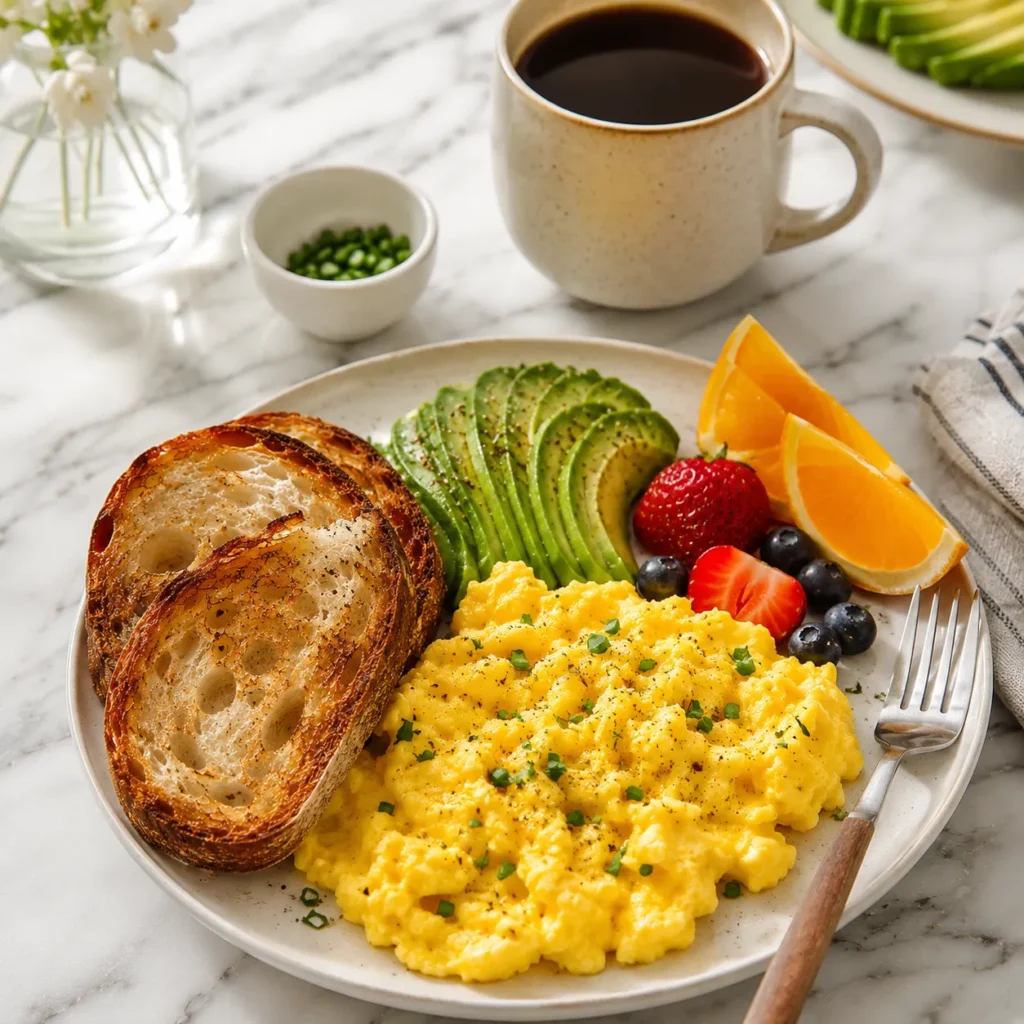
- Serve your fluffy scrambled eggs with toasted sourdough bread and sliced avocado for a balanced breakfast that includes healthy fats and satisfying texture.
- Spoon the eggs into a warm breakfast burrito with cheese, spinach, and roasted potatoes to create a filling meal you can enjoy on the go.
- Pair them with fresh fruit, yogurt, and granola for a lighter breakfast that still provides plenty of protein.
- Add the scrambled eggs to a breakfast sandwich with turkey bacon and cheese for a hearty option that works well for busy weekdays.
- Serve alongside roasted vegetables and breakfast potatoes when hosting brunch to create a complete and visually appealing spread.
Healthier Alternatives and Ingredient Swaps
- Replace whole milk or cream with unsweetened almond milk or skim milk if you want a lighter version while still maintaining a tender texture.
- Use olive oil instead of butter to reduce saturated fat while adding a subtle savory flavor that complements the eggs.
- Add finely chopped spinach, mushrooms, or bell peppers to increase vegetable content and add extra nutrients without significantly changing the recipe.
- Mix one whole egg with additional egg whites if you want a higher-protein, lower-fat breakfast option.
- Reduce the salt slightly and enhance flavor with fresh herbs, garlic powder, or black pepper if you are monitoring sodium intake.
Storage and Meal Prep Tips
- Store leftover scrambled eggs in an airtight container in the refrigerator for up to 2 days. Keeping them sealed helps prevent moisture loss and preserves texture.
- Reheat gently in a skillet over low heat or in short microwave intervals to avoid overcooking and drying out the eggs.
- If meal prepping, slightly undercook the eggs initially because they will continue cooking during reheating and stay softer overall.
- Portion the eggs into individual containers alongside vegetables or breakfast potatoes for easy grab-and-go breakfasts throughout the week.
- Avoid freezing scrambled eggs whenever possible because freezing can significantly alter their texture and make them watery after thawing.
Conclusion
This fluffy scrambled eggs recipe proves that a simple breakfast can still feel special when you use the right technique. By whisking thoroughly, cooking gently, and removing the eggs from the heat at the right moment, you create soft, creamy curds every time. Once you’ve mastered the basics, you can customize the recipe with herbs, vegetables, cheeses, or your favorite breakfast sides to make it uniquely yours.