
Crispy Roasted Cauliflower Recipe for Golden Healthy Sides
Golden edges, tender centers, and a lightly seasoned crust make this crispy roasted cauliflower recipe one of the easiest ways to transform a simple vegetable into a flavorful side dish. You’ll love how quickly it comes together and how well it pairs with everything from weeknight dinners to holiday meals.
Timing
- Prep Time: 10 minutes
- Cook Time: 30 minutes
- Total Time: 40 minutes
- Servings: 4 servings
Ingredients for Roasted Cauliflower Recipe
For the Cauliflower
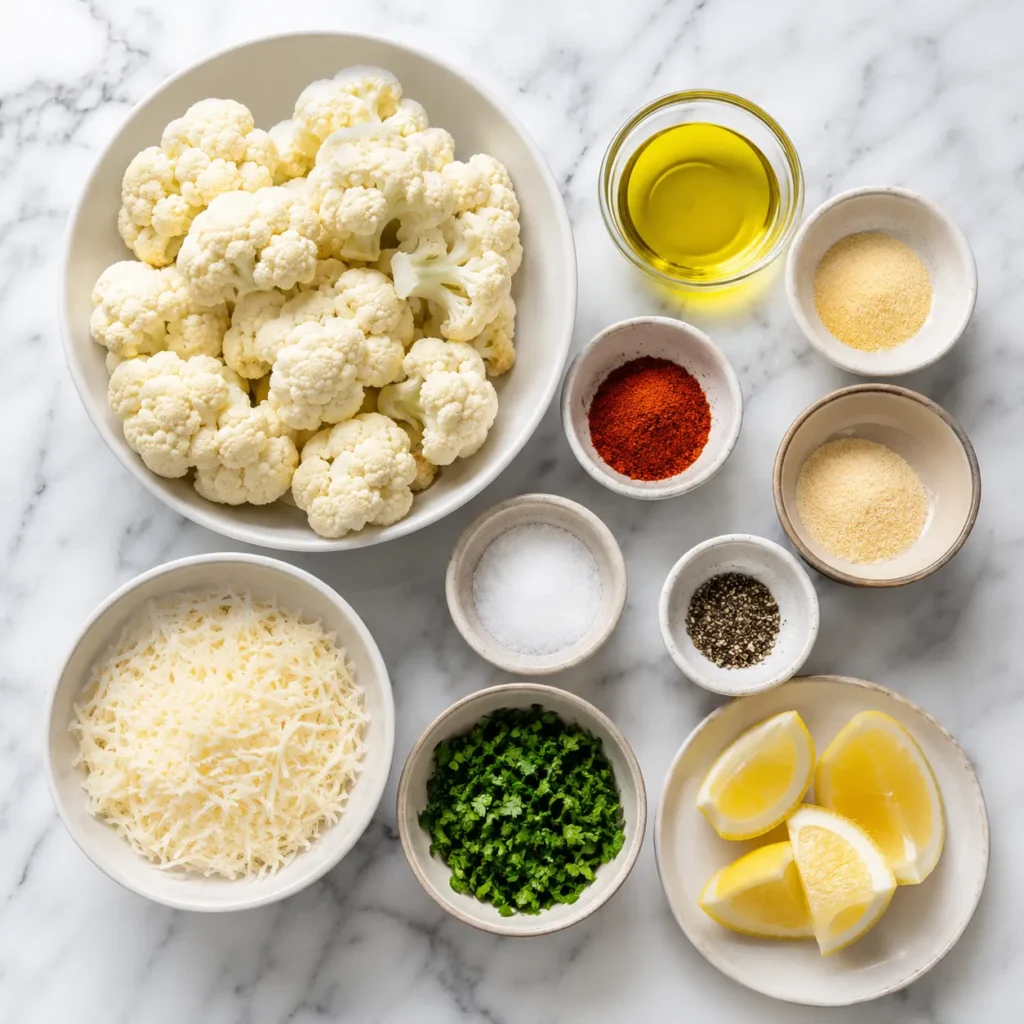
- 1 large head cauliflower, cut into bite-sized florets (about 6 cups)
- 2 tablespoons olive oil
- 1 teaspoon garlic powder
- 1 teaspoon paprika
- ½ teaspoon onion powder
- ½ teaspoon salt
- ¼ teaspoon black pepper
Optional Finishing Ingredients
- 1 tablespoon fresh parsley, finely chopped
- 1 tablespoon grated Parmesan cheese
- Fresh lemon wedges for serving
How to Make Crispy Roasted Cauliflower
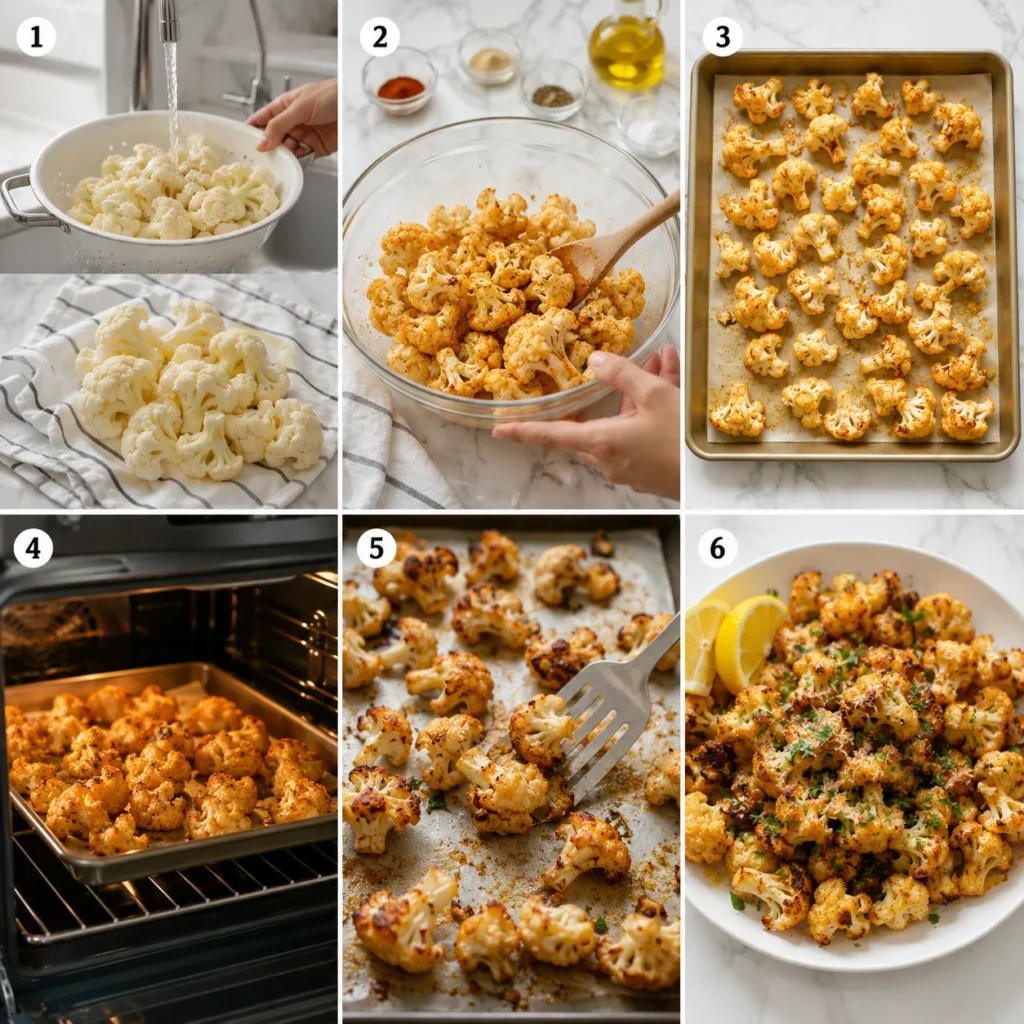
Step 1: Prepare the Cauliflower
Preheat your oven to 425°F (220°C). Wash the cauliflower thoroughly and dry it completely with paper towels. Cut it into evenly sized florets so they cook at the same rate. This step takes about 5 minutes and helps ensure every piece becomes tender and golden rather than unevenly cooked.
Chef’s Tip: Moisture is the biggest enemy of crispy roasted cauliflower. Taking an extra minute to dry the florets thoroughly allows the surface to roast instead of steam, creating better browning and a crispier texture.
Step 2: Season the Florets
Place the cauliflower florets in a large mixing bowl. Add olive oil, garlic powder, paprika, onion powder, salt, and black pepper. Toss everything together until each floret is evenly coated. This should take about 2 minutes and ensures every bite is packed with flavor.
Chef’s Tip: Use your hands or a large spoon to mix thoroughly. Uneven seasoning can leave some florets bland while others become overly salty, so take the time to coat each piece properly.
Step 3: Arrange on the Baking Sheet
Spread the seasoned cauliflower onto a large baking sheet lined with parchment paper. Arrange the florets in a single layer with space between them. This step takes about 2 minutes and is essential for proper roasting.
Chef’s Tip: Crowding the pan traps steam between the florets and prevents crisping. If needed, use two baking sheets rather than squeezing everything onto one pan.
Step 4: Roast the Cauliflower
Place the baking sheet in the preheated oven and roast for 15 minutes. The cauliflower will begin developing color while the natural sugars start caramelizing. This stage builds the rich roasted flavor that makes the dish so satisfying.
Chef’s Tip: Position the baking sheet in the center of the oven for even airflow. This helps the cauliflower cook uniformly and prevents some pieces from burning before others are done.
Step 5: Flip and Continue Roasting
Remove the tray from the oven and carefully flip the florets using a spatula. Return the pan to the oven and roast for another 12 to 15 minutes until the cauliflower is deeply golden with crispy edges. This additional roasting time develops the signature texture of a perfect crispy roasted cauliflower recipe.
Chef’s Tip: Don’t rush this stage by increasing the temperature dramatically. Moderate high heat allows the cauliflower to caramelize properly without becoming bitter or burnt.
Step 6: Finish and Serve
Transfer the roasted cauliflower to a serving dish. Sprinkle with fresh parsley and Parmesan cheese if desired, then serve with lemon wedges. The bright lemon juice balances the rich roasted flavors and enhances the overall taste. This final step takes just 1 minute.
Chef’s Tip: Add lemon juice immediately before serving rather than before roasting. The acidity brightens the dish while preserving the crisp texture you worked to achieve.
Nutrition Information
Approximate values per serving
| Nutrient | Amount |
| Calories | 120 |
| Protein | 4g |
| Carbohydrates | 10g |
| Total Fat | 8g |
| Saturated Fat | 1g |
| Fiber | 4g |
| Sugar | 3g |
| Sodium | 320mg |
| Vitamin C | 75mg |
| Potassium | 420mg |
Why You’ll Love This Recipe
- You only need a handful of everyday ingredients to create a side dish that tastes far more impressive than the effort required. The simple seasoning blend enhances the natural flavor of the cauliflower without overwhelming it.
- The high-temperature roasting method creates crispy edges and caramelized surfaces while keeping the inside tender. This texture contrast makes cauliflower much more appealing, even for picky eaters.
- This recipe works with nearly any main course, including chicken, fish, steak, pasta, and vegetarian meals. Its versatility makes it a reliable addition to your meal rotation.
- The preparation is beginner-friendly and requires no special equipment. Even if you rarely cook vegetables, you can achieve excellent results by following the simple steps.
- Roasted cauliflower reheats surprisingly well, making it useful for meal prep and busy weeknight dinners throughout the week.
Common Mistakes to Avoid
- Skipping the drying step often results in soft, steamed cauliflower instead of crispy roasted cauliflower. Always remove as much surface moisture as possible before seasoning.
- Overcrowding the baking sheet prevents proper air circulation and encourages steaming. Give the florets space so the hot air can circulate around them evenly.
- Cutting florets into dramatically different sizes causes uneven cooking. Smaller pieces may burn while larger pieces remain undercooked, so aim for consistent sizing.
- Using too little oil can lead to dry, tough cauliflower that struggles to brown properly. A light but even coating helps promote caramelization and crispness.
- Removing the cauliflower too early often means missing out on the best flavor. Allow enough time for deep golden color to develop, as this is where much of the roasted flavor comes from.
Serving Suggestions
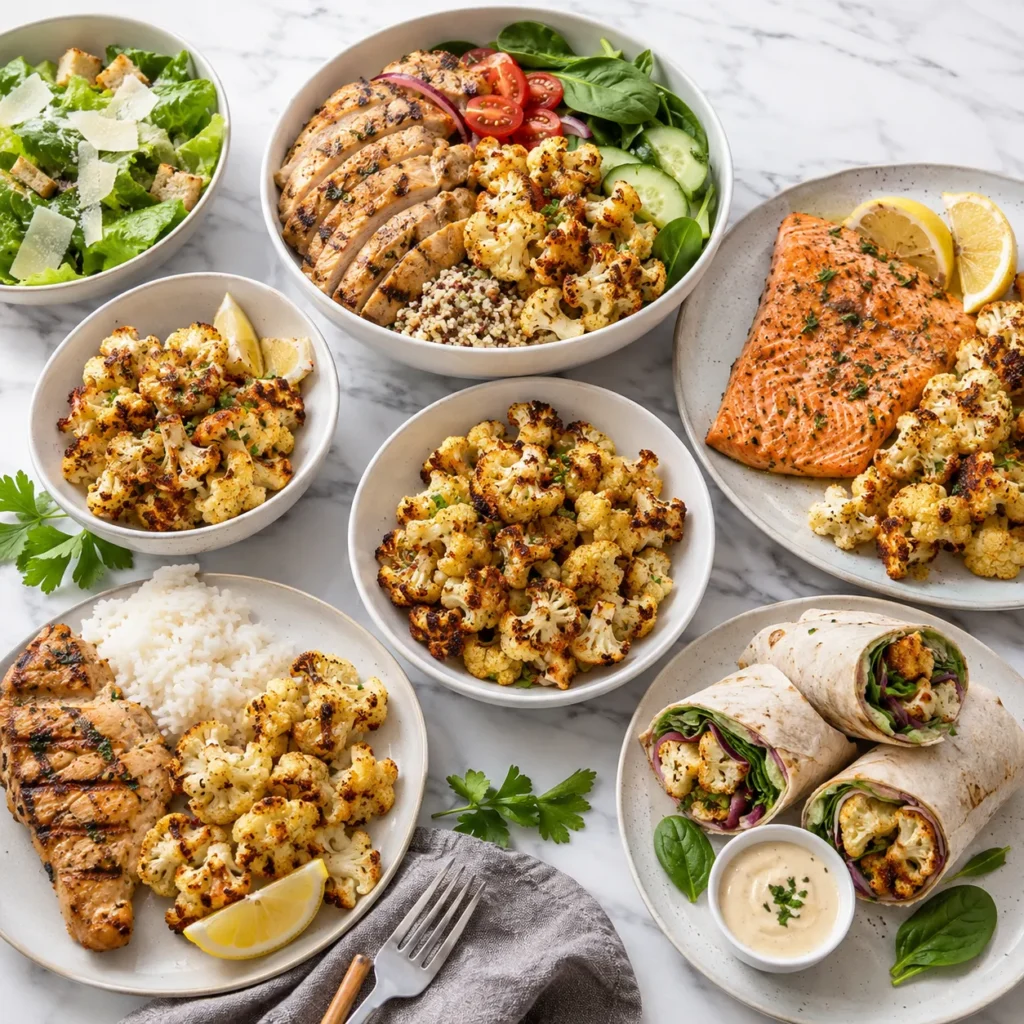
- Serve this crispy roasted cauliflower alongside grilled chicken, roasted salmon, or lean steak for a balanced and satisfying dinner that feels complete without requiring complicated side dishes.
- Add the roasted florets to grain bowls with quinoa, brown rice, chickpeas, and a light yogurt sauce. The crispy texture provides contrast to softer ingredients.
- Use leftovers as a filling for wraps and pita sandwiches. The roasted flavor pairs especially well with hummus, fresh vegetables, and leafy greens.
- Toss the cauliflower into salads after it cools slightly. The caramelized flavor adds depth and transforms an ordinary salad into a more substantial meal.
- Include it on holiday tables or family gatherings as a healthier alternative to heavier side dishes while still providing plenty of flavor and visual appeal.
Healthier Alternatives and Ingredient Swaps
- Replace Parmesan cheese with nutritional yeast if you want a dairy-free option that still provides a savory, cheesy flavor profile.
- Use avocado oil instead of olive oil if you prefer an oil with a higher smoke point while maintaining excellent roasting performance.
- Add turmeric to the seasoning blend for extra color and additional nutritional benefits without significantly changing the overall flavor.
- Reduce the oil slightly and use an oil spray if you are looking to lower the overall fat content while still encouraging browning.
- Experiment with herbs such as thyme, rosemary, or oregano for additional flavor complexity without relying on extra salt or heavy sauces.
Storage and Meal Prep Tips
- Store cooled roasted cauliflower in an airtight container in the refrigerator for up to 4 days. Allowing it to cool first helps prevent condensation from softening the texture.
- Reheat in a 400°F (200°C) oven for about 8 minutes to restore some of the crisp edges. This method works much better than microwaving.
- If using a microwave for convenience, expect the cauliflower to become softer. It will still taste good, but the texture will be less crispy.
- Prep the cauliflower florets and seasoning blend a day ahead to save time. Keep them separate until ready to roast for the best results.
- Roast a double batch during meal prep sessions so you have an easy vegetable side available throughout the week for lunches and dinners.
Conclusion
This crispy roasted cauliflower recipe proves that simple ingredients and proper technique can create a side dish packed with flavor, texture, and versatility. The combination of golden caramelized edges, tender centers, and balanced seasoning makes it a dependable addition to everything from quick family dinners to special occasions. Once you master the basic method, you can customize the seasonings and toppings to make the recipe uniquely your own.