
Fluffy Rice Pilaf Recipe for Aromatic Side Dish Meals
This fluffy rice pilaf recipe for aromatic side dish meals gives you perfectly separated grains infused with butter, spices, and stock. You’ll learn how to build flavor from the base up, creating a restaurant-style side dish that pairs beautifully with curries, grilled meats, or roasted vegetables.
Timing
- Prep Time: 10 minutes
- Cook Time: 25 minutes
- Total Time: 35 minutes
- Servings: 4
Ingredients for Rice Pilaf Recipe
Base Ingredients
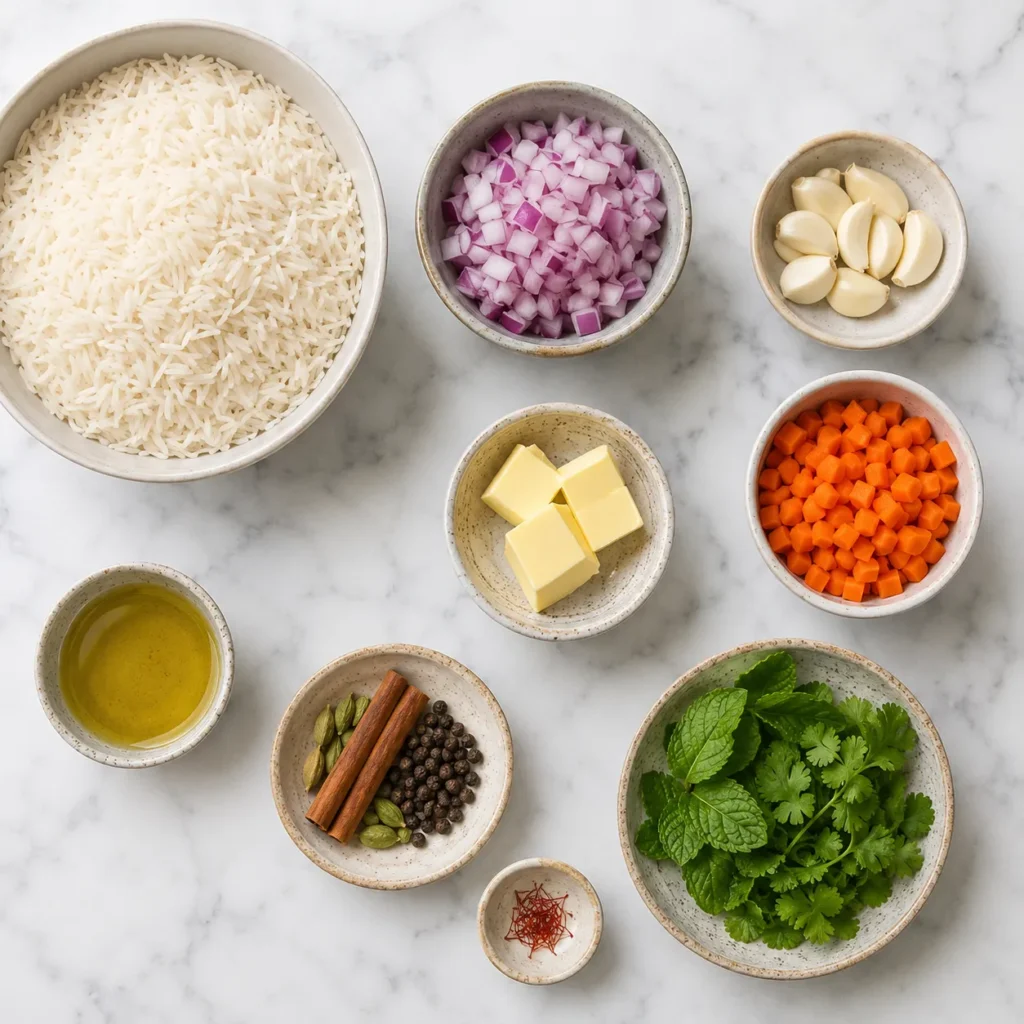
- 1 ½ cups basmati rice (long-grain rice for best fluffiness)
- 3 cups chicken or vegetable stock (warm, not cold)
- 2 tablespoons butter or ghee
- 1 tablespoon olive oil
Aromatics
- 1 small onion, finely chopped
- 2 garlic cloves, minced
- 1 small carrot, diced (optional but adds sweetness and color)
Flavor Builders
- 1 bay leaf
- 4–5 whole black peppercorns
- 2 green cardamom pods, lightly crushed
- 1 small cinnamon stick
- Salt, to taste
Finishing Touch
- 2 tablespoons chopped fresh parsley or coriander
- 2 tablespoons toasted almonds or cashews (optional for texture)
Step-by-Step Instructions
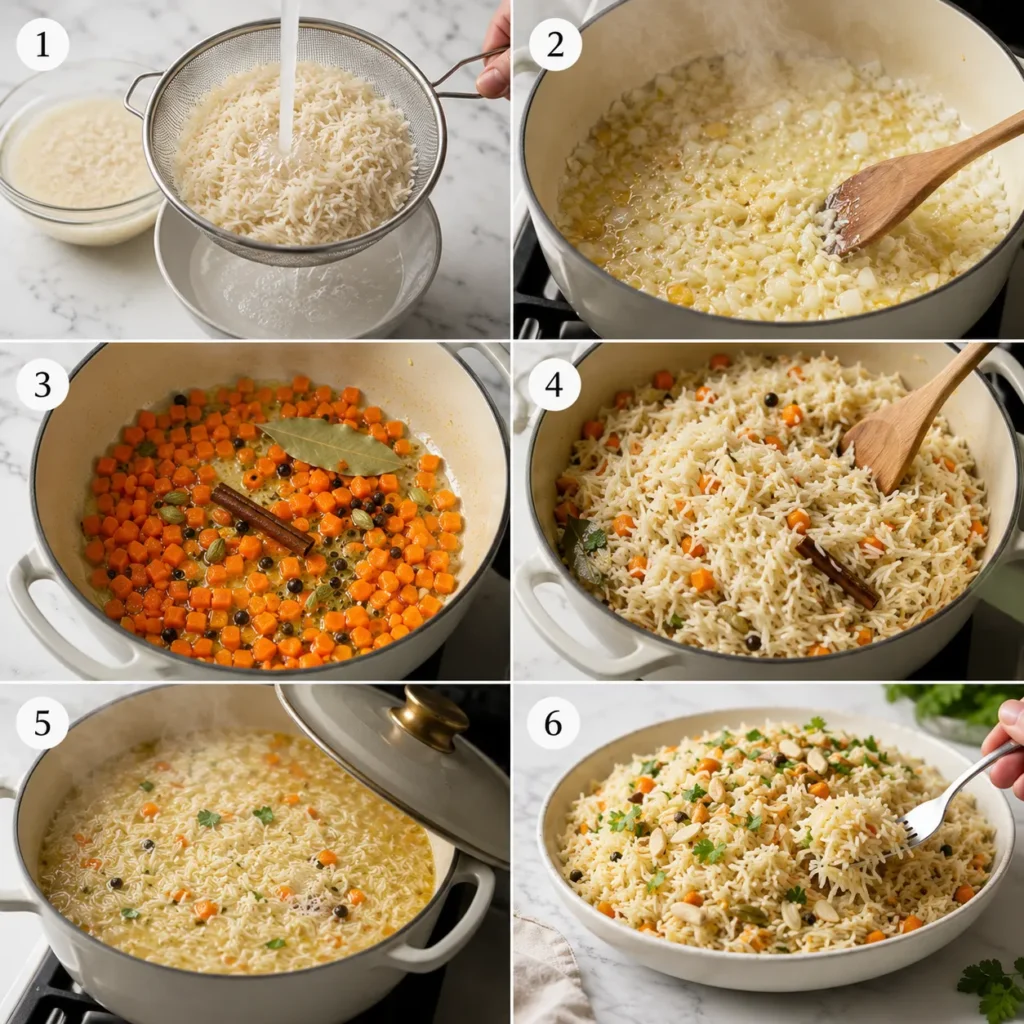
Step 1: Rinse and Soak the Rice Properly
Start by rinsing your basmati rice under cold water until the water runs clear. This removes excess starch, which is essential for achieving fluffy rice instead of sticky grains. Then soak it for 20 minutes before cooking.
Chef’s Tip: Soaking allows the grains to absorb water evenly, so they cook faster and expand fully without breaking, giving you that light, separated texture pilaf is known for.
Step 2: Build the Aromatic Base
Heat butter and olive oil in a deep pan over medium heat. Add onion and sauté for 3–4 minutes until soft and lightly golden. Add garlic and cook for another 30 seconds until fragrant.
Chef’s Tip: Cooking the onions slowly develops natural sweetness, which forms the flavor foundation of your rice pilaf recipe for aromatic side dish meals, so avoid rushing this step.
Step 3: Add Spices and Vegetables
Stir in bay leaf, peppercorns, cardamom, and cinnamon stick. Add diced carrot and cook for 2–3 minutes, letting the spices release their aroma into the oil.
Chef’s Tip: Toasting whole spices in fat unlocks their essential oils, making your pilaf deeply aromatic instead of bland or flat in taste.
Step 4: Coat the Rice in Flavor
Drain the soaked rice and add it directly to the pan. Stir gently for 2–3 minutes so each grain gets coated in the spiced butter mixture.
Chef’s Tip: Coating rice before adding liquid helps seal the grains slightly, which prevents them from breaking and ensures a fluffy, separate finish after cooking.
Step 5: Add Stock and Simmer Gently
Pour in warm stock and add salt. Bring everything to a gentle boil, then reduce heat to low, cover the pan, and cook for 15–18 minutes without stirring.
Chef’s Tip: Keeping the lid closed traps steam inside the pot, which is essential for even cooking and helps the rice absorb liquid without turning mushy.
Step 6: Rest and Fluff Before Serving
Once the liquid is absorbed, turn off the heat and let the rice rest for 5–10 minutes. Then fluff it gently with a fork and finish with herbs and toasted nuts.
Chef’s Tip: Resting is what transforms good rice into perfect pilaf, as it allows moisture to redistribute evenly so every bite stays light and airy.
Nutrients (Per Serving)
| Nutrient | Amount |
| Calories | 310 kcal |
| Protein | 6 g |
| Carbohydrates | 52 g |
| Total Fat | 10 g |
| Fiber | 2 g |
| Sodium | 420 mg |
Why You’ll Love This Recipe
- You get consistently fluffy grains because the soaking and steaming method ensures each grain cooks evenly without clumping together, giving you a professional-quality texture every time.
- The layered spices create a deep, aromatic flavor profile that makes this rice pilaf stand out even when served on its own without any curry or sauce.
- It’s highly versatile, meaning you can pair it with almost any main dish, from grilled chicken to vegetarian stews, without overpowering other flavors.
- The recipe uses simple pantry ingredients, so you don’t need special equipment or hard-to-find spices to achieve a restaurant-style result.
Common Mistakes to Avoid
- Not rinsing the rice properly often leaves excess starch, which causes clumping. You should rinse until the water is clear to ensure each grain stays separate.
- Stirring the rice while it cooks can break the grains and release starch. You should only stir during the initial coating stage, then leave it untouched.
- Using cold stock slows down cooking and affects texture. Warm liquid helps the rice absorb moisture evenly and cook more consistently.
- Removing the lid too early releases steam, which is essential for cooking the rice properly. Always keep it covered until the resting stage.
Serving Suggestions
- You can serve this rice pilaf alongside grilled chicken or lamb, where its mild spice profile enhances savory proteins without overpowering them.
- It works beautifully with curries and stews because the fluffy texture absorbs sauces while still maintaining structure.
- You can repurpose leftovers into stuffed vegetables like bell peppers or tomatoes, turning it into a complete baked dish.
- It also pairs well with roasted vegetables for a light vegetarian meal that still feels satisfying and well-balanced.

Healthier Alternatives and Ingredient Swaps
- You can replace butter with olive oil entirely if you want a lighter, heart-healthy version without losing the aromatic base flavor.
- Brown basmati rice can be used for extra fiber, though you’ll need to adjust cooking time and liquid quantity slightly.
- Adding more vegetables like peas, beans, or bell peppers increases nutrient content while keeping the dish colorful and filling.
- You can reduce salt and rely more on spices like cardamom and cinnamon for natural depth and aroma.
Storage and Meal Prep Tips
- Store leftover rice pilaf in an airtight container in the refrigerator for up to 3 days, ensuring it cools completely before sealing.
- Reheat gently with a splash of water or stock to restore moisture and prevent dryness, ideally using low heat or steaming.
- You can prepare the aromatics in advance and refrigerate them, making it quicker to assemble the dish on busy days.
- For meal prep, portion the rice into individual containers so you can easily pair it with different proteins throughout the week.
Conclusion
This fluffy rice pilaf recipe for aromatic side dish meals gives you a reliable way to create perfectly textured, flavorful rice every time. Once you understand the balance of rinsing, toasting spices, and gentle steaming, you can easily customize it with your favorite ingredients and make it your own signature side dish.