
Flavorful Red Beans and Rice Recipe for Classic Comfort Meals
You make this red beans and rice recipe when you want something hearty, deeply satisfying, and budget-friendly. It’s loved for its smoky flavor, creamy beans, and comforting texture, perfect for weeknight dinners or slow, relaxed weekend cooking.
Timing
- Prep Time: 15 minutes
- Cook Time: 1 hour 30 minutes
- Total Time: 1 hour 45 minutes
- Servings: 4–6 servings
Ingredients
For the Red Beans
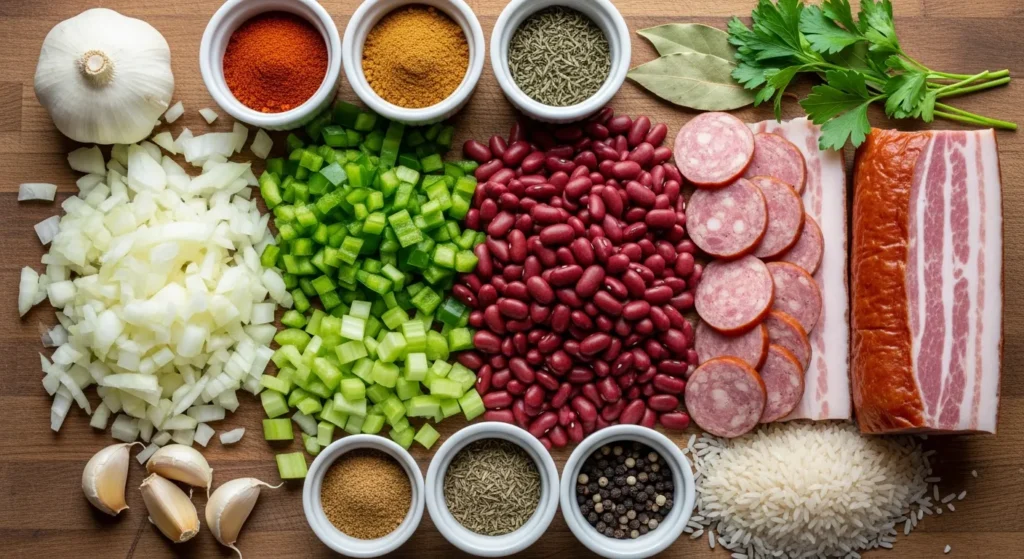
- 1 ½ cups dried red kidney beans (or 3 cups cooked/canned, drained)
- 1 tablespoon olive oil
- 1 medium onion, finely chopped
- 1 green bell pepper, diced
- 2 celery stalks, chopped
- 4 garlic cloves, minced
- 200g smoked sausage (such as andouille), sliced
- 1 teaspoon paprika
- 1 teaspoon dried thyme
- 1 teaspoon oregano
- ½ teaspoon cayenne pepper (adjust to taste)
- 2 bay leaves
- 4 cups chicken broth (or vegetable broth)
- Salt and black pepper to taste
For the Rice
- 1 ½ cups long-grain white rice
- 3 cups water
- ½ teaspoon salt
Optional Garnish
- Fresh parsley, chopped
- Green onions, sliced
Step-by-Step Instructions
Step 1: Soak and Prepare the Beans
If you’re using dried beans, soak them overnight or for at least 8 hours. Drain and rinse before cooking. This step takes a few minutes of prep but saves time later and ensures even cooking.
Chef’s Tip: Soaking softens the beans and reduces cooking time, but it also helps improve digestion by breaking down complex sugars that can cause discomfort.
Step 2: Build the Flavor Base
Heat olive oil in a large pot over medium heat. Add onion, bell pepper, and celery, and cook for 5–7 minutes until softened. Stir in garlic and cook for another 1 minute.
Chef’s Tip: This trio of vegetables is your flavor foundation, so don’t rush it. Cooking them slowly releases natural sweetness, which balances the smoky and spicy elements later.
Step 3: Add Sausage and Spices
Add sliced sausage to the pot and cook for 5–6 minutes until lightly browned. Stir in paprika, thyme, oregano, cayenne, and bay leaves.
Chef’s Tip: Browning the sausage creates a layer of flavor at the bottom of the pot. When you stir in the spices, they absorb the fat and release deeper aromas.
Step 4: Simmer the Beans
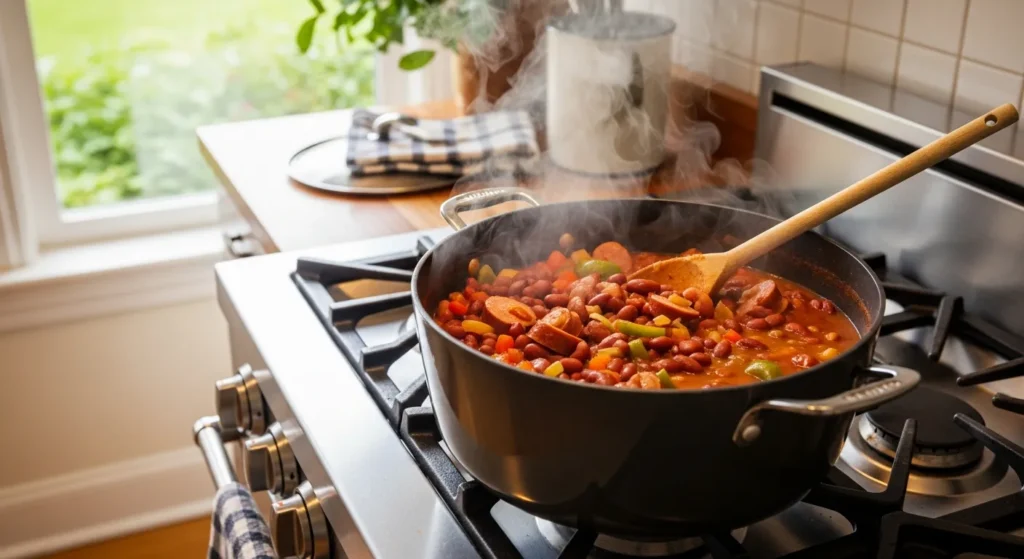
Add soaked beans and pour in the broth. Bring to a boil, then reduce heat to low and simmer uncovered for 1 to 1 hour 15 minutes, stirring occasionally.
Chef’s Tip: Stir occasionally to prevent sticking and mash a few beans against the pot wall. This naturally thickens the sauce and creates that classic creamy texture.
Step 5: Cook the Rice
While the beans are simmering, rinse the rice until the water runs clear. Combine rice, water, and salt in a pot, bring to a boil, then reduce heat, cover, and cook for 15–18 minutes.
Chef’s Tip: Rinsing removes excess starch, which keeps the rice fluffy instead of sticky, giving you a perfect base for the rich beans.
Step 6: Finish and Adjust Seasoning
Once beans are tender and the sauce has thickened, remove bay leaves. Taste and adjust salt and pepper. Let the mixture rest for 5 minutes before serving.
Chef’s Tip: Resting allows flavors to settle and intensify. It also slightly thickens the sauce, making every bite more cohesive.
Nutritional Information (Per Serving Approx.)
| Nutrient | Amount |
| Calories | 420 kcal |
| Protein | 18 g |
| Carbohydrates | 52 g |
| Total Fat | 15 g |
| Fiber | 12 g |
| Sodium | 780 mg |
Why You’ll Love This Recipe
- You get a deeply flavorful dish using simple pantry ingredients, making it both accessible and satisfying without requiring complex techniques.
- The combination of smoky sausage and creamy beans creates a rich, comforting texture that feels indulgent while still being nourishing.
- It’s incredibly versatile, allowing you to adjust spice levels, protein choices, or even make it vegetarian without losing its essence.
- This recipe is perfect for meal prep because the flavors develop even more over time, making leftovers taste even better the next day.
Common Mistakes to Avoid
- Skipping the soaking step for dried beans often leads to uneven cooking and a tougher texture, so always plan ahead or use canned beans as a backup.
- Cooking on high heat can cause beans to break apart too quickly, resulting in a mushy texture rather than a creamy consistency. Keep it at a gentle simmer.
- Under-seasoning early in the process can lead to bland results, so layer your spices gradually and taste as you go.
- Not allowing enough cooking time prevents the flavors from fully developing, which is essential for a dish like this that relies on slow simmering.
Serving Suggestions
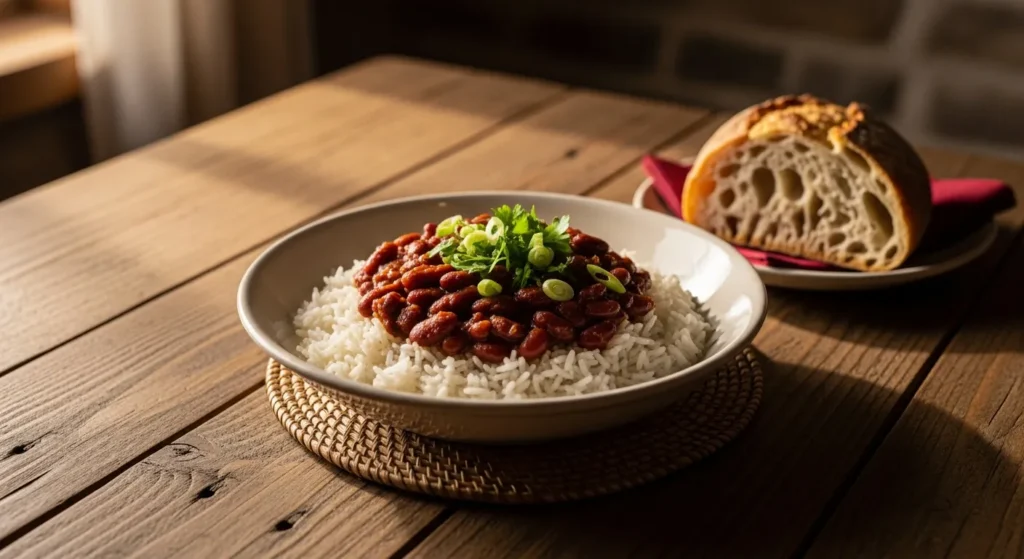
- Serve the red beans over freshly cooked rice and garnish with chopped parsley and green onions for a balanced, restaurant-style presentation.
- Pair it with crusty bread or cornbread to soak up the rich sauce and add a contrasting texture.
- You can turn leftovers into a hearty wrap by filling tortillas with beans, rice, and fresh vegetables for a quick lunch option.
- For a more complete meal, add a simple side salad with a tangy dressing to balance the richness of the dish.
Healthier Alternatives and Ingredient Swaps
- Swap smoked sausage with turkey sausage or chicken sausage to reduce fat while maintaining a similar smoky flavor profile.
- Use brown rice instead of white rice to increase fiber content and create a more nutrient-dense base.
- Replace part of the sausage with extra beans or vegetables if you want a lighter, plant-forward version.
- Reduce sodium by using low-sodium broth and adjusting seasoning at the end rather than relying on pre-salted ingredients.
Storage and Meal Prep Tips
- Store leftovers in an airtight container in the refrigerator for up to 4 days, ensuring the flavors continue to deepen over time.
- Reheat gently on the stovetop with a splash of water or broth to loosen the sauce and restore its original consistency.
- Freeze portions for up to 2 months, but keep rice separate for the best texture when reheating.
- Prepare a large batch and divide into meal-sized containers for easy grab-and-go lunches throughout the week.
Conclusion
This red beans and rice recipe works because it builds flavor step by step, turning simple ingredients into a rich, satisfying meal. Once you master the technique, you can adjust spices, proteins, and textures to make it entirely your own.
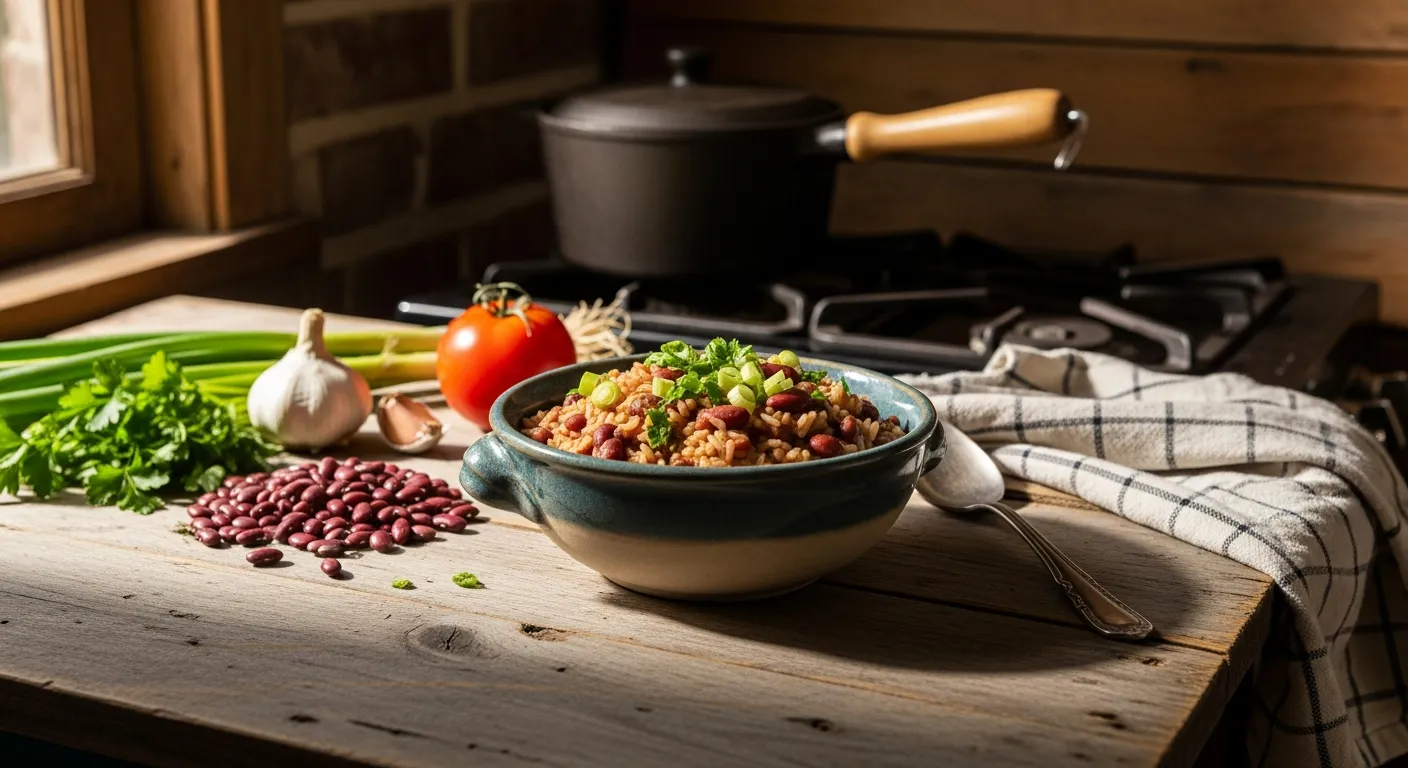
Flavorful Red Beans and Rice Recipe
Ingredients
Method
- Soak beans overnight, then drain and rinse before cooking.
- Sauté onion, bell pepper, and celery in oil until softened, then add garlic.
- Add sausage and cook until browned, then stir in spices.
- Add beans and broth, simmer until tender and creamy.
- Cook rice separately until fluffy.
- Adjust seasoning, rest briefly, and serve beans over rice.
Notes
- Soaking beans improves both texture and digestibility, making your final dish smoother and easier to enjoy.
- Cooking vegetables slowly builds a strong flavor base that carries through the entire dish.
- Browning sausage properly adds depth and prevents the dish from tasting flat.
- Letting the dish rest before serving enhances texture and allows flavors to fully develop.