
Moist Orange Cake Recipe for Bright Citrus Baking
A moist orange cake recipe like this brings fresh citrus flavor into a soft, tender crumb that feels both light and indulgent. You’ll love making it when you want a simple yet impressive dessert for tea, brunch, or celebrations.
Timing
- Prep Time: 20 minutes
- Cook Time: 35–40 minutes
- Total Time: 1 hour
- Servings: 8–10 slices
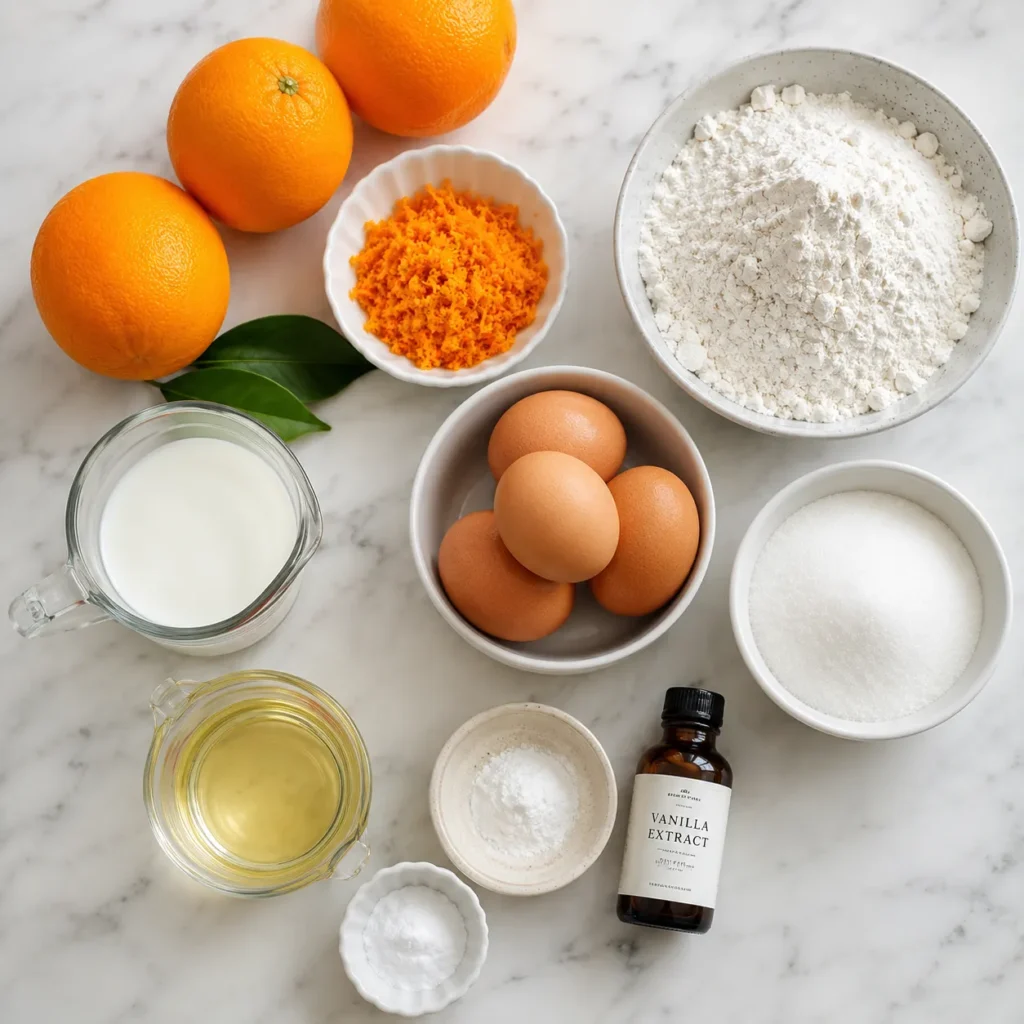
Ingredients for Orange Cake Recipe
Dry Ingredients
- 2 cups all-purpose flour
- 1 ½ teaspoons baking powder
- ½ teaspoon baking soda
- ¼ teaspoon salt
Wet Ingredients
- 3 large eggs (room temperature)
- 1 cup granulated sugar
- ½ cup vegetable oil
- ½ cup fresh orange juice
- 1 tablespoon orange zest
- ½ cup milk (room temperature)
- 1 teaspoon vanilla extract
Optional Orange Glaze
- 1 cup powdered sugar
- 2–3 tablespoons fresh orange juice
- ½ teaspoon orange zest
Step-by-Step Instructions
Step 1: Prepare the Pan and Oven
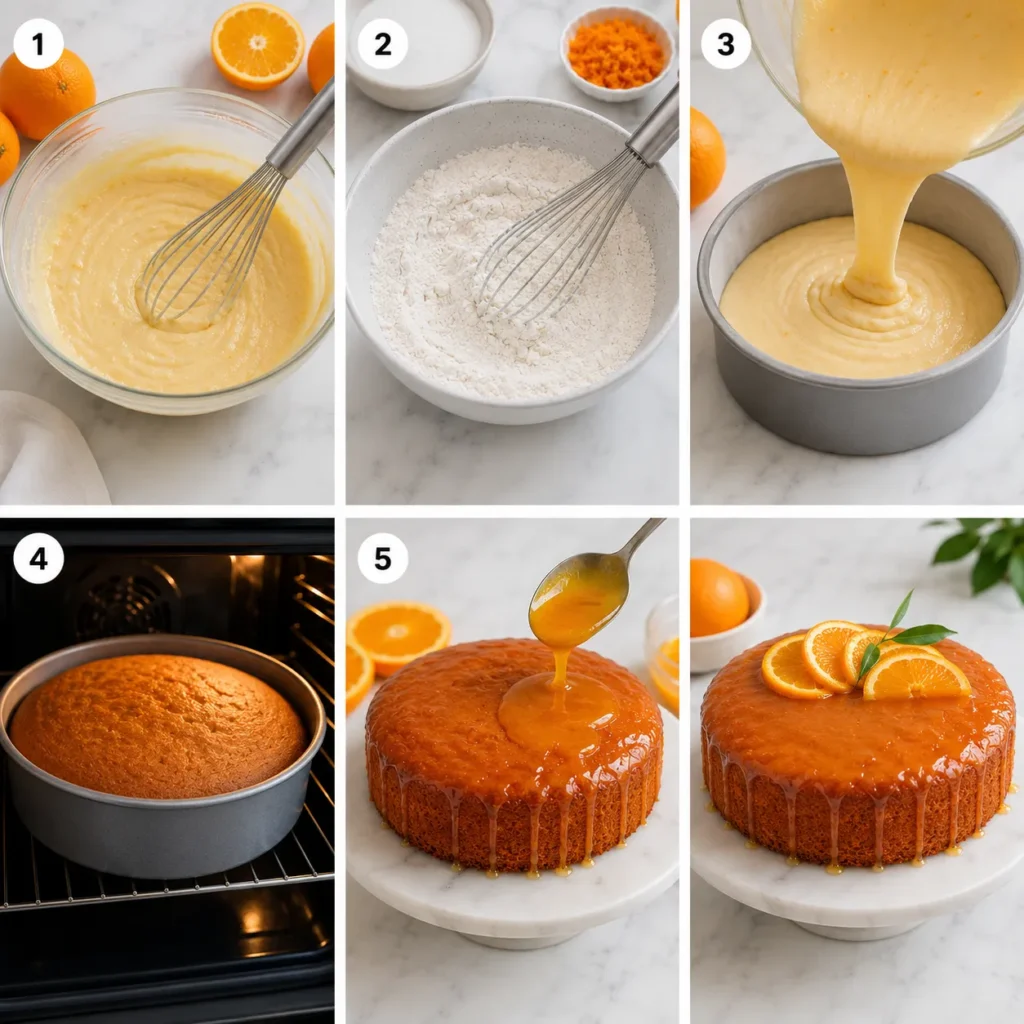
Preheat your oven to 180°C (350°F) and grease a 9-inch round cake pan. Line the bottom with parchment paper to prevent sticking. This step takes about 5 minutes and ensures easy removal later.
Chef’s Tip: Greasing alone can sometimes fail, especially with moist cakes, so always use parchment paper to guarantee a clean release without tearing the delicate crumb.
Step 2: Mix the Dry Ingredients
In a medium bowl, whisk together flour, baking powder, baking soda, and salt for about 2 minutes. This evenly distributes the leavening agents so your cake rises properly.
Chef’s Tip: Whisking instead of just stirring aerates the flour slightly, which helps create a lighter texture in your finished cake.
Step 3: Combine Wet Ingredients
In a large bowl, beat the eggs and sugar together for 3–4 minutes until pale and slightly thick. Then add oil, orange juice, zest, milk, and vanilla, mixing until smooth.
Chef’s Tip: Beating eggs and sugar well at this stage helps dissolve the sugar and creates a stable base, giving your cake a soft and fluffy structure.
Step 4: Bring Wet and Dry Together
Gradually add the dry ingredients into the wet mixture in two batches, mixing gently for about 2–3 minutes. Stop as soon as no dry streaks remain.
Chef’s Tip: Overmixing at this stage can develop gluten, making your cake dense instead of tender, so mix just until combined.
Step 5: Bake the Cake
Pour the batter into the prepared pan and smooth the top. Bake for 35–40 minutes, or until a toothpick inserted in the center comes out clean.
Chef’s Tip: Avoid opening the oven door during the first 25 minutes, as sudden temperature changes can cause the cake to sink in the middle.
Step 6: Cool and Glaze
Let the cake cool in the pan for 10 minutes, then transfer to a wire rack. Once fully cooled, drizzle with the orange glaze if using.
Chef’s Tip: Applying glaze on a warm cake will make it soak in too much and disappear, so always wait until the cake is completely cool for a glossy finish.
Nutritional Information (Per Slice)
| Nutrient | Amount |
| Calories | 280 kcal |
| Protein | 4 g |
| Carbohydrates | 38 g |
| Total Fat | 12 g |
| Fiber | 1 g |
| Sugar | 22 g |
Why You’ll Love This Recipe
- You get a perfectly balanced citrus flavor that is fresh but not overpowering, making it suitable for both casual and special occasions.
- The texture stays soft and moist for days, so you don’t have to worry about it drying out quickly like many homemade cakes.
- The ingredients are simple and easy to find, which means you can bake this without any complicated preparation or specialty shopping.
- The recipe is flexible enough to customize with glazes, toppings, or even layering for a more decorative dessert.
Common Mistakes to Avoid
- Using cold ingredients can lead to uneven mixing and a dense cake, so always bring eggs and milk to room temperature before starting.
- Overmixing the batter develops too much gluten, which results in a tough texture instead of a soft crumb. Mix only until combined.
- Skipping the zest reduces the intensity of the orange flavor, as most of the essential oils are in the peel rather than the juice.
- Baking at the wrong temperature can cause uneven cooking, so always preheat your oven and avoid guessing the heat level.
Serving Suggestions
- Serve the cake with a dusting of powdered sugar and a side of whipped cream for a simple yet elegant presentation.
- Pair slices with a hot cup of tea or coffee, as the citrus flavor complements warm beverages beautifully.
- Add fresh berries on top to introduce a contrasting tartness and a visually appealing finish.
- Turn it into a layered dessert by slicing horizontally and filling with cream or orange curd for a more indulgent version.

Healthier Alternatives and Ingredient Swaps
- Replace half of the all-purpose flour with whole wheat flour to add more fiber while still maintaining a soft texture.
- Use honey or coconut sugar instead of granulated sugar for a more natural sweetness, adjusting the liquid slightly if needed.
- Substitute vegetable oil with Greek yogurt or applesauce to reduce fat while keeping the cake moist.
- Opt for a sugar-free glaze or skip it entirely if you want to lower the overall sugar content without losing flavor.
Storage and Meal Prep Tips
- Store the cake in an airtight container at room temperature for up to 2 days to maintain its soft texture and fresh flavor.
- Refrigerate for up to 5 days if needed, but allow it to come to room temperature before serving for the best taste.
- Wrap individual slices in plastic wrap and freeze for up to 2 months, making it convenient for quick desserts later.
- When reheating, warm slices gently in the microwave for 10–15 seconds to restore softness without drying them out.
Conclusion
This moist orange cake recipe gives you a reliable way to bake a bright, citrusy dessert that feels both simple and refined. With clear steps and flexible options, you can easily adapt it to your taste while still achieving a soft, flavorful result every time.