
Classic New York Cheesecake Recipe for Rich Creamy Dessert
A Classic New York Cheesecake Recipe delivers that dense, velvety texture and buttery graham cracker crust people crave. You’ll create a bakery-style dessert with simple ingredients, perfect for celebrations, holidays, or whenever you want a rich, creamy slice of indulgence.
Timing
- Prep Time: 25 minutes
- Cook Time: 60–70 minutes
- Cooling & Chilling Time: 6–8 hours (or overnight)
- Total Time: 8–10 hours
- Servings: 10–12 slices
Ingredients for New York Cheesecake Recipe
For the Graham Cracker Crust
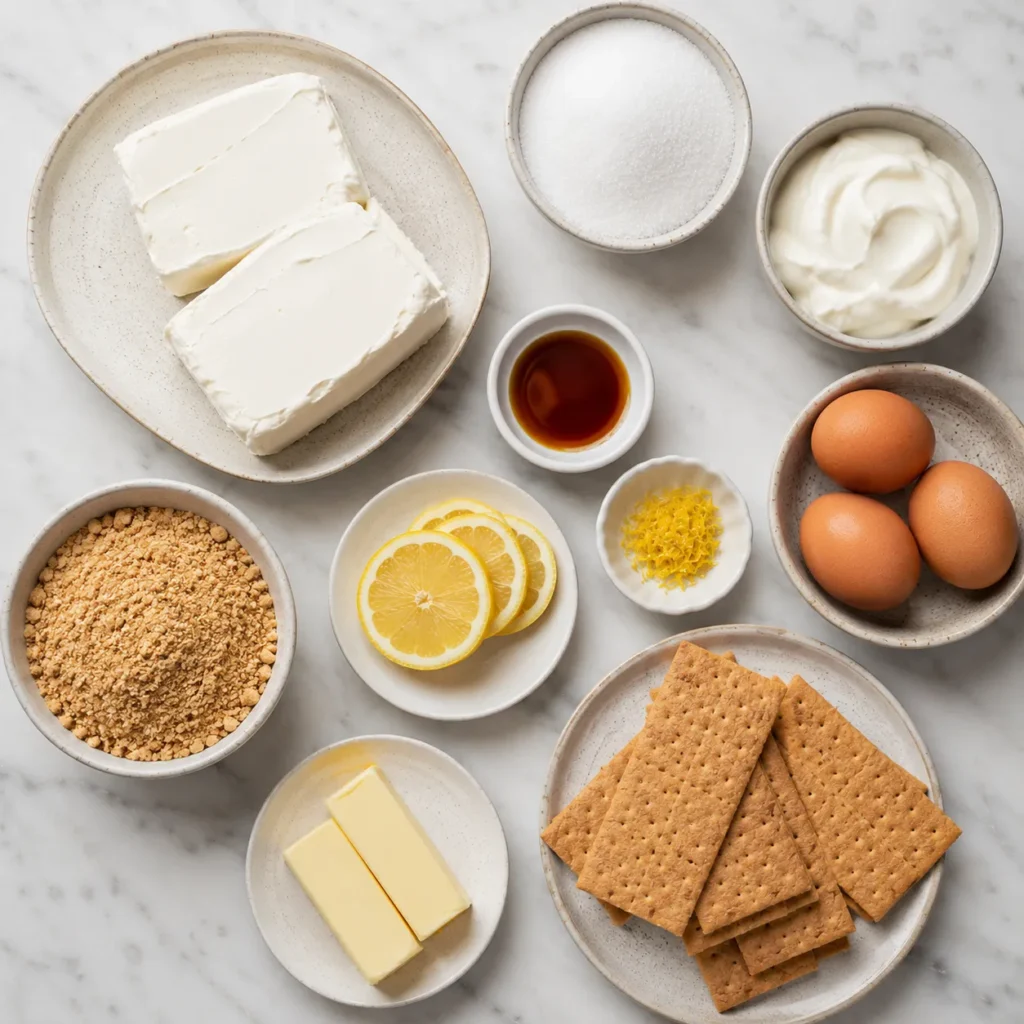
- 2 cups graham cracker crumbs (finely crushed)
- ½ cup unsalted butter (melted)
- 2 tablespoons granulated sugar
- ¼ teaspoon salt
For the Cream Cheese Filling
- 4 (8 oz) blocks cream cheese (room temperature)
- 1 ¼ cups granulated sugar
- 1 cup sour cream (room temperature)
- 4 large eggs (room temperature)
- 2 teaspoons pure vanilla extract
- 1 tablespoon lemon juice
- 2 tablespoons all-purpose flour (optional for stability)
For Water Bath Setup
- Hot water (for roasting pan)
- Aluminum foil (to wrap pan securely)
Step 1: Prepare the Graham Cracker Crust
You start by mixing graham cracker crumbs, melted butter, sugar, and salt until the texture feels like wet sand. Press it firmly into a springform pan and bake for 10 minutes to set the base before cooling slightly.
Chef’s Tip: Press the crust using the bottom of a glass to create an even, compact layer that won’t crumble when you slice the cheesecake later.
Step 2: Soften and Beat the Cream Cheese
You beat softened cream cheese until completely smooth, about 2–3 minutes, ensuring there are no lumps before adding sugar. This step creates the silky foundation of your Classic New York Cheesecake Recipe.
Chef’s Tip: Always bring cream cheese to room temperature naturally; microwaving it can create uneven texture and lead to grainy filling.
Step 3: Add Sugar, Sour Cream, and Flavorings
You mix in sugar, sour cream, vanilla extract, lemon juice, and flour until just combined. This takes around 2–3 minutes and adds richness while balancing sweetness with subtle tang.
Chef’s Tip: Mix on low speed to avoid incorporating too much air, which can cause cracks during baking.
Step 4: Incorporate Eggs Gently
You add eggs one at a time, mixing slowly after each addition until just combined. This helps maintain structure while keeping the filling dense and creamy, which defines a true New York cheesecake.
Chef’s Tip: Overmixing after adding eggs introduces air bubbles, so stop as soon as the yolk disappears into the batter.
Step 5: Prepare Water Bath and Bake
You wrap the springform pan in foil and place it inside a larger pan filled with hot water. Bake at 325°F (160°C) for 60–70 minutes until the edges are set and the center slightly jiggles.
Chef’s Tip: The water bath creates gentle steam that prevents cracks and ensures even baking throughout the cheesecake.
Step 6: Cool Slowly and Chill Overnight
You turn off the oven and let the cheesecake sit inside with the door slightly open for 1 hour. Then cool it fully at room temperature before refrigerating overnight to set properly.
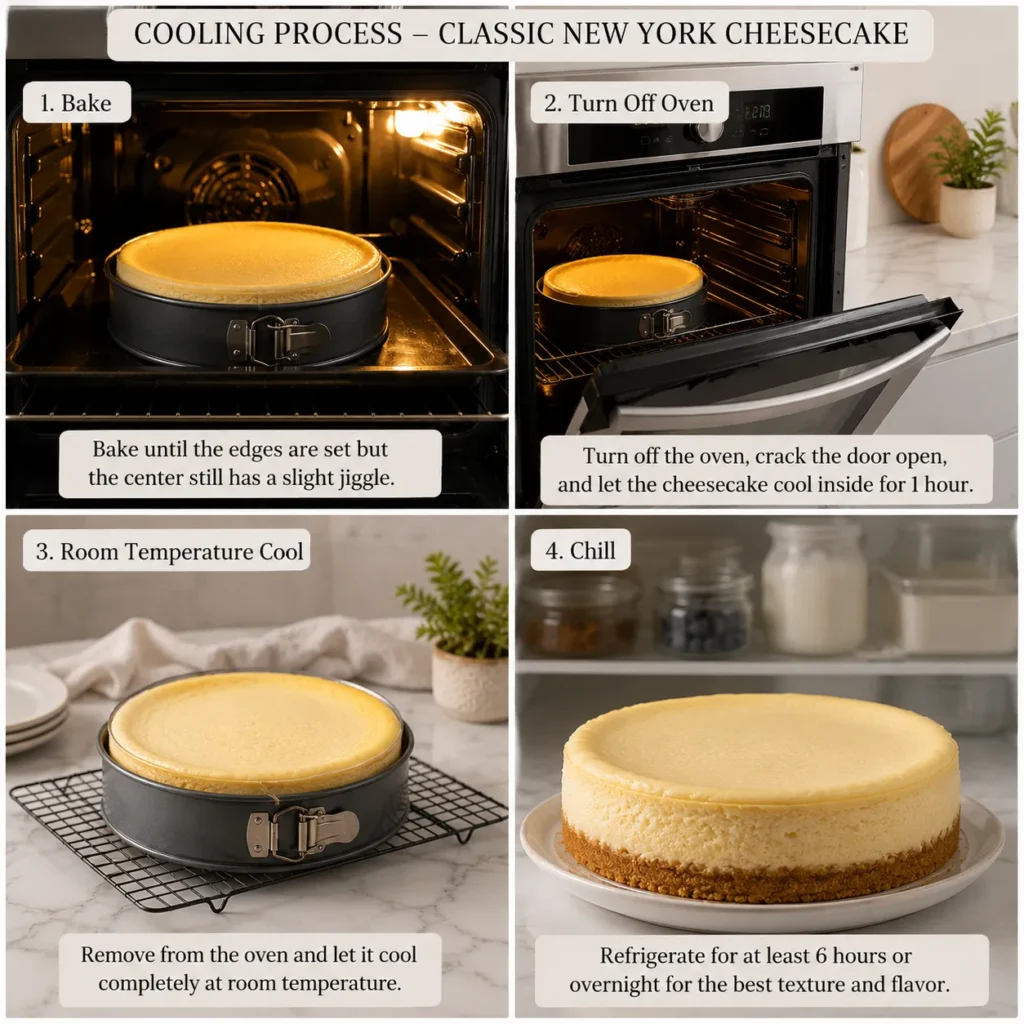
Chef’s Tip: Slow cooling prevents sudden temperature changes, which is the most common reason for surface cracks in cheesecake.
Nutritional Information (Per Slice)
| Nutrient | Amount |
| Calories | 420 kcal |
| Protein | 7 g |
| Carbohydrates | 32 g |
| Total Fat | 30 g |
| Saturated Fat | 17 g |
| Fibre | 0.5 g |
| Sugar | 24 g |
| Sodium | 260 mg |
Why You’ll Love This Recipe
- You get a bakery-style texture at home, with a dense and creamy bite that feels luxurious yet achievable with basic ingredients.
- The balance of tangy sour cream and sweet vanilla creates a rich flavor profile that doesn’t feel overly heavy or cloying.
- You can prepare it ahead of time, making it ideal for parties, holidays, or special occasions where planning ahead matters.
- The water bath technique ensures a professional finish with minimal cracking when followed correctly.
Common Mistakes to Avoid
- Using cold cream cheese often leads to lumps in the batter, which will not disappear even after baking, so always soften it fully before starting.
- Overmixing the batter introduces excess air, causing the cheesecake to rise and then collapse or crack after baking.
- Skipping the water bath results in uneven baking and a dry texture around the edges, reducing the signature creaminess.
- Removing the cheesecake too quickly from the oven causes sudden temperature shock, which is a major reason for surface cracks.
Serving Suggestions
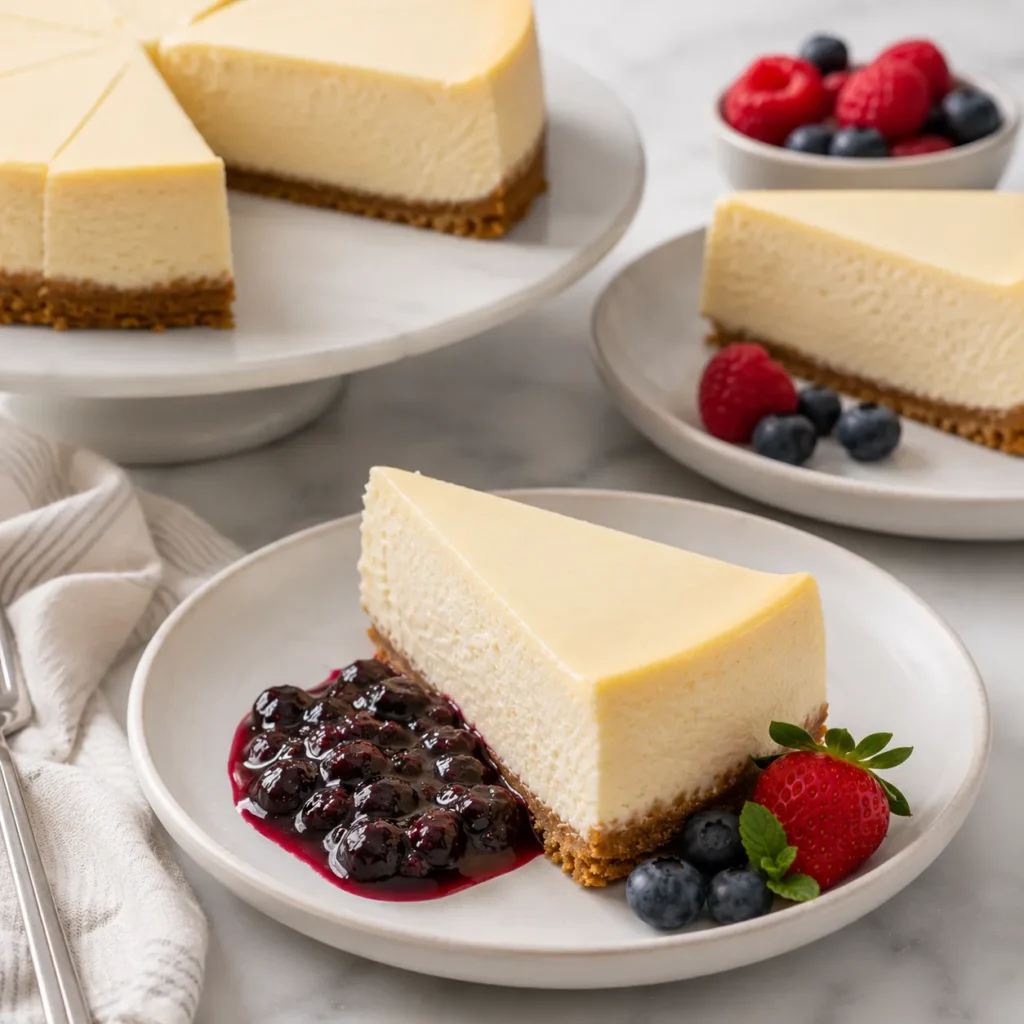
- You can serve it plain for a classic experience, allowing the rich cream cheese flavor to stand out without distraction.
- Fresh berries or berry compote add brightness and contrast, making each slice feel lighter and more refreshing.
- A drizzle of caramel or chocolate sauce turns it into a dessert-worthy centerpiece for dinner parties.
- Crushed cookies or toasted nuts on top add texture and make each bite more interesting.
Healthier Alternatives and Ingredient Swaps
- You can use reduced-fat cream cheese to lower calories, though the texture will be slightly softer but still enjoyable.
- Greek yogurt can replace sour cream for a higher-protein version with a similar tangy flavor.
- Coconut sugar or a natural sweetener can replace refined sugar for a more wholesome sweetness profile.
- Almond flour crust can be used instead of graham crackers for a gluten-free alternative with a nutty depth.
Storage and Meal Prep Tips
- You should store the cheesecake in an airtight container in the refrigerator for up to 5 days while maintaining its creamy texture.
- It freezes well when wrapped tightly in plastic and foil, allowing you to store it for up to 2 months without major texture loss.
- Always thaw frozen cheesecake overnight in the refrigerator instead of at room temperature to preserve structure.
- Slice only what you need at a time to keep the remaining cheesecake fresh and moist for longer.
Conclusion
A Classic New York Cheesecake Recipe rewards you with a rich, creamy dessert that feels both elegant and comforting. Once you understand the slow baking and cooling process, you can confidently recreate this restaurant-quality cheesecake anytime and even adapt it with your own flavors.