
Classic Minestrone Soup Recipe for Italian Vegetable Flavor
This classic minestrone soup recipe brings together tender vegetables, beans, and pasta in a rich tomato broth that feels both hearty and fresh. You’ll love how adaptable it is, making it perfect for weeknight dinners or cozy weekend cooking.
Timing
- Prep Time: 15 minutes
- Cook Time: 35 minutes
- Total Time: 50 minutes
- Servings: 4–6 servings
Ingredients for Minestrone Soup Recipe
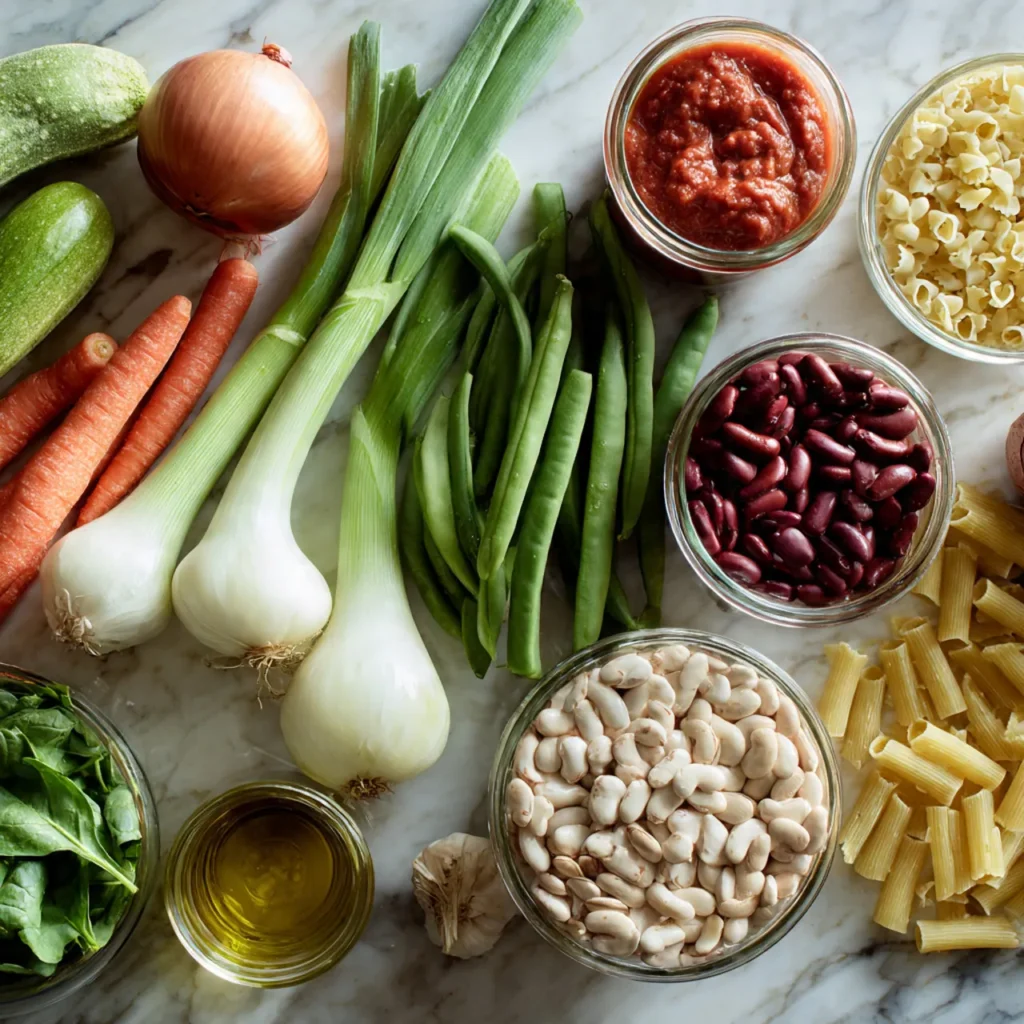
Base Flavor Ingredients
- 2 tablespoons olive oil
- 1 medium onion, finely chopped
- 2 cloves garlic, minced
- 2 medium carrots, diced
- 2 celery stalks, chopped
Vegetables and Beans
- 1 medium zucchini, diced
- 1 cup green beans, trimmed and cut
- 1 can (400g) diced tomatoes
- 1 can (400g) kidney beans, drained and rinsed
- 1 can (400g) cannellini beans, drained and rinsed
Broth and Seasoning
- 4 cups vegetable broth
- 1 teaspoon dried oregano
- 1 teaspoon dried basil
- 1/2 teaspoon thyme
- Salt and black pepper to taste
Pasta and Finishing
- 3/4 cup small pasta (like ditalini or elbow)
- 2 cups fresh spinach or kale
- 2 tablespoons chopped fresh parsley
- Grated Parmesan cheese (optional, for serving)
Step-by-Step Instructions
Step 1: Build the Flavor Base (5–7 minutes)
Heat olive oil in a large pot over medium heat. Add the chopped onion, carrots, and celery, and cook until softened. Stir in garlic and cook for another minute until fragrant.
This step creates the foundational flavor of your classic minestrone soup recipe, so don’t rush it. The gentle sauté helps release natural sweetness from the vegetables.
Chef’s Tip: Keep the heat moderate rather than high so the vegetables soften without browning too quickly, which ensures a balanced and mellow base instead of a bitter taste.
Step 2: Add Tomatoes and Broth (5 minutes)
Pour in the diced tomatoes and vegetable broth. Stir well to combine everything and bring the mixture to a gentle boil.
This step builds the body of the soup, blending acidity from tomatoes with the depth of the broth.
Chef’s Tip: If your tomatoes taste overly acidic, add a small pinch of sugar to balance the flavor without making the soup sweet.
Step 3: Add Beans and Seasoning (10 minutes)
Stir in kidney beans, cannellini beans, oregano, basil, thyme, salt, and pepper. Let the soup simmer gently for about 10 minutes.
The beans add protein and texture, while the herbs give the soup its signature Italian aroma.
Chef’s Tip: Crushing a few beans slightly with the back of your spoon thickens the soup naturally and creates a more comforting, hearty texture.
Step 4: Add Vegetables (10 minutes)
Add zucchini and green beans to the pot. Continue simmering until the vegetables are tender but still vibrant.
This step ensures your vegetables cook evenly without becoming mushy.
Chef’s Tip: Cut vegetables into similar sizes so they cook at the same rate, which keeps the soup visually appealing and consistent in texture.
Step 5: Cook the Pasta (8–10 minutes)
Add the pasta directly into the soup and cook until al dente, stirring occasionally to prevent sticking.
Cooking pasta in the soup allows it to absorb the flavorful broth, making every bite richer.
Chef’s Tip: Avoid overcooking the pasta, as it will continue to soften even after you turn off the heat, especially if you plan to store leftovers.
Step 6: Finish with Greens (2–3 minutes)
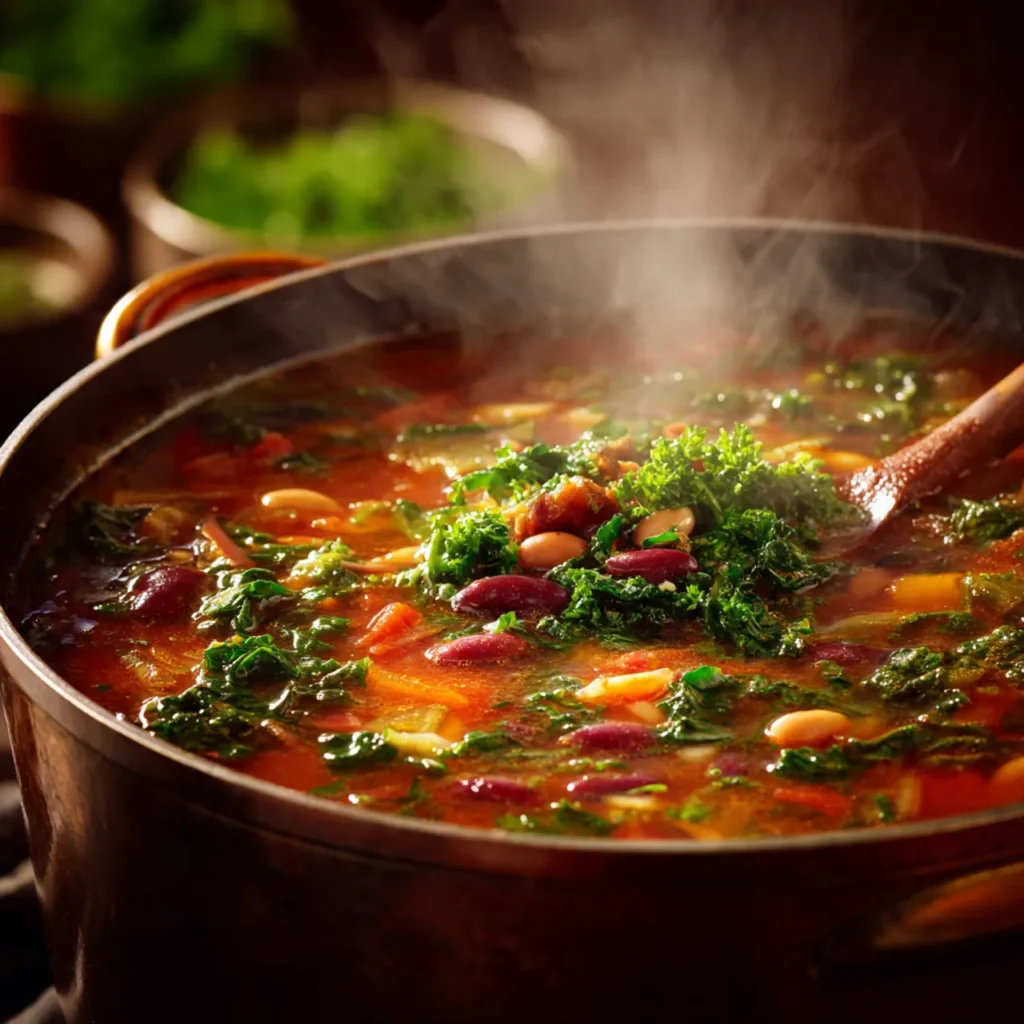
Stir in spinach or kale and cook until just wilted. Turn off the heat and sprinkle fresh parsley over the top.
This final step adds freshness and a boost of nutrients to your classic minestrone soup recipe.
Chef’s Tip: Add greens at the very end to preserve their color and nutrients instead of letting them cook too long and lose their brightness.
Nutritional Information (Per Serving)
| Nutrient | Amount |
| Calories | 220 kcal |
| Protein | 10 g |
| Carbohydrates | 32 g |
| Total Fat | 6 g |
| Fiber | 8 g |
| Sodium | 480 mg |
Why You’ll Love This Recipe
- You get a complete meal in one pot, combining vegetables, beans, and pasta, which makes this classic minestrone soup recipe both convenient and satisfying without needing extra sides.
- The recipe is highly flexible, allowing you to use seasonal vegetables or whatever you already have in your kitchen without sacrificing flavor.
- It’s beginner-friendly because each step builds logically, helping you understand how flavors develop in soups while still being simple to follow.
- You can make it ahead of time, and the flavor actually improves as it sits, making it ideal for meal prep or leftovers.
Common Mistakes to Avoid
- Adding all vegetables at once can lead to uneven cooking, as softer vegetables like zucchini will become mushy while firmer ones remain undercooked, so always stagger them.
- Overcooking the pasta directly in the soup can make it overly soft and absorb too much liquid, so monitor it closely and cook just until al dente.
- Skipping seasoning adjustments at the end often results in a flat-tasting soup, so always taste and adjust salt and pepper before serving.
- Using low-quality broth can weaken the entire dish, as the broth forms the backbone of flavor, so choose a good-quality one or enhance it with herbs.
Serving Suggestions
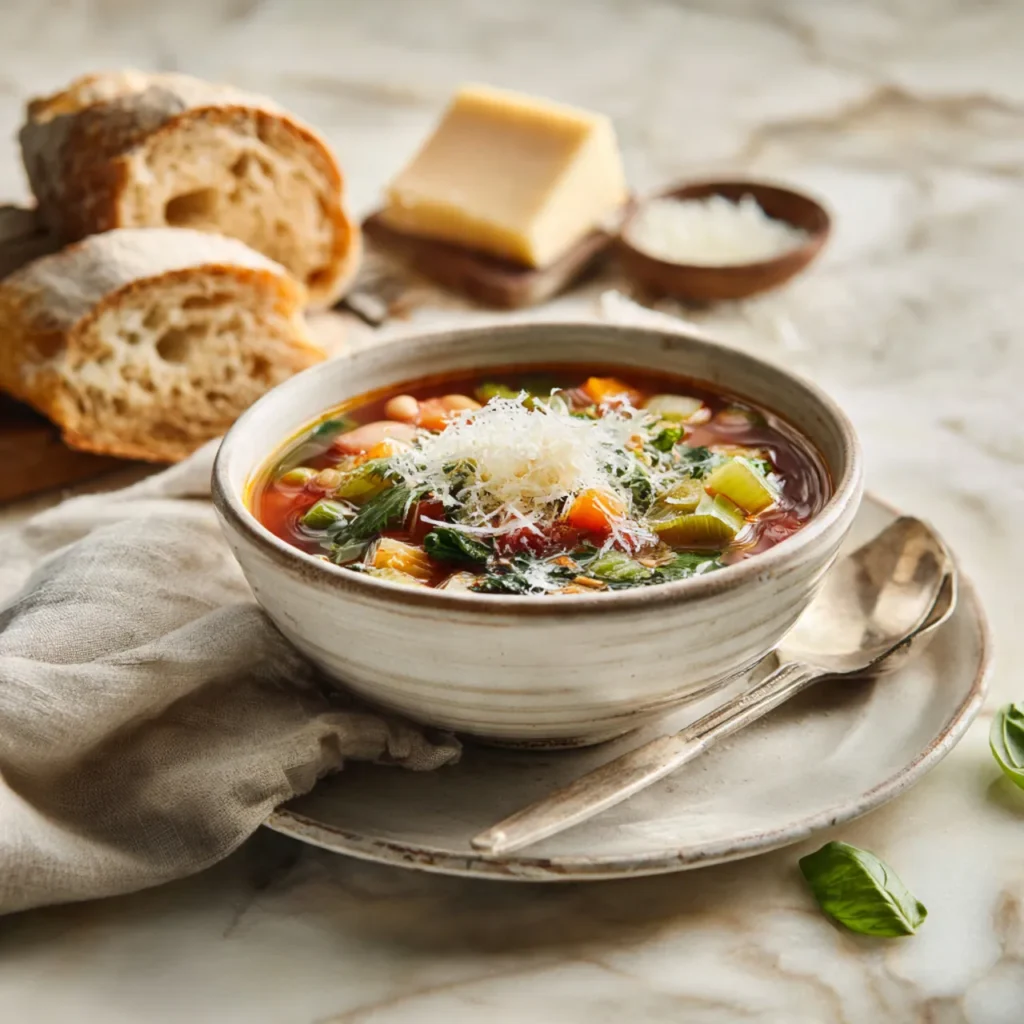
- Serve your classic minestrone soup recipe with crusty bread, allowing you to soak up the flavorful broth while adding a satisfying texture contrast.
- Top each bowl with grated Parmesan cheese and a drizzle of olive oil to elevate the presentation and add richness.
- Pair the soup with a light side salad dressed in lemon vinaigrette to balance the hearty nature of the dish.
- For a more filling meal, serve alongside grilled chicken or a simple sandwich to turn it into a complete dinner option.
Healthier Alternatives and Ingredient Swaps
- Replace pasta with whole wheat or gluten-free pasta to suit dietary needs while maintaining the structure of the soup.
- Reduce sodium by using low-sodium broth and rinsing canned beans thoroughly, which helps control salt levels without affecting taste.
- Add more leafy greens like kale or spinach to increase nutrient density and fiber content without increasing calories significantly.
- Substitute beans with chickpeas or lentils for a different texture and flavor while keeping the protein content high.
Storage and Meal Prep Tips
- Store leftover soup in an airtight container in the refrigerator for up to 4 days, ensuring it cools completely before sealing to maintain freshness.
- Reheat gently on the stovetop with a splash of water or broth to loosen the texture, as the pasta will absorb liquid over time.
- For meal prep, cook the pasta separately and add it when serving to prevent it from becoming overly soft during storage.
- Freeze the soup without pasta for up to 2 months, then add freshly cooked pasta when reheating for the best texture.
Conclusion
This classic minestrone soup recipe works because it layers simple ingredients into a deeply satisfying dish that’s both nourishing and adaptable. Once you master the basics, you can easily adjust it to match your taste, season, or pantry, making it a reliable go-to recipe.