
Buttery Lemon Pound Cake Recipe for Dense Citrus Dessert
This buttery lemon pound cake recipe gives you a rich, tight crumb balanced with bright citrus flavor. It’s perfect when you want a reliable, sliceable dessert that feels classic yet fresh, ideal for tea time, brunch tables, or simple celebrations.
Timing
- Prep Time: 20 minutes
- Cook Time: 60–70 minutes
- Total Time: 1 hour 30 minutes
- Servings: 8–10 slices
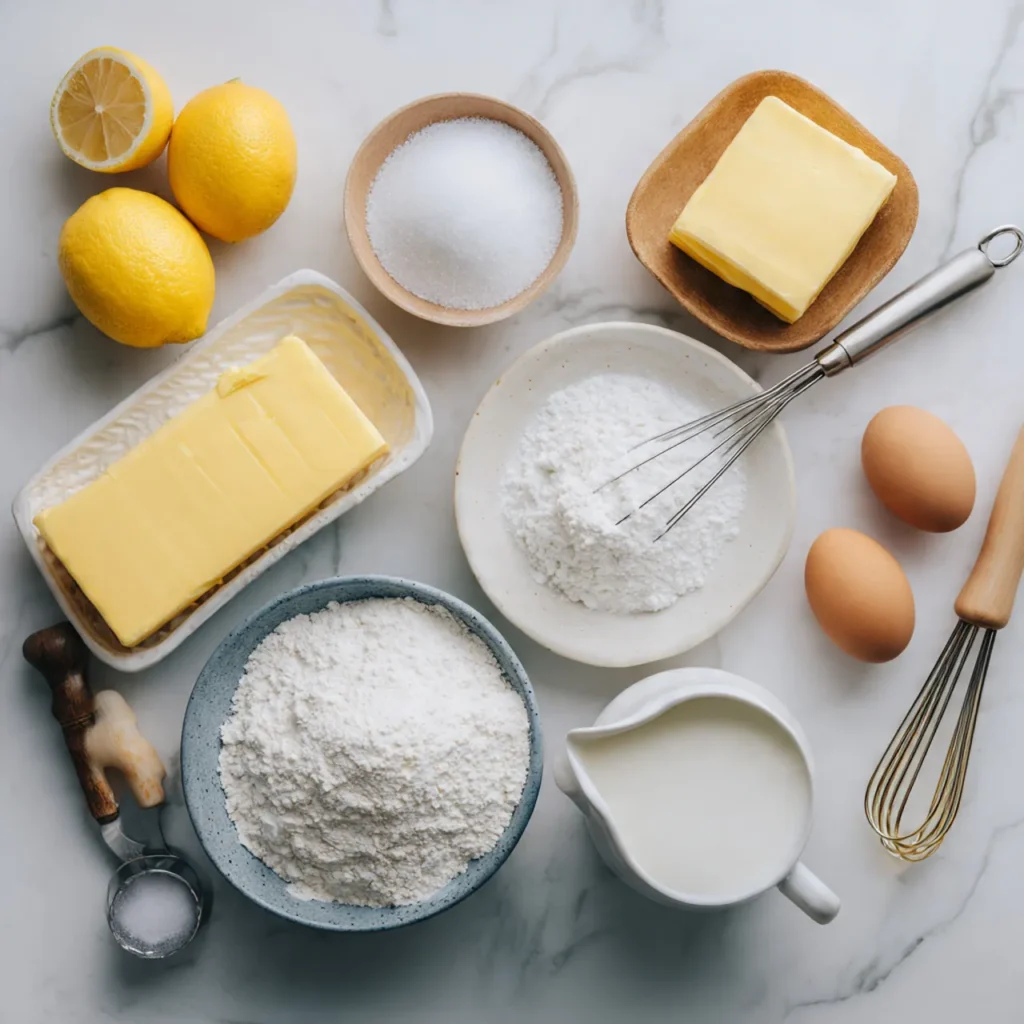
Ingredients for Lemon Pound Cake Recipe
For the Pound Cake Batter
- 1 cup (226 g) unsalted butter, softened
- 1 ½ cups (300 g) granulated sugar
- 4 large eggs, room temperature
- 2 cups (250 g) all-purpose flour
- ½ teaspoon salt
- 1 teaspoon baking powder
- ½ cup (120 ml) whole milk
- 2 tablespoons fresh lemon juice
- 1 tablespoon lemon zest
For the Lemon Glaze
- 1 cup (120 g) powdered sugar
- 2–3 tablespoons fresh lemon juice
- 1 teaspoon lemon zest (optional for extra flavor)
Step-by-Step Instructions
Step 1: Prepare Your Pan and Oven (10 minutes)
Preheat your oven to 175°C (350°F) and grease a loaf pan thoroughly with butter or non-stick spray, then lightly dust with flour. This prevents sticking and ensures a clean release after baking.
Chef’s Tip: Taking time to coat every corner of the pan evenly prevents tearing when unmolding, especially since pound cakes have a dense texture that can cling to surfaces.
Step 2: Cream Butter and Sugar (5–7 minutes)
In a large bowl, beat the softened butter and sugar together until light, fluffy, and pale in color. This step incorporates air, which helps the cake rise properly.
Chef’s Tip: Don’t rush this process, proper creaming creates the structure of your buttery lemon pound cake recipe, and under-mixing here leads to a heavy, flat result.
Step 3: Add Eggs One at a Time (5 minutes)
Add eggs one at a time, mixing well after each addition. This helps emulsify the batter and keeps it smooth instead of curdled.
Chef’s Tip: If your batter looks slightly split, it’s usually due to cold eggs, bringing them to room temperature beforehand ensures a silky mixture.
Step 4: Mix Dry and Wet Ingredients (5–7 minutes)
In a separate bowl, whisk together flour, baking powder, and salt. In another small bowl, combine milk and lemon juice. Gradually add the dry ingredients to the butter mixture, alternating with the milk mixture. Stir in lemon zest at the end.
Chef’s Tip: Alternate additions prevent overworking the batter and help maintain a soft crumb, which is essential for a tender but dense citrus dessert.
Step 5: Bake the Cake (60–70 minutes)
Pour the batter into your prepared loaf pan and smooth the top. Bake for 60–70 minutes, or until a toothpick inserted in the center comes out clean.
Chef’s Tip: Avoid opening the oven too early, temperature fluctuations can cause the cake to sink in the middle, especially during the first 40 minutes.
Step 6: Cool and Glaze (15–20 minutes)
Let the cake cool in the pan for 10 minutes, then transfer it to a wire rack. Once slightly warm, drizzle the lemon glaze over the top.

Chef’s Tip: Glazing while the cake is still warm allows the citrus syrup to soak slightly into the surface, enhancing both flavor and moisture.
Nutritional Information (Per Slice)
| Nutrient | Amount |
| Calories | 320 kcal |
| Protein | 5 g |
| Carbohydrates | 40 g |
| Total Fat | 16 g |
| Saturated Fat | 10 g |
| Fiber | 1 g |
| Sugar | 25 g |
Why You’ll Love This Recipe
- The buttery lemon pound cake recipe gives you a perfect balance between richness and brightness, making it satisfying without feeling overly heavy.
- You get a dense yet soft texture that slices cleanly, which is ideal for serving guests or packaging as a homemade gift.
- The ingredients are simple and accessible, so you can confidently make this citrus dessert without needing advanced baking skills.
- The lemon flavor is fresh and natural, not artificial, giving your cake a vibrant, homemade taste that stands out.
Common Mistakes to Avoid
- Overmixing the batter after adding flour can make the cake tough because it develops too much gluten, so mix just until combined.
- Using cold ingredients often leads to uneven texture and curdled batter, so always bring eggs, butter, and milk to room temperature before starting.
- Skipping the pan preparation can result in sticking, which ruins the cake’s appearance and wastes effort.
- Removing the cake too early from the oven may leave the center undercooked, so always check with a toothpick for doneness.
Serving Suggestions
- Serve slices with a dusting of powdered sugar and fresh berries to add color and a slight tart contrast to the rich cake.
- Pair your lemon pound cake with tea or coffee for a simple afternoon treat that feels elegant yet effortless.
- Lightly toast slices and add a dollop of whipped cream or yogurt for a slightly indulgent breakfast option.
- Use leftover slices to create a layered dessert with cream and fruit for a quick trifle-style presentation.

Healthier Alternatives and Ingredient Swaps
- Replace half the butter with Greek yogurt to reduce fat while maintaining moisture and a slight tang that complements the lemon flavor.
- Use whole wheat flour for part of the all-purpose flour to increase fiber, though you may need a little extra liquid to keep the texture soft.
- Substitute coconut sugar or a reduced amount of sugar for a less sweet version, especially if you plan to add glaze.
- Opt for a sugar-free glaze or skip it entirely if you prefer a lighter citrus dessert with fewer calories.
Storage and Meal Prep Tips
- Store the cake in an airtight container at room temperature for up to 3 days to maintain its soft texture and flavor.
- Refrigerate for up to a week, but allow slices to come to room temperature before serving to restore the buttery consistency.
- Wrap individual slices and freeze for up to 2 months, making it easy to enjoy a quick dessert whenever you want.
- For meal prep, bake the cake a day ahead since pound cakes often taste even better after resting and allowing flavors to develop.
Conclusion
This buttery lemon pound cake recipe works because it combines simple techniques with balanced ingredients to create a dependable, flavorful result. Once you master the method, you can easily adjust sweetness, citrus intensity, or toppings to suit your taste and make it truly your own.

Buttery Lemon Pound Cake Recipe
Ingredients
Method
- Preheat the oven to 175°C (350°F) and grease a loaf pan thoroughly to ensure easy removal after baking.
- Cream butter and sugar until light and fluffy to build the cake’s structure and create a tender crumb.
- Add eggs one at a time, mixing well after each addition to maintain a smooth and stable batter.
- Combine dry ingredients separately and alternate adding them with the milk mixture to avoid overmixing.
- Pour batter into the pan and bake until a toothpick inserted in the center comes out clean.
- Cool slightly before removing from the pan and drizzle with lemon glaze while still warm for best flavor absorption.
Notes
- Always use room temperature ingredients to ensure a smooth batter and even baking.
- Creaming butter and sugar properly is essential for a light texture, so take your time with this step.
- Avoid opening the oven door too early, as it can cause the cake to collapse in the center.
- Let the glaze soak into the warm cake for enhanced citrus flavor and moisture.