
Savory Kimchi Fried Rice Recipe for Bold Fermented Flavor
Packed with punchy, tangy heat, this kimchi fried rice recipe turns leftover rice into something crave-worthy. You’ll love how quickly it comes together and how deeply flavorful it feels, perfect for busy weeknights or a bold, comforting lunch.
Timing
- Prep Time: 10 minutes
- Cook Time: 15 minutes
- Total Time: 25 minutes
- Servings: 2–3 servings
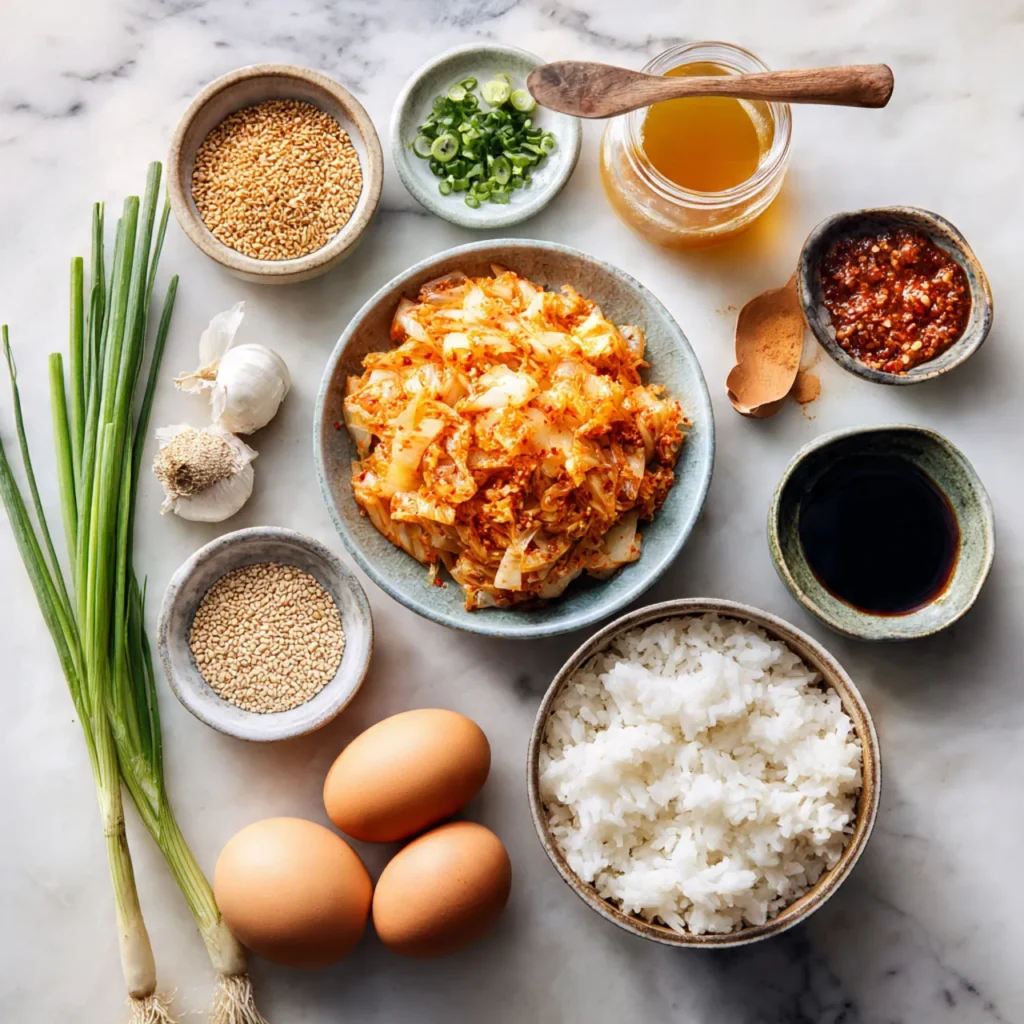
Ingredients for Kimchi Fried Rice Recipe
Base Ingredients
- 2 cups cooked and chilled white rice (preferably day-old)
- 1 cup kimchi, chopped
- 2 tablespoons kimchi juice (from the jar)
- 2 tablespoons vegetable oil (or sesame oil for extra flavor)
Aromatics and Flavor Builders
- 2 cloves garlic, minced
- 1 teaspoon fresh ginger, grated
- 2 green onions, sliced (white and green parts separated)
Protein Options (Optional but Recommended)
- 2 eggs
- ½ cup cooked chicken, bacon, tofu, or shrimp
Seasoning and Sauce
- 1 tablespoon soy sauce
- 1 teaspoon gochujang (Korean chili paste)
- ½ teaspoon sugar
Garnish
- 1 teaspoon sesame seeds
- Extra sliced green onions
Step-by-Step Instructions
Step 1: Prepare Your Ingredients (5 minutes)
Start by chopping your kimchi into bite-sized pieces and separating your green onions into white and green parts. Measure out all ingredients so everything is within reach.
This step matters because fried rice cooks quickly, and having everything ready prevents overcooking or burning.
Chef’s Tip: If your rice is freshly cooked, spread it on a tray and let it cool for 10 minutes. Slightly dry rice fries better and prevents a mushy texture.
Step 2: Cook the Eggs (2–3 minutes)
Heat a nonstick pan over medium heat and add a little oil. Crack the eggs directly into the pan and scramble until just set, then remove and set aside.
Cooking eggs first ensures they stay soft and fluffy instead of overcooked later.
Chef’s Tip: Slightly undercook the eggs because they will cook again when mixed back into the rice, helping them stay tender instead of rubbery.
Step 3: Sauté Aromatics and Kimchi (4–5 minutes)
In the same pan, add oil and sauté garlic, ginger, and the white parts of the green onions for about 1 minute until fragrant. Add chopped kimchi and cook for another 3–4 minutes.
Cooking kimchi deepens its flavor, reducing sharp acidity while enhancing its savory, fermented notes.
Chef’s Tip: Let the kimchi caramelize slightly by not stirring constantly. This adds a deeper umami flavor to your kimchi fried rice recipe.
Step 4: Add Rice and Break It Up (3–4 minutes)
Add the chilled rice to the pan and use a spatula to break up any clumps. Mix thoroughly with the kimchi and aromatics.
Even mixing ensures every grain gets coated with flavor rather than staying bland.
Chef’s Tip: Press the rice lightly against the pan and let it sit for 30 seconds before stirring. This creates slightly crispy bits that add texture.
Step 5: Season and Add Protein (3–4 minutes)
Stir in soy sauce, gochujang, sugar, and kimchi juice. Add your protein of choice and mix well. Let everything cook together for a few minutes.
This step builds the signature bold, spicy, and slightly sweet flavor profile of the dish.
Chef’s Tip: Taste before adding more salt. Kimchi and soy sauce are already salty, so adjusting at the end prevents over-seasoning.
Step 6: Combine Eggs and Finish (2 minutes)
Return the cooked eggs to the pan and gently fold them into the rice. Add the green parts of the onions and toss briefly.
This final step brings balance, soft eggs, crunchy rice, and fresh onion flavor.
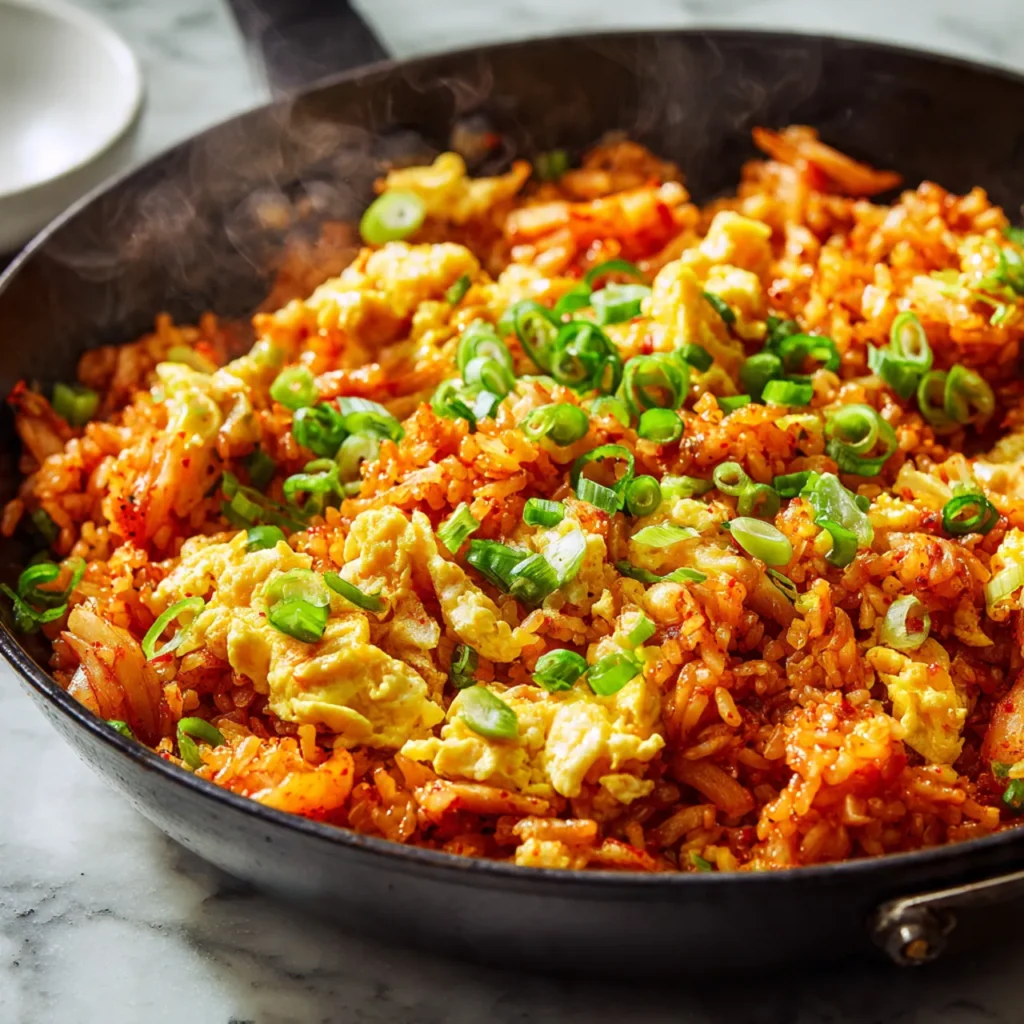
Chef’s Tip: Turn off the heat before adding green onions to keep their flavor fresh and slightly crisp instead of wilted.
Nutritional Information (Per Serving)
| Nutrient | Amount |
| Calories | 380 kcal |
| Protein | 14 g |
| Carbohydrates | 42 g |
| Total Fat | 16 g |
| Fiber | 3 g |
| Sodium | 780 mg |
Why You’ll Love This Recipe
- You get a bold, complex flavor with minimal effort because kimchi brings tang, spice, and umami all in one ingredient.
- It’s incredibly versatile, allowing you to use leftover rice and any protein you already have in your fridge.
- The recipe cooks quickly, making it perfect for busy days when you still want something homemade and satisfying.
- You can easily adjust the spice level by adding more or less gochujang, making it beginner-friendly and customizable.
Common Mistakes to Avoid
- Using freshly cooked rice can result in soggy fried rice because it holds too much moisture; always use chilled or slightly dried rice for the best texture.
- Adding too much sauce at once can make the dish overly salty and wet, so it’s important to add gradually and taste as you go.
- Overcrowding the pan reduces heat and prevents proper frying, so use a wide pan or cook in batches if needed.
- Skipping the caramelization step for kimchi leads to a flatter flavor, so allow it to cook long enough to deepen its taste.
Serving Suggestions
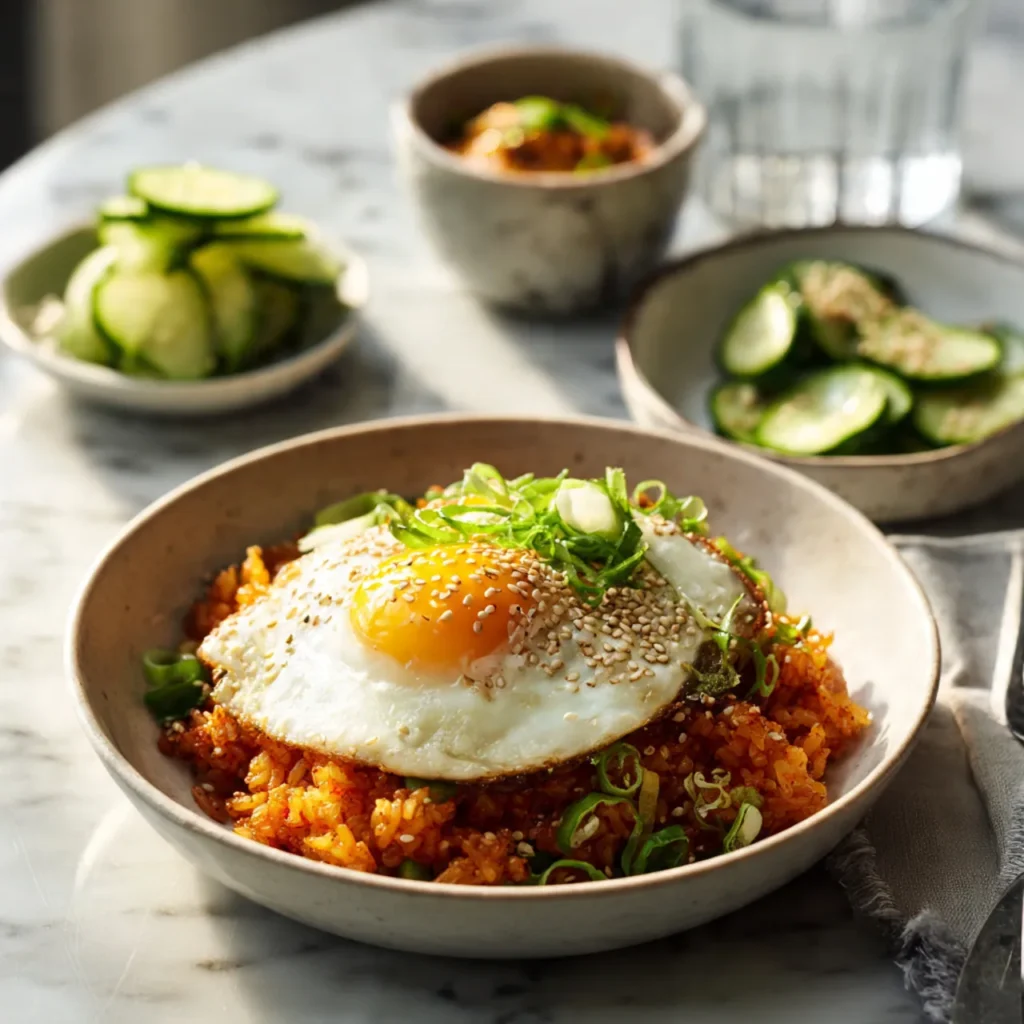
- Serve your kimchi fried rice in a shallow bowl with a fried egg on top, allowing the yolk to mix in and create a rich, creamy finish.
- Pair it with a simple cucumber salad or lightly pickled vegetables to balance the bold and spicy flavors.
- Use it as a filling for lettuce wraps to create a lighter, fresh presentation with added crunch.
- Turn leftovers into a quick lunch by reheating and stuffing into a tortilla for a fusion-style wrap.
Healthier Alternatives and Ingredient Swaps
- Swap white rice for brown rice or cauliflower rice if you want more fiber and a lighter version of this dish.
- Use low-sodium soy sauce to reduce salt content without compromising flavor.
- Replace traditional oil with a smaller amount of sesame oil for a more intense flavor using less fat.
- Choose tofu or skip added protein entirely to create a vegetarian or plant-based variation that still feels satisfying.
Storage and Meal Prep Tips
- Store leftover kimchi fried rice in an airtight container in the refrigerator for up to 3 days, ensuring it cools completely before sealing.
- Reheat in a pan over medium heat instead of the microwave to restore texture and avoid sogginess.
- Add a splash of water or extra kimchi juice while reheating to bring back moisture and flavor.
- For meal prep, portion into containers and keep garnishes separate so they stay fresh when serving.
Conclusion
This savory kimchi fried rice recipe works because it layers simple ingredients into something bold and deeply satisfying. Once you understand the basics, you can easily adapt it to your taste, making it a reliable go-to for quick, flavorful meals.