
Classic Egg and Cheese Sandwich Recipe for Easy Breakfast
A classic egg and cheese sandwich is one of the most reliable breakfasts you can make when you want something warm, satisfying, and quick. With fluffy eggs, melted cheese, and toasted bread, it delivers comfort and protein in every bite while fitting easily into busy mornings.
Timing
- Prep Time: 5 minutes
- Cook Time: 10 minutes
- Total Time: 15 minutes
- Servings: 2 sandwiches
Ingredients for Egg and Cheese Sandwich Recipe
For the Egg Filling
- 4 large eggs
- 2 tablespoons milk
- ¼ teaspoon salt
- ¼ teaspoon black pepper
- 1 tablespoon butter
For the Sandwiches
- 4 slices sandwich bread
- 2 slices cheddar cheese
- 1 tablespoon butter for toasting bread
Optional Add-Ins
- 2 tomato slices
- 2 lettuce leaves
- 1 tablespoon mayonnaise
- 1 teaspoon hot sauce
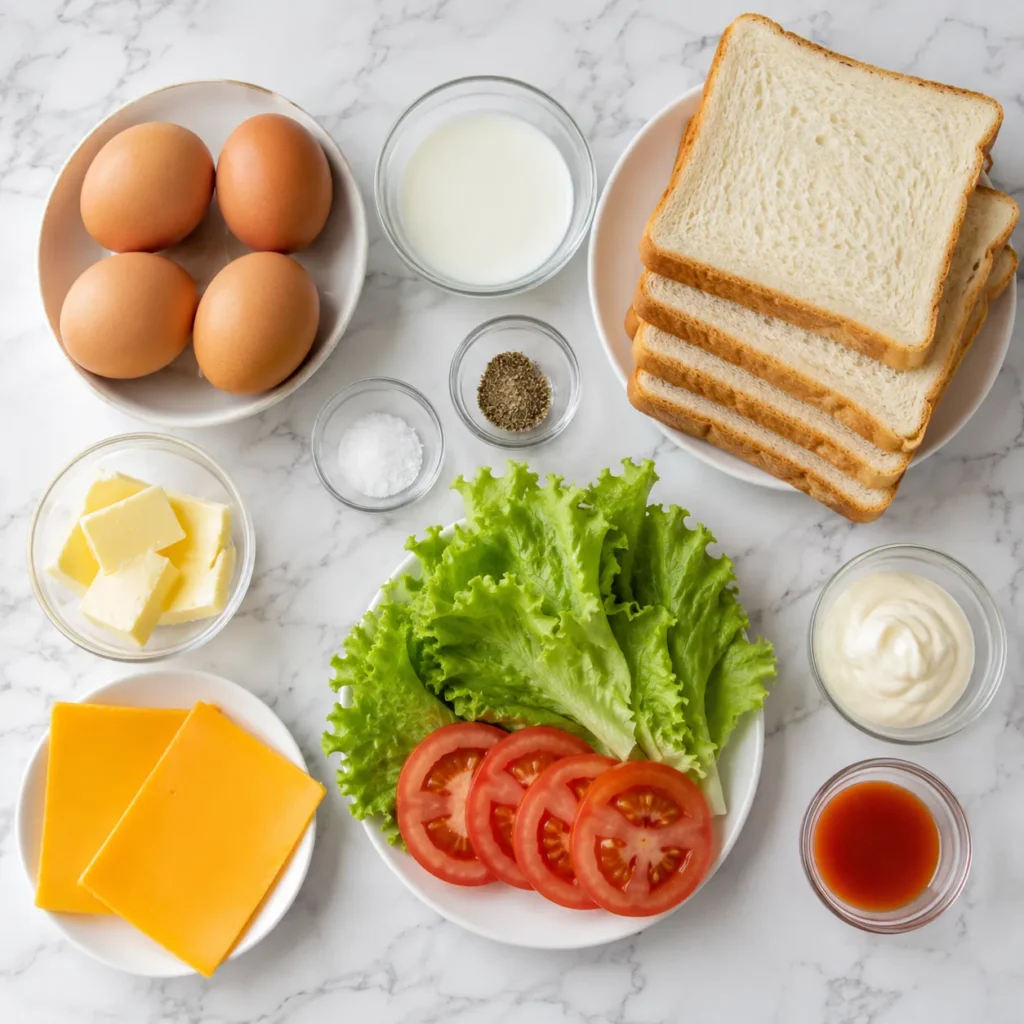
How to Make a Classic Egg and Cheese Sandwich
Step 1: Prepare the Egg Mixture
Crack the eggs into a medium bowl and add the milk, salt, and black pepper. Whisk for about 1 minute until the mixture looks smooth and slightly frothy. This helps create soft, fluffy eggs rather than dense or rubbery ones.
Chef’s Tip: Whisking thoroughly incorporates air into the eggs, which improves texture and creates a lighter scramble. Even an extra 20 seconds of whisking can make a noticeable difference in the final sandwich.
Step 2: Toast the Bread
Spread a thin layer of butter on one side of each bread slice. Place the bread in a skillet over medium heat and toast for 2 to 3 minutes per side until golden brown. Remove from the pan and set aside.
Chef’s Tip: Toasting the bread before assembling the sandwich creates a barrier that helps prevent sogginess. It also adds a pleasant crunch that contrasts beautifully with the soft eggs and melted cheese.
Step 3: Cook the Eggs
Reduce the heat to medium-low and melt 1 tablespoon of butter in the same skillet. Pour in the egg mixture and let it sit for about 20 seconds. Gently stir and fold the eggs with a spatula for 3 to 4 minutes until they are softly set but still slightly creamy.
Chef’s Tip: Avoid high heat when cooking eggs. Slow cooking gives you better control and prevents the proteins from tightening too quickly, which can lead to dry, tough eggs.
Step 4: Add the Cheese
Once the eggs are nearly cooked, place the cheese slices directly on top of the eggs. Cover the skillet with a lid for 30 to 60 seconds so the cheese melts completely.
Chef’s Tip: Covering the pan traps heat and steam, allowing the cheese to melt evenly without overcooking the eggs underneath. This simple step creates a smooth, creamy cheese layer.
Step 5: Assemble the Sandwiches
Divide the cheesy eggs evenly between two slices of toasted bread. If using optional ingredients, add tomato, lettuce, mayonnaise, or hot sauce at this stage. Top with the remaining bread slices.
Chef’s Tip: Layering vegetables beneath the eggs helps keep the bread crisp. The vegetables also provide freshness that balances the richness of the eggs and cheese.
Step 6: Finish and Serve
For an extra-crispy sandwich, return the assembled sandwiches to the skillet for 1 minute per side over low heat. Slice in half and serve immediately while warm.
Chef’s Tip: A brief final toast helps fuse the sandwich layers together and gives the exterior a café-style finish without requiring any special equipment.

Nutrition Information
Approximate values per sandwich.
| Nutrient | Amount |
| Calories | 370 |
| Protein | 19g |
| Carbohydrates | 24g |
| Total Fat | 22g |
| Saturated Fat | 10g |
| Cholesterol | 390mg |
| Fiber | 2g |
| Sugar | 3g |
| Sodium | 550mg |
| Calcium | 220mg |
Why You’ll Love This Recipe
- You can make this classic egg and cheese sandwich in about 15 minutes, making it ideal for busy weekdays when you need a filling breakfast without spending much time in the kitchen.
- The combination of fluffy eggs and melted cheese creates a comforting texture that feels satisfying while still using simple ingredients you probably already have at home.
- This recipe is extremely flexible because you can add vegetables, sauces, breakfast meats, or different cheeses to suit your taste preferences and dietary needs.
- The sandwich provides a good amount of protein, which helps keep you feeling full and energized throughout the morning.
- Beginners often appreciate this recipe because the cooking techniques are straightforward and easy to master after just one or two attempts.
Common Mistakes to Avoid
- Cooking the eggs over high heat is one of the most common mistakes because it causes them to become dry and rubbery. Keep the heat moderate and cook slowly for the best texture.
- Skipping the bread toasting step can result in a sandwich that becomes soft and soggy as it sits. Toasted bread holds up much better against the moisture from the eggs.
- Adding cheese too early can cause it to burn or separate before the eggs finish cooking. Wait until the eggs are nearly done before adding it.
- Overfilling the sandwich with ingredients can make it difficult to eat and may cause fillings to fall out. Aim for balanced layers that stay together easily.
- Serving the sandwich after it has cooled significantly reduces the appeal of the melted cheese and warm eggs. Enjoy it soon after preparation for the best experience.
Serving Suggestions
- Pair your egg and cheese sandwich with fresh fruit such as strawberries, grapes, or orange slices for a balanced breakfast that feels complete and refreshing.
- Serve alongside crispy breakfast potatoes or hash browns when you want a heartier meal that is suitable for weekends or brunch gatherings.
- Add a small green salad with a light vinaigrette if you are serving the sandwich for lunch and want extra freshness on the plate.
- Slice the sandwich into smaller portions and serve it as part of a breakfast platter with yogurt, fruit, and coffee for guests.
- Wrap the sandwich in parchment paper and take it on the go for a convenient breakfast during busy mornings or commutes.

Healthier Alternatives and Ingredient Swaps
- Use whole wheat bread instead of white bread to increase the fiber content and create a more filling breakfast without changing the overall flavor significantly.
- Replace some of the whole eggs with egg whites if you want to reduce cholesterol and fat while maintaining a high protein content.
- Choose reduced-fat cheese to lower calories while still enjoying the creamy, melty texture that makes this sandwich so appealing.
- Add spinach, mushrooms, bell peppers, or tomatoes to increase the vegetable content and provide extra vitamins and minerals.
- Substitute butter with a light olive oil spray to reduce saturated fat while still achieving a nicely cooked sandwich.
Storage and Meal Prep Tips
- Store cooked egg filling in an airtight container in the refrigerator for up to 3 days. Reheat gently before assembling fresh sandwiches.
- For meal prep, prepare the scrambled eggs in advance and portion them into containers so breakfast can be assembled quickly each morning.
- Avoid storing fully assembled sandwiches for extended periods because the bread may absorb moisture and lose its crisp texture.
- Reheat the egg mixture in a skillet over low heat rather than using high microwave power, which can make the eggs tough.
- If making multiple sandwiches for the week, keep the bread, eggs, and toppings separate until serving time for the best quality.
Conclusion
This classic egg and cheese sandwich recipe proves that a delicious breakfast does not need complicated ingredients or advanced cooking skills. The combination of fluffy eggs, melted cheese, and golden toasted bread delivers dependable flavor every time. Once you master the basic method, you can easily customize it with your favorite breads, cheeses, vegetables, and sauces to create a breakfast that fits your tastes perfectly.