
Aromatic Beef Pho Recipe for Rich Vietnamese Noodle Soup
A deeply aromatic beef pho recipe brings together slow-simmered broth, silky rice noodles, and tender slices of beef in a bowl that feels both comforting and refreshing. You’ll love how layered spices like star anise and cinnamon create a restaurant-quality Vietnamese noodle soup right in your own kitchen, perfect for cozy dinners or weekend cooking.
Timing
- Prep Time: 25 minutes
- Cook Time: 3 hours
- Total Time: 3 hours 25 minutes
- Servings: 4 large bowls
Ingredients for Beef Pho Recipe
For the broth base
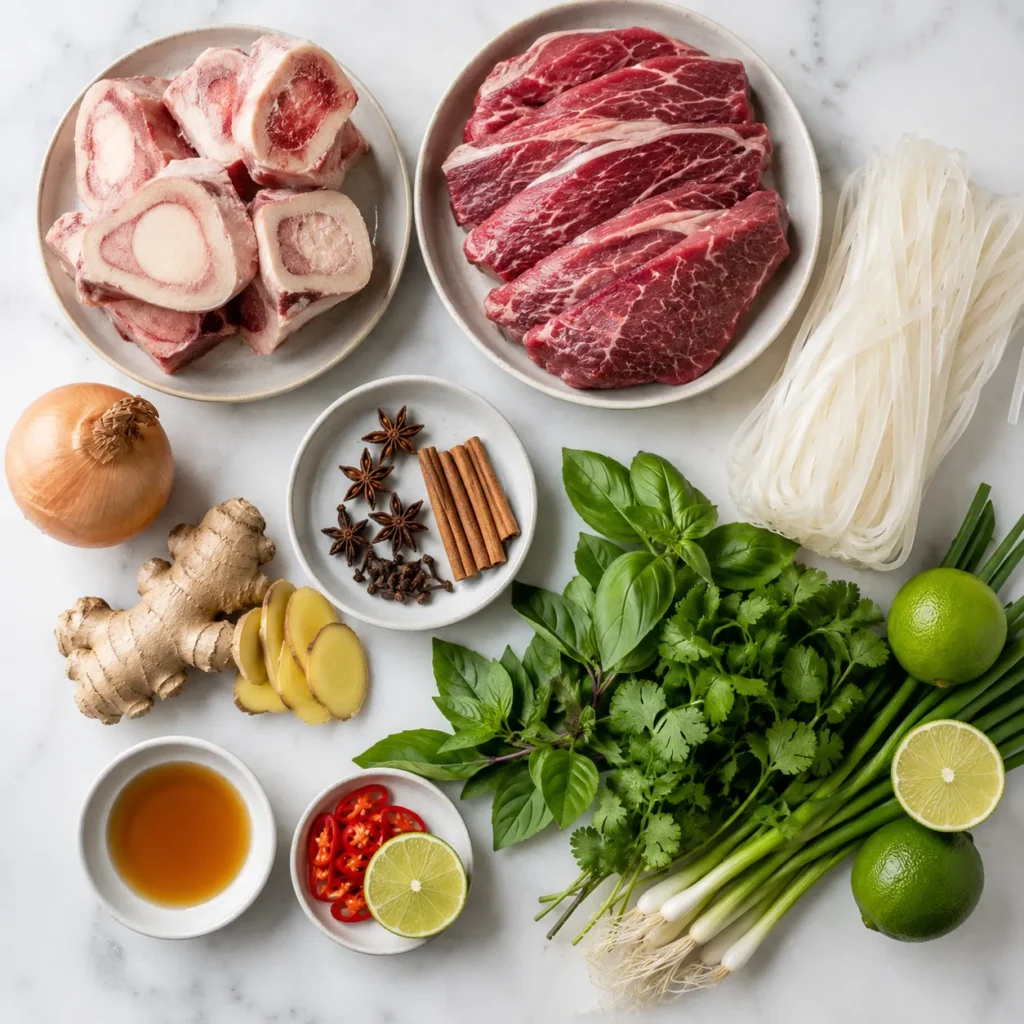
- 1.2 kg beef bones (marrow or knuckle bones for depth)
- 500 g beef brisket (adds richness and slices later for serving)
- 1 large onion, halved
- 1 large piece ginger (4–5 inches), halved lengthwise
- 2 cinnamon sticks
- 4 star anise pods
- 5 cloves
- 1 black cardamom pod (optional but highly recommended)
- 1 tablespoon coriander seeds
Seasoning
- 2 tablespoons fish sauce
- 1 tablespoon rock sugar or regular sugar
- Salt, to taste
For the noodles and beef
- 400 g flat rice noodles (pho noodles)
- 300 g raw beef sirloin or tenderloin, thinly sliced
- 200 g cooked brisket slices (from broth)
Fresh toppings
- Bean sprouts (1–2 cups)
- Fresh Thai basil leaves
- Fresh coriander (cilantro)
- Spring onions, finely sliced
- Lime wedges
- Thinly sliced chili (optional)
Step-by-Step Instructions
Step 1: Clean and prepare the bones for a clear broth
You start by rinsing beef bones under cold water, then boiling them for 10 minutes before discarding the water. This removes impurities and ensures your broth stays clean and aromatic rather than cloudy or greasy. This step takes about 15 minutes and sets the foundation for a professional-quality pho.
Chef’s Tip: Always blanch the bones properly because skipping this step leads to a heavy, unclear broth that lacks the light, refined character of authentic pho.
Step 2: Char aromatics for deep flavor
You place onion and ginger directly over an open flame or under a broiler until slightly blackened. This takes around 8–10 minutes and intensifies their sweetness while adding a smoky depth to your beef pho recipe broth.
Chef’s Tip: Don’t peel the onion before charring because the skin helps protect the inside while still allowing smoky flavor to develop.
Step 3: Build the broth and begin slow simmering
You combine cleaned bones, brisket, charred aromatics, and spices in a large pot with about 4 liters of water. Bring it to a gentle simmer and cook uncovered for 2.5 to 3 hours, skimming foam occasionally. This step extracts collagen and spice oils, creating a rich yet balanced broth.
Chef’s Tip: Keep the heat low and steady; boiling too aggressively will break the broth’s clarity and mute the delicate spice profile.
Step 4: Season the broth carefully
After simmering, you remove solids and strain the broth. Then you season with fish sauce, sugar, and salt, adjusting slowly until the flavor becomes savory, slightly sweet, and aromatic. This step takes about 10–15 minutes.
Chef’s Tip: Add fish sauce gradually because its saltiness can easily overpower the subtle spice balance if added all at once.
Step 5: Prepare noodles and beef for serving
You soak or briefly boil rice noodles until just tender, then drain immediately. Thinly slice raw beef as finely as possible so it cooks instantly when hot broth is poured over. This takes about 10–12 minutes and ensures perfect texture contrast.
Chef’s Tip: Slightly chill the beef before slicing; it firms up the meat, making it easier to cut paper-thin slices that cook evenly in the bowl.
Step 6: Assemble the pho bowl and serve hot
You place noodles in bowls, top with raw beef slices and brisket, then ladle over steaming hot broth. The heat gently cooks the raw beef in seconds, creating a silky texture. Finish with fresh herbs, bean sprouts, lime, and chili.
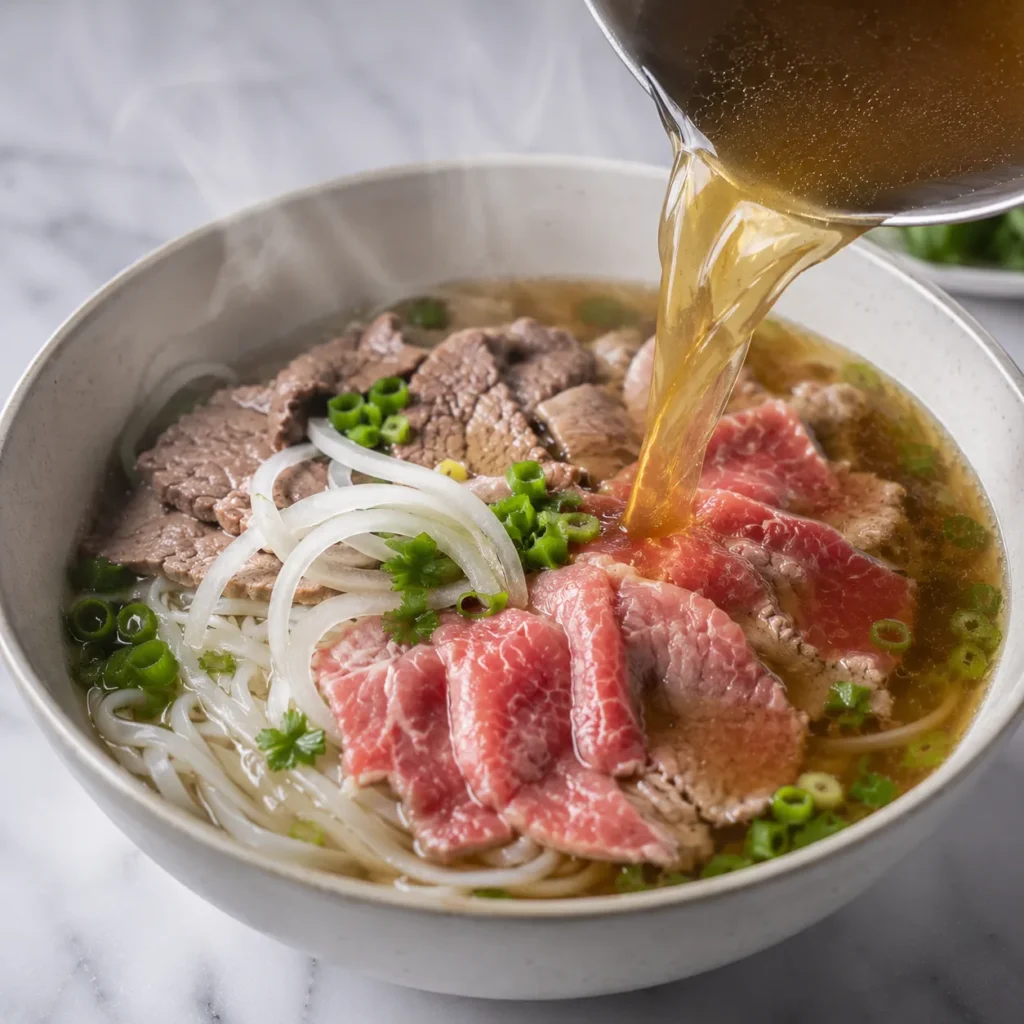
Chef’s Tip: Always pour the broth first over the beef so it cooks instantly; this preserves tenderness and keeps the flavor clean and juicy.
Nutritional Information (Per Serving)
| Nutrient | Amount |
| Calories | 520 kcal |
| Protein | 38 g |
| Carbohydrates | 45 g |
| Total Fat | 22 g |
| Fibre | 3 g |
| Sodium | 980 mg |
Why You’ll Love This Recipe
- You get a deeply aromatic broth that feels like it has been simmered for generations, yet you control every ingredient for a fresher, cleaner taste.
- The balance of herbs, spices, and beef creates a bowl that feels both light and filling, making it suitable for any time of day.
- You can customize toppings freely, allowing you to build each bowl exactly how you prefer it without losing authenticity.
- The cooking process is meditative and rewarding, giving you a restaurant-level result from simple home techniques.
Common Mistakes to Avoid
- Skipping the bone blanching step often leads to a cloudy broth with a greasy surface, which reduces the clean flavor profile of traditional pho.
- Boiling the broth too aggressively causes it to become muddy and dull instead of clear and aromatic, so maintaining a gentle simmer is essential.
- Over-seasoning early in the process can throw off balance, so you should always adjust saltiness and sweetness at the final stage.
- Cutting beef too thick prevents it from cooking properly in the hot broth, resulting in a chewy texture instead of soft, delicate slices.
Serving Suggestions
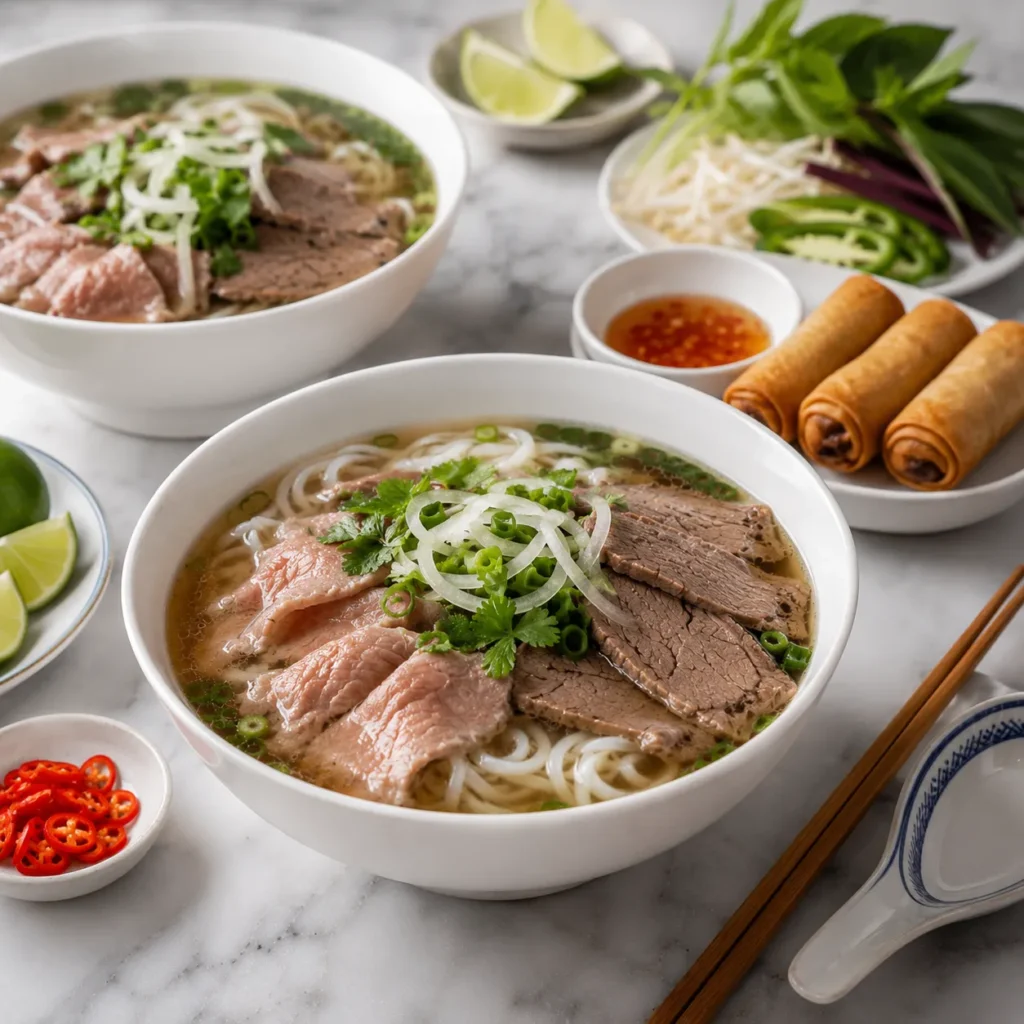
- You can serve this beef pho recipe with extra lime wedges and chili on the side so each person adjusts acidity and heat to their preference.
- Pair it with crispy spring rolls or light Vietnamese salads to create a full restaurant-style meal at home.
- Serve in deep bowls to retain heat longer, allowing the broth to slowly infuse the herbs as you eat.
- Add extra herbs tableside so the aroma stays fresh and vibrant until the very last spoonful.
Healthier Alternatives and Ingredient Swaps
- You can use lean beef cuts instead of brisket to reduce fat content while still maintaining a rich protein base.
- Replace rice noodles with zucchini noodles for a low-carb version that still absorbs the flavorful broth beautifully.
- Reduce sodium by using low-sodium fish sauce and balancing flavor with extra herbs and lime juice.
- Add more bean sprouts and fresh greens to increase fibre content and lighten the overall bowl.
Storage and Meal Prep Tips
- Store broth separately in an airtight container in the fridge for up to 4 days so it stays fresh and easy to reheat.
- Freeze extra broth in portions, allowing you to quickly assemble pho anytime without repeating the long simmering process.
- Keep noodles and toppings separate until serving to prevent sogginess and preserve texture.
- Reheat broth gently on the stove instead of microwaving to maintain its clarity and aromatic depth.
Conclusion
This aromatic beef pho recipe gives you full control over one of Vietnam’s most iconic dishes without sacrificing authenticity. With slow-simmered broth, carefully balanced spices, and fresh toppings, you create a bowl that feels both comforting and refined. Once you master the process, you’ll find yourself returning to it often, adjusting it to your taste and making it truly your own.