
Savory Beef Bulgogi Recipe for Sweet Korean Style Flavor
Few dishes deliver the perfect balance of sweet, savory, and smoky flavor quite like a classic beef bulgogi recipe. Thinly sliced beef absorbs a rich Korean-style marinade, creating a quick and satisfying meal that’s ideal for weeknight dinners, family gatherings, or meal prep.
Timing
- Prep Time: 20 minutes
- Marinating Time: 1 hour (recommended)
- Cook Time: 15 minutes
- Total Time: 1 hour 35 minutes
- Servings: 4 servings
Ingredients for Beef Bulgogi Recipe
For the Beef
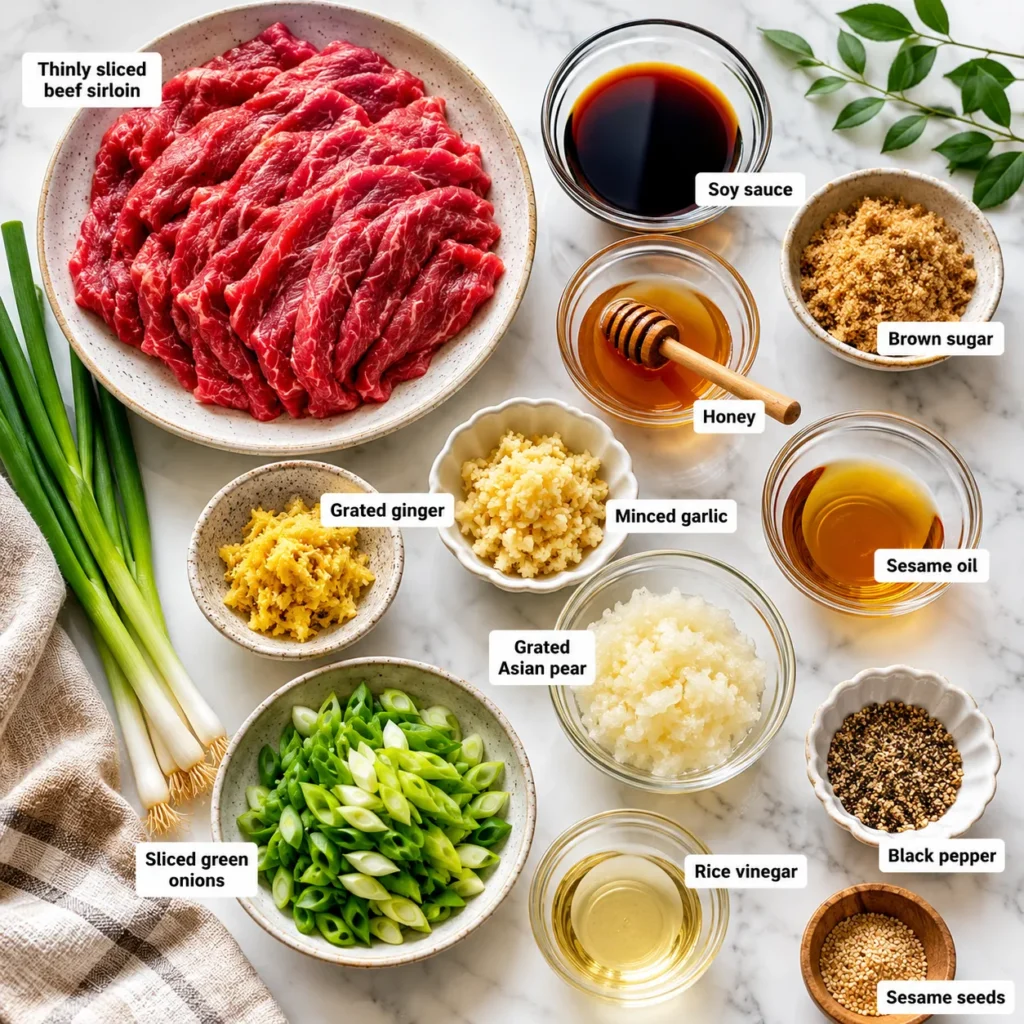
- 1½ pounds (680g) beef sirloin or ribeye, thinly sliced
- 1 tablespoon vegetable oil for cooking
For the Bulgogi Marinade
- ¼ cup low-sodium soy sauce
- 2 tablespoons brown sugar
- 1 tablespoon honey
- 2 tablespoons sesame oil
- 4 garlic cloves, minced
- 1 tablespoon fresh ginger, grated
- 1 small Asian pear, grated
- 2 green onions, finely sliced
- 1 tablespoon rice vinegar
- ½ teaspoon black pepper
For Garnish
- 1 tablespoon toasted sesame seeds
- 2 green onions, sliced
- Lettuce leaves for serving (optional)
How to Make Beef Bulgogi
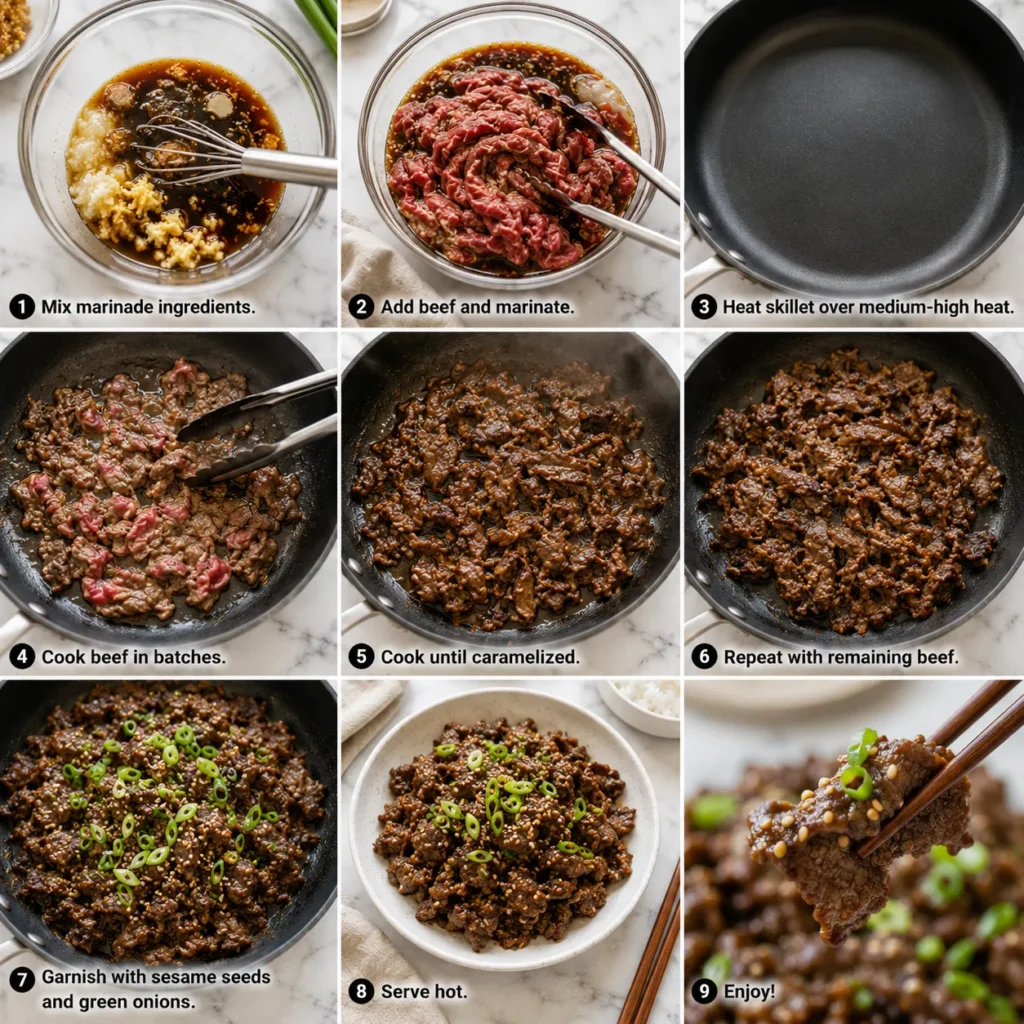
Step 1: Prepare the Marinade
In a large mixing bowl, combine the soy sauce, brown sugar, honey, sesame oil, garlic, ginger, grated pear, green onions, rice vinegar, and black pepper. Stir for about 2 minutes until the sugar dissolves and everything is evenly mixed.
The pear helps tenderize the beef naturally while adding the subtle sweetness that makes authentic Korean-style beef bulgogi so appealing.
Chef’s Tip: Grating the pear instead of chopping it creates more juice, which helps tenderize the meat more effectively and allows the sweet flavor to spread evenly throughout the marinade.
Step 2: Marinate the Beef
Add the thinly sliced beef to the marinade and toss thoroughly until every piece is coated. Cover the bowl and refrigerate for at least 1 hour, or up to overnight for deeper flavor.
Marinating allows the beef to absorb the sweet and savory ingredients while becoming more tender.
Chef’s Tip: If possible, freeze the beef for about 20 minutes before slicing. Slightly firm meat is much easier to cut into the thin slices needed for traditional beef bulgogi.
Step 3: Bring the Beef to Room Temperature
Remove the marinated beef from the refrigerator about 15 minutes before cooking. This short resting period helps the meat cook more evenly and prevents the pan from cooling down too much.
Separate any pieces that are sticking together so they cook quickly and develop better browning.
Chef’s Tip: Avoid leaving the beef out longer than necessary. Fifteen minutes is enough to remove the chill without compromising food safety or texture.
Step 4: Cook the First Batch
Heat a large skillet, grill pan, or wok over medium-high heat for about 2 minutes. Add half of the vegetable oil and half of the beef mixture. Cook for 3 to 4 minutes, stirring occasionally.
The beef should develop caramelized edges while remaining juicy inside. Cooking in batches prevents overcrowding and encourages browning.
Chef’s Tip: Resist the urge to stir constantly. Allowing the beef to sit briefly against the hot surface creates the rich caramelized flavor that makes bulgogi taste restaurant-quality.
Step 5: Finish Cooking the Remaining Beef
Add the remaining oil and cook the second batch for another 3 to 4 minutes. Return all the cooked beef to the pan and stir everything together for about 1 minute.
This final mixing step distributes the flavorful cooking juices evenly across all of the beef.
Chef’s Tip: If excess liquid accumulates in the pan, increase the heat slightly during the last minute of cooking so the sauce reduces and coats the meat instead of becoming watery.
Step 6: Garnish and Serve
Transfer the beef bulgogi to a serving platter and sprinkle with toasted sesame seeds and sliced green onions. Serve immediately while hot.
The fresh garnish adds texture, color, and a finishing layer of flavor that complements the sweet Korean-style beef beautifully.
Chef’s Tip: Toast sesame seeds in a dry skillet for 1 to 2 minutes before garnishing. This simple step intensifies their nutty aroma and adds noticeable depth to the finished dish.
Beef Bulgogi Nutrition Information
| Nutrient | Amount Per Serving |
| Calories | 410 |
| Protein | 33g |
| Carbohydrates | 14g |
| Total Fat | 24g |
| Saturated Fat | 7g |
| Fiber | 1g |
| Sugar | 10g |
| Sodium | 760mg |
| Cholesterol | 85mg |
| Iron | 15% DV |
Nutrition values are approximate and may vary based on ingredients used.
Why You’ll Love This Recipe
- The marinade creates the signature sweet Korean-style flavor that makes beef bulgogi so popular, balancing savory soy sauce, aromatic garlic, and natural sweetness without becoming overpowering.
- Thinly sliced beef cooks in just a few minutes, making this recipe practical for busy weeknights when you need a flavorful meal without spending hours in the kitchen.
- The ingredients are easy to find in most grocery stores, allowing you to enjoy restaurant-style Korean flavors without searching for specialty products.
- This beef bulgogi recipe works well for meal prep because the marinated meat can be prepared ahead of time and cooked when needed.
- The recipe is versatile enough to serve with rice, noodles, lettuce wraps, or vegetables, giving you plenty of options for different meals throughout the week.
Common Mistakes to Avoid
- Using thick slices of beef often results in chewy bulgogi because the marinade cannot penetrate the meat properly. Always slice the beef as thinly as possible for the best texture.
- Skipping the marinating time limits flavor development and tenderness. Even one hour makes a noticeable difference in the final result.
- Overcrowding the pan causes the beef to steam instead of brown. Cooking in batches allows moisture to evaporate and encourages caramelization.
- Cooking over low heat prevents the characteristic caramelized edges from forming. Medium-high heat creates the best balance of browning and juiciness.
- Adding extra soy sauce during cooking can make the dish overly salty. The marinade already provides enough seasoning when properly balanced.
Serving Suggestions
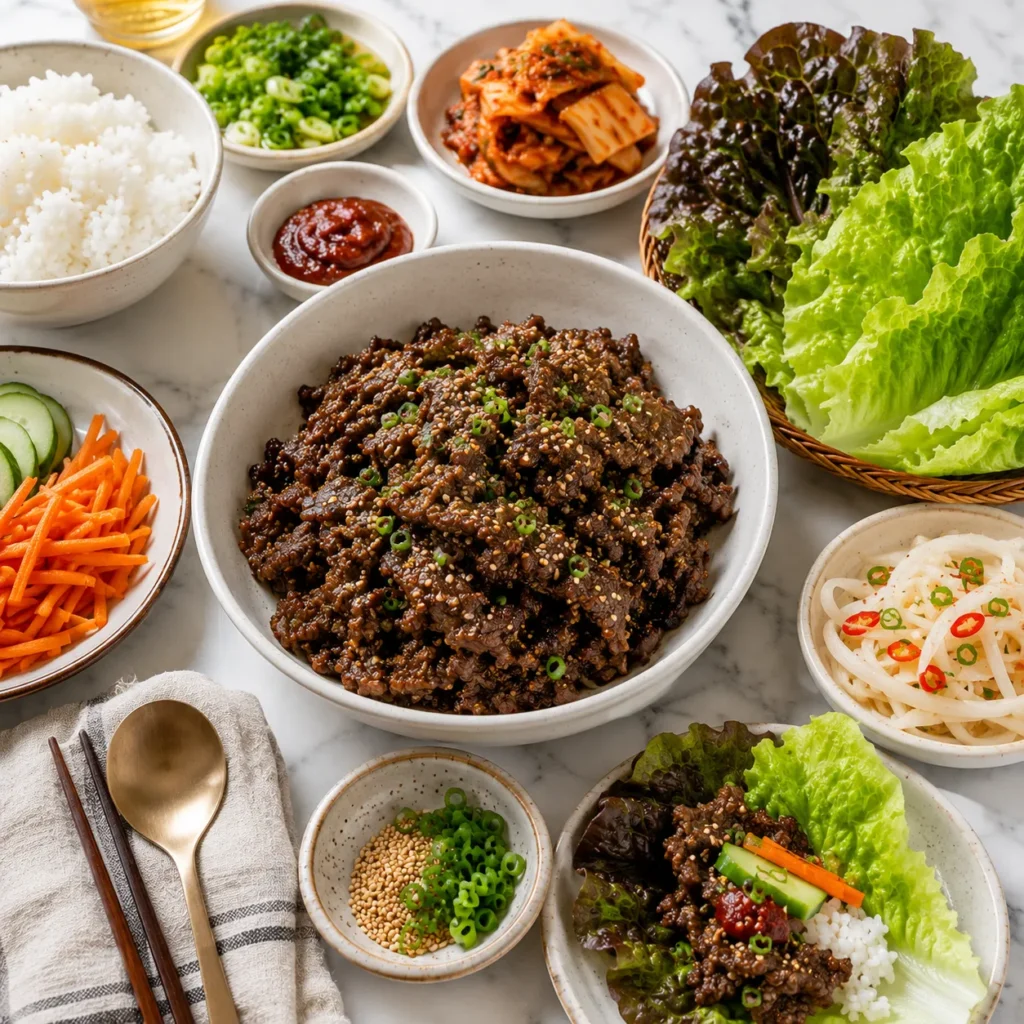
- Serve the beef bulgogi over steamed white rice so the grains absorb the flavorful juices and create a complete, satisfying meal.
- Wrap portions of the beef in crisp lettuce leaves with rice and sliced vegetables for a fresh Korean-inspired dinner presentation.
- Pair the beef with stir-fried vegetables such as broccoli, carrots, and bell peppers to add color, texture, and nutritional balance.
- Use leftover bulgogi as a filling for rice bowls topped with cucumbers, shredded carrots, and a fried egg for an easy lunch.
- Add the cooked beef to noodles with extra green onions and sesame seeds for a quick variation that feels like a completely new meal.
Healthier Alternatives and Ingredient Swaps
- Replace ribeye with lean sirloin to reduce overall fat while still maintaining excellent flavor and tenderness.
- Use coconut aminos instead of soy sauce if you prefer a lower-sodium alternative with a slightly sweeter profile.
- Swap brown sugar for a smaller amount of honey or maple syrup if you want a less processed sweetener option.
- Increase the vegetable content by serving the beef over cauliflower rice or alongside roasted vegetables instead of traditional white rice.
- Choose low-sodium soy sauce to help control sodium levels without sacrificing the classic savory taste associated with beef bulgogi.
Storage and Meal Prep Tips
- Store leftover beef bulgogi in an airtight container in the refrigerator for up to 4 days while maintaining good flavor and texture.
- Reheat gently in a skillet over medium heat rather than using high microwave power, which can make the beef tough and dry.
- Freeze cooked bulgogi in freezer-safe containers for up to 3 months and thaw overnight in the refrigerator before reheating.
- Prepare the marinade and beef up to 24 hours in advance to save time on busy cooking days while improving flavor development.
- Portion cooked beef into individual meal-prep containers with rice and vegetables for convenient lunches throughout the week.
Conclusion
This beef bulgogi recipe combines tender beef, a sweet and savory Korean-style marinade, and quick cooking techniques to create a meal that feels both comforting and impressive. The straightforward process makes it beginner-friendly, while the bold flavor delivers restaurant-quality results at home. Once you’ve mastered the basics, you can customize the ingredients and serving options to make this classic dish your own.