
Flaky Baked Salmon Recipe for Simple Healthy Meals
A perfectly cooked flaky baked salmon gives you a reliable, nourishing dinner that feels special without extra effort. You’ll love how quickly it comes together, making it ideal for busy weeknights or a clean, protein-rich meal anytime.
Timing
- Prep Time: 10 minutes
- Cook Time: 12–15 minutes
- Total Time: 25 minutes
- Servings: 4 servings
Ingredients For Flaky Baked Salmon Recipe
Salmon & Seasoning
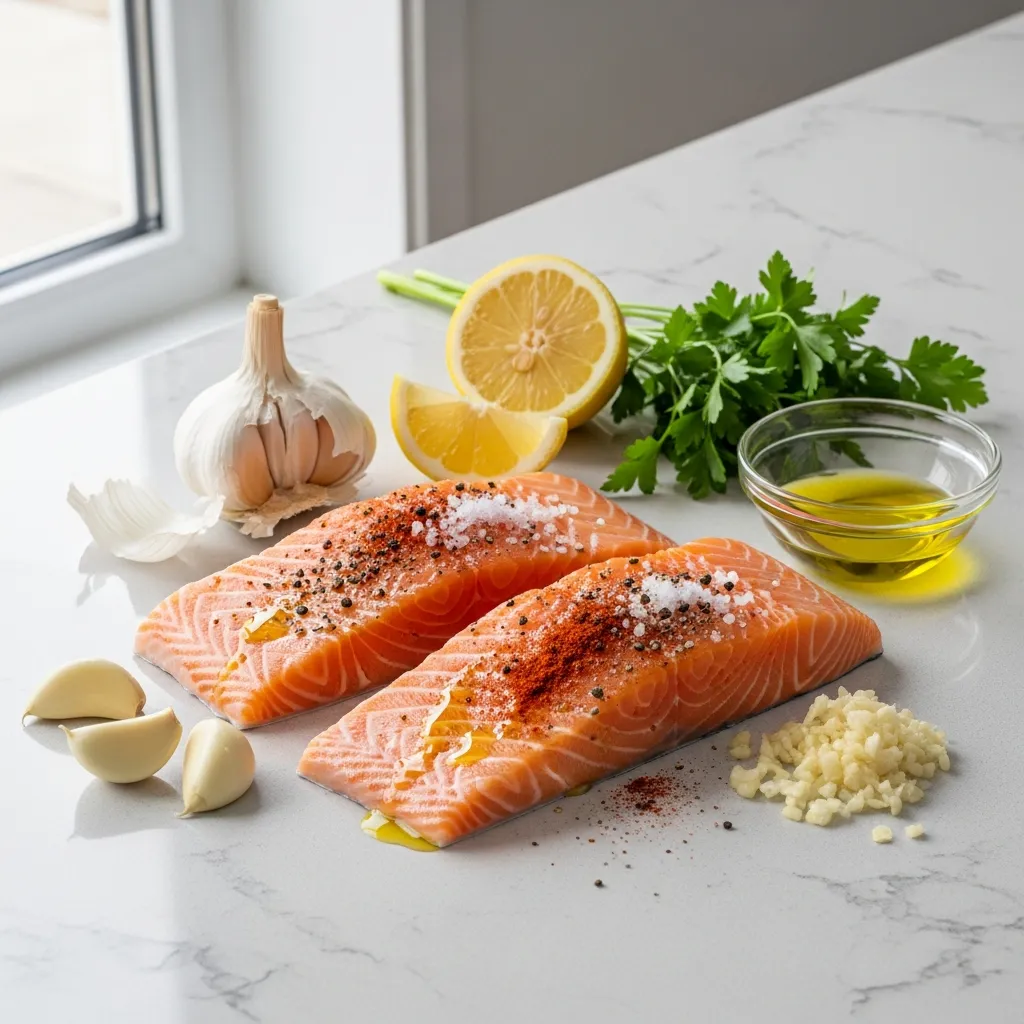
- 4 salmon fillets (about 6 oz each)
- 2 tablespoons olive oil
- 1 teaspoon salt
- ½ teaspoon black pepper
- 1 teaspoon garlic powder
- 1 teaspoon paprika
Flavor Enhancers
- 2 tablespoons fresh lemon juice
- 1 teaspoon lemon zest
- 2 cloves garlic, minced
- 1 tablespoon fresh parsley, chopped
Optional Additions
- ½ teaspoon chili flakes (for heat)
- 1 teaspoon honey (for subtle sweetness and balance)
Step-by-Step Instructions
Step 1: Preheat and Prepare the Baking Tray
Preheat your oven to 400°F (200°C). Line a baking tray with parchment paper or lightly grease it with oil. This step takes about 5 minutes and ensures your salmon doesn’t stick while baking evenly.
Chef’s Tip: Allowing the oven to fully preheat before placing the salmon inside helps it cook evenly from the start, preventing a dry outer layer with an undercooked center.
Step 2: Season the Salmon
Pat the salmon fillets dry using paper towels, then place them on the tray. Drizzle olive oil over each piece and rub it in gently. Sprinkle salt, pepper, garlic powder, and paprika evenly.
This step takes 3–4 minutes and builds the base flavor that carries through the entire dish.
Chef’s Tip: Drying the salmon first helps the seasoning stick better and allows the surface to roast slightly instead of steaming, which improves texture.
Step 3: Add Fresh Flavor Elements
Mix lemon juice, lemon zest, and minced garlic in a small bowl. Spoon this mixture evenly over each fillet, making sure it coats the surface.
This step takes about 2 minutes and adds brightness that balances the richness of the salmon.
Chef’s Tip: Distributing the lemon mixture evenly prevents overpowering one area while leaving another bland, giving you a balanced bite every time.
Step 4: Bake the Salmon
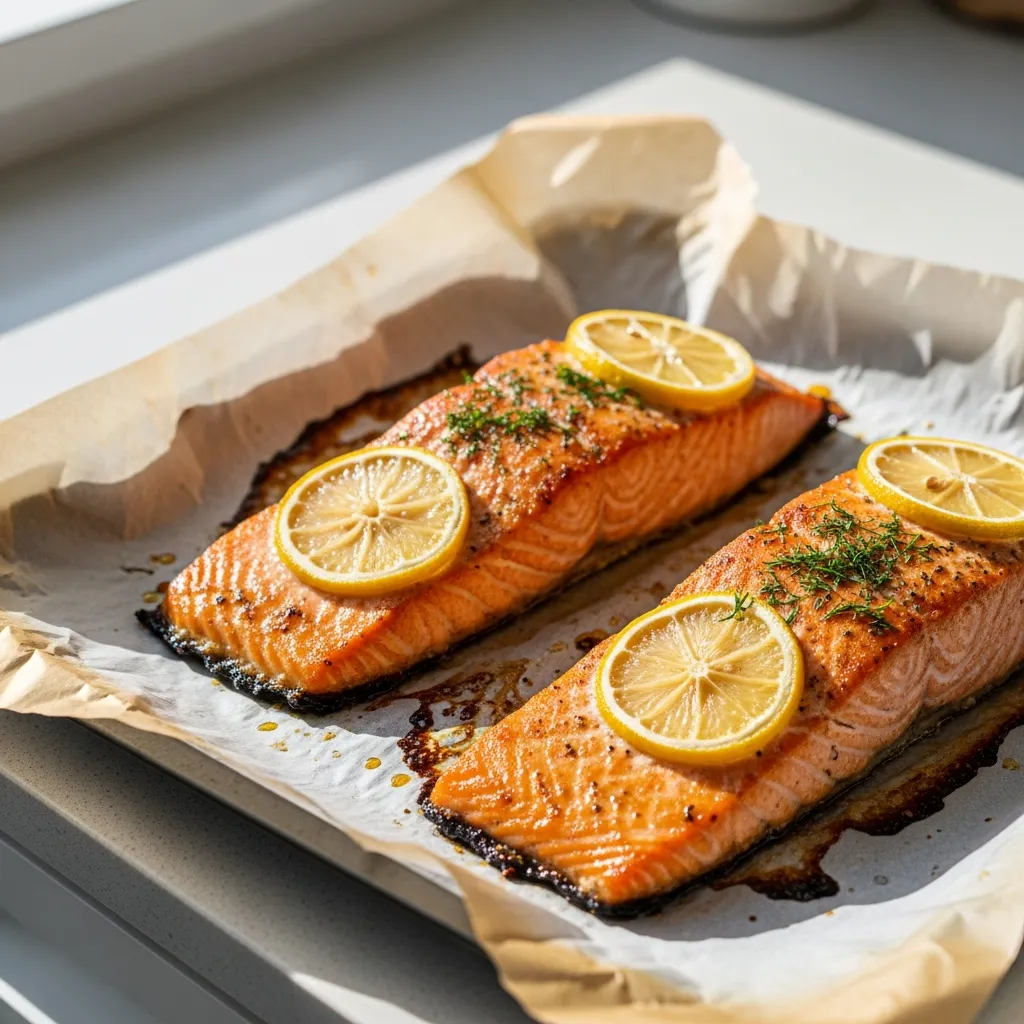
Place the tray in the preheated oven and bake for 12–15 minutes. The salmon is done when it flakes easily with a fork and appears opaque in the center.
This is the most important step, where precise timing ensures perfect doneness.
Chef’s Tip: Avoid overbaking, as salmon continues to cook slightly after you remove it from the oven. Pull it out when it just begins to flake for the best texture.
Step 5: Garnish and Rest
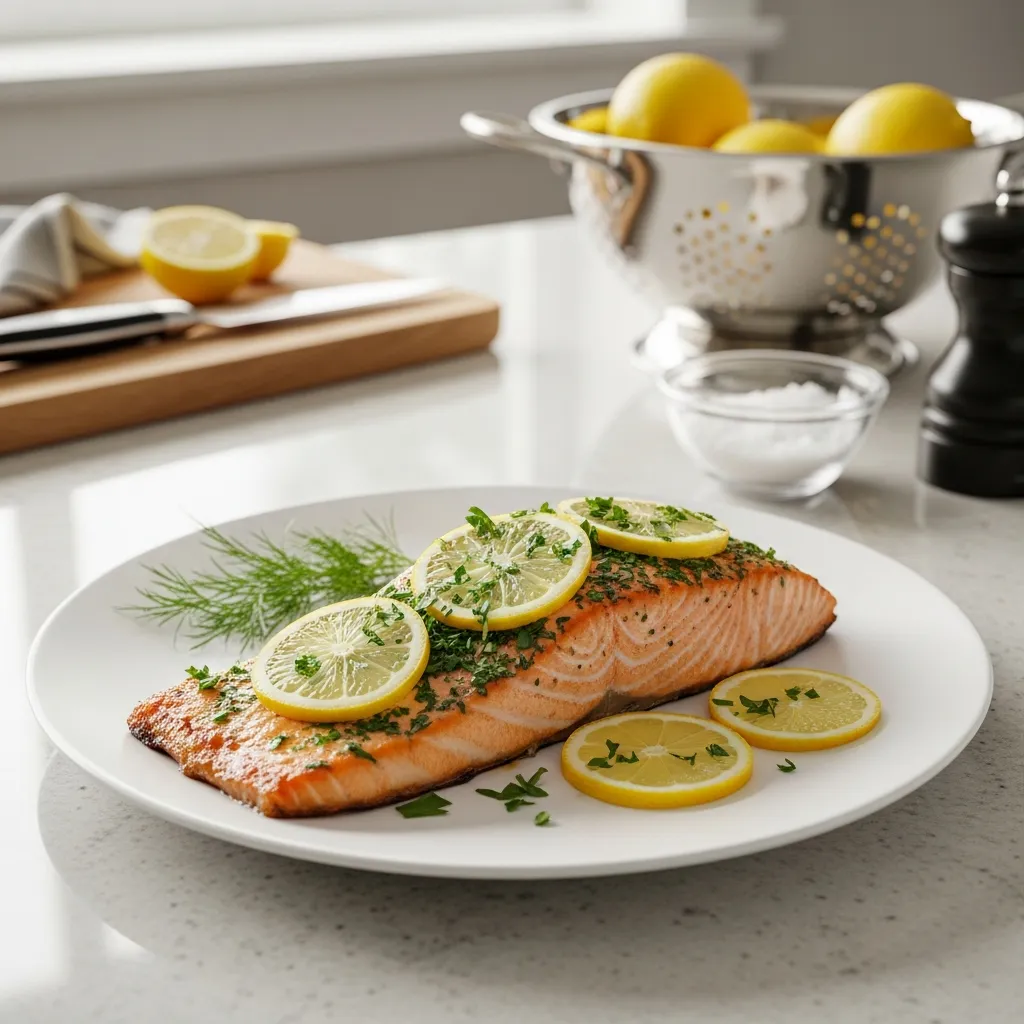
Remove the salmon from the oven and let it rest for 2–3 minutes. Sprinkle fresh parsley and optional chili flakes or honey over the top before serving.
This final step enhances presentation and allows juices to redistribute.
Chef’s Tip: Resting the salmon briefly locks in moisture, ensuring each bite stays tender instead of drying out immediately.
Nutritional Information (Per Serving)
| Nutrient | Amount |
| Calories | 320 kcal |
| Protein | 34 g |
| Carbohydrates | 3 g |
| Total Fat | 19 g |
| Fiber | 0.5 g |
| Omega-3 Fats | High |
Why You’ll Love This Recipe
- You get a consistent, flaky texture every time because the method focuses on proper temperature and timing, which eliminates guesswork for beginners.
- The ingredient list stays simple, yet the combination of lemon, garlic, and herbs creates a restaurant-quality flavor without complicated steps.
- It fits into a healthy lifestyle easily since salmon is rich in protein and omega-3s, making it ideal for clean eating meals.
- You can pair it with a wide variety of sides, from vegetables to grains, which makes it adaptable for different meals throughout the week.
- Even if you’re exploring recipes like Tortellini Squash Soup or Butternut Squash Tortellini Soup, this salmon works perfectly as a protein addition alongside those comforting dishes.
Common Mistakes to Avoid
- Overcooking the salmon is one of the most common mistakes, and it usually happens when you leave it in the oven too long; always check for flakiness instead of relying only on time.
- Skipping the drying step leads to excess moisture, which prevents proper roasting and results in a softer, less appealing texture.
- Using too much seasoning at once can overpower the natural flavor of salmon, so it’s important to keep a balanced approach.
- Not preheating the oven properly causes uneven cooking, leaving parts of the fish undercooked while others dry out.
- Ignoring resting time can cause the juices to escape immediately, reducing the tenderness of the final dish.
Serving Suggestions
- Serve your flaky baked salmon with roasted vegetables like asparagus or broccoli, which complement the light, citrusy flavor and create a balanced plate.
- Pair it with rice, quinoa, or mashed potatoes to make the meal more filling while absorbing the flavorful juices from the fish.
- Add it alongside cozy dishes like Butternut Tortellini Soup or Butternut Squash Soup With Tortellini for a comforting yet protein-rich dinner.
- Use leftovers in salads or wraps to create quick lunches without sacrificing taste or nutrition.
- For a seasonal touch, combine it with sides inspired by Fall Butternut Squash Tortellini or Sausage And Butternut Squash Soup for a complete menu.
Healthier Alternatives and Ingredient Swaps
- Swap olive oil with avocado oil if you prefer a higher smoke point and a slightly different flavor profile without compromising health benefits.
- Replace salt with a low-sodium seasoning blend to make the recipe more heart-friendly while maintaining flavor.
- Use fresh herbs like dill instead of parsley for a lighter, fresher taste that pairs beautifully with salmon.
- If you want a sweeter balance, substitute honey with maple syrup in small amounts for a natural alternative.
- Pair the salmon with lighter soups such as Creamy Butternut Squash And Sausage Soup or Butternut Sausage Soup in reduced-fat versions to keep meals balanced.
Storage and Meal Prep Tips
- Store leftover salmon in an airtight container in the refrigerator for up to 3 days, ensuring it stays fresh and safe to eat.
- Reheat gently in the oven at a low temperature to prevent the fish from drying out, rather than using a microwave which can overcook it quickly.
- You can prep the seasoning and marinade ahead of time, making it easier to cook fresh salmon quickly during busy days.
- Flake leftover salmon and use it in bowls, sandwiches, or salads for convenient meal prep options.
- Pair it with pre-made dishes like Butternut Squash Sausage Tortellini Soup to create a complete, ready-to-go meal plan.
Conclusion
This flaky baked salmon recipe works because it simplifies technique while focusing on the details that truly matter—temperature, timing, and balanced seasoning. Once you master it, you can easily adapt flavors and pairings to suit your taste, making it a dependable go-to for healthy, satisfying meals.
Baked Salmon Recipe
Ingredients
Method
- Preheat the oven to 400°F and prepare a lined baking tray to ensure even cooking and prevent sticking.
- Pat salmon dry and season with olive oil, salt, pepper, garlic powder, and paprika for a balanced flavor base.
- Mix lemon juice, zest, and garlic, then spoon over the fillets to enhance freshness and aroma.
- Bake for 12–15 minutes until the salmon flakes easily and appears opaque in the center.
- Rest briefly, garnish with parsley, and serve immediately for the best texture and flavor.
Notes
- Always dry the salmon before seasoning because moisture prevents proper roasting and reduces flavor absorption.
- Monitor cooking time closely since salmon continues cooking after removal, which can easily lead to overcooking if ignored.
- Use fresh lemon juice instead of bottled for a brighter, cleaner taste that enhances the dish naturally.
- Let the salmon rest briefly before serving so the juices redistribute and maintain tenderness.