
Tangy Lemon Bars Recipe for Bright Citrus Dessert
A good lemon bar should hit that perfect balance between sweet and sharp, with a buttery crust that stays tender under a bright citrus filling. These tangy lemon bars are ideal for spring gatherings, bake sales, afternoon coffee breaks, or anytime you want a dessert that feels fresh instead of overly heavy.
Timing
- Prep Time: 20 minutes
- Cook Time: 40 minutes
- Cooling Time: 2 hours
- Total Time: 3 hours
- Servings: 12 lemon bars
Ingredients
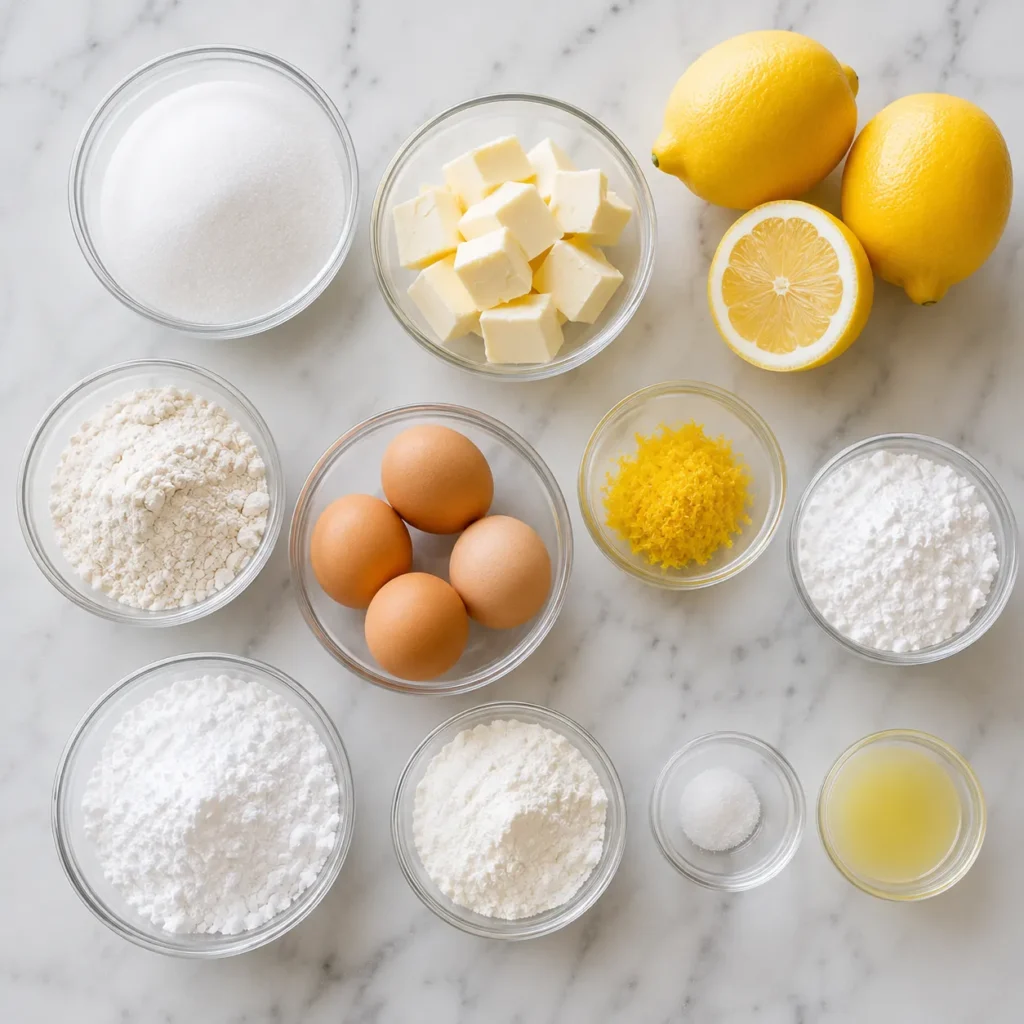
For the Buttery Shortbread Crust
- 1 cup unsalted butter, softened
- 1/2 cup granulated sugar
- 2 cups all-purpose flour
- 1/4 teaspoon salt
For the Tangy Lemon Filling
- 4 large eggs
- 1 1/2 cups granulated sugar
- 1/4 cup all-purpose flour
- 2 tablespoons cornstarch
- 2/3 cup freshly squeezed lemon juice
- 1 tablespoon lemon zest
- 1/4 teaspoon salt
For Finishing
- 2 tablespoons powdered sugar for dusting
- Thin lemon slices for garnish, optional
How to Make Tangy Lemon Bars
Step 1: Prepare the Baking Pan and Oven
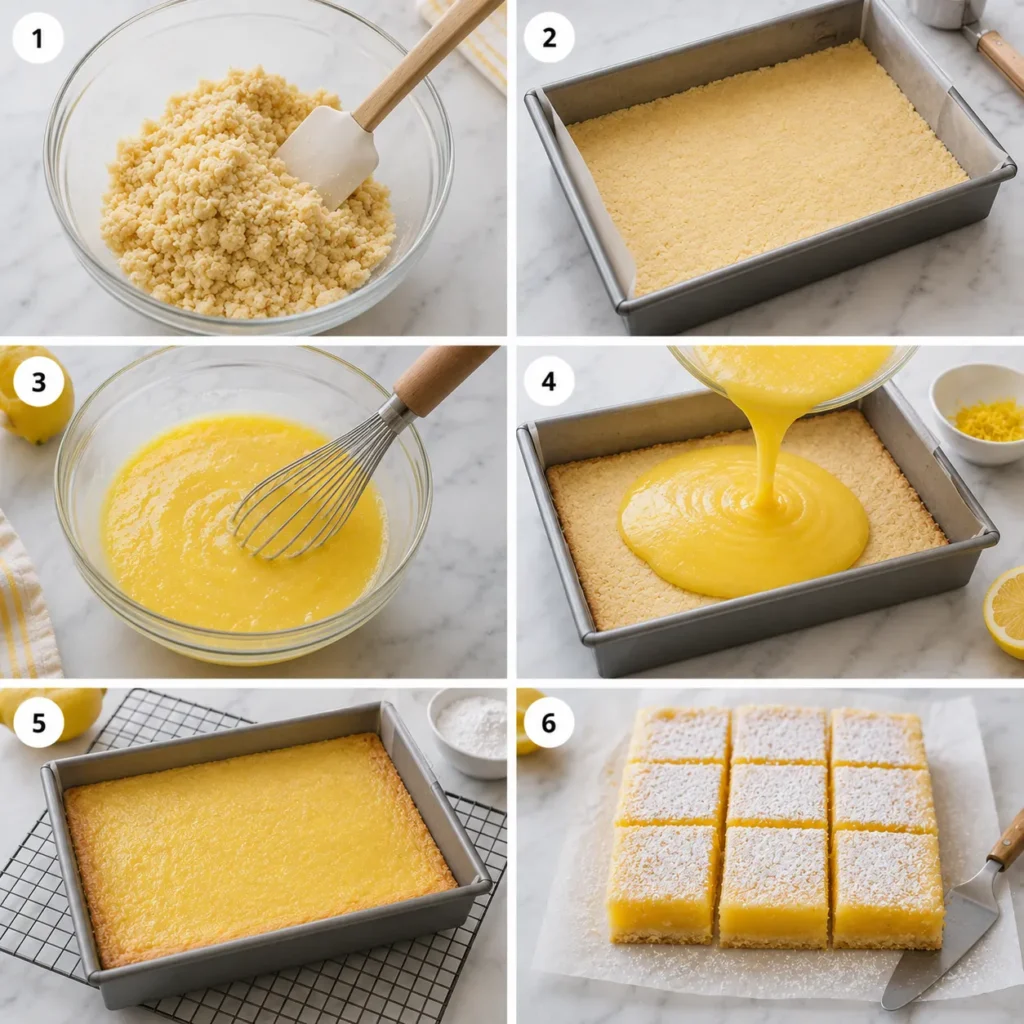
Preheat your oven to 350°F (175°C). Line a 9×13-inch baking pan with parchment paper, leaving extra paper hanging over the sides so you can easily lift the bars out later. Lightly grease the parchment with butter or cooking spray.
In a medium bowl, cream the softened butter and sugar together for about 2 minutes until smooth. Add the flour and salt, then mix until a soft dough forms. Press the dough evenly into the bottom of the prepared pan.
Bake the crust for 18–20 minutes until the edges turn lightly golden.
Chef’s Tip: Press the crust firmly into the corners using the bottom of a measuring cup. This creates an even layer that bakes consistently and prevents thin spots from becoming too crisp.
Step 2: Mix the Lemon Filling
While the crust bakes, prepare the filling. In a large bowl, whisk together the eggs and sugar until fully combined and slightly pale. Add the flour, cornstarch, lemon juice, lemon zest, and salt. Whisk for another minute until smooth and lump-free.
Fresh lemon juice makes a noticeable difference here because bottled juice often tastes flat and overly acidic. The zest also adds natural citrus oils that give the bars a stronger lemon aroma.
Chef’s Tip: Zest the lemons before juicing them because whole lemons are much easier to handle. Use only the yellow outer peel and avoid the bitter white pith underneath.
Step 3: Pour the Filling Over the Hot Crust
Once the crust comes out of the oven, immediately pour the lemon filling over the warm base. The hot crust helps the filling begin setting quickly and keeps the layers from separating during baking.
Carefully return the pan to the oven and bake for 20–22 minutes. The center should look set with only a slight wobble when you gently shake the pan.
Chef’s Tip: Avoid overbaking the filling because the eggs continue cooking as the bars cool. Pulling them out at the right moment keeps the texture smooth and creamy instead of rubbery.
Step 4: Cool the Lemon Bars Properly
Place the pan on a wire rack and let the lemon bars cool at room temperature for about 1 hour. After that, transfer them to the refrigerator for at least another hour so the filling firms up completely.
Cooling may feel like the hardest part, but it is essential for clean slices and the proper texture. Warm lemon bars tend to fall apart and stick to the knife.
Chef’s Tip: Chill the bars uncovered at first so condensation does not form on the surface. Excess moisture can soften the powdered sugar topping later.
Step 5: Slice and Finish the Bars
Once fully chilled, lift the bars out of the pan using the parchment paper overhang. Place them on a cutting board and dust lightly with powdered sugar.
Use a sharp knife to cut the lemon bars into squares or rectangles. Wipe the knife clean between cuts for neat edges that look bakery-quality.
Chef’s Tip: For especially clean slices, run the knife under hot water and dry it before each cut. The warm blade glides through the filling without dragging crumbs across the surface.
Step 6: Garnish and Serve
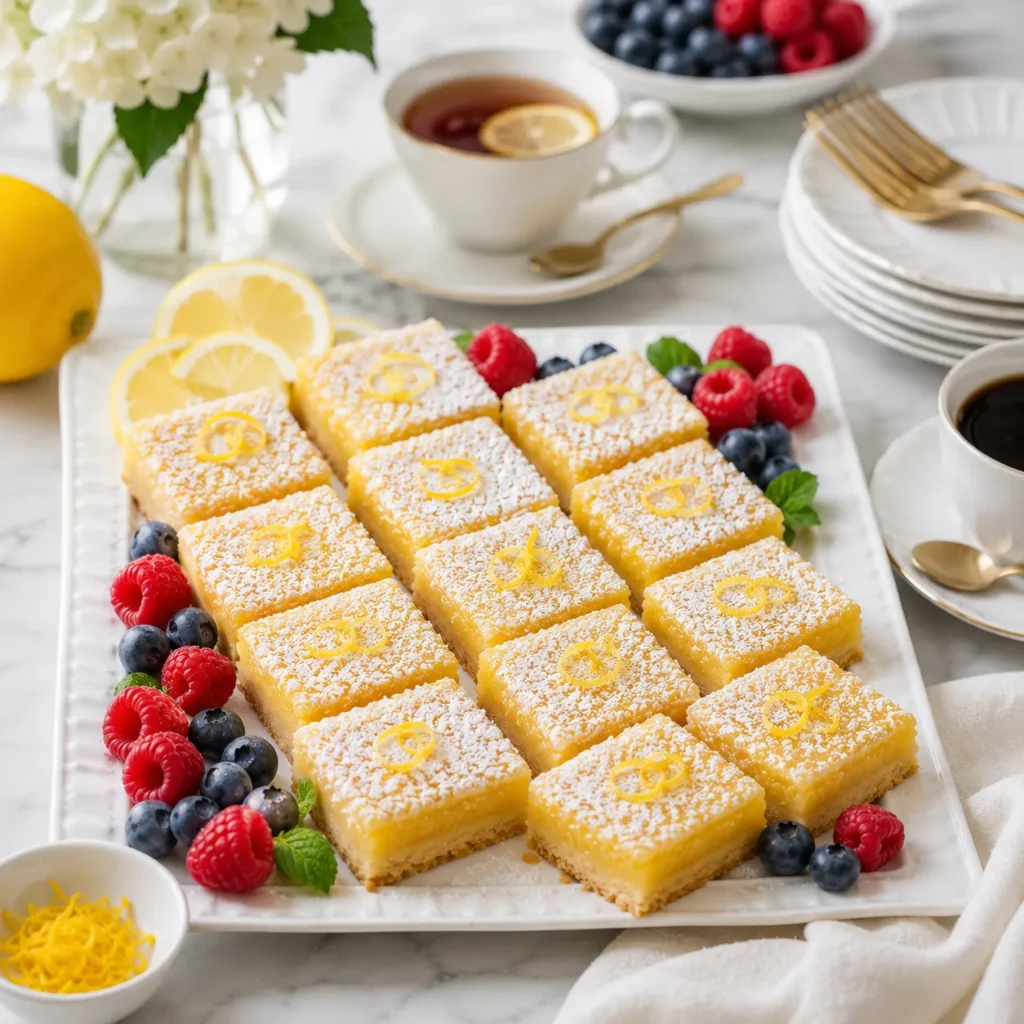
Arrange the lemon bars on a serving platter with thin lemon slices or a little extra zest for color. Serve chilled or slightly cool for the best flavor and texture.
These bars pair especially well with tea, iced coffee, or fresh berries because the tart citrus flavor balances creamy or sweet drinks beautifully.
Chef’s Tip: Let refrigerated bars sit at room temperature for 10 minutes before serving. The filling softens slightly and the lemon flavor becomes brighter and more noticeable.
Lemon Bars Nutrition Information
| Nutrient | Per Serving |
| Calories | 285 |
| Protein | 4g |
| Carbohydrates | 36g |
| Total Fat | 14g |
| Saturated Fat | 8g |
| Fiber | 1g |
| Sugar | 24g |
| Sodium | 95mg |
| Vitamin C | 12% DV |
Why You’ll Love This Recipe
- The buttery shortbread crust stays firm enough to hold the filling while still tasting soft and tender. You get a satisfying contrast between crisp edges and smooth citrus filling in every bite.
- Fresh lemon juice gives these lemon bars a bright flavor that tastes clean and refreshing instead of overly sugary. The tartness keeps the dessert balanced and easy to enjoy even after a large meal.
- You do not need advanced baking skills or specialty equipment to make this recipe successfully. The steps are straightforward and beginner-friendly while still producing bakery-style results.
- These tangy lemon bars store well in the refrigerator, which makes them ideal for preparing ahead of parties, holidays, picnics, or weekend gatherings.
- The recipe uses simple pantry ingredients that are easy to find year-round, so you can make this citrus dessert whenever you crave something fresh and homemade.
Common Mistakes to Avoid
- Overmixing the crust dough can make the base dense and tough because too much mixing develops gluten in the flour. Stir only until the ingredients come together into a soft dough.
- Using bottled lemon juice often produces dull flavor because it lacks the fresh citrus oils found in real lemons. Fresh juice and zest create a much brighter dessert with better aroma.
- Cutting the bars before they are fully chilled usually leads to messy slices and a filling that falls apart. Allow enough cooling time so the filling can properly set.
- Overbaking the filling can cause cracks and a rubbery texture because the eggs become overcooked. Remove the bars when the center still has a slight jiggle.
- Adding powdered sugar too early may cause it to dissolve into the bars from trapped moisture. Dust the tops shortly before serving for the best appearance.
Serving Suggestions
- Serve these lemon bars chilled with fresh raspberries or strawberries because the berries complement the citrus flavor while adding color to the dessert plate.
- Pair the bars with hot tea or iced coffee for a balanced afternoon treat. The tart lemon filling cuts through rich drinks especially well.
- Add a small dollop of whipped cream for a softer, creamier finish that tones down the sharp citrus notes without overpowering them.
- Arrange the lemon bars on a dessert tray alongside brownies and cookies for parties or bake sales. Their bright yellow filling adds visual contrast and variety.
- Crumble leftover lemon bars over vanilla yogurt or ice cream to create an easy layered dessert with extra texture and flavor.
Healthier Alternatives and Ingredient Swaps
- Replace part of the all-purpose flour with white whole wheat flour for added fiber while still maintaining a soft crust texture.
- Reduce the sugar in the filling slightly if you prefer a sharper citrus flavor. Lowering the sweetness by about 1/4 cup still keeps the filling balanced.
- Use a gluten-free flour blend in both the crust and filling if you need a gluten-free dessert option. Choose a blend designed specifically for baking for the best results.
- Substitute coconut sugar in the crust for a slightly deeper caramel-like flavor while reducing the refined sugar content.
- Greek yogurt can replace a small portion of the butter in the crust if you want a lighter base, though the texture will be slightly softer.
Storage and Meal Prep Tips
- Store the lemon bars in an airtight container in the refrigerator for up to 5 days. Keeping them chilled helps maintain the firm texture of the filling.
- Place parchment paper between stacked layers so the powdered sugar topping does not stick or smear during storage.
- Freeze the bars without powdered sugar for up to 2 months. Wrap them tightly in plastic wrap and place them in a freezer-safe container to prevent freezer burn.
- Thaw frozen lemon bars overnight in the refrigerator instead of at room temperature. Slow thawing helps preserve the smooth texture of the filling.
- Prepare the crust a day ahead if you want to save time before serving. Once baked, allow it to cool completely and cover tightly until ready to add the filling.
Conclusion
These tangy lemon bars work because every layer is balanced carefully, from the buttery shortbread crust to the bright citrus filling that stays smooth and creamy. You can keep them classic with powdered sugar or customize them with berries, whipped cream, or extra zest depending on the occasion. Once you make them from scratch, you will understand why homemade lemon bars always taste fresher, brighter, and more satisfying than store-bought versions.

Tangy Lemon Bars Recipe for Bright Citrus Dessert
Ingredients
Method
- Preheat the oven to 350°F and line a 9×13-inch baking pan with parchment paper so the bars can be removed easily after baking.
- Cream the butter and sugar together until smooth, then mix in the flour and salt until a soft dough forms. Press the dough evenly into the pan and bake until lightly golden around the edges.
- Whisk together the eggs, sugar, flour, cornstarch, lemon juice, lemon zest, and salt until completely smooth with no lumps remaining in the filling.
- Pour the lemon mixture over the hot baked crust and return the pan to the oven. Bake until the center looks mostly set with a slight wobble.
- Cool the bars at room temperature first, then refrigerate them until fully chilled so the filling firms up properly before slicing.
- Dust the chilled lemon bars with powdered sugar, slice carefully using a sharp knife, and serve cold or slightly cool for the best flavor.
Notes
- Always use freshly squeezed lemon juice because it provides brighter flavor and better aroma than bottled juice, which can taste overly acidic and flat.
- Chill the lemon bars completely before cutting so the filling stays smooth and the slices hold their shape without breaking apart.
- Wipe the knife clean between each cut because sticky filling and crumbs can quickly make the bars look messy around the edges.
- Avoid overbaking the filling since eggs continue cooking as the bars cool. Removing them slightly early keeps the texture creamy instead of rubbery.
- Dust the powdered sugar on top shortly before serving because moisture from refrigeration can cause the sugar to dissolve into the surface.