
Soft Biscoff Cookie Recipe for Sweet Spiced Caramel Flavor
Warm caramel notes, soft centers, and the unmistakable spiced flavor of Biscoff cookies make this recipe impossible to ignore. You get bakery-style cookies with crisp edges and gooey middles that work perfectly for weekend baking, holiday trays, or an easy homemade dessert craving.
Timing
- Prep Time: 20 minutes
- Chill Time: 30 minutes
- Cook Time: 11–13 minutes
- Total Time: 1 hour 5 minutes
- Servings: 14 large cookies
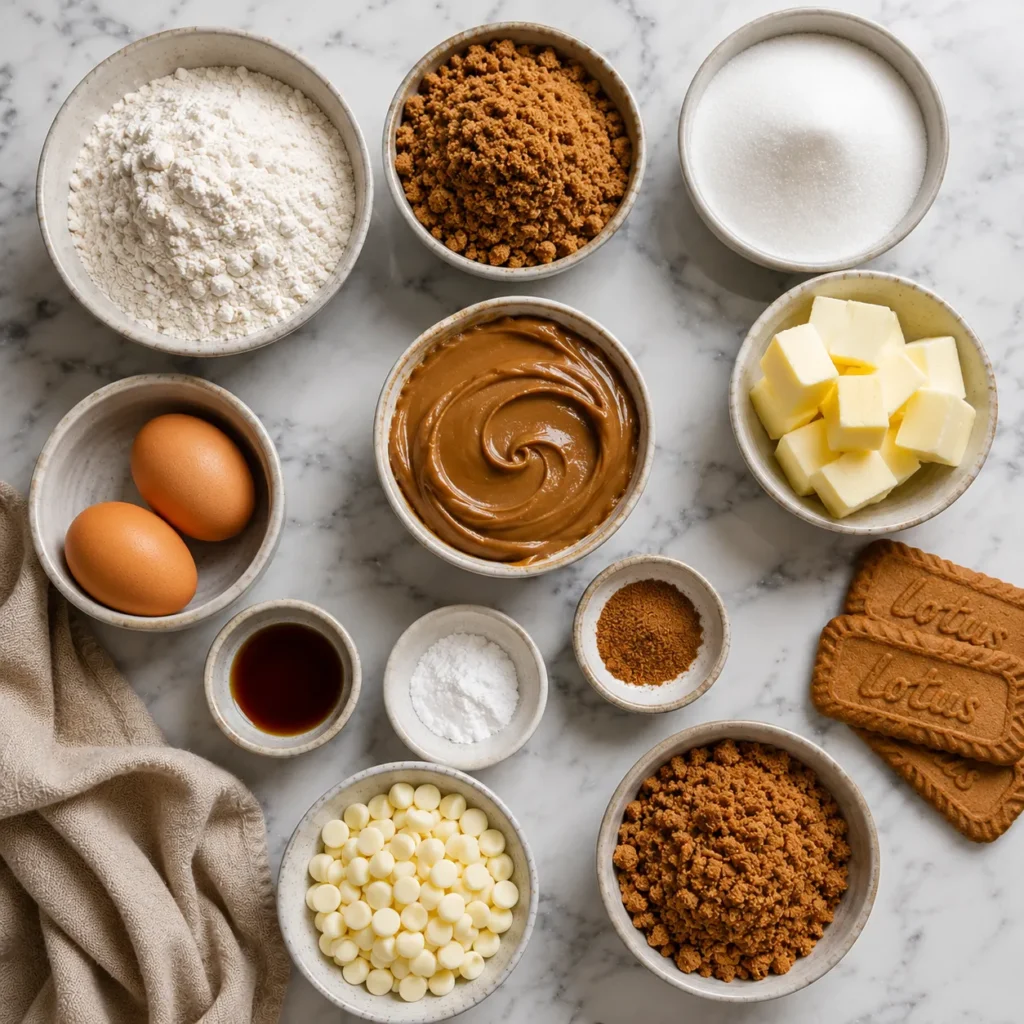
Ingredients You’ll Need
Dry Ingredients
- 2 ¼ cups all-purpose flour
- 1 teaspoon baking soda
- ½ teaspoon baking powder
- ½ teaspoon salt
- 1 teaspoon ground cinnamon
Wet Ingredients
- ¾ cup unsalted butter, softened
- ¾ cup light brown sugar
- ¼ cup granulated sugar
- ½ cup creamy Biscoff spread
- 1 large egg
- 1 egg yolk
- 2 teaspoons vanilla extract
Mix-Ins and Toppings
- 10 Biscoff cookies, roughly crushed
- ¼ cup white chocolate chips
- 2 tablespoons extra Biscoff spread for topping
- 2 extra Biscoff cookies, broken into pieces for garnish
How to Make Soft Biscoff Cookies
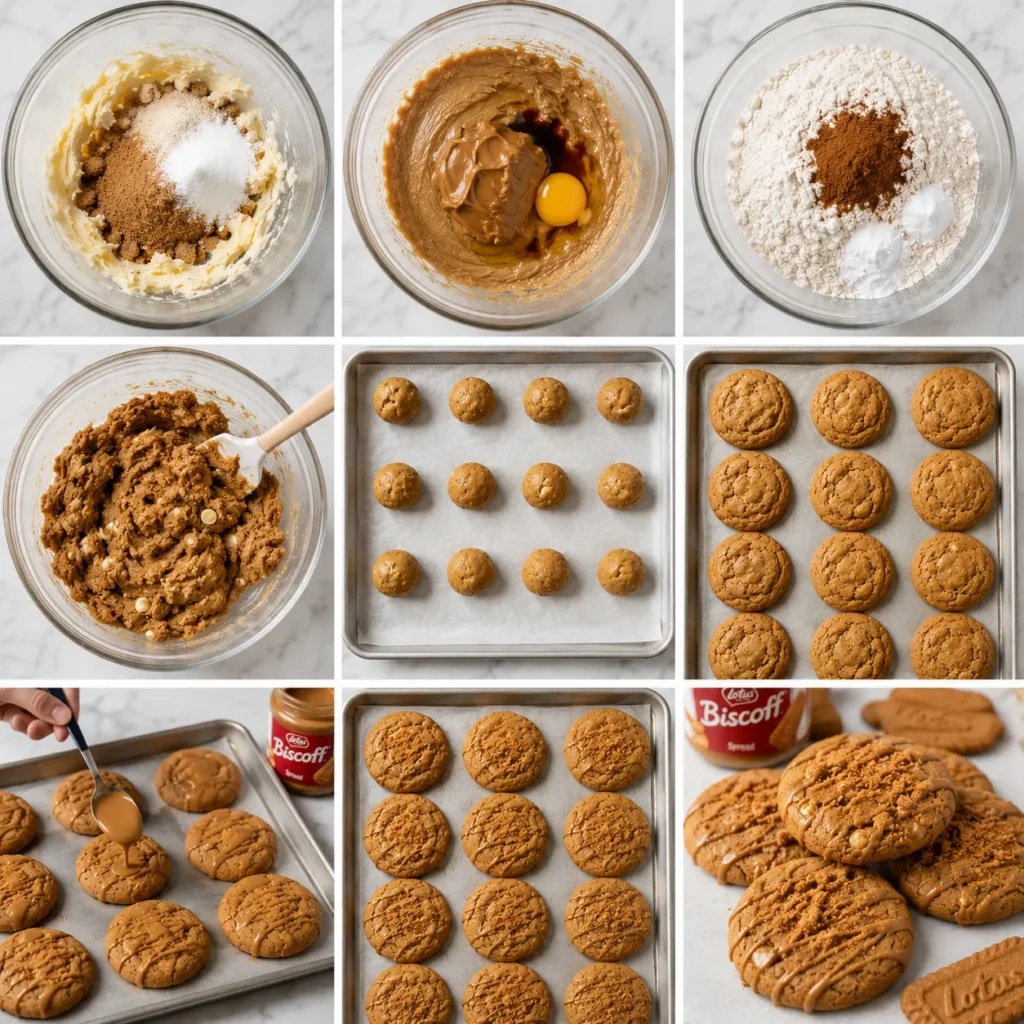
Step 1: Prepare Your Baking Ingredients
Preheat your oven to 350°F (175°C) and line two baking trays with parchment paper. In a medium bowl, whisk together the flour, baking soda, baking powder, salt, and cinnamon for about 1 minute so everything distributes evenly.
In another large bowl, beat the softened butter, brown sugar, and granulated sugar for 2–3 minutes until the mixture looks pale and fluffy. Add the Biscoff spread, egg, egg yolk, and vanilla extract, then mix again until smooth.
The extra egg yolk adds richness and helps create the soft cookie texture that makes this Biscoff cookie recipe stand out.
Chef’s Tip: Your butter should feel soft enough to press with a finger but not melted. Overly warm butter causes the cookies to spread too quickly, leaving you with thin cookies instead of thick, bakery-style centers.
Step 2: Combine the Dough Carefully
Add the dry ingredients into the wet mixture in two batches, mixing slowly after each addition. Once the flour disappears, fold in the crushed Biscoff cookies and white chocolate chips using a spatula.
This step takes about 3 minutes total. Avoid overmixing because too much stirring develops gluten in the flour, which can make your cookies dense instead of tender.
You want the dough to look thick, soft, and slightly sticky.
Chef’s Tip: Stop mixing as soon as you no longer see dry flour pockets. Continuing to beat the dough after that point can make the finished cookies chewy in a tough way rather than soft and delicate.
Step 3: Chill the Dough
Scoop large portions of dough onto a tray or plate using a cookie scoop or spoon. Chill the dough in the refrigerator for 30 minutes.
Chilling is important because the butter firms up again, which helps the cookies bake thicker with soft centers. It also deepens the caramelized Biscoff flavor while preventing excess spreading in the oven.
While the dough chills, preheat the oven fully if you have not already done so.
Chef’s Tip: If your kitchen feels warm, chilling the dough slightly longer gives even better texture. Cold dough creates more defined edges while keeping the inside moist and soft after baking.
Step 4: Shape and Bake the Cookies
Place the chilled cookie dough balls onto the prepared baking trays, leaving about 2 inches of space between each cookie. Bake one tray at a time for 11–13 minutes.
The edges should look lightly golden while the centers still appear slightly underbaked. That soft center is exactly what you want because the cookies continue cooking on the hot tray after leaving the oven.
Right after baking, gently press extra crushed Biscoff cookie pieces onto the tops.
Chef’s Tip: Resist the urge to overbake. Beginners often wait until the centers look fully done, but that removes the soft texture that makes these cookies rich and bakery-worthy.
Step 5: Add the Biscoff Finish
Warm the extra Biscoff spread in the microwave for 10–15 seconds until pourable. Drizzle a little over each warm cookie using a spoon.
Let the cookies cool on the tray for 10 minutes before moving them to a cooling rack. This resting time allows the cookies to set properly without breaking apart.
The melted Biscoff topping adds an extra layer of spiced caramel flavor and gives the cookies a polished bakery-style appearance.
Chef’s Tip: Drizzle the topping while the cookies are still slightly warm so it settles naturally into the surface instead of sitting stiffly on top.
Step 6: Serve and Enjoy
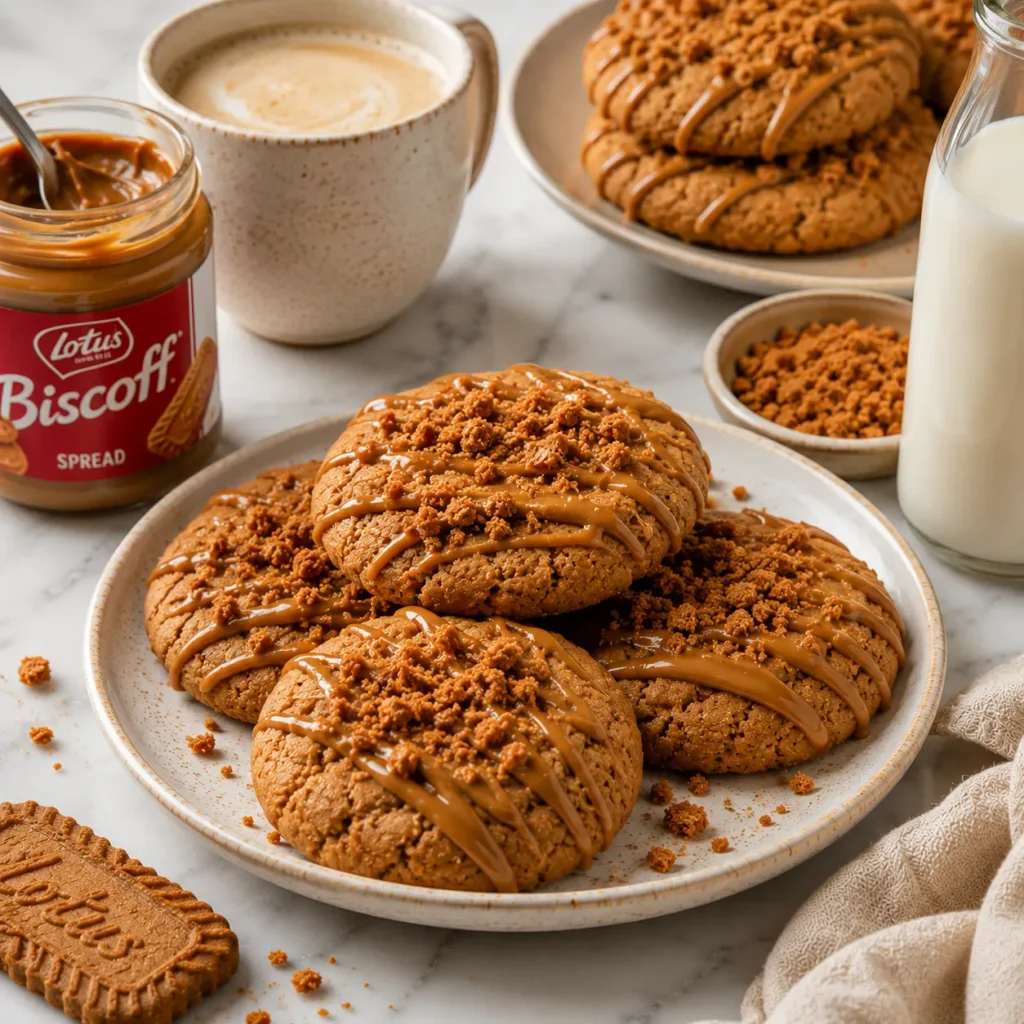
Serve the cookies slightly warm for the softest texture and strongest caramel aroma. Pair them with coffee, chai, milk, or hot chocolate for a cozy dessert experience.
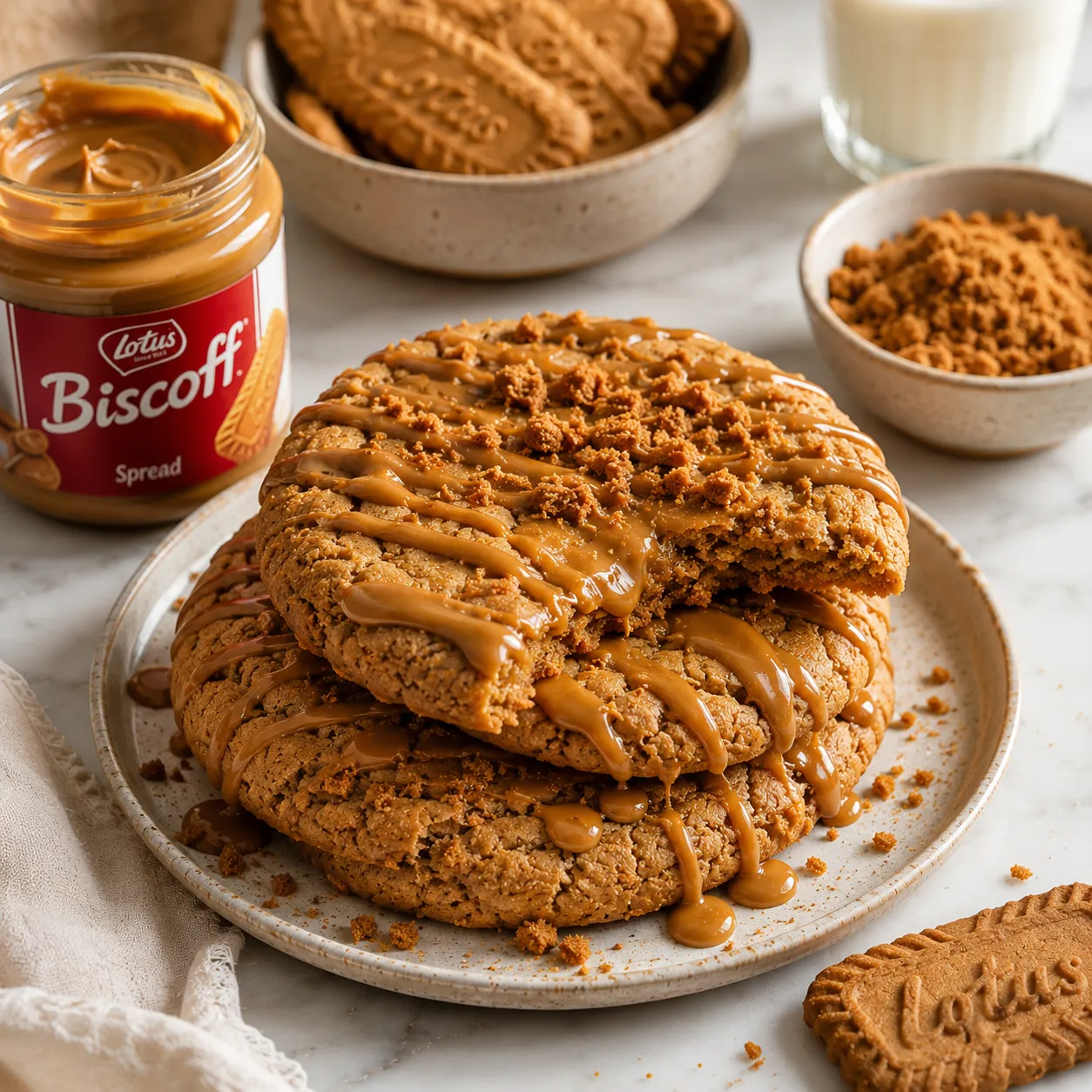
You will notice crisp edges, gooey middles, and crunchy Biscoff pieces in every bite.
Chef’s Tip: If you want ultra-soft cookies the next day, store them with a slice of sandwich bread in the container. The cookies absorb moisture from the bread and stay tender longer.
Nutrition Information
| Nutrient | Per Cookie |
| Calories | 290 |
| Protein | 4g |
| Carbohydrates | 36g |
| Total Fat | 15g |
| Saturated Fat | 8g |
| Fiber | 1g |
| Sugar | 21g |
| Sodium | 170mg |
Why You’ll Love This Recipe
- You get a true soft Biscoff cookie texture with crisp edges and gooey centers, which gives the cookies a bakery-style finish without requiring advanced baking skills.
- The recipe uses simple pantry ingredients, so you can make these cookies without hunting for complicated specialty items or expensive equipment.
- Crushed Biscoff cookies inside the dough add texture and deepen the warm cinnamon-caramel flavor, making every bite taste layered and rich instead of overly sweet.
- Chilling the dough keeps the cookies thick and soft, which helps beginners avoid flat cookies that spread too much during baking.
- The extra drizzle of melted Biscoff spread gives the cookies a professional-looking finish that makes them perfect for parties, gifting, or Pinterest-worthy dessert tables.
Common Mistakes to Avoid
- Using melted butter instead of softened butter often causes the cookie dough to become greasy and spread too quickly in the oven. Softened butter keeps the dough stable while still creating a tender texture.
- Skipping the chilling step may seem harmless, but warm dough creates thinner cookies with less flavor concentration and uneven baking results.
- Overmixing the flour into the dough can produce heavy cookies because excess gluten develops as you stir. Mix only until the ingredients combine evenly.
- Baking the cookies until the centers look fully cooked is one of the biggest beginner mistakes. Slightly underbaked centers finish setting during cooling and stay soft for hours.
- Placing too many cookies on one tray traps heat and causes uneven spreading. Giving each cookie enough space helps them bake evenly with crisp edges.
Serving Suggestions
- Serve these soft Biscoff cookies with hot coffee or chai tea because the warm spices and caramel flavor pair naturally with rich drinks and cozy desserts.
- Turn the cookies into ice cream sandwiches by adding vanilla or cinnamon ice cream between two cooled cookies for an easy party dessert.
- Crumble leftover cookies over yogurt or vanilla pudding to create a quick layered dessert with crunchy texture and caramelized flavor.
- Add the cookies to holiday dessert platters because their golden color and Biscoff drizzle make them visually stand out beside brownies and sugar cookies.
- Warm a cookie for a few seconds in the microwave and top it with whipped cream for a simple restaurant-style dessert at home.
Healthier Alternatives and Ingredient Swaps
- Replace part of the all-purpose flour with whole wheat flour for extra fiber while still keeping the cookies soft and tender.
- Use dark chocolate chips instead of white chocolate chips if you want less sweetness and a slightly richer flavor balance.
- Swap regular butter with plant-based butter to make the cookies dairy-free while maintaining a soft texture.
- Reduce the sugar slightly if you prefer a less sweet cookie because Biscoff spread already adds strong caramel sweetness naturally.
- Use gluten-free flour blends designed for baking if you need a gluten-free version, but keep the dough chilled well for the best texture.
Storage and Meal Prep Tips
- Store the baked cookies in an airtight container at room temperature for up to 4 days to maintain their soft texture and fresh flavor.
- Refrigerate the cookie dough balls before baking if you want to prep ahead. The dough stays fresh in the refrigerator for about 48 hours.
- Freeze unbaked dough balls on a tray first, then transfer them to a freezer-safe bag. You can bake them directly from frozen by adding 1–2 extra minutes.
- Warm stored cookies in the microwave for about 10 seconds before serving to bring back the gooey center and fresh-baked softness.
- Keep parchment paper between stacked cookies during storage so the Biscoff drizzle does not stick or smear.
Conclusion
This soft Biscoff cookie recipe works because every step focuses on texture, flavor, and balance. You get rich caramelized spice, soft bakery-style centers, and enough crunch from crushed cookies to keep every bite interesting. Once you master the base recipe, you can customize it with chocolate, nuts, or extra toppings to make it completely your own.
Soft Biscoff Cookie Recipe
Ingredients
Method
- Preheat the oven to 350°F and line baking trays with parchment paper. Whisk together the flour, baking soda, baking powder, salt, and cinnamon so the dry ingredients distribute evenly throughout the cookie dough.
- Beat the softened butter, brown sugar, and granulated sugar until light and fluffy. Mix in the Biscoff spread, egg, egg yolk, and vanilla extract until the mixture becomes smooth and creamy.
- Gradually combine the dry ingredients with the wet mixture, stirring gently until no dry flour remains. Fold in the crushed Biscoff cookies and white chocolate chips carefully to avoid overmixing.
- Scoop the dough into large portions and chill for 30 minutes so the cookies bake thicker and develop deeper caramelized flavor during baking.
- Arrange the chilled dough balls on baking trays with space between each one. Bake for 11–13 minutes until the edges are lightly golden but the centers still look slightly soft.
- Drizzle warm Biscoff spread over the cookies while they are still warm, then cool for 10 minutes before serving for the best texture and flavor.
Notes
- Use room-temperature ingredients because they combine more smoothly and create a more even cookie texture during baking.
- Chilling the dough is essential for thick, soft cookies since cold butter slows spreading and helps maintain bakery-style shape.
- Slightly underbaked centers create the best texture because the cookies continue setting while cooling on the tray after baking.
- Press extra crushed Biscoff cookies on top immediately after baking so they stick properly and add a decorative finish.
- Store the cookies with a slice of bread in the container because it helps maintain softness for several days without drying out the cookies.