
Fresh Pesto Pasta Recipe for Herb Packed Italian Flavor
Fresh pesto pasta gives you a fast, flavor-packed dinner that tastes vibrant and homemade without requiring complicated techniques. You get silky pasta coated in a bright basil pesto sauce with garlic, Parmesan, and olive oil, making it perfect for busy weeknights, casual lunches, or simple entertaining.
Timing
- Prep Time: 15 minutes
- Cook Time: 12 minutes
- Total Time: 27 minutes
- Servings: 4 servings
Ingredients for Pesto Pasta Recipe
For the Fresh Basil Pesto
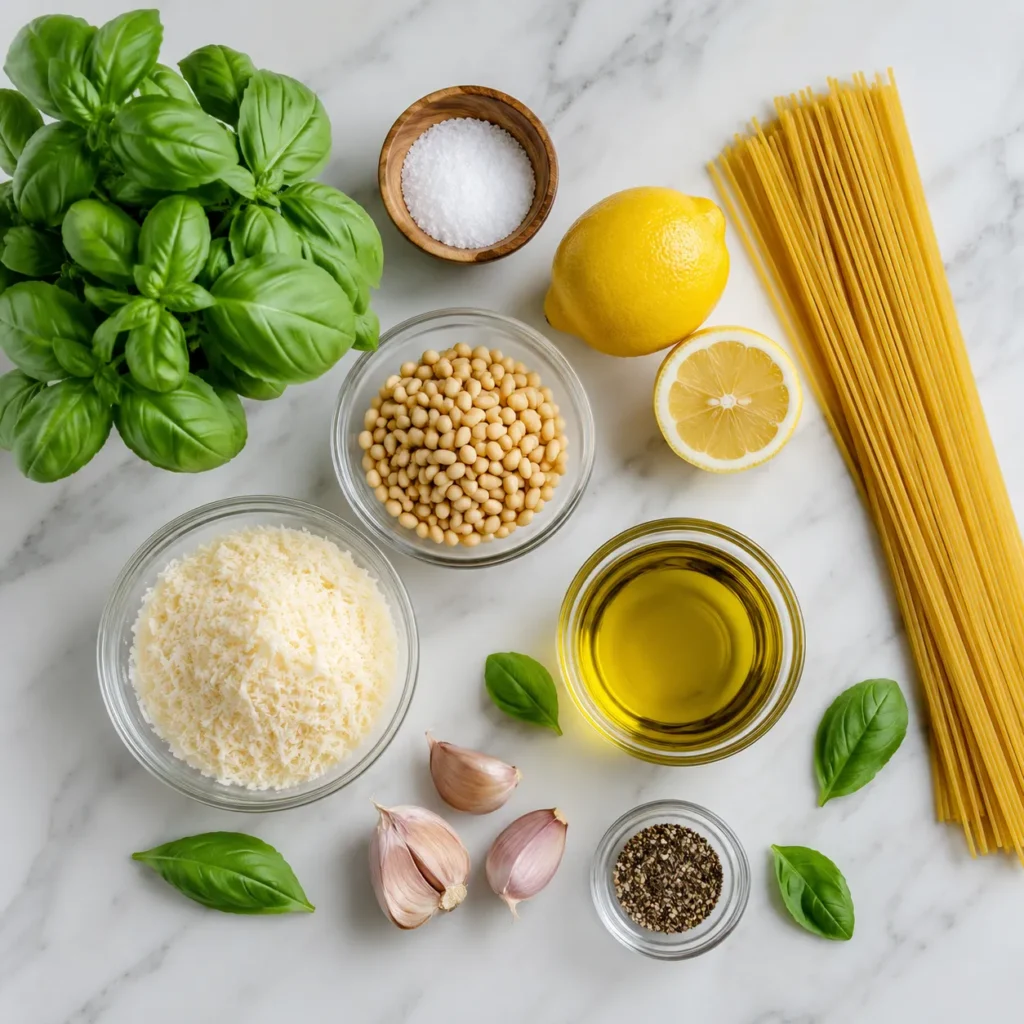
- 2 packed cups fresh basil leaves
- 2 garlic cloves
- 1/3 cup pine nuts
- 1/2 cup freshly grated Parmesan cheese
- 1/2 cup extra virgin olive oil
- 1 tablespoon lemon juice
- 1/2 teaspoon salt
- 1/4 teaspoon black pepper
For the Pasta
- 12 ounces spaghetti or linguine
- 1 teaspoon salt for boiling water
- 1/3 cup reserved pasta water
Optional Garnishes
- Extra grated Parmesan cheese
- Fresh basil leaves
- Cracked black pepper
- Cherry tomatoes, halved
How to Make Fresh Pesto Pasta
Step 1: Prepare the Pasta Water and Ingredients
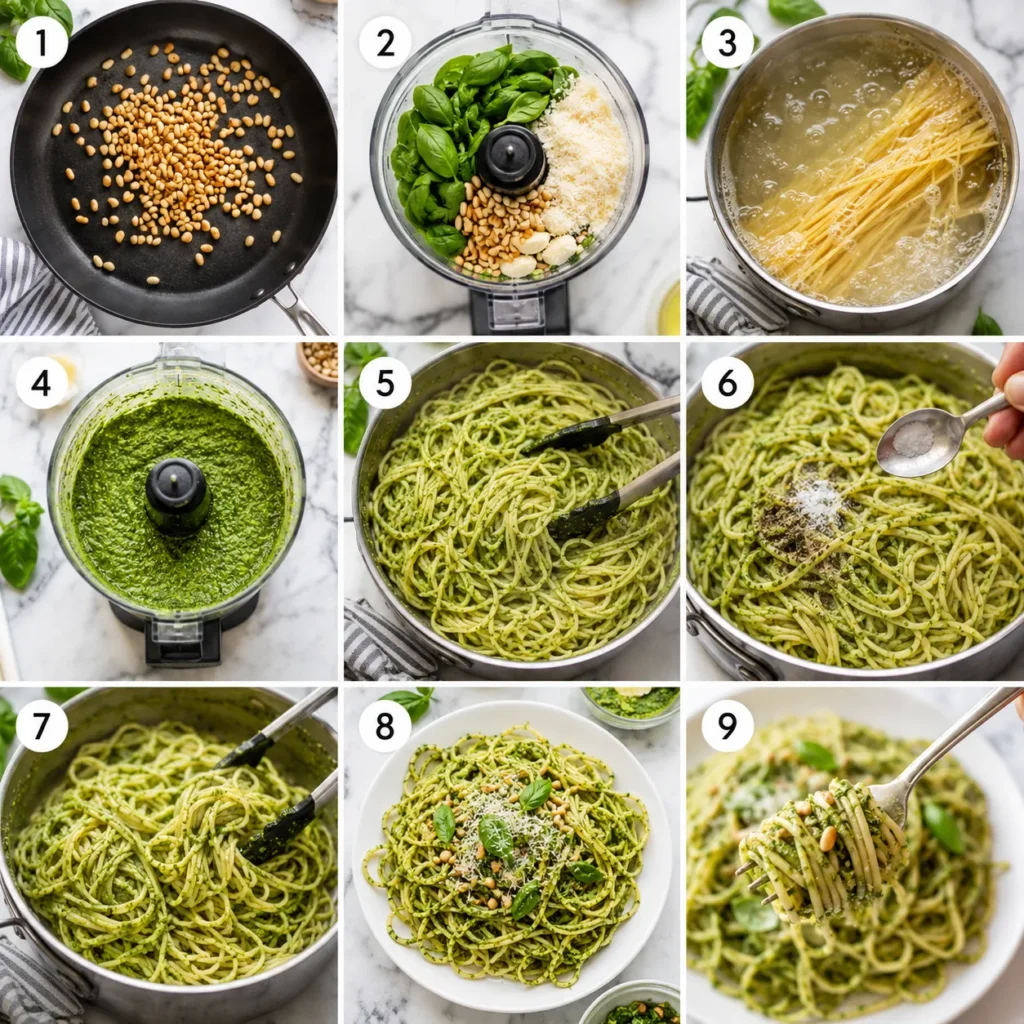
Bring a large pot of water to a rolling boil and add the teaspoon of salt. While the water heats, wash and dry the basil leaves carefully because excess water can thin out your pesto. Measure all your ingredients before you begin so the recipe moves smoothly once the pasta cooks. This setup takes about 5 minutes and makes the cooking process much less stressful for beginners.
Chef’s Tip: Dry basil leaves thoroughly with paper towels or a salad spinner because wet basil can darken the pesto quickly and create a watery texture instead of a creamy sauce.
Step 2: Make the Fresh Basil Pesto
Add the basil, garlic, pine nuts, and Parmesan cheese to a food processor. Pulse several times until the ingredients are finely chopped. Slowly drizzle in the olive oil while blending until the pesto becomes smooth and creamy. Stir in the lemon juice, salt, and black pepper. This process takes around 4 minutes and creates the bold herb-packed flavor that makes fresh pesto pasta so popular.
Chef’s Tip: Avoid running the food processor continuously for too long because the heat from the blades can dull the fresh basil flavor and change the bright green color of the pesto.
Step 3: Cook the Pasta Properly
Add the spaghetti or linguine to the boiling water and cook according to the package instructions until al dente, usually about 9 to 11 minutes. Stir the pasta occasionally so it does not stick together. Before draining, reserve about 1/3 cup of pasta water because the starch helps the pesto coat the noodles evenly.
Chef’s Tip: Al dente pasta works best for pesto pasta because slightly firm noodles hold the sauce better and prevent the final dish from becoming too soft after mixing.
Step 4: Combine the Pasta and Pesto
Drain the pasta and immediately transfer it back to the warm pot or a large mixing bowl. Add the pesto and a few tablespoons of reserved pasta water. Toss everything together gently for about 1 minute until the noodles are glossy and evenly coated. Add more pasta water if the sauce looks too thick.
Chef’s Tip: Never place pesto over direct high heat after mixing because basil can lose its fresh flavor and turn dark quickly. The warmth of the pasta is enough to create a silky sauce.
Step 5: Adjust the Flavor and Texture
Taste the pasta and adjust the seasoning if needed with extra salt, black pepper, or lemon juice. If you want a richer finish, sprinkle in additional Parmesan cheese and toss once more. This final adjustment only takes 2 minutes but gives the dish a more balanced and restaurant-style flavor.
Chef’s Tip: A small squeeze of fresh lemon juice at the end brightens the herb flavor and prevents the pasta from tasting heavy, especially if you are serving it warm.
Step 6: Garnish and Serve Immediately
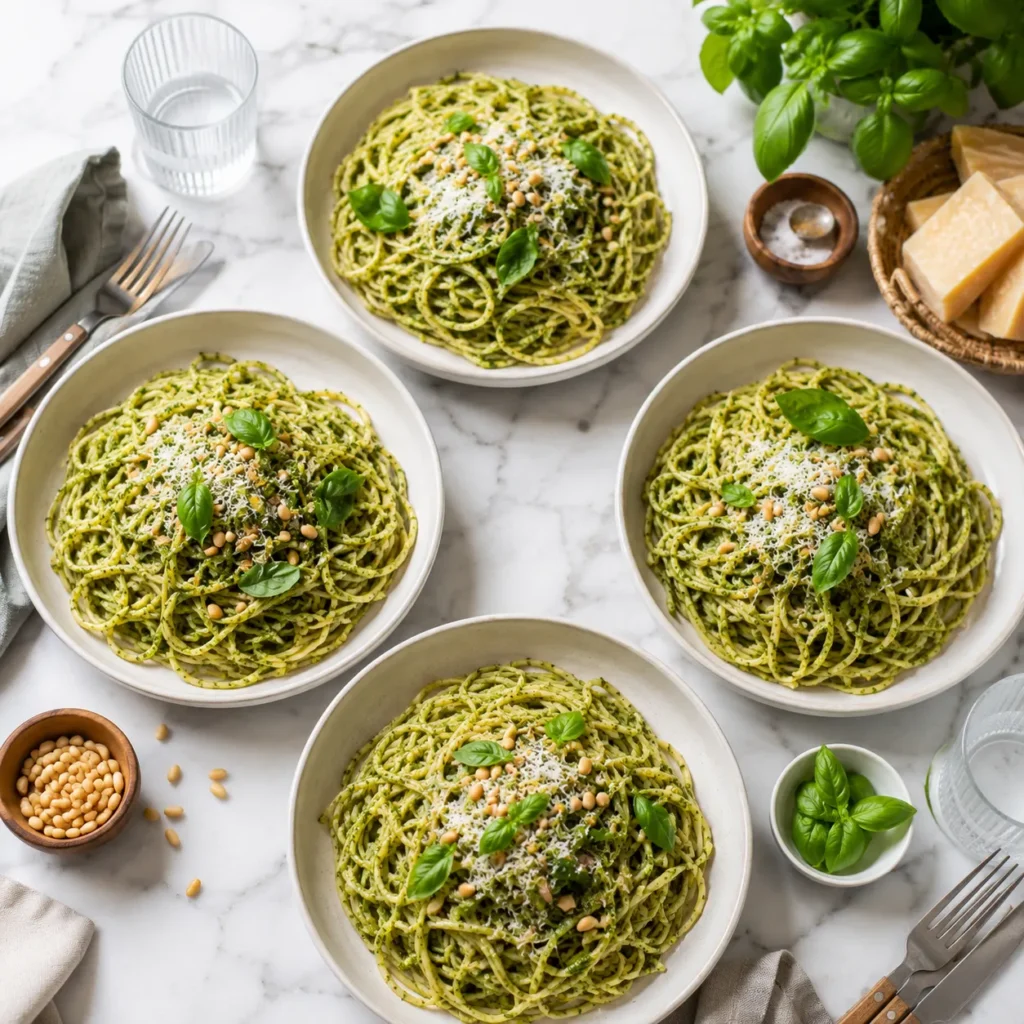
Transfer the fresh pesto pasta to serving bowls and garnish with extra basil leaves, Parmesan cheese, cracked black pepper, or cherry tomatoes. Serve immediately while the pasta is warm and glossy. Fresh pesto tastes best right after mixing because the basil flavor is strongest and most vibrant.
Chef’s Tip: Warm serving bowls for a minute with hot water before plating because this simple step keeps the pasta warm longer and improves the overall dining experience.
Fresh Pesto Pasta Nutrition
| Nutrient | Per Serving |
| Calories | 520 |
| Protein | 15g |
| Carbohydrates | 50g |
| Total Fat | 29g |
| Saturated Fat | 6g |
| Fiber | 4g |
| Sodium | 430mg |
| Sugar | 3g |
Why You’ll Love This Recipe
- You get bold Italian flavor from simple fresh ingredients, which makes this pesto pasta feel impressive even though the recipe is beginner-friendly and quick enough for a busy evening meal.
- The homemade basil pesto tastes fresher and brighter than store-bought sauce because you control the quality of the herbs, cheese, and olive oil used in the recipe.
- This recipe works for several occasions, including weeknight dinners, meal prep lunches, or light summer entertaining, because it comes together quickly without needing heavy cooking techniques.
- Fresh pesto pasta is highly customizable, so you can add vegetables, grilled chicken, shrimp, or roasted tomatoes depending on what you already have available in your kitchen.
- The creamy texture comes naturally from olive oil, cheese, and pasta water, allowing you to create a rich sauce without needing heavy cream or complicated ingredients.
Common Mistakes to Avoid
- Using wet basil leaves often causes watery pesto and dull flavor because extra moisture prevents the olive oil from blending properly with the herbs and cheese. Always dry the basil completely before blending.
- Overcooking the pasta can make the final dish mushy because pesto sauce coats softer noodles too heavily. Cooking the pasta until al dente helps maintain the right texture and bite.
- Heating pesto directly in a hot pan can cause the basil to darken and lose its fresh flavor. Instead, toss the sauce with hot pasta off the heat so the herbs stay vibrant and aromatic.
- Forgetting to reserve pasta water makes the sauce thicker and less smooth because the starch in the water helps the pesto cling evenly to the noodles without becoming oily.
- Adding too much garlic at once can overpower the fresh basil flavor. Start with two cloves and adjust later if you prefer a sharper, stronger pesto taste.
Serving Suggestions
- Serve fresh pesto pasta with grilled chicken or shrimp if you want a more filling dinner while still keeping the bright herb flavor as the focus of the dish.
- Pair the pasta with roasted vegetables such as zucchini, asparagus, or cherry tomatoes because the caramelized flavor balances the freshness of the basil pesto beautifully.
- Spoon leftover pesto pasta into a chilled pasta salad with mozzarella pearls and spinach for a simple next-day lunch that still tastes fresh and flavorful.
- Add toasted garlic bread and a crisp green salad on the side if you are serving this recipe for guests because the meal feels complete without requiring extra complicated dishes.
- Top the pasta with burrata cheese for a richer presentation that makes the dish look elegant enough for dinner parties or special family meals.
Healthier Alternatives and Ingredient Swaps
- Replace regular pasta with whole wheat pasta if you want extra fiber and a nuttier flavor while still maintaining the classic texture of fresh pesto pasta.
- Use walnuts or almonds instead of pine nuts because they are more budget-friendly while still creating a creamy, flavorful pesto sauce.
- Swap Parmesan cheese for nutritional yeast if you need a dairy-free option that still adds savory depth and richness to the pesto.
- Add spinach along with basil to create a lighter pesto with additional nutrients while keeping the fresh green color and herb flavor balanced.
- Choose gluten-free pasta if needed because the pesto sauce works well with most gluten-free varieties, especially rice or corn-based pasta shapes.
Storage and Meal Prep Tips
- Store leftover pesto pasta in an airtight container in the refrigerator for up to 3 days because fresh basil pesto keeps its flavor best within that timeframe.
- Add a small drizzle of olive oil before storing the pasta because it helps prevent the noodles from drying out and sticking together overnight.
- Reheat the pasta gently over low heat with a splash of water because high heat can separate the pesto sauce and reduce the fresh basil flavor.
- Prepare the pesto sauce ahead of time and refrigerate it separately for easier meal prep during busy weekdays since homemade pesto stays fresh for about 4 days.
- Freeze extra pesto in small portions or ice cube trays because this method lets you thaw only the amount you need for quick lunches or dinners later.
Conclusion
Fresh pesto pasta works because it combines simple ingredients with techniques that build bright, balanced flavor in less than 30 minutes. You get a satisfying Italian-inspired meal that feels fresh, comforting, and versatile at the same time. Once you master the basic pesto sauce, you can easily customize the recipe with proteins, vegetables, or different pasta shapes to make it your own every time.