
Savory Halloumi Breakfast Recipe for Mediterranean Morning Flavor
Golden, pan-seared halloumi brings a rich, salty bite that transforms an ordinary breakfast into something memorable. This savory halloumi breakfast recipe combines fresh vegetables, eggs, and Mediterranean flavors for a satisfying meal that works equally well for busy weekdays or relaxed weekend mornings.
Timing
- Prep Time: 10 minutes
- Cook Time: 15 minutes
- Total Time: 25 minutes
- Servings: 2 servings
Ingredients for Halloumi Breakfast Recipe
For the Halloumi
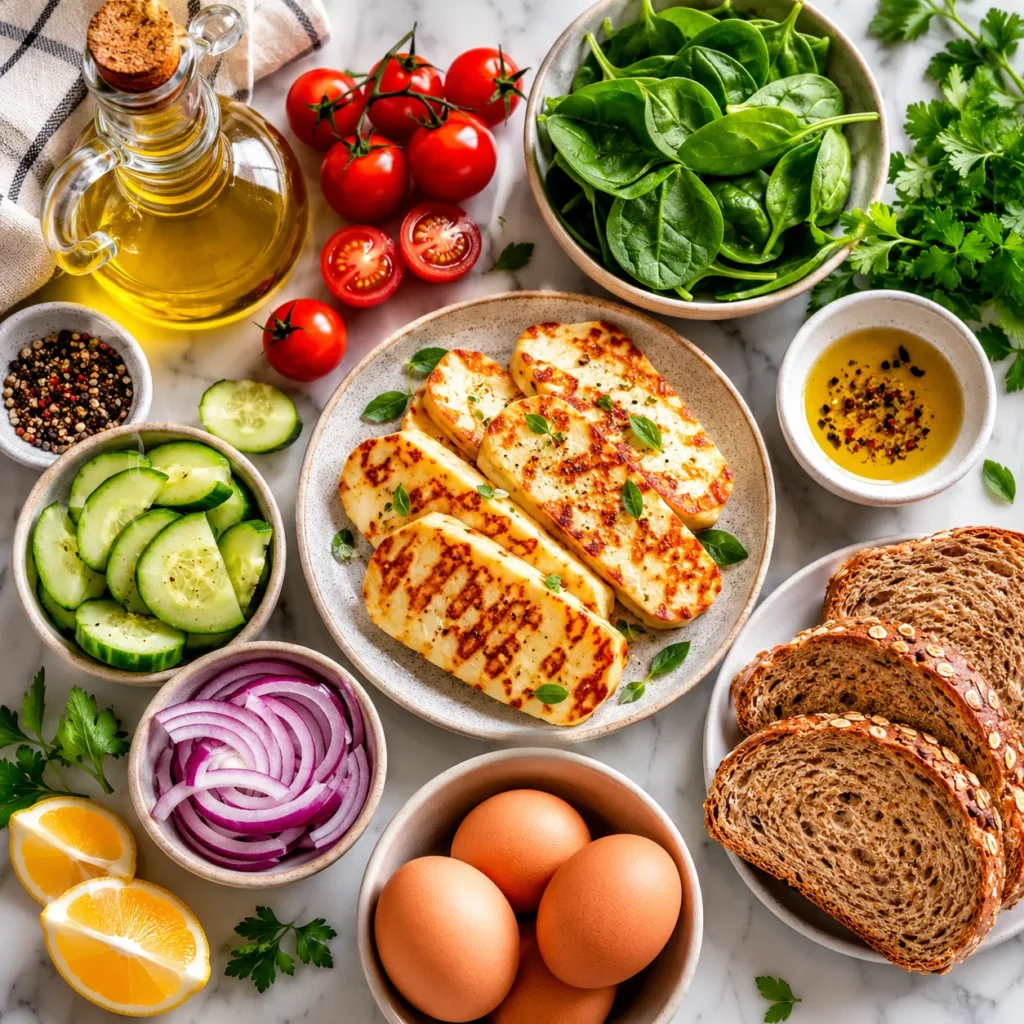
- 200g halloumi cheese, sliced into ½-inch pieces
- 1 teaspoon olive oil
For the Vegetables
- 1 cup cherry tomatoes, halved
- 1 small cucumber, sliced
- ½ small red onion, thinly sliced
- 1 cup baby spinach
- 1 tablespoon fresh parsley, chopped
For the Eggs
- 4 large eggs
- 1 tablespoon olive oil
- ¼ teaspoon black pepper
For Serving
- 2 pieces whole grain toast or pita bread
- 1 tablespoon extra virgin olive oil
- Lemon wedges
- Optional: sliced avocado or olives
How to Make Savory Halloumi Breakfast
Step 1: Prepare the Fresh Vegetables
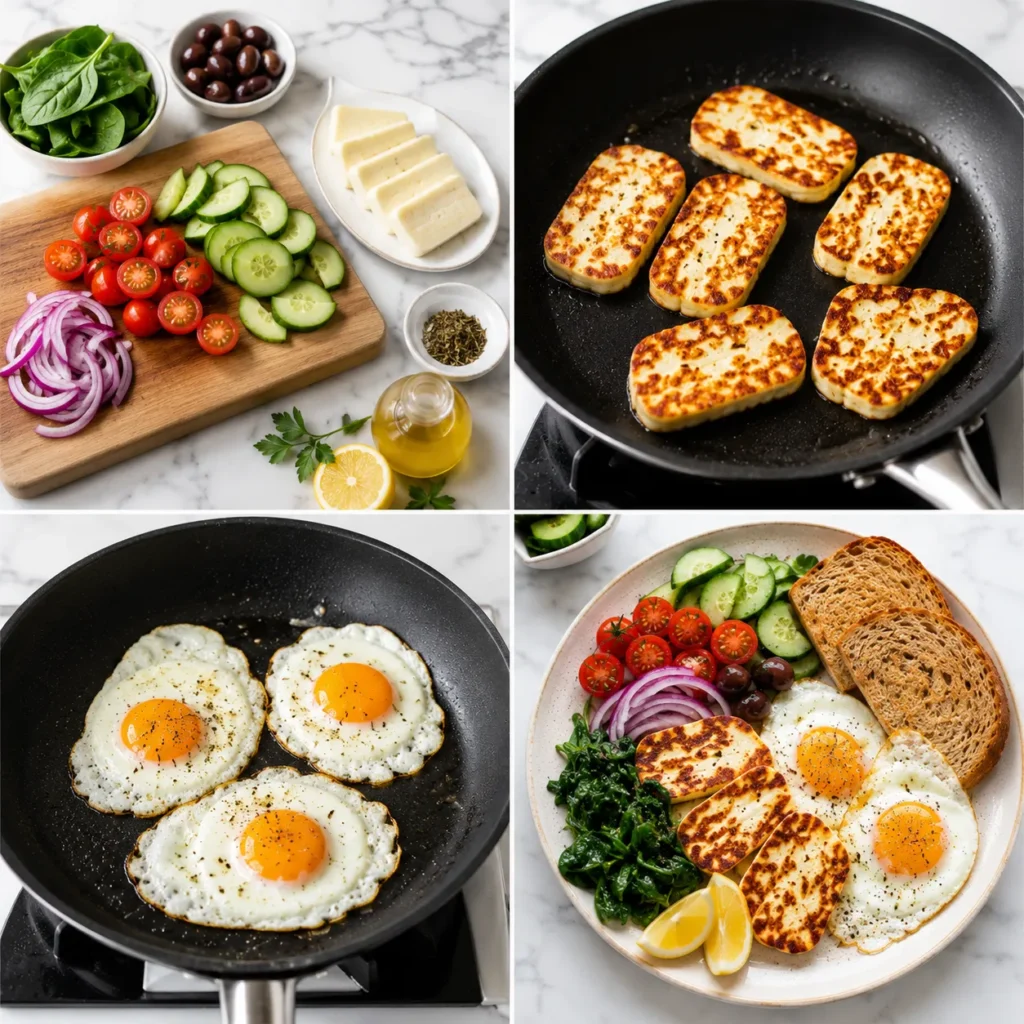
Wash and slice the cherry tomatoes, cucumber, and red onion. Toss them together in a bowl with the chopped parsley and a small drizzle of olive oil. Set aside while you prepare the remaining ingredients. This simple salad adds freshness and balances the richness of the halloumi and eggs.
Chef’s Tip: Allowing the vegetables to sit for a few minutes helps the flavors blend together naturally. The tomatoes release a little juice that lightly dresses the salad without needing additional ingredients.
Step 2: Cook the Halloumi
Heat a non-stick skillet over medium heat and add 1 teaspoon olive oil. Place the halloumi slices in the pan and cook for 2–3 minutes per side until golden brown and slightly crisp around the edges. Remove from the skillet and keep warm.
Chef’s Tip: Avoid moving the halloumi too soon after placing it in the pan. Giving it time to develop a crust creates better texture and prevents sticking, resulting in beautifully browned slices.
Step 3: Wilt the Spinach
Using the same skillet, add the baby spinach and cook for 1–2 minutes until just wilted. Stir gently and remove from the heat. The residual flavor left from the halloumi adds extra depth to the spinach.
Chef’s Tip: Do not overcook the spinach. It continues to soften after leaving the pan, and keeping some texture prevents it from becoming watery and losing its bright color.
Step 4: Cook the Eggs
Add 1 tablespoon olive oil to the skillet and cook the eggs according to your preference. Fried eggs with slightly runny yolks pair especially well with halloumi. Cook for about 3–4 minutes until the whites are fully set.
Chef’s Tip: Medium heat gives you the most control when cooking eggs. High heat may brown the bottoms too quickly while leaving the tops undercooked, making the final breakfast less balanced.
Step 5: Toast the Bread
While the eggs cook, toast the whole grain bread or warm the pita bread. This takes approximately 2–3 minutes. Toasted bread provides structure and helps soak up the egg yolk and vegetable juices.
Chef’s Tip: Brushing the bread lightly with olive oil before toasting adds extra flavor and creates a crisp exterior that complements the soft textures on the plate.
Step 6: Assemble and Serve
Arrange the toasted bread on serving plates. Add the spinach, vegetable salad, halloumi slices, and eggs. Finish with a drizzle of extra virgin olive oil and a squeeze of fresh lemon juice. Serve immediately while the halloumi is warm and the eggs are freshly cooked.
Chef’s Tip: Layering the spinach beneath the halloumi helps absorb juices while keeping the cheese crisp. This simple plating trick improves both presentation and texture.
Nutrition Information
| Nutrient | Per Serving |
| Calories | 520 kcal |
| Protein | 28g |
| Carbohydrates | 24g |
| Total Fat | 34g |
| Saturated Fat | 14g |
| Fiber | 5g |
| Sugar | 6g |
| Sodium | 920mg |
| Calcium | 620mg |
| Iron | 3mg |
Nutrition values are approximate and may vary depending on ingredient brands and serving sizes.
Why You’ll Love This Recipe
- This savory halloumi breakfast recipe delivers a satisfying combination of crispy cheese, creamy eggs, and fresh vegetables, creating a balanced meal that feels special without requiring complicated techniques.
- The recipe comes together in just 25 minutes, making it practical for busy mornings when you want something more exciting than standard toast or cereal.
- Halloumi provides a unique texture that stays firm when cooked, giving you a delicious contrast to the soft eggs and juicy vegetables.
- The Mediterranean-inspired ingredients offer fresh flavors that feel light yet filling, helping you stay energized throughout the morning.
- The recipe is highly customizable, allowing you to adjust vegetables, bread choices, and toppings based on what you already have available.
Common Mistakes to Avoid
- Avoid cooking halloumi over excessively high heat. The outside can burn before the interior warms through, resulting in uneven texture and flavor.
- Do not add extra salt without tasting first. Halloumi naturally contains a significant amount of salt, and additional seasoning can easily overwhelm the dish.
- Skipping the vegetable component can make the breakfast feel heavy. Fresh vegetables provide acidity and crunch that balance the richness of the cheese and eggs.
- Overcooking the eggs reduces the creamy texture that helps tie all the components together. Watch them carefully and remove them from the heat once the whites are set.
- Using a cold skillet for the halloumi may cause sticking and uneven browning. Always allow the pan to preheat properly before adding the cheese.
Serving Suggestions
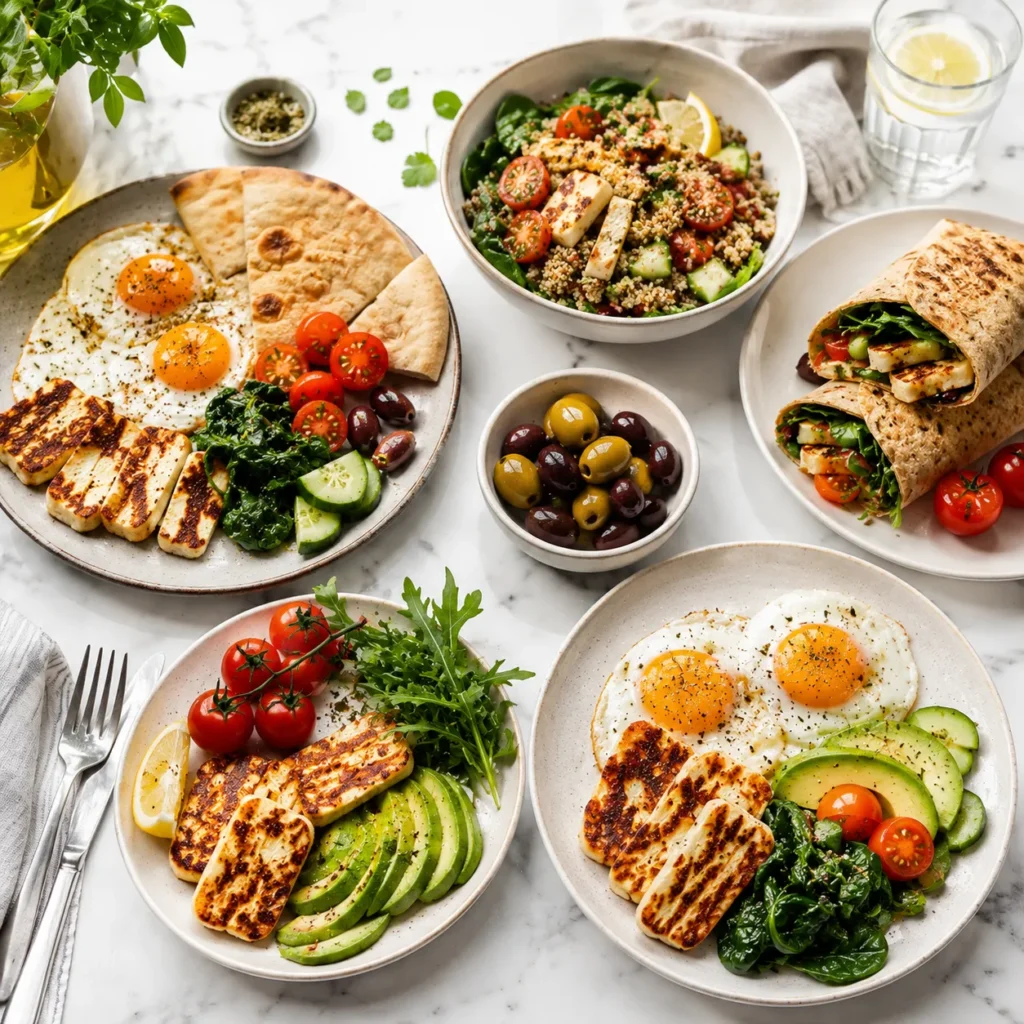
- Serve this breakfast with warm pita bread and a side of hummus for a more substantial Mediterranean-inspired brunch that feels restaurant quality at home.
- Pair the dish with sliced avocado and fresh herbs to add creaminess and extra freshness while maintaining the savory character of the meal.
- Turn the ingredients into a breakfast bowl by layering spinach, halloumi, eggs, and vegetables over cooked quinoa for additional protein and fiber.
- Wrap everything inside a warm flatbread for a portable breakfast option that works well for busy mornings or packed lunches.
- Add olives and roasted red peppers to create an expanded mezze-style breakfast spread suitable for entertaining guests.
Healthier Alternatives and Ingredient Swaps
- Replace regular halloumi with a reduced-fat version if available. You will still enjoy the signature texture while slightly lowering the overall fat content.
- Swap whole grain bread for sprouted grain bread to increase fiber and nutrient density without changing the flavor profile significantly.
- Use egg whites for part of the eggs if you want to reduce calories while maintaining a high protein content.
- Add extra spinach, arugula, or mixed greens to increase vegetable intake and create a larger serving without adding many additional calories.
- Substitute avocado for part of the cheese if you prefer a heart-healthy source of fats while still keeping the breakfast satisfying.
Storage and Meal Prep Tips
- Halloumi is best enjoyed freshly cooked, but leftovers can be refrigerated in an airtight container for up to 2 days and gently reheated in a skillet.
- Store the vegetable salad separately from the cooked ingredients to preserve freshness and prevent excess moisture from affecting texture.
- Hard-cooked eggs can be prepared ahead of time and refrigerated, making morning assembly much faster on busy days.
- Slice vegetables the night before and store them in sealed containers. This simple preparation can reduce breakfast cooking time significantly.
- Reheat halloumi in a dry skillet instead of a microwave whenever possible. This helps restore some of its signature crisp exterior and prevents a rubbery texture.
Conclusion
This savory halloumi breakfast recipe combines simple Mediterranean ingredients into a meal that feels both comforting and vibrant. Crispy halloumi, perfectly cooked eggs, fresh vegetables, and toasted bread create a balanced breakfast with plenty of flavor and texture. Once you master the basic method, you can easily customize it with different vegetables, herbs, or serving styles to suit your preferences while keeping the heart of the recipe intact.