
Fresh Pasta Primavera Recipe for Colorful Vegetable Pasta
Fresh Pasta Primavera is a vibrant vegetable pasta dish that combines tender fresh pasta with a variety of colorful seasonal vegetables in a light, flavorful sauce. You’ll love how quickly it comes together, making it perfect for weeknight dinners, spring gatherings, or a satisfying meatless meal.
Timing
- Prep Time: 20 minutes
- Cook Time: 20 minutes
- Total Time: 40 minutes
- Servings: 4 servings
Ingredients for Pasta Primavera Recipe
For the Pasta
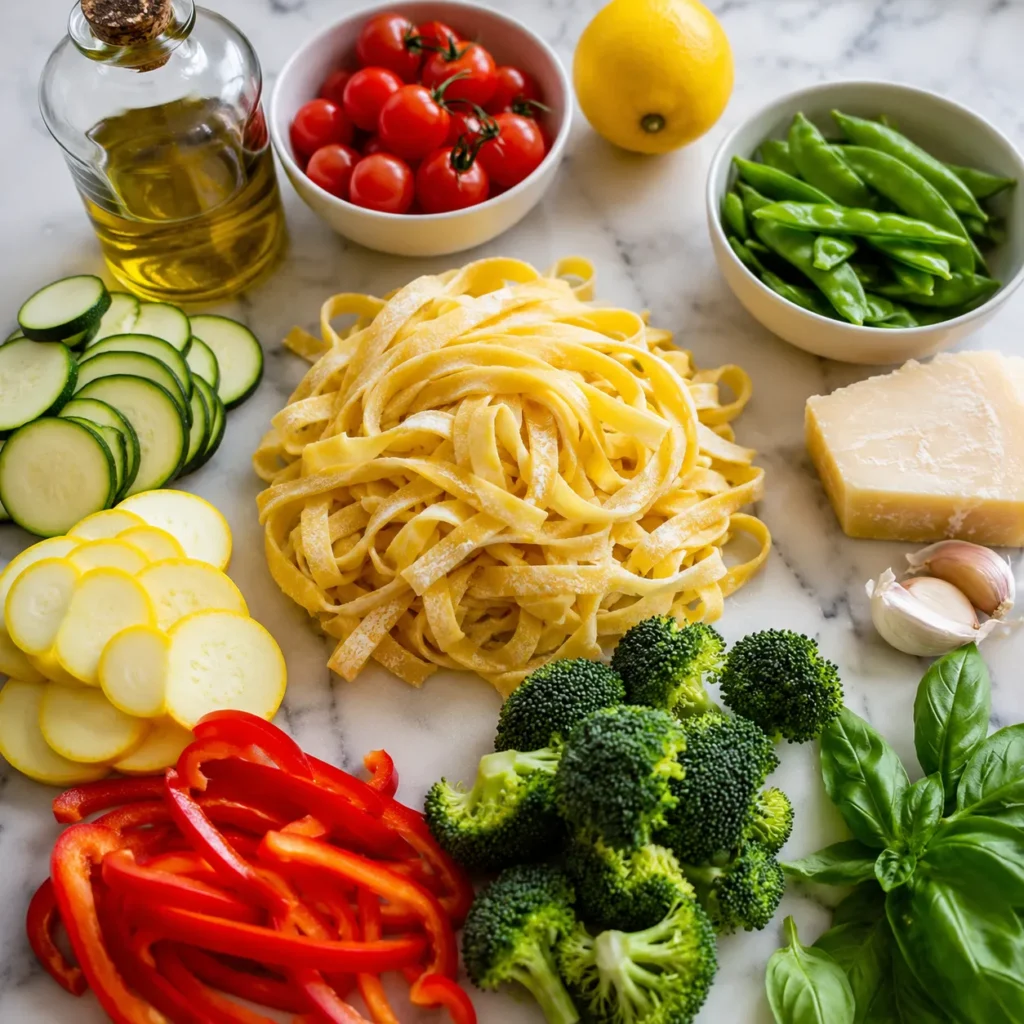
- 12 ounces fresh pasta (fettuccine, tagliatelle, or linguine)
- 1 tablespoon salt (for pasta water)
For the Vegetables
- 1 tablespoon olive oil
- 1 medium zucchini, sliced into half-moons
- 1 yellow squash, sliced into half-moons
- 1 red bell pepper, thinly sliced
- 1 cup broccoli florets
- 1 cup cherry tomatoes, halved
- 1 cup snap peas, trimmed
- 3 cloves garlic, minced
For the Sauce
- 2 tablespoons olive oil
- 1 lemon, zested and juiced
- ½ cup grated Parmesan cheese
- ¼ cup reserved pasta water
- ½ teaspoon salt, or to taste
- ¼ teaspoon black pepper
- ¼ teaspoon red pepper flakes (optional)
For Garnish
- 2 tablespoons chopped fresh basil
- Extra Parmesan cheese for serving
How to Make Fresh Pasta Primavera
Step 1: Prepare the Vegetables
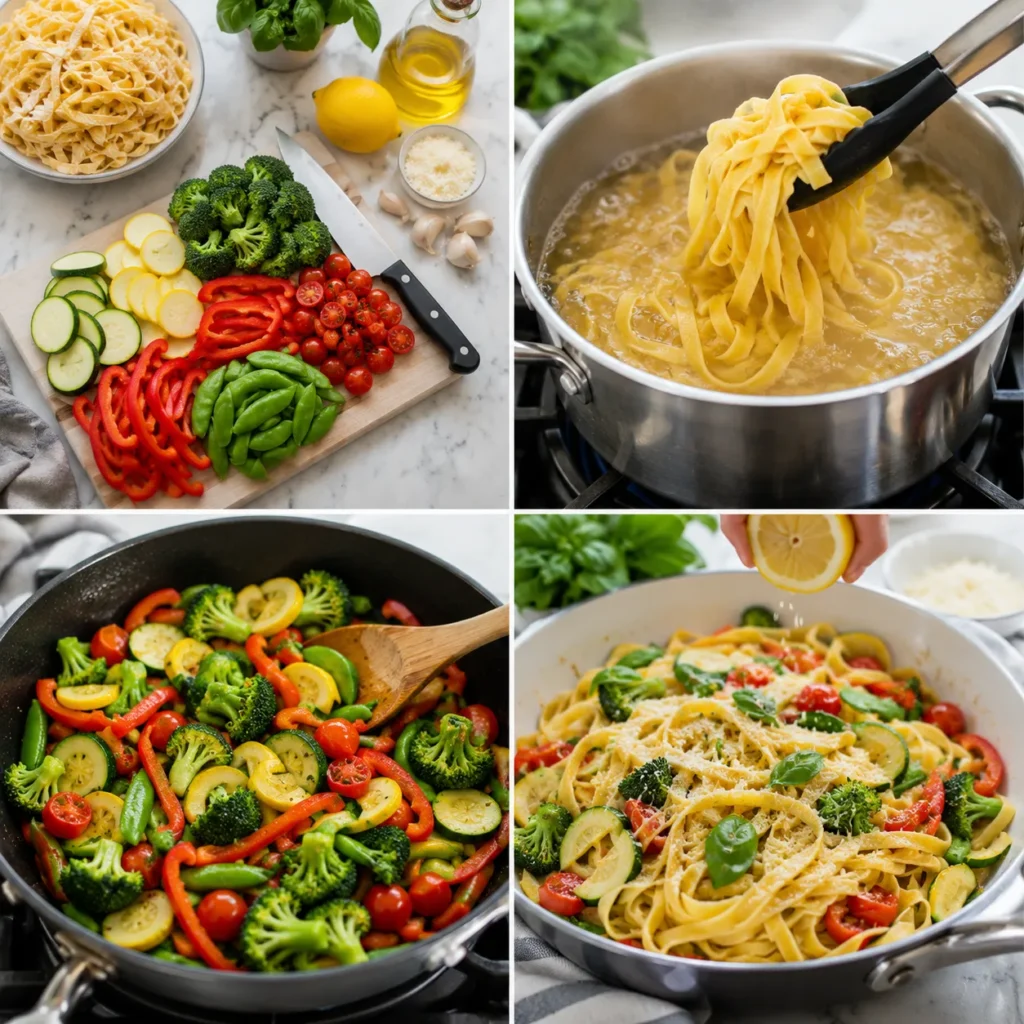
Wash and cut all vegetables before you start cooking. Slice the zucchini, squash, and bell pepper into similar-sized pieces so they cook evenly. Halve the cherry tomatoes, trim the snap peas, and mince the garlic. This preparation takes about 10 minutes and helps the cooking process move smoothly once the pan is hot.
Chef’s Tip: Uniform vegetable sizes are important because they ensure everything cooks at the same rate. If some pieces are much larger than others, you may end up with vegetables that are either undercooked or too soft by the time the dish is finished.
Step 2: Cook the Fresh Pasta
Bring a large pot of water to a rolling boil and add the salt. Cook the fresh pasta according to the package directions, usually about 2 to 4 minutes. Before draining, reserve ¼ cup of pasta water. Drain the pasta and set it aside while you prepare the vegetables.
Chef’s Tip: Fresh pasta cooks much faster than dried pasta, so keep an eye on it. Overcooked fresh pasta can become soft and fragile, making it harder to toss with the vegetables without breaking apart.
Step 3: Sauté the Firm Vegetables
Heat 1 tablespoon olive oil in a large skillet over medium-high heat. Add the broccoli, bell pepper, zucchini, and yellow squash. Cook for about 5 to 6 minutes, stirring occasionally, until the vegetables begin to soften while still maintaining a slight bite.
Chef’s Tip: Avoid overcrowding the skillet. Giving the vegetables enough space allows them to develop light caramelization, which adds depth of flavor and prevents them from steaming instead of sautéing.
Step 4: Add the Remaining Vegetables and Aromatics
Add the snap peas, cherry tomatoes, and minced garlic to the skillet. Continue cooking for another 3 to 4 minutes. The tomatoes should begin to soften slightly, and the garlic should become fragrant without browning.
Chef’s Tip: Garlic burns quickly and can become bitter if cooked too long. Adding it later in the cooking process preserves its sweet, aromatic flavor and keeps the dish balanced.
Step 5: Create the Light Sauce
Reduce the heat to medium. Add the lemon zest, lemon juice, reserved pasta water, Parmesan cheese, salt, pepper, and red pepper flakes if using. Stir everything together until the cheese melts and forms a light sauce that coats the vegetables.
Chef’s Tip: Pasta water contains starch that helps bind the sauce ingredients together. This creates a silky texture without needing heavy cream or large amounts of butter.
Step 6: Combine and Finish
Add the cooked fresh pasta to the skillet and gently toss until every strand is coated with the sauce and mixed evenly with the vegetables. Cook for 1 to 2 minutes so the flavors blend together. Remove from the heat and stir in the fresh basil before serving.
Chef’s Tip: Toss the pasta gently rather than stirring aggressively. Fresh pasta is delicate, and careful mixing helps maintain its texture and presentation while distributing the vegetables evenly.
Nutrition Information
| Nutrient | Per Serving |
| Calories | 420 |
| Protein | 16g |
| Carbohydrates | 58g |
| Total Fat | 14g |
| Saturated Fat | 4g |
| Fiber | 8g |
| Sugar | 8g |
| Sodium | 520mg |
| Calcium | 220mg |
| Vitamin C | 95mg |
Why You’ll Love This Recipe
- This Fresh Pasta Primavera recipe showcases a variety of colorful vegetables, creating a meal that looks as beautiful as it tastes while adding a wide range of nutrients to your plate.
- The light lemon-Parmesan sauce enhances the natural flavors of the vegetables rather than covering them, making the dish feel fresh and balanced.
- Fresh pasta cooks quickly, allowing you to prepare a restaurant-quality dinner in under an hour without complicated techniques.
- The recipe is highly flexible, so you can use seasonal produce and customize the ingredients based on what you already have available.
- It delivers a satisfying vegetarian meal that feels substantial while still being lighter than many cream-based pasta dishes.
Common Mistakes to Avoid
- Overcooking the vegetables is one of the most common issues. Vegetables should remain slightly crisp so they provide texture and maintain their bright color rather than becoming mushy.
- Skipping the reserved pasta water can result in a dry dish. The starch in the water helps create a smooth sauce that coats both the pasta and vegetables evenly.
- Cooking fresh pasta too long can cause it to become overly soft. Because fresh pasta cooks very quickly, check it frequently and drain it as soon as it reaches the proper texture.
- Adding all vegetables at the same time often leads to uneven cooking. Firmer vegetables require more cooking time than delicate ingredients like tomatoes and snap peas.
- Using low heat throughout the cooking process may prevent vegetables from developing flavor. A moderately high heat encourages light browning and enhances the overall taste of the dish.
Serving Suggestions
- Serve this colorful vegetable pasta alongside warm garlic bread and a crisp green salad to create a complete and satisfying dinner.
- Pair it with grilled chicken, shrimp, or salmon if you want additional protein while maintaining the fresh flavors of the dish.
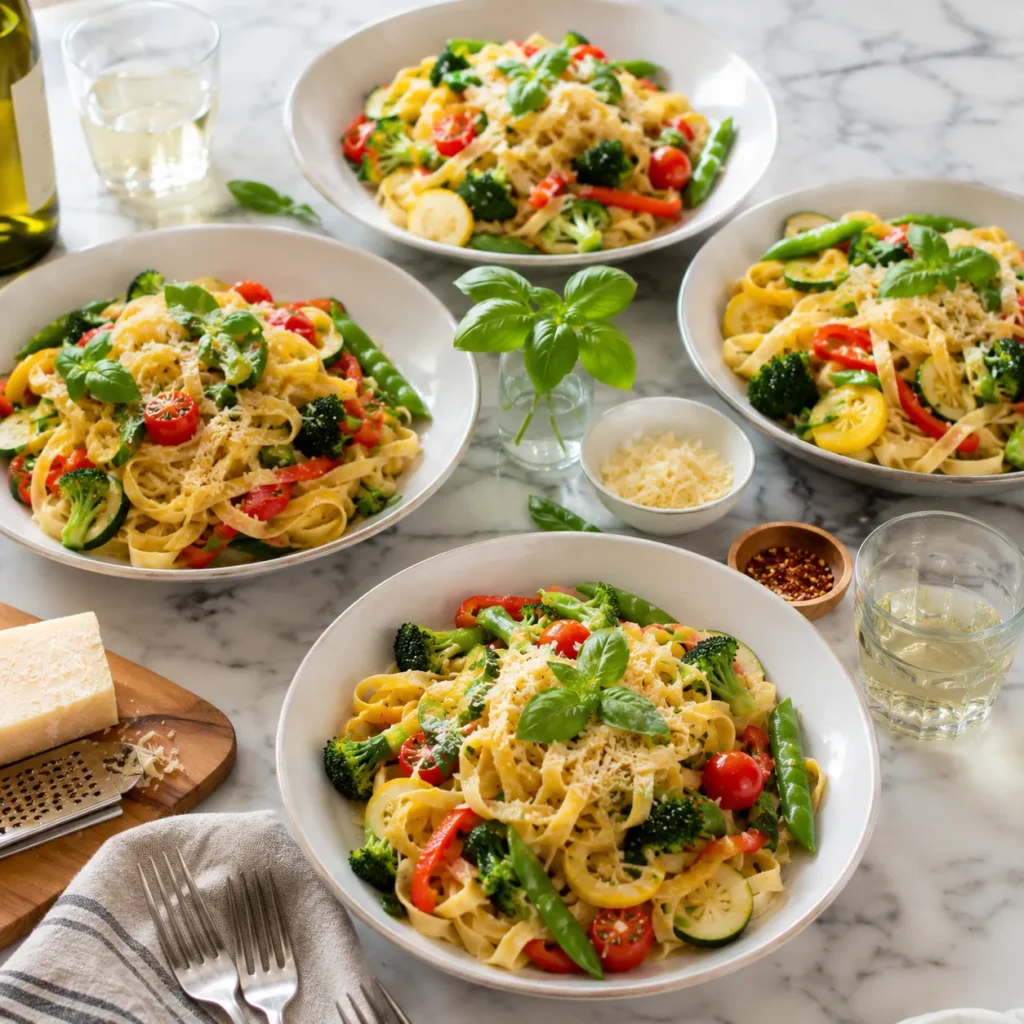
- Present it family-style in a large serving bowl topped with extra Parmesan and basil for a beautiful centerpiece at casual gatherings.
- Use leftovers as a cold pasta salad for lunch the next day by adding a little extra lemon juice and olive oil before serving.
- Serve smaller portions as a side dish alongside roasted vegetables or grilled meats during spring and summer entertaining.
Healthier Alternatives and Ingredient Swaps
- Replace regular fresh pasta with whole wheat pasta to increase fiber content while still enjoying the same colorful vegetable combination.
- Use reduced-fat Parmesan cheese if you want to lower the overall fat content without sacrificing the savory flavor of the sauce.
- Add spinach, kale, or asparagus to increase the vegetable content and introduce additional vitamins and minerals.
- Substitute gluten-free fresh pasta if you need a gluten-free version while keeping the preparation method exactly the same.
- Reduce the amount of cheese and increase the lemon juice slightly for a lighter sauce that still feels bright and flavorful.
Storage and Meal Prep Tips
- Store leftover Fresh Pasta Primavera in an airtight container in the refrigerator for up to 3 days to maintain freshness and texture.
- Reheat gently in a skillet with a splash of water or vegetable broth to restore moisture and prevent the pasta from drying out.
- Avoid microwaving for extended periods because the vegetables may become soft and lose their appealing texture.
- Prepare and chop all vegetables a day in advance to make dinner assembly much faster on busy evenings.
- If meal prepping, keep the pasta and vegetables separate until serving time to preserve the best texture possible.
Conclusion
This Fresh Pasta Primavera recipe proves that simple ingredients can create an impressive and flavorful meal. The combination of fresh pasta, colorful vegetables, bright lemon, and Parmesan creates a balanced dish that feels both comforting and fresh. Once you master the basic technique, you can easily customize the vegetables and seasonings to make this recipe your own throughout the year.