
Rich Beef Rendang Recipe for Slow Cooked Spiced Curry
Deep, slow-cooked flavors define this rich beef rendang recipe, where tender beef absorbs layers of aromatic spices and coconut. You’ll love it for special dinners, meal prep, or whenever you want a comforting, deeply satisfying curry.
Timing
- Prep Time: 20 minutes
- Cook Time: 2 hours 30 minutes
- Total Time: 2 hours 50 minutes
- Servings: 4–5 servings
Ingredients for Beef Rendang Recipe
For the Beef and Base
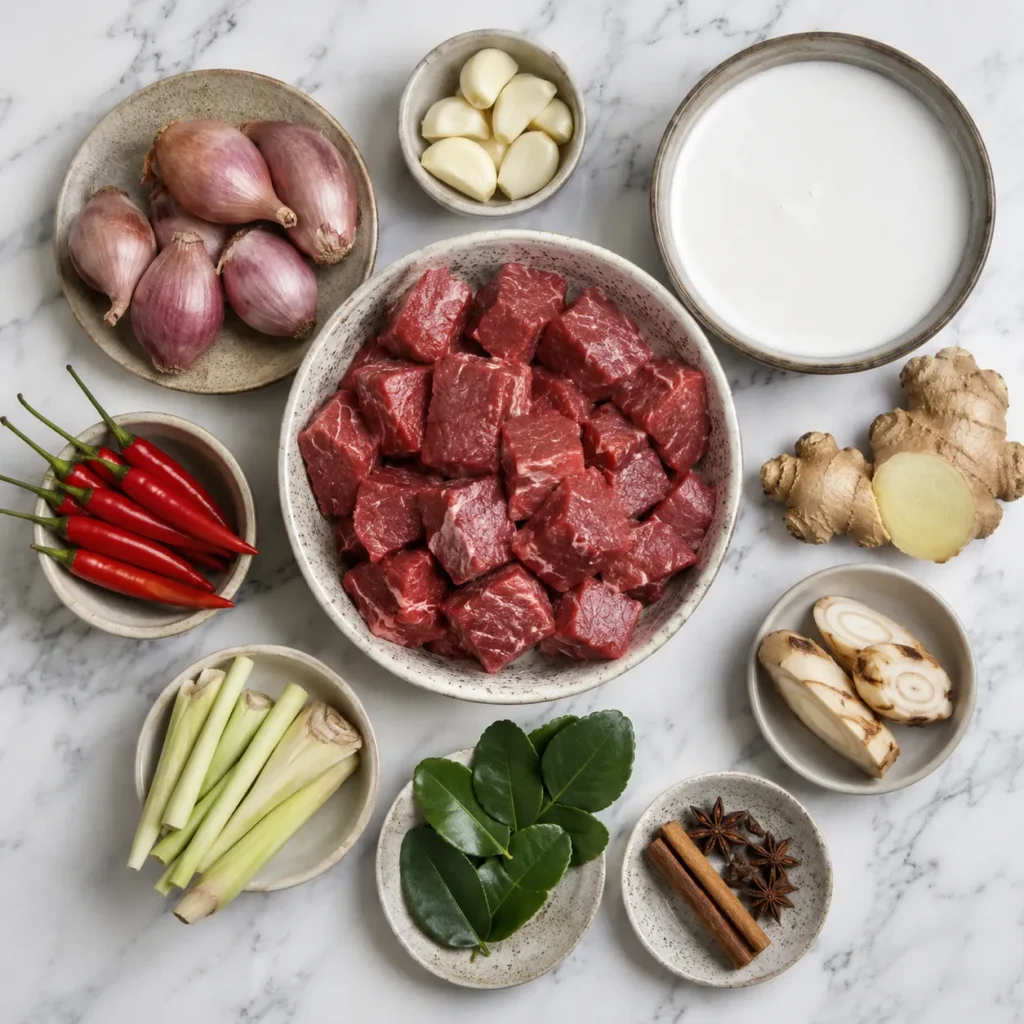
- 800g beef chuck or stewing beef, cut into chunks
- 400ml full-fat coconut milk
- 1 cup water
For the Spice Paste
- 5 shallots
- 4 garlic cloves
- 1-inch ginger
- 1-inch galangal
- 3 red chilies (adjust to taste)
- 2 tablespoons cooking oil
For the Aromatics
- 2 lemongrass stalks, smashed
- 4 kaffir lime leaves
- 1 cinnamon stick
- 2 star anise
For Seasoning
- 1 tablespoon tamarind paste
- 1 tablespoon brown sugar
- 1 teaspoon salt (adjust to taste)
Instructions
Step 1: Blend the Spice Paste
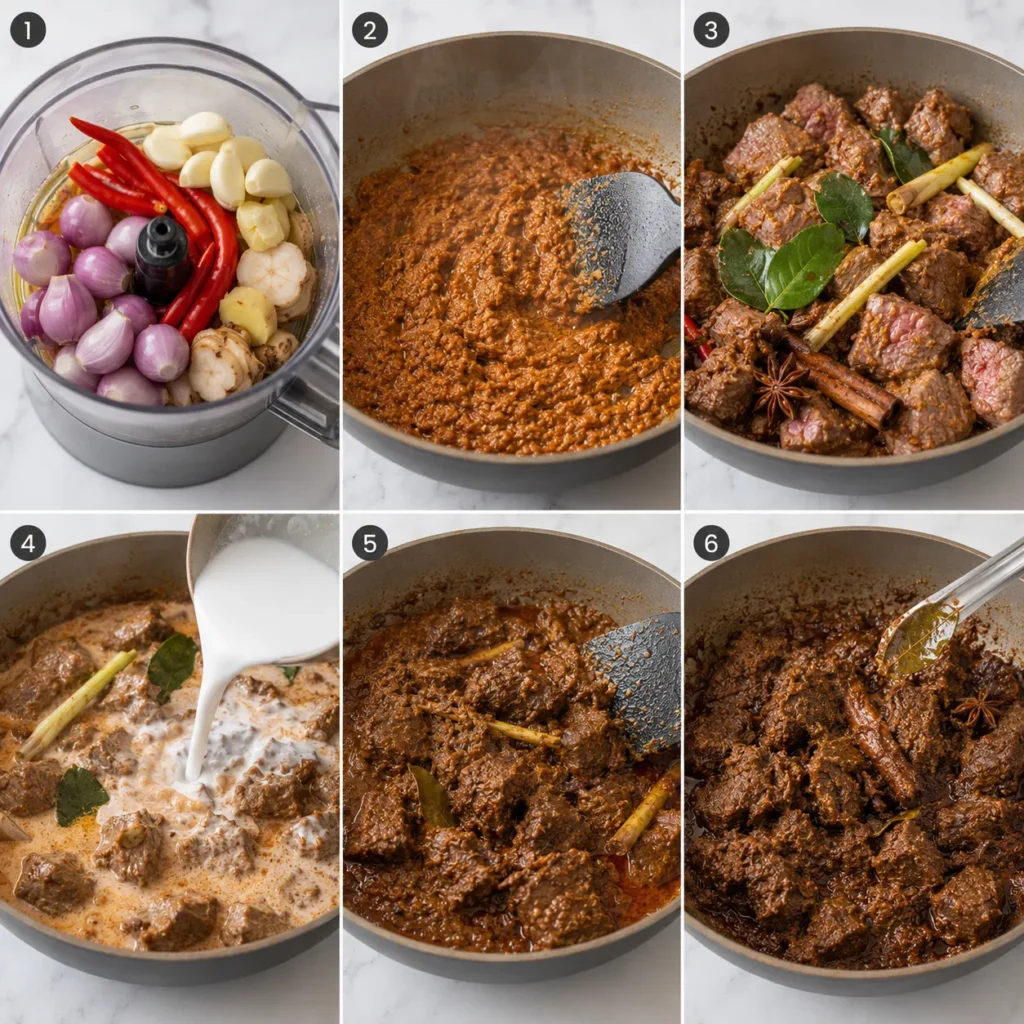
Add shallots, garlic, ginger, galangal, red chilies, and oil into a blender. Blend until you get a smooth, thick paste. This takes about 2–3 minutes. A smooth paste ensures the flavors coat the beef evenly and cook properly without gritty texture.
Chef’s Tip: If your blender struggles, add a tablespoon of water gradually, but keep it minimal so the paste stays concentrated and rich.
Step 2: Cook the Spice Paste
Heat a large pan over medium heat and cook the spice paste for 8–10 minutes, stirring often. You’ll notice it darkens slightly and becomes fragrant. This step removes raw flavors and develops depth, which is essential for a proper beef rendang recipe.
Chef’s Tip: Don’t rush this stage; undercooked paste leads to a sharp, raw taste instead of the deep, mellow flavor rendang is known for.
Step 3: Add Aromatics and Beef
Add lemongrass, kaffir lime leaves, cinnamon stick, and star anise. Stir for 1–2 minutes, then add the beef chunks. Cook for 5–7 minutes until the beef is lightly seared and coated with the spice mixture. This locks in flavor and builds a rich base.
Chef’s Tip: Make sure the beef touches the pan surface briefly before stirring; this helps create a slight caramelization for extra depth.
Step 4: Simmer with Coconut Milk
Pour in coconut milk and water, then stir well. Bring to a gentle simmer and cook uncovered for 60–75 minutes, stirring occasionally. This slow cooking tenderizes the beef while reducing the liquid into a thick curry.
Chef’s Tip: Keep the heat low and steady; boiling too aggressively can split the coconut milk and ruin the texture.
Step 5: Reduce and Caramelize
Continue cooking for another 45–60 minutes until the sauce thickens significantly and coats the beef. Add tamarind paste, brown sugar, and salt. Stir frequently at this stage to prevent sticking as the oils begin to separate.
Chef’s Tip: This is where rendang transforms, patience here gives you that signature rich, almost dry texture with intense flavor.
Step 6: Final Adjustments
Taste and adjust seasoning as needed. Remove whole spices and let the dish rest for 10 minutes before serving. Resting allows the flavors to settle and intensify.
Chef’s Tip: Rendang often tastes even better after resting or the next day, as the spices fully absorb into the beef.
Nutritional Information (Per Serving)
| Nutrient | Amount |
| Calories | 520 kcal |
| Protein | 35 g |
| Carbohydrates | 10 g |
| Total Fat | 38 g |
| Saturated Fat | 22 g |
| Fibre | 2 g |
| Sodium | 480 mg |
Why You’ll Love This Recipe
- You get a deeply flavorful dish where every bite of beef is infused with spices, making it far more satisfying than quick curries.
- The slow cooking process creates tender meat that practically melts, even if you’re starting with a tougher cut.
- It’s a versatile recipe that works just as well for family dinners as it does for special occasions.
- You can make it ahead, and it actually tastes better the next day, which is perfect for meal planning.
Common Mistakes to Avoid
- Skipping the proper cooking of the spice paste leads to a harsh, raw flavor, so always cook it until fragrant and slightly darker.
- Cooking on high heat can cause the coconut milk to separate, resulting in an oily and unpleasant texture instead of a creamy curry.
- Not stirring during the final reduction stage often causes burning at the bottom, which can ruin the entire dish’s flavor.
- Cutting beef into uneven sizes leads to inconsistent cooking, so aim for uniform chunks for even tenderness.
Serving Suggestions
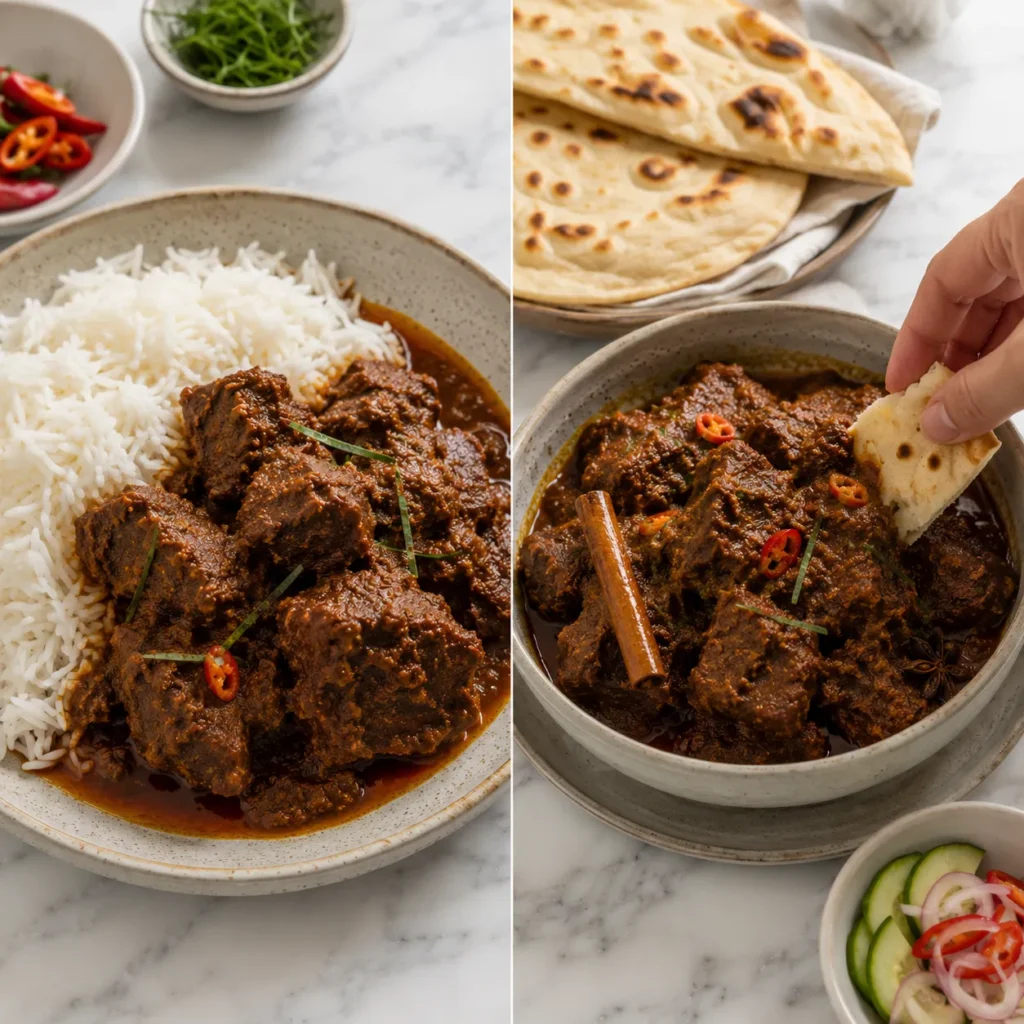
- Serve your beef rendang recipe with steamed jasmine rice to balance the richness and soak up the flavorful sauce.
- Pair it with flatbreads like naan or roti for a more hands-on, comforting dining experience.
- Add a side of lightly pickled vegetables or cucumber salad to cut through the richness and refresh your palate.
- Use leftovers as a filling for wraps or sandwiches, where the intense flavor works beautifully in a different format.
Healthier Alternatives and Ingredient Swaps
- Swap full-fat coconut milk with light coconut milk to reduce fat while still keeping a creamy consistency.
- Use leaner cuts of beef, but extend cooking time slightly to maintain tenderness without sacrificing texture.
- Replace brown sugar with a smaller amount of honey or skip it entirely if you prefer a lower-sugar option.
- Add extra vegetables like green beans or spinach toward the end for more fiber and nutrients without overpowering the dish.
Storage and Meal Prep Tips
- Store leftover rendang in an airtight container in the refrigerator for up to 4 days, allowing flavors to deepen over time.
- Freeze portions for up to 2 months, making sure to cool completely before storing to preserve texture.
- Reheat gently on the stovetop with a splash of water or coconut milk to bring back the original consistency.
- Prepare the spice paste ahead and refrigerate it for up to 2 days to save time on cooking day.
Conclusion
This rich beef rendang recipe rewards patience with bold, layered flavor and incredibly tender meat. Once you master the slow cooking process, you can adjust spices and textures to suit your taste, making it a reliable, impressive dish every time.