
Smooth Mango Sorbet Recipe for Light Tropical Dessert
Ripe mangoes blended into a silky, frozen treat give you a naturally sweet dessert that feels refreshing without being heavy. This smooth mango sorbet recipe is perfect for hot afternoons, light dinners, or whenever you want a clean, fruity finish.
Timing
- Prep Time: 15 minutes
- Cook Time: 5 minutes (simple syrup)
- Freezing Time: 3–4 hours
- Total Time: 4 hours 20 minutes
- Servings: 4–6 portions
Ingredients for Mango Sorbet Recipe
Fresh Fruit Base
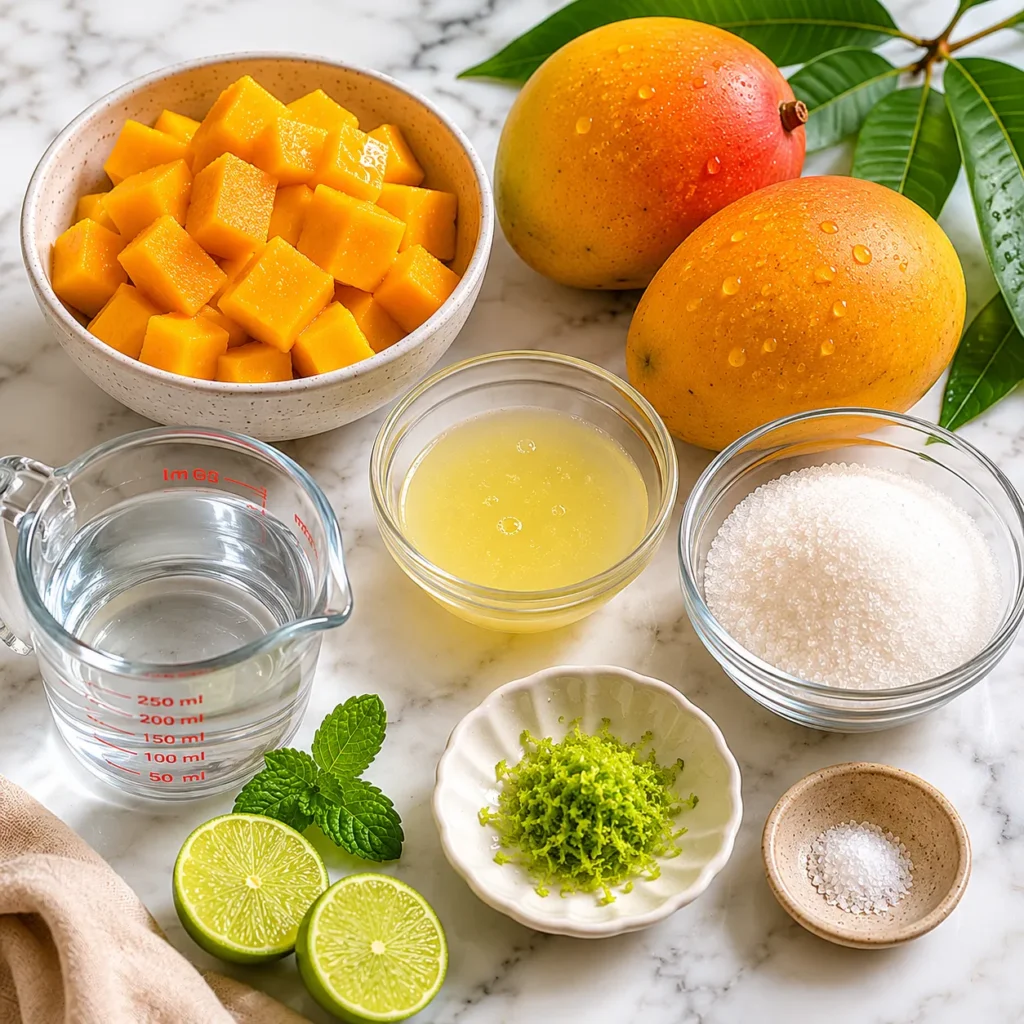
- 3 cups ripe mango chunks (about 3–4 large mangoes)
- 2 tablespoons fresh lemon juice
Sweetener & Texture
- ¾ cup granulated sugar
- ½ cup water
Optional Enhancers
- 1 teaspoon lime zest (for brighter flavor)
- Pinch of salt (balances sweetness)
Step-by-Step Instructions
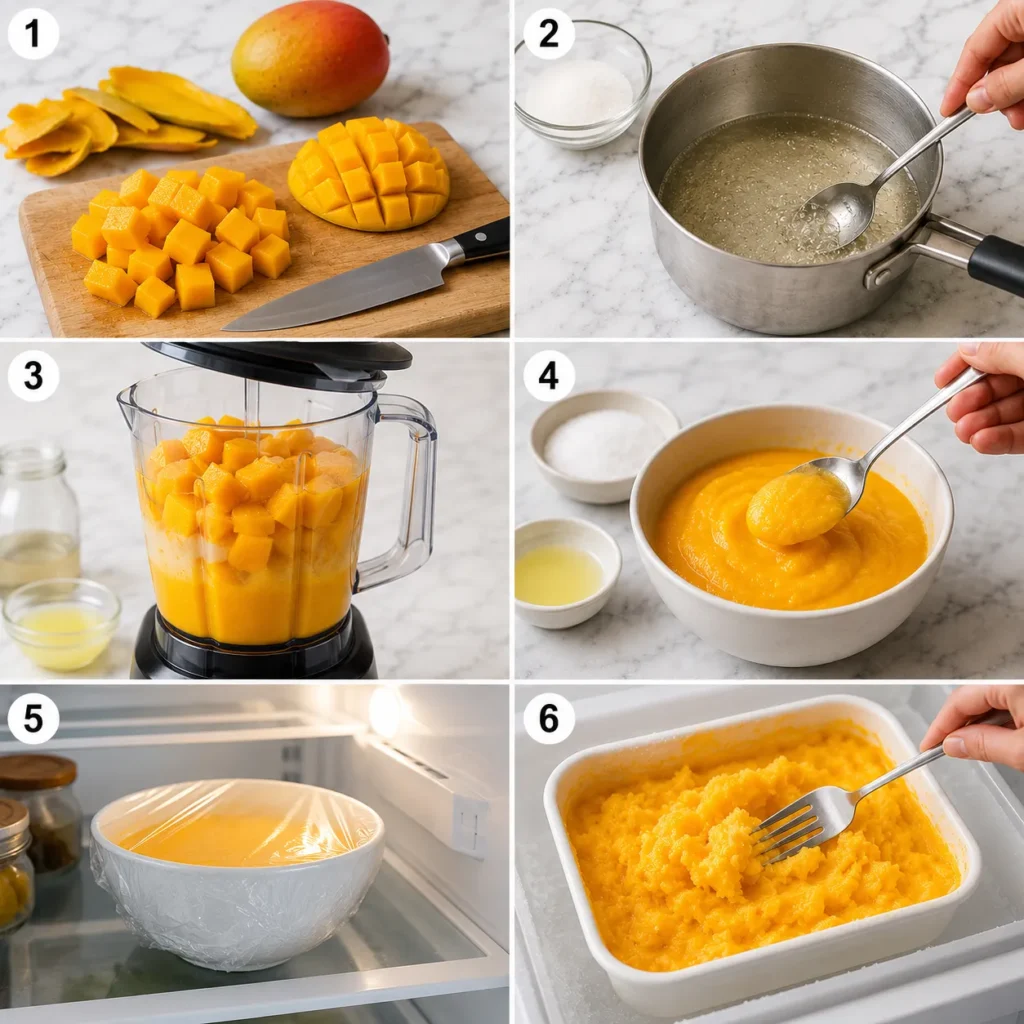
Step 1: Prepare the Mango (10 minutes)
Peel and chop your mangoes into chunks, removing as much flesh from the pit as possible. Place the pieces in a blender or food processor until ready to use. This step ensures a smooth base without fibrous bits.
Chef’s Tip: Choose mangoes that feel slightly soft when pressed and smell fragrant near the stem; underripe mangoes will result in a sorbet that lacks natural sweetness and depth.
Step 2: Make a Simple Syrup (5 minutes)
In a small saucepan, combine sugar and water. Heat over medium, stirring until the sugar completely dissolves. Let it cool slightly before using. This syrup helps create a smoother, scoopable texture.
Chef’s Tip: Do not boil the syrup aggressively; gentle heating prevents evaporation and keeps the sugar-to-water ratio balanced for proper freezing consistency.
Step 3: Blend the Mixture (5 minutes)
Add mango chunks, lemon juice, cooled syrup, salt, and optional lime zest into your blender. Blend until completely smooth and creamy, scraping down the sides if needed.
Chef’s Tip: Blend longer than you think necessary, extra blending incorporates air and creates that soft, velvety texture instead of an icy finish.
Step 4: Taste and Adjust (2–3 minutes)
Taste the mixture before freezing. If needed, add a little more lemon juice for brightness or sugar for sweetness. This is your last chance to balance the flavor.
Chef’s Tip: Flavors dull slightly when frozen, so the mixture should taste a touch sweeter and more vibrant than you want the final result.
Step 5: Chill Before Freezing (30 minutes)
Transfer the blended mixture into a bowl and refrigerate for about 30 minutes. This helps it freeze more evenly and improves texture.
Chef’s Tip: Skipping this step can lead to uneven freezing and larger ice crystals, especially if your freezer runs very cold.
Step 6: Freeze and Stir (3–4 hours)
Pour the mixture into a shallow container and place it in the freezer. Stir every 30–45 minutes during the first 2 hours to break up ice crystals until it becomes smooth and scoopable.
Chef’s Tip: Use a fork or whisk during stirring; this mimics the churning process of an ice cream maker and creates a smoother sorbet without special equipment.
Nutritional Information (Per Serving)
| Nutrient | Amount |
| Calories | 140 kcal |
| Protein | 1 g |
| Carbohydrates | 36 g |
| Total Fat | 0.3 g |
| Fiber | 2 g |
| Sugar | 32 g |
| Vitamin C | 35% DV |
Why You’ll Love This Recipe
- This smooth mango sorbet recipe uses simple, natural ingredients, giving you a clean, fruit-forward flavor without artificial additives or heavy cream.
- The texture turns out silky and refreshing, making it a perfect alternative to ice cream when you want something lighter but still satisfying.
- You don’t need special equipment like an ice cream maker, which makes it beginner-friendly and accessible for any home kitchen.
- It highlights seasonal mangoes beautifully, allowing you to make the most of peak ripeness and natural sweetness.
Common Mistakes to Avoid
- Using unripe mangoes often leads to a sour and fibrous sorbet, so always choose fruit that is soft and aromatic for the best results.
- Skipping the simple syrup may seem tempting, but it can cause the sorbet to freeze too hard and lose its smooth consistency.
- Not stirring during freezing allows large ice crystals to form, which creates a grainy texture instead of a creamy one.
- Overloading the blender without blending thoroughly can leave small chunks, affecting the final smoothness of the dessert.
Serving Suggestions
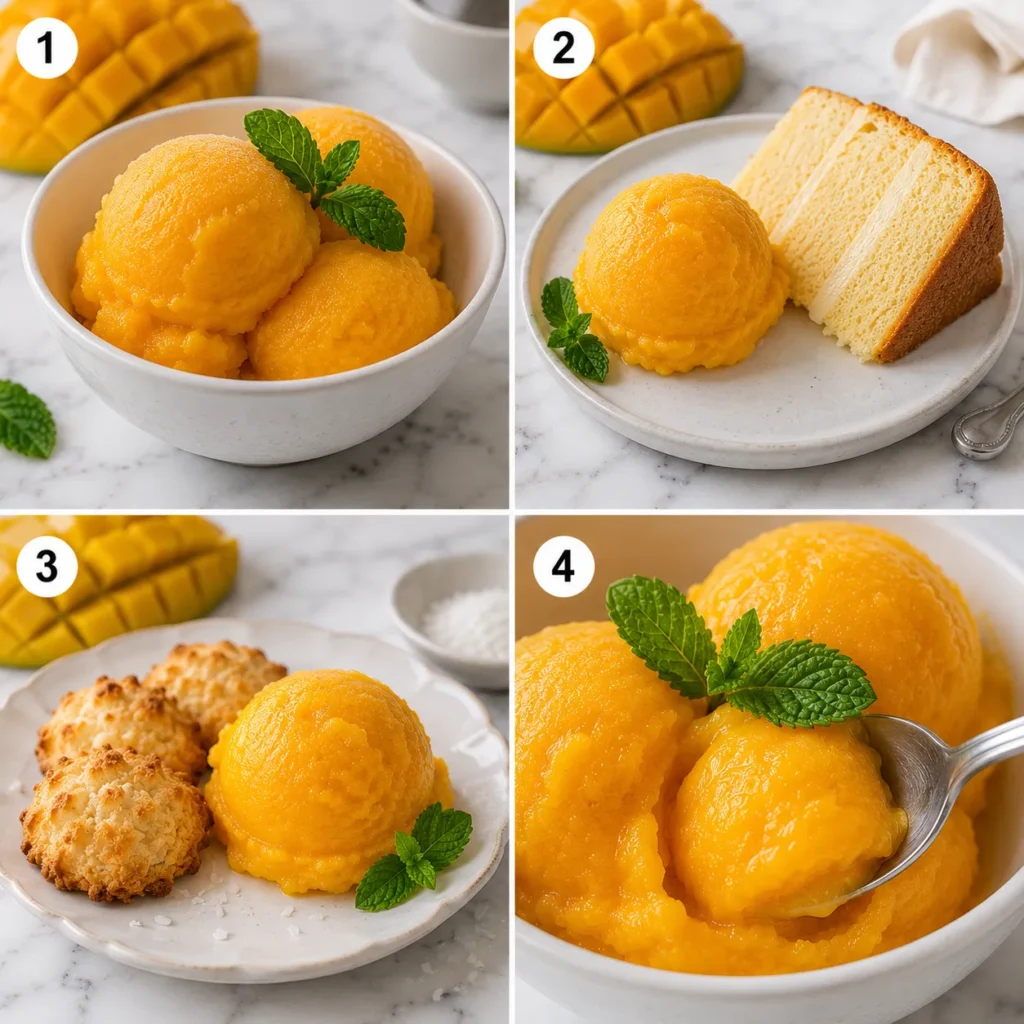
- Serve your mango sorbet in chilled bowls with fresh mint leaves to enhance the tropical feel and add a subtle herbal contrast.
- Pair it with a light sponge cake or coconut cookies for a balanced dessert that combines creamy and crumbly textures.
- Use it as a palate cleanser between courses during a dinner party, as its refreshing acidity resets the taste buds beautifully.
- Layer it with yogurt and granola to create a quick frozen parfait that works as a summer breakfast or light snack.
Healthier Alternatives and Ingredient Swaps
- Replace granulated sugar with honey or maple syrup for a more natural sweetener, adjusting the quantity slightly to taste.
- Add a splash of coconut water instead of plain water in the syrup to introduce a subtle tropical depth without extra fat.
- Use less sugar if your mangoes are very ripe, as their natural sweetness can carry the flavor without needing much added sugar.
- Incorporate a handful of pineapple chunks for a mixed fruit variation that adds complexity while keeping the recipe light.
Storage and Meal Prep Tips
- Store the sorbet in an airtight container in the freezer for up to one week, pressing parchment paper directly on the surface to prevent ice crystals.
- Let the sorbet sit at room temperature for 5–10 minutes before scooping to soften it slightly for a smoother texture.
- For meal prep, portion the sorbet into individual containers so you can enjoy single servings without repeated thawing and refreezing.
- Avoid frequent temperature changes, as this can cause the sorbet to become icy and lose its creamy consistency over time.
Conclusion
This smooth mango sorbet recipe proves that simple ingredients can deliver impressive results. With the right balance of sweetness, acidity, and technique, you create a dessert that feels both refreshing and refined. Once you master it, you can easily adapt it with other fruits and make it your own.