
Juicy Ribeye Steak Recipe for Tender Pan Seared Flavor
A perfectly cooked ribeye steak brings together rich marbling, deep flavor, and a golden crust that feels restaurant-quality at home. This juicy ribeye steak recipe is ideal for weeknight indulgence or impressing guests without complicated techniques.
Timing
- Prep Time: 10 minutes
- Cook Time: 12–15 minutes
- Total Time: 25 minutes
- Servings: 2 servings
Ingredients for Ribeye Steak Recipe
For the Ribeye Steak
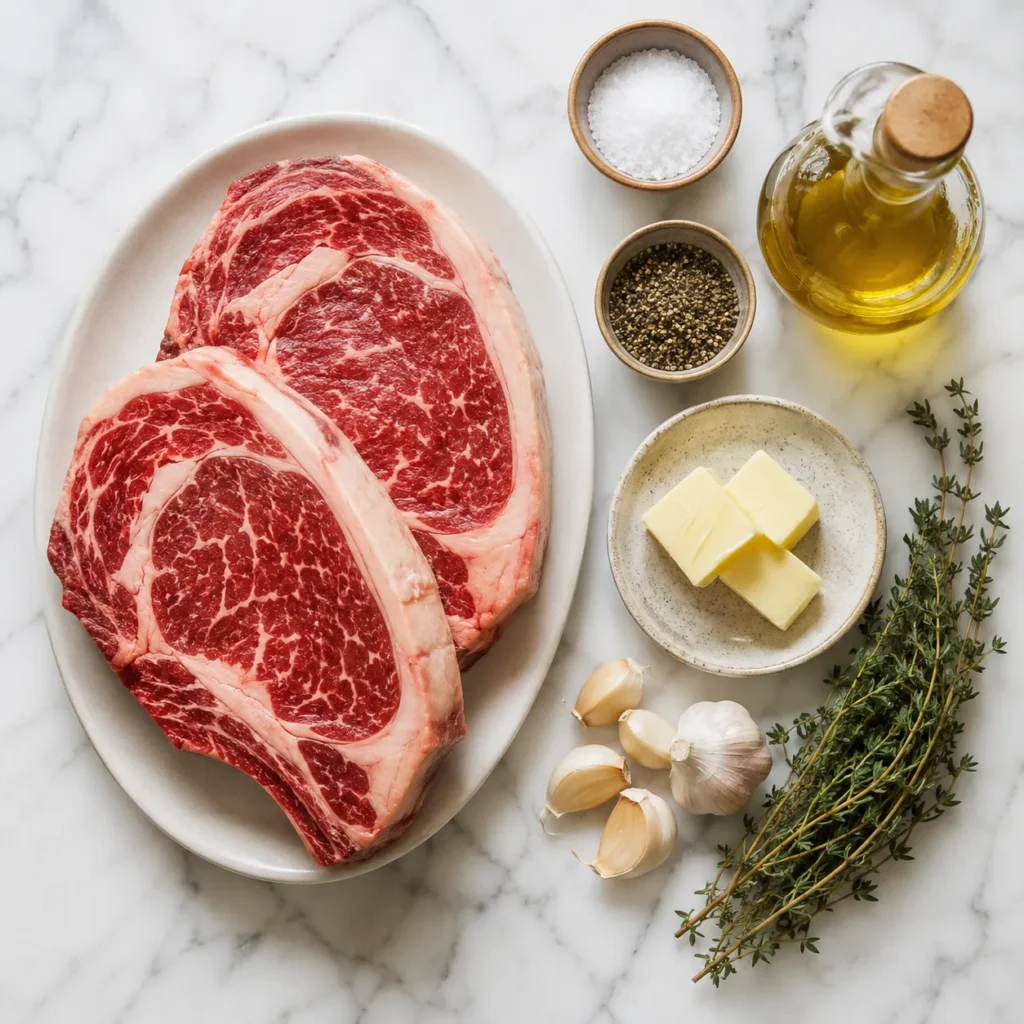
- 2 ribeye steaks (1–1.5 inches thick, about 250–300g each)
- 1 teaspoon salt (adjust to taste)
- 1 teaspoon freshly ground black pepper
For Pan Searing
- 2 tablespoons olive oil or neutral oil
- 2 tablespoons unsalted butter
- 3 garlic cloves (lightly crushed)
- 2 sprigs fresh thyme or rosemary
Optional Finishing
- 1 teaspoon lemon juice (for brightness)
- Flaky sea salt (for garnish)
Step-by-Step Instructions
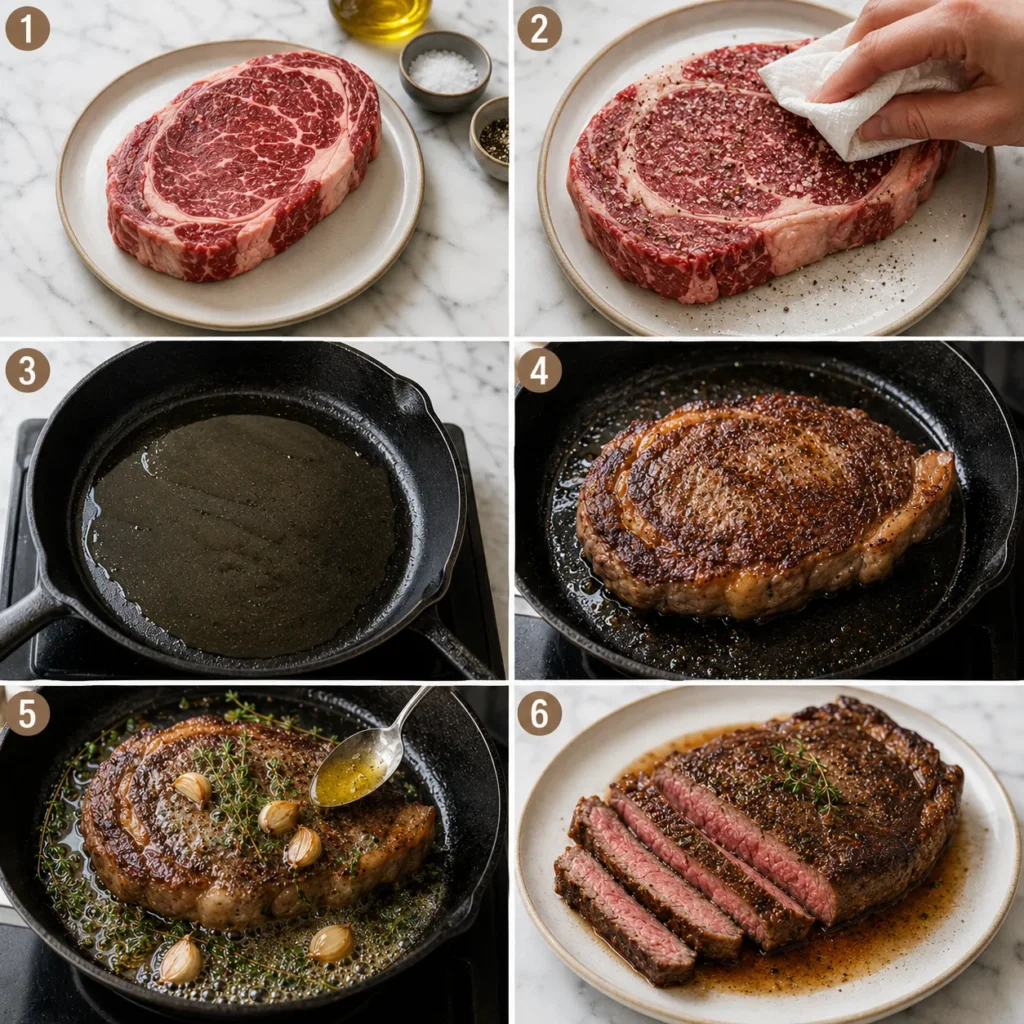
Step 1: Bring the Steak to Room Temperature (10 minutes)
Take your ribeye steak out of the fridge and let it rest on the counter for about 10 minutes. This ensures even cooking throughout the meat and prevents a cold center.
Chef’s Tip: When the steak is too cold, the outside cooks faster than the inside, often leading to uneven doneness. Allowing it to warm slightly helps you achieve a consistent juicy interior.
Step 2: Season Generously (2 minutes)
Pat the steaks dry using paper towels, then season both sides with salt and black pepper. Press the seasoning gently into the surface so it adheres well.
Chef’s Tip: Drying the steak is essential because moisture creates steam in the pan, preventing that beautiful golden crust from forming. A dry surface equals better searing.
Step 3: Heat the Pan Properly (3–4 minutes)
Place a heavy skillet (preferably cast iron) over medium-high heat and add olive oil. Let the oil heat until it shimmers but doesn’t smoke.
Chef’s Tip: Proper pan temperature is key. If the pan isn’t hot enough, the steak will release juices instead of searing, resulting in a gray, less flavorful surface.
Step 4: Sear the Ribeye Steak (4–5 minutes per side)
Place the steaks in the hot pan without overcrowding. Sear for about 4–5 minutes on one side without moving them, then flip and cook the other side for another 4 minutes.
Chef’s Tip: Resist the urge to move the steak around. Letting it sit undisturbed allows the Maillard reaction to develop, giving you that rich, caramelized crust.
Step 5: Add Butter, Garlic, and Herbs (2–3 minutes)
Lower the heat slightly, then add butter, garlic, and herbs to the pan. Tilt the pan and use a spoon to baste the melted butter over the steaks repeatedly.
Chef’s Tip: Basting not only enhances flavor but also helps cook the top surface gently. The infused butter carries garlic and herb aromas deep into the meat.
Step 6: Rest the Steak Before Serving (5 minutes)
Remove the steak from the pan and let it rest on a plate for at least 5 minutes before slicing. Optionally drizzle with lemon juice and sprinkle flaky salt.
Chef’s Tip: Resting allows the juices to redistribute throughout the steak instead of spilling out when you cut it. Skipping this step can result in a dry steak despite perfect cooking.
Nutritional Information (Per Serving)
| Nutrient | Amount |
| Calories | 520 kcal |
| Protein | 45 g |
| Carbohydrates | 1 g |
| Total Fat | 38 g |
| Saturated Fat | 16 g |
| Fiber | 0 g |
| Sodium | 520 mg |
Why You’ll Love This Recipe
- This juicy ribeye steak recipe gives you a restaurant-quality crust and tender center using simple techniques that are easy to follow, even if you’re cooking steak for the first time.
- The combination of butter, garlic, and herbs adds deep flavor without overpowering the natural richness of the ribeye, making every bite balanced and satisfying.
- It’s quick to prepare and cook, which means you can enjoy a premium meal without spending hours in the kitchen or using complicated equipment.
- The method is flexible, allowing you to adjust doneness levels easily based on your preference, whether you like rare or well-done steak.
Common Mistakes to Avoid
- Skipping the step of bringing the steak to room temperature often leads to uneven cooking, where the outside is overdone while the inside remains undercooked.
- Not drying the steak properly can cause steaming instead of searing, which prevents that flavorful crust from forming.
- Using a pan that isn’t hot enough will result in a dull, gray exterior instead of a rich golden-brown crust.
- Flipping the steak too often interrupts the searing process, reducing flavor development and making it harder to achieve a proper crust.
- Cutting into the steak immediately after cooking causes the juices to run out, leaving the meat dry instead of juicy.
Serving Suggestions
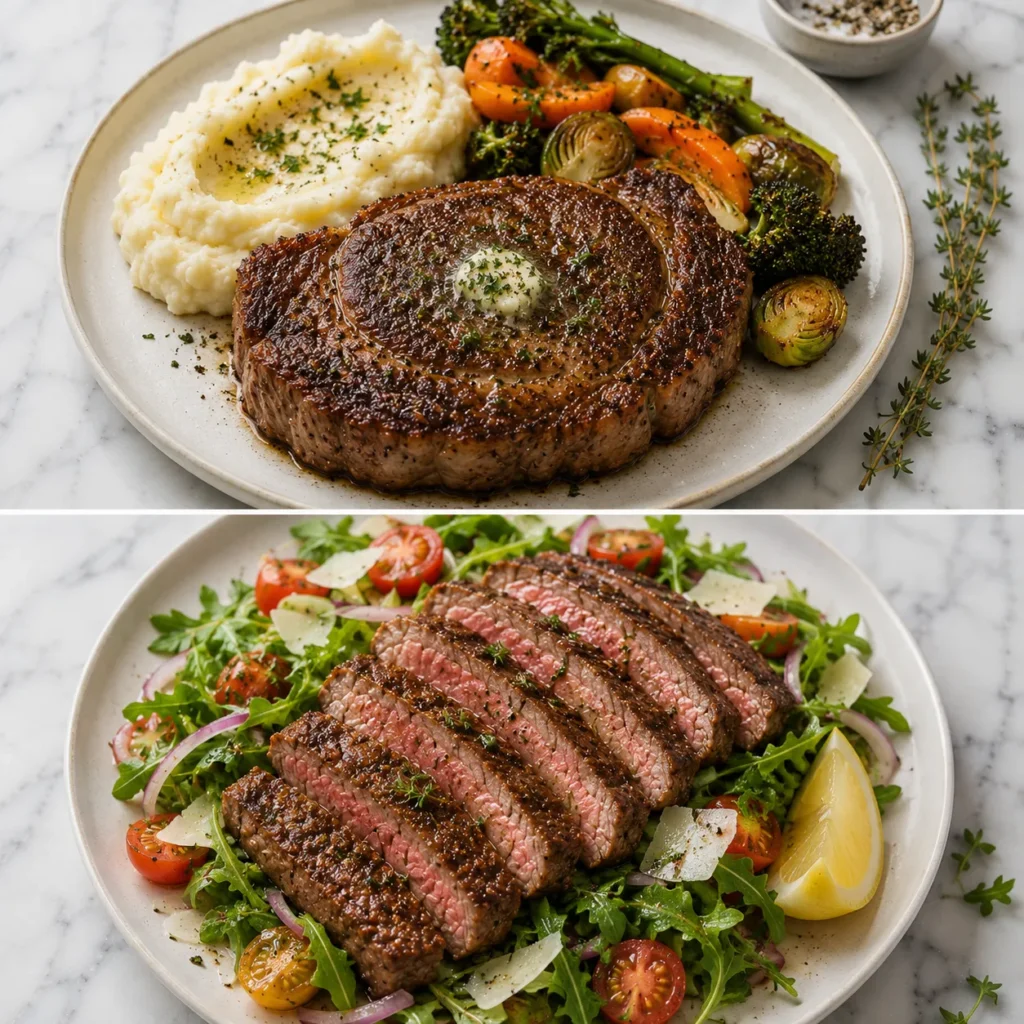
- Serve your pan seared ribeye steak with creamy mashed potatoes and roasted vegetables for a classic, comforting meal that highlights the steak’s richness.
- Slice the steak thinly and serve it over a fresh salad with arugula, cherry tomatoes, and a light vinaigrette for a lighter yet satisfying option.
- Pair it with garlic butter rice or herbed quinoa to create a balanced plate with added texture and flavor contrast.
- Use leftovers to make steak sandwiches with crusty bread, caramelized onions, and a simple sauce for a quick next-day meal.
Healthier Alternatives and Ingredient Swaps
- Replace butter with a smaller amount of olive oil if you want to reduce saturated fat while still achieving a good sear and flavor.
- Choose a slightly leaner cut like sirloin if you’re aiming for lower fat content, though it may be slightly less tender than ribeye.
- Use fresh herbs without butter and finish with a squeeze of lemon juice for a lighter, fresher flavor profile.
- Reduce the salt and enhance flavor with garlic powder, smoked paprika, or herbs to make the dish more heart-friendly.
Storage and Meal Prep Tips
- Store leftover ribeye steak in an airtight container in the refrigerator for up to 3 days, ensuring it stays fresh and safe to eat.
- Reheat gently in a pan over low heat with a bit of butter or oil to maintain moisture and avoid overcooking the meat.
- Avoid microwaving if possible, as it can make the steak tough and unevenly heated.
- For meal prep, slice the steak and portion it into containers with sides like vegetables or grains for quick, balanced meals during the week.
Conclusion
This juicy ribeye steak recipe works because it focuses on simple, reliable techniques that bring out the best in a high-quality cut of meat. Once you master the timing and heat control, you can confidently adjust flavors and sides to make it your own every time.