
Juicy Beef Tenderloin Recipe for Elegant Dinner Meals
A perfectly cooked beef tenderloin gives you that restaurant-quality centerpiece without complicated techniques. You get a melt-in-your-mouth texture, rich flavor, and an elegant presentation, ideal for holidays, date nights, or when you want to impress without stress.
Timing
- Prep Time: 20 minutes
- Cook Time: 35–45 minutes
- Total Time: 1 hour 5 minutes
- Servings: 4–6
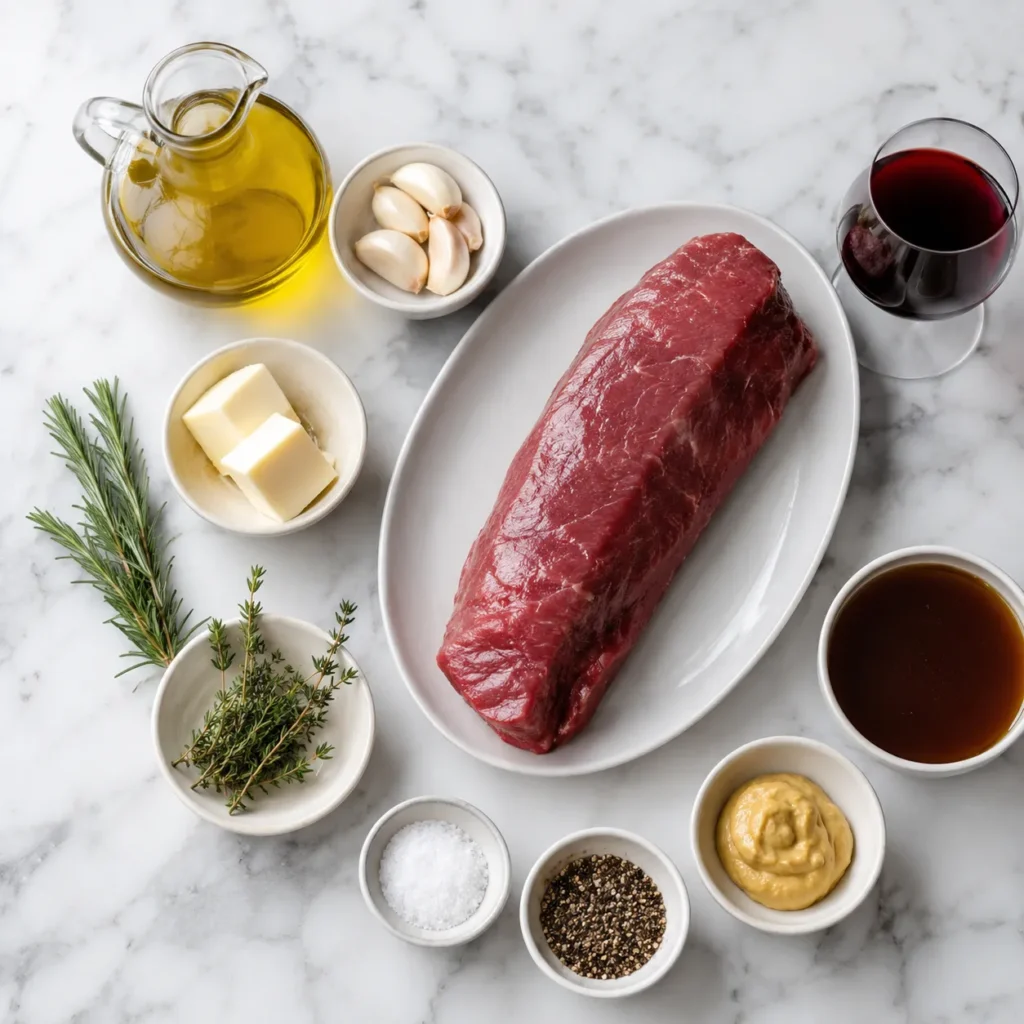
Ingredients for Beef Tenderloin Recipe
Beef & Seasoning
- 1.5–2 lbs beef tenderloin, trimmed
- 2 teaspoons salt
- 1 teaspoon black pepper
- 1 tablespoon fresh rosemary, finely chopped
- 1 tablespoon fresh thyme, finely chopped
Flavor Base
- 3 tablespoons olive oil
- 4 cloves garlic, smashed
Butter Basting
- 3 tablespoons unsalted butter
- 1 teaspoon Dijon mustard
Optional Pan Sauce
- ½ cup beef broth
- ¼ cup dry red wine
- 1 teaspoon cornstarch (optional, for thickening)
Step-by-Step Instructions
Step 1: Prepare and Season the Beef (10 minutes)
You pat the beef tenderloin completely dry using paper towels, which helps create a proper crust during searing. Then rub it evenly with salt, pepper, rosemary, and thyme, pressing gently so the seasoning sticks.
Chef’s Tip: Allow the seasoned beef to sit at room temperature for about 20 minutes before cooking. This step ensures even cooking from edge to center and prevents a cold interior with an overcooked exterior.
Step 2: Sear for a Flavorful Crust (8–10 minutes)
You heat olive oil in a heavy skillet over medium-high heat until it shimmers. Carefully place the beef in the pan and sear each side for 2–3 minutes until a deep golden crust forms. Add garlic cloves during the last minute for aromatic flavor.
Chef’s Tip: Avoid moving the beef too early while searing. Letting it sit undisturbed allows a proper crust to develop, which locks in juices and builds that rich, savory flavor you expect.
Step 3: Add Butter and Begin Basting (5 minutes)
You reduce the heat slightly and add butter to the pan. Once melted, tilt the pan and spoon the butter over the beef repeatedly. This adds richness and keeps the surface moist.
Chef’s Tip: Basting continuously coats the beef in hot fat, helping it cook more evenly while enhancing flavor. This small step makes a noticeable difference in both texture and taste.
Step 4: Roast to Desired Doneness (20–25 minutes)
You transfer the skillet to a preheated oven at 200°C (400°F). Roast the beef until it reaches your preferred doneness, about 50–52°C (122–125°F) for medium-rare using a meat thermometer.
Chef’s Tip: Always rely on a thermometer rather than guessing. Beef tenderloin is expensive, and precision ensures you don’t overcook and lose that signature tenderness.
Step 5: Rest Before Slicing (10–15 minutes)
You remove the beef from the oven and transfer it to a cutting board. Let it rest uncovered for at least 10 minutes so the juices redistribute throughout the meat.
Chef’s Tip: Skipping the resting step causes juices to spill out when slicing, leaving the meat dry. Resting locks moisture inside, giving you juicy slices every time.
Step 6: Optional Pan Sauce (5–7 minutes)
You place the skillet back on the stove, add beef broth and red wine, and scrape up browned bits. Simmer until slightly reduced, and optionally thicken with cornstarch slurry.
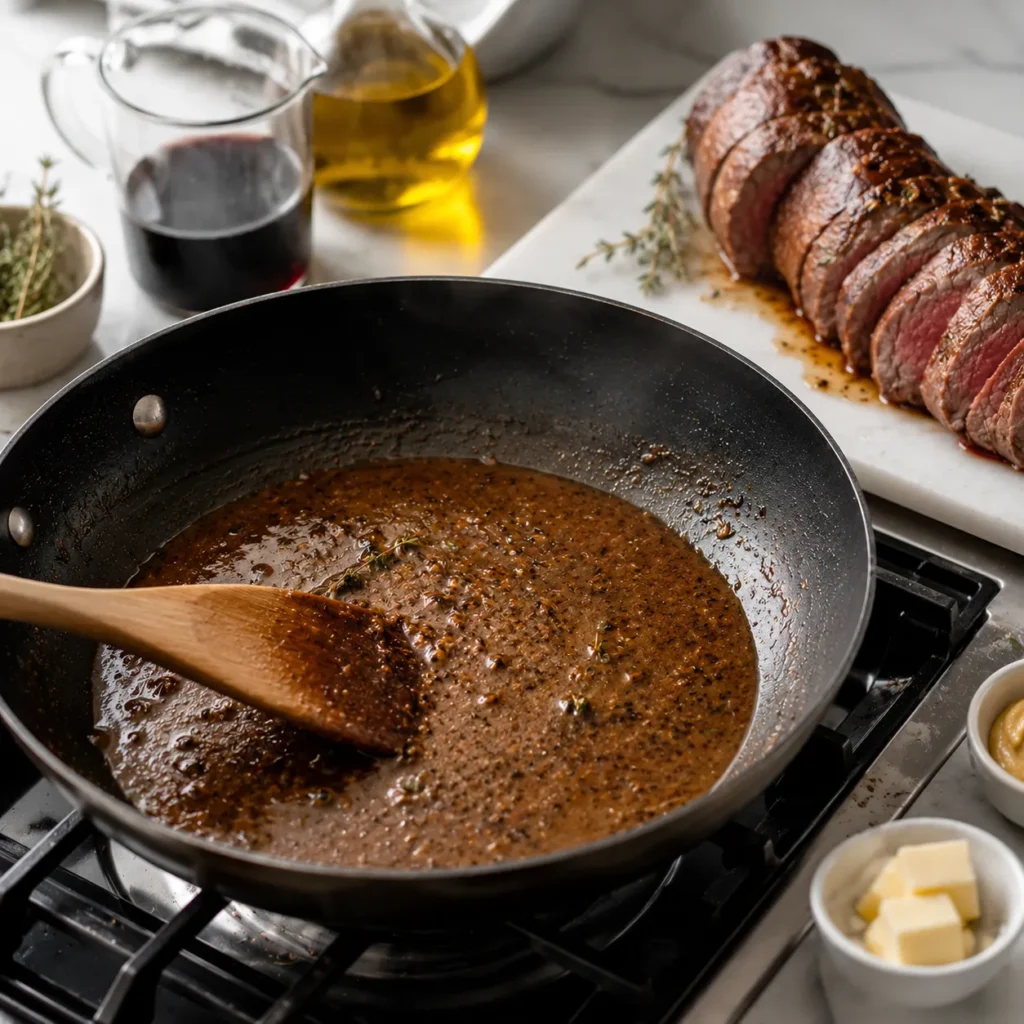
Chef’s Tip: Those browned bits at the bottom of the pan are packed with flavor. Deglazing them into a sauce turns simple drippings into a rich finishing touch.
Nutritional Information (Per Serving)
| Nutrient | Amount |
| Calories | 420 kcal |
| Protein | 38 g |
| Carbohydrates | 3 g |
| Total Fat | 28 g |
| Saturated Fat | 11 g |
| Fiber | 0 g |
| Iron | 3.5 mg |
Why You’ll Love This Recipe
- You get a restaurant-quality beef tenderloin at home without complicated techniques, making it approachable even if you’re cooking it for the first time.
- The method balances searing and roasting, which gives you both a flavorful crust and a perfectly tender interior.
- It’s versatile enough for special occasions yet simple enough to prepare without stress or advanced skills.
- The optional pan sauce elevates the dish further, giving you a complete, elegant meal with minimal extra effort.
Common Mistakes to Avoid
- Skipping the step of bringing the beef to room temperature can lead to uneven cooking, where the outside overcooks before the inside is done.
- Overcrowding the pan during searing prevents proper browning, which means you miss out on that rich crust and depth of flavor.
- Guessing doneness instead of using a thermometer often results in overcooked beef, which can quickly ruin the tenderness of the cut.
- Cutting the beef immediately after cooking causes juices to run out, leaving the meat dry rather than juicy and flavorful.
Serving Suggestions
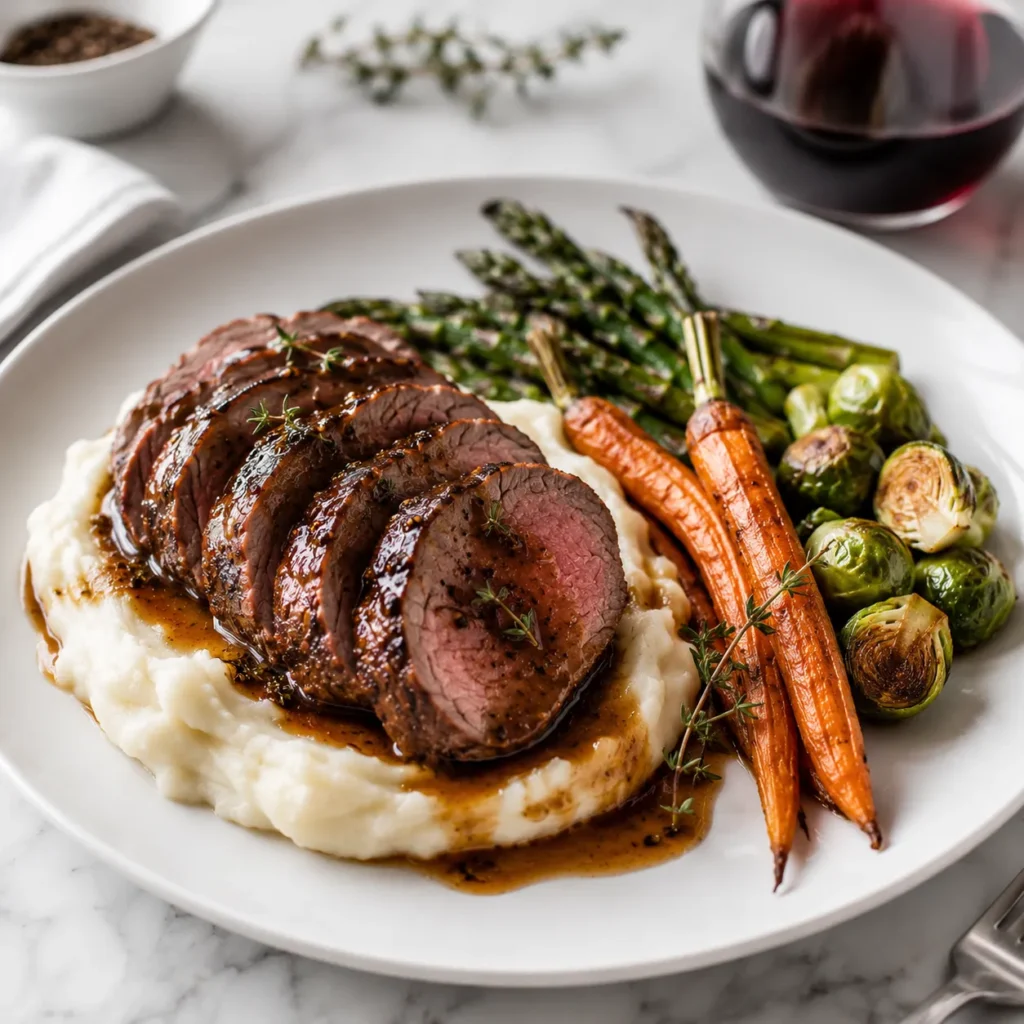
- You can serve the beef tenderloin sliced over creamy mashed potatoes, allowing the juices and sauce to soak in for a rich, comforting plate.
- Pair it with roasted vegetables like carrots, asparagus, or Brussels sprouts to add color, texture, and balance to the meal.
- For a lighter option, serve it with a crisp green salad dressed in a simple vinaigrette, which cuts through the richness of the beef.
- Leftover slices can be used in sandwiches or wraps with horseradish sauce for a quick and flavorful next-day meal.
Healthier Alternatives and Ingredient Swaps
- You can reduce butter and use more olive oil for basting, which lowers saturated fat while still keeping the beef moist and flavorful.
- Swap the pan sauce wine with additional beef broth if you prefer to avoid alcohol while still achieving a rich sauce.
- Use fresh herbs generously instead of relying on heavy sauces, which enhances flavor without adding extra calories.
- Pair the dish with steamed or grilled vegetables instead of creamy sides to create a lighter overall meal.
Storage and Meal Prep Tips
- Store leftover beef tenderloin in an airtight container in the refrigerator for up to 3 days to maintain freshness and flavor.
- Reheat gently in a low-temperature oven or covered skillet to prevent the meat from drying out or becoming tough.
- Slice only what you need and store the rest whole, as this helps retain moisture better than pre-sliced pieces.
- You can prepare the seasoning and trim the beef a day ahead, which makes cooking quicker and more organized when you’re ready to serve.
Conclusion
This juicy beef tenderloin recipe gives you full control over a premium cut without making things complicated. You build flavor step by step, lock in moisture, and finish with a dish that feels refined yet achievable. Once you try it, you’ll see how easy it is to make it your own with different herbs, sides, or sauces.