
Classic Cacio e Pepe Recipe for Authentic Italian Pasta
The Classic Cacio e Pepe Recipe for Authentic Italian Pasta is one of those timeless Roman dishes where simplicity creates bold flavor. With just pasta, cheese, and black pepper, you’ll learn how to turn a few pantry staples into a silky, restaurant-quality bowl that feels both comforting and elegant.
Timing
- Prep Time: 10 minutes
- Cook Time: 15 minutes
- Total Time: 25 minutes
- Servings: 2
Ingredients for Cacio e Pepe Recipe
Pasta Base
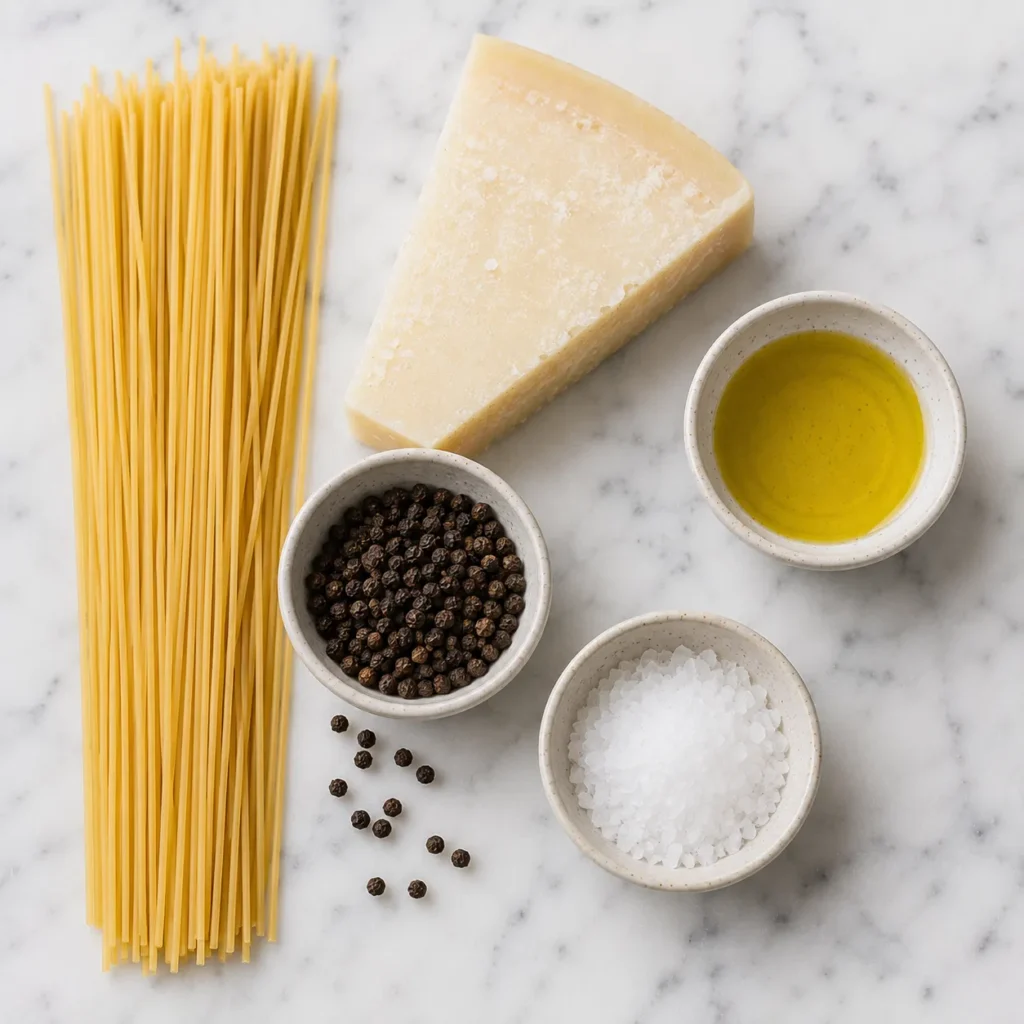
- 200 g spaghetti (or tonnarelli for authenticity)
- 2 liters water (for boiling)
- 1 tablespoon salt (for pasta water)
Cheese Mixture
- 1 cup finely grated Pecorino Romano cheese (very important for creaminess)
- 1–2 tablespoons reserved hot pasta water (for emulsifying the sauce)
Pepper Base
- 1½ teaspoons freshly cracked black pepper (adjust to taste)
- 1 teaspoon olive oil (optional, for smoother texture control)
Step-by-Step Instructions
Step 1: Boil the Pasta Properly
You start by bringing a large pot of water to a rolling boil, adding salt before dropping in the spaghetti. Cook it until it’s just shy of al dente, usually 1–2 minutes less than package instructions.
Chef’s Tip: You should always undercook pasta slightly because it finishes cooking in the sauce, helping it absorb flavor instead of becoming mushy.
Step 2: Toast the Black Pepper
In a dry pan over medium heat, you gently toast the cracked black pepper for about 1–2 minutes until it becomes fragrant. This step unlocks the essential oils in the pepper and deepens its flavor.
Chef’s Tip: You should avoid burning the pepper, as overheating it will turn the flavor bitter instead of aromatic and warm.
Step 3: Prepare the Cheese Emulsion
You take your finely grated Pecorino Romano and place it in a bowl. Slowly add a small amount of hot pasta water while stirring quickly to form a thick, creamy paste.
Chef’s Tip: You should add the water gradually and whisk continuously, because rushing this step can cause the cheese to clump instead of forming a smooth sauce.
Step 4: Combine Pasta and Pepper
You transfer the drained pasta directly into the pan with toasted pepper. Toss it gently over low heat so the pasta absorbs the pepper’s aroma evenly.
Chef’s Tip: You should keep the heat low at this stage to prevent the cheese mixture from splitting when it is added later.
Step 5: Create the Creamy Sauce
You remove the pan from heat and immediately add the cheese mixture. Toss vigorously while adding a splash of reserved pasta water until a glossy, creamy sauce forms.
Chef’s Tip: You should always combine cheese off the heat because high temperature will make it grainy instead of silky.
Step 6: Adjust Texture and Serve
You check the consistency and add more pasta water if needed until the sauce clings perfectly to every strand of spaghetti. Serve immediately while hot and creamy.
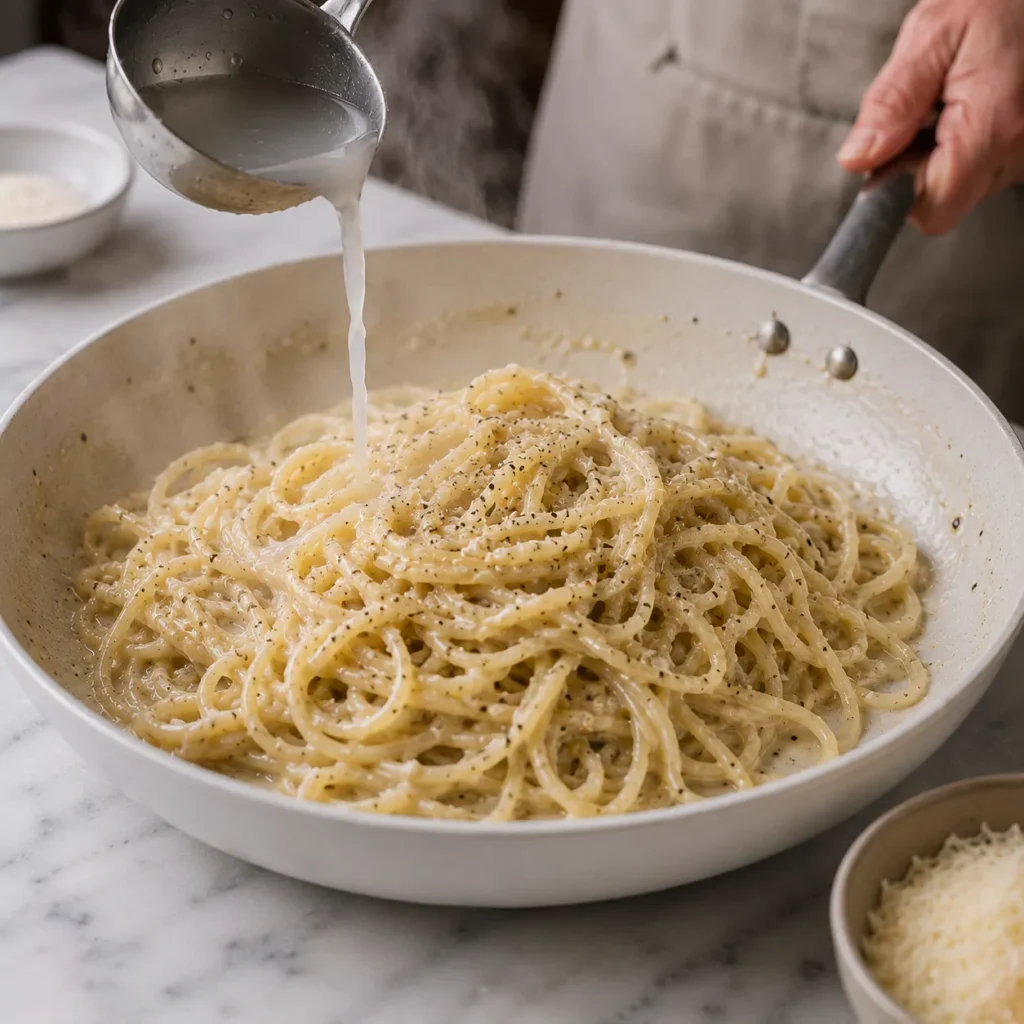
Chef’s Tip: You should serve it right away because the sauce thickens quickly as it cools, losing its signature smooth texture.
Nutrients (Per Serving)
| Nutrient | Amount |
| Calories | 520 kcal |
| Protein | 21 g |
| Carbohydrates | 62 g |
| Total Fat | 18 g |
| Saturated Fat | 9 g |
| Fiber | 3 g |
| Sodium | 780 mg |
Why You’ll Love This Recipe
- You create a restaurant-quality pasta using just a few simple ingredients, proving that great flavor doesn’t require complexity or expensive additions.
- You get a deeply satisfying creamy texture without using cream, relying instead on cheese and pasta water for natural emulsification.
- You enjoy a fast, reliable dish that fits perfectly into busy weeknights while still feeling special enough for guests.
- You experience a bold, pepper-forward flavor balanced by the salty richness of Pecorino Romano cheese.
- You gain confidence in mastering pasta emulsification, a foundational Italian cooking skill that improves many other recipes.
Common Mistakes to Avoid
- You should avoid adding cheese over direct heat because high temperatures break the emulsion and create a grainy, separated sauce instead of a smooth one.
- You should not skip reserving pasta water since it contains starch that helps bind the sauce and create its signature silky texture.
- You should avoid using pre-grated cheese because it often contains anti-caking agents that prevent proper melting and emulsification.
- You should not overcook the pasta since overly soft noodles won’t hold the sauce properly and will result in a heavy, soggy dish.
- You should avoid rushing the mixing process because proper tossing ensures even coating and prevents clumps from forming.
Serving Suggestions
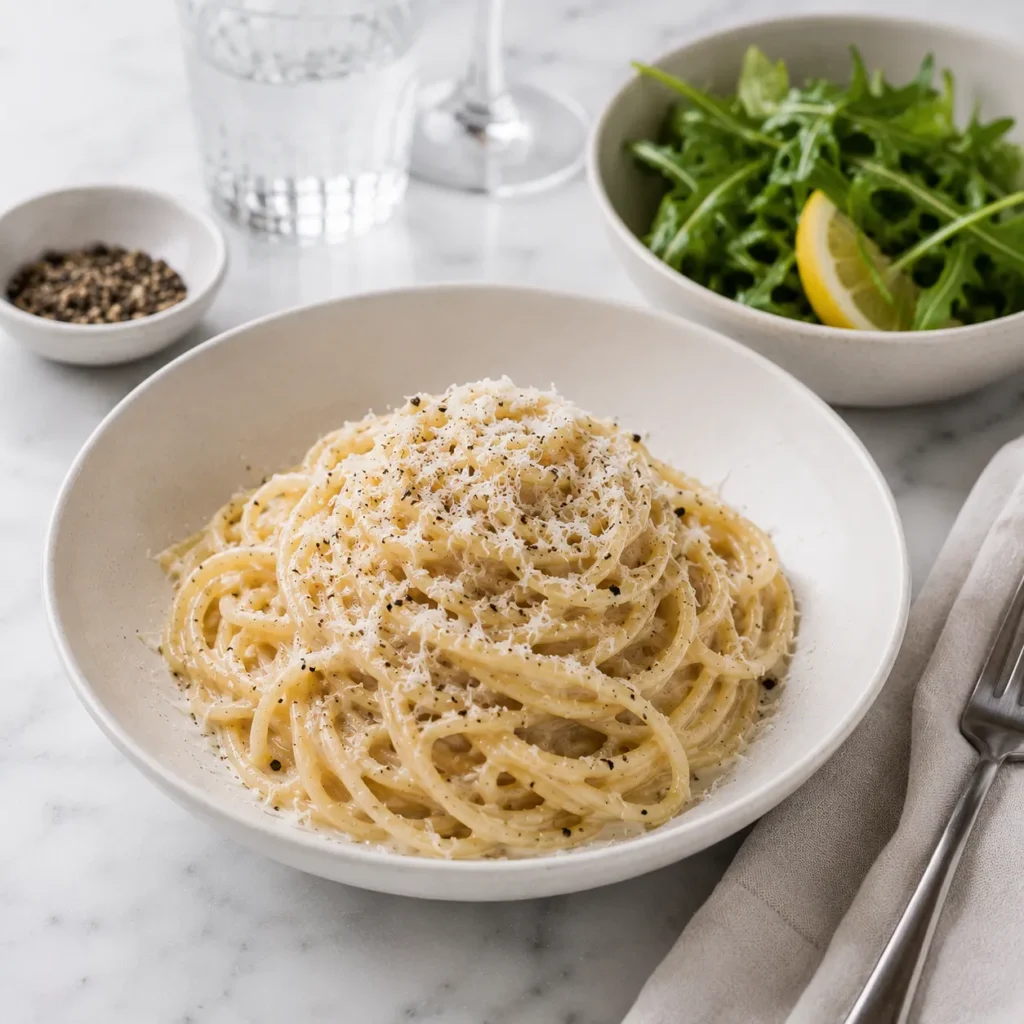
- You can serve this pasta immediately with extra Pecorino Romano sprinkled on top, enhancing the salty depth and giving it a more luxurious finish.
- You can pair it with a light arugula salad dressed in lemon vinaigrette, which balances the richness of the cheese and pepper.
- You can serve it alongside grilled chicken or shrimp to turn it into a more protein-rich main course for dinner.
- You can enjoy it as a standalone comfort meal with a glass of sparkling water or chilled white wine for a classic Roman dining experience.
Healthier Alternatives and Ingredient Swaps
- You can use whole wheat spaghetti to increase fiber content while still maintaining a satisfying bite and holding the sauce well.
- You can reduce the amount of Pecorino Romano slightly and replace part of it with Parmesan for a milder, lower-sodium option.
- You can use less olive oil or omit it entirely since the traditional recipe does not require fat beyond cheese.
- You can increase black pepper slightly instead of salt to enhance flavor without adding extra sodium.
Storage and Meal Prep Tips
- You should avoid long storage since Cacio e Pepe is best enjoyed fresh, as the sauce tends to thicken and lose creaminess over time.
- You can refrigerate leftovers in an airtight container for up to 1 day, but expect some texture changes.
- You should reheat gently in a pan with a splash of hot water to help loosen the sauce and restore creaminess.
- You should avoid microwaving at high heat since it can cause the cheese to separate and become oily.
Conclusion
This Classic Cacio e Pepe Recipe for Authentic Italian Pasta proves that mastery in cooking often comes from simplicity, technique, and timing rather than long ingredient lists. Once you understand how to emulsify cheese and pasta water, you can recreate this silky Roman favorite anytime with confidence and consistency.