
Juicy Pan Seared Steak Recipe for Restaurant Style Dinner
A perfectly cooked pan seared steak gives you a crisp golden crust, rich buttery flavor, and a juicy center without needing a grill. This easy steak recipe is ideal for date nights, quick family dinners, or anytime you want restaurant-style results at home.
Timing
- Prep Time: 10 minutes
- Cook Time: 12 minutes
- Resting Time: 5 minutes
- Total Time: 27 minutes
- Servings: 2 steaks
Ingredients for Pan Seared Steak Recipe
For the Steak
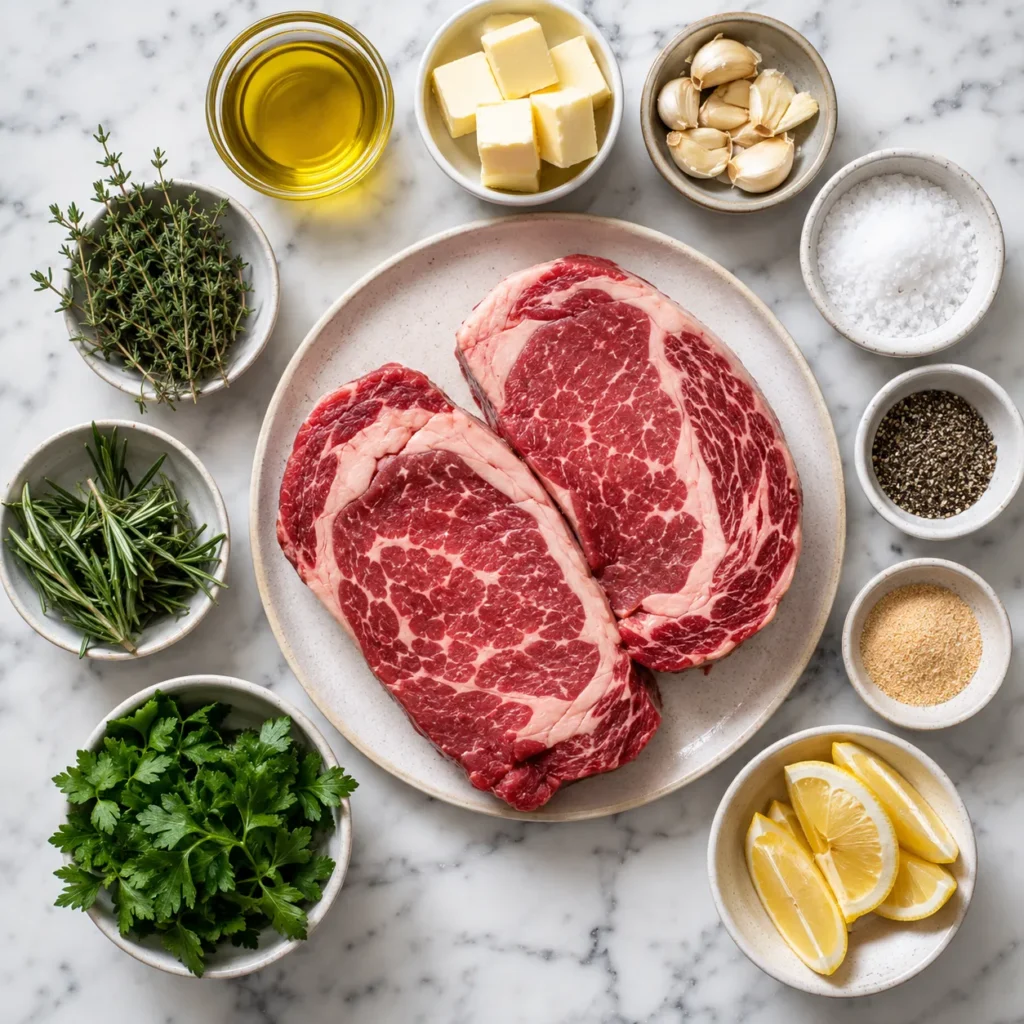
- 2 ribeye steaks or New York strip steaks, about 1 inch thick
- 1 teaspoon kosher salt
- 1 teaspoon black pepper
- 1 teaspoon garlic powder
- 1 tablespoon olive oil
For Butter Basting
- 2 tablespoons unsalted butter
- 4 garlic cloves, smashed
- 2 sprigs fresh rosemary
- 2 sprigs fresh thyme
Optional Garnishes
- Fresh chopped parsley
- Flaky sea salt
- Lemon wedges
Step-by-Step Instructions
Step 1: Bring the Steak to Room Temperature
Take the steaks out of the refrigerator about 30 minutes before cooking. Pat them completely dry using paper towels, then season both sides evenly with salt, black pepper, and garlic powder.
Allowing the steak to warm slightly helps it cook more evenly from edge to center. Drying the surface is equally important because moisture prevents the crust from forming properly in the hot pan.
Chef’s Tip: Moisture is the biggest enemy of a good sear. Even if your steak looks dry, gently pressing it with paper towels again right before cooking makes a noticeable difference in creating that deep brown crust.
Step 2: Heat the Pan Properly
Place a heavy cast iron skillet over medium-high heat for about 3 to 4 minutes until it becomes very hot. Add olive oil and swirl it around the pan.
A properly heated skillet creates the signature crust that makes restaurant-style steak so flavorful. If the pan is not hot enough, the steak will steam instead of sear, leaving it pale and less flavorful.
Chef’s Tip: Test the pan by flicking a tiny drop of water into it. If the water quickly sizzles and evaporates, the skillet is hot enough for searing without sticking.
Step 3: Sear the First Side
Carefully place the steaks into the hot skillet and leave them untouched for 3 to 4 minutes. Avoid moving or pressing the meat while it cooks.
Keeping the steak still allows the proteins and sugars on the surface to caramelize properly, creating a rich crust with deep savory flavor. You should hear a steady sizzling sound the entire time.
Chef’s Tip: Resist the urge to constantly flip or check the steak too early. The crust naturally releases from the pan once it develops properly, making it easier to turn without tearing the surface.
Step 4: Flip and Add Butter
Flip the steaks using tongs, then immediately add butter, smashed garlic, rosemary, and thyme to the skillet. Cook for another 3 to 4 minutes while spooning the melted butter over the steaks continuously.
Butter basting keeps the steak juicy while layering it with rich flavor from the herbs and garlic. This technique also helps cook the top surface gently for a more even finish.
Chef’s Tip: Tilt the pan slightly toward you while spooning butter over the steak. This pools the butter near the edge of the skillet and makes basting easier and more effective.
Step 5: Check the Temperature and Rest
Use a meat thermometer to check doneness. For medium-rare steak, remove it from the pan at 130°F because the temperature will continue rising slightly while resting.
Transfer the steaks to a plate and let them rest for 5 minutes before slicing. Resting allows the juices to redistribute inside the meat instead of spilling onto the plate.
Chef’s Tip: Cutting steak immediately after cooking is one of the fastest ways to lose moisture. Resting may seem small, but it keeps every bite noticeably juicier and more tender.
Step 6: Slice and Serve
Slice the steak against the grain and spoon any remaining garlic butter from the skillet over the top. Finish with parsley, flaky sea salt, or a squeeze of lemon if desired.
Serving steak immediately while the crust is still crisp gives you the best texture and flavor contrast between the browned exterior and juicy center.
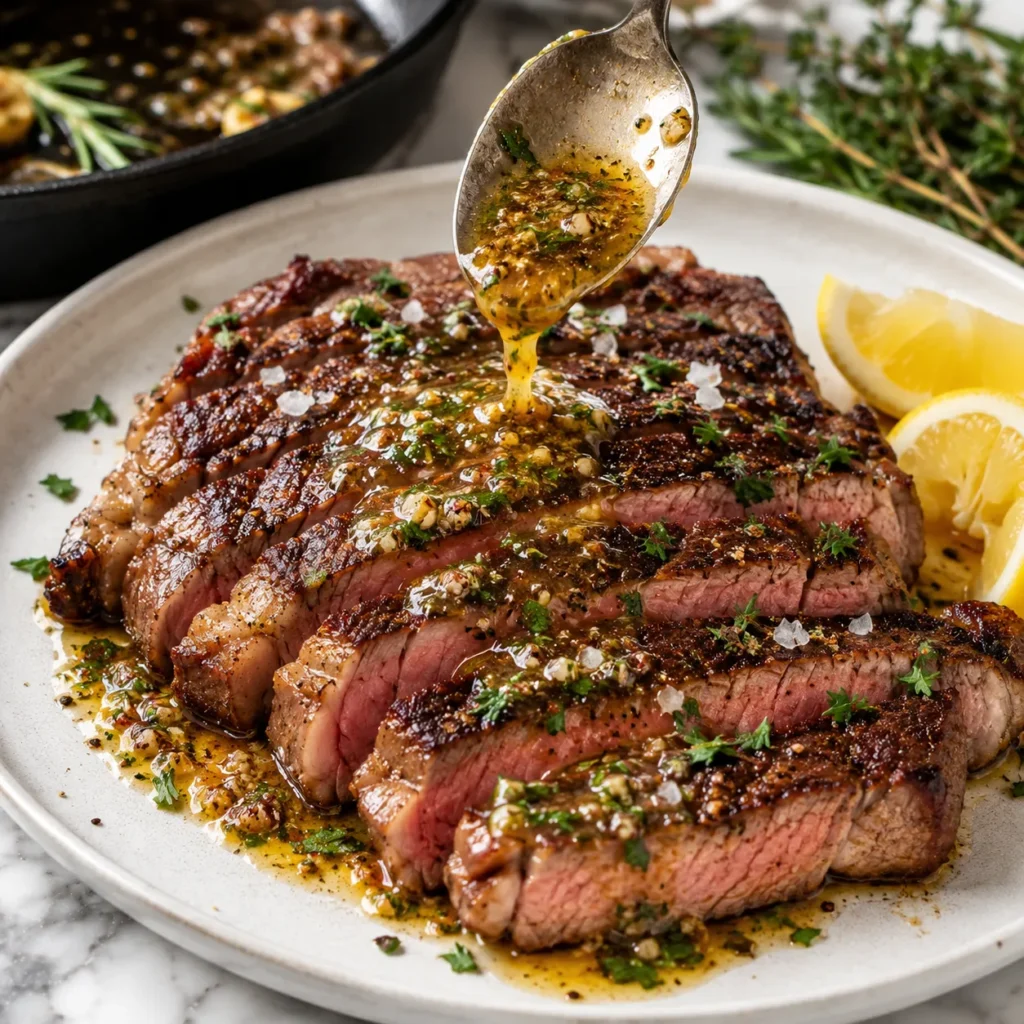
Chef’s Tip: Slicing against the grain shortens the muscle fibers in the meat, making every bite easier to chew and much more tender, especially with thicker steak cuts.
Pan Seared Steak Nutrition
| Nutrient | Amount Per Serving |
| Calories | 520 |
| Protein | 42g |
| Carbohydrates | 2g |
| Total Fat | 38g |
| Saturated Fat | 15g |
| Fiber | 0g |
| Sodium | 620mg |
| Iron | 4mg |
Why You’ll Love This Recipe
- You get a steakhouse-quality crust and juicy interior using simple ingredients and one skillet, making this recipe approachable even if you have never cooked steak before.
- The butter, garlic, and fresh herbs create layers of flavor that taste rich and impressive without requiring complicated marinades or long preparation times.
- This pan seared steak recipe cooks quickly, making it perfect for busy weeknights when you want something satisfying without spending hours in the kitchen.
- Using a cast iron skillet helps you achieve consistent results because the pan retains heat extremely well and cooks the steak evenly.
- The recipe works with several steak cuts including ribeye, strip steak, or sirloin, giving you flexibility based on your budget and preference.
Common Mistakes to Avoid
- Cooking cold steak straight from the refrigerator often leads to uneven doneness because the center stays too cold while the outside cooks too quickly. Allowing the steak to sit at room temperature briefly solves this issue.
- Overcrowding the pan lowers the heat and causes steaming instead of searing. Always leave enough space between steaks so hot air and heat can circulate properly.
- Skipping the resting period causes the juices to run out onto the cutting board instead of staying inside the steak. Even a short five-minute rest improves texture significantly.
- Using low heat prevents proper browning and leaves the crust weak and gray rather than deeply caramelized. A very hot skillet is essential for restaurant-style steak.
- Flipping the steak too frequently interrupts crust formation and prevents proper browning. Let each side cook undisturbed for the recommended time.
Serving Suggestions
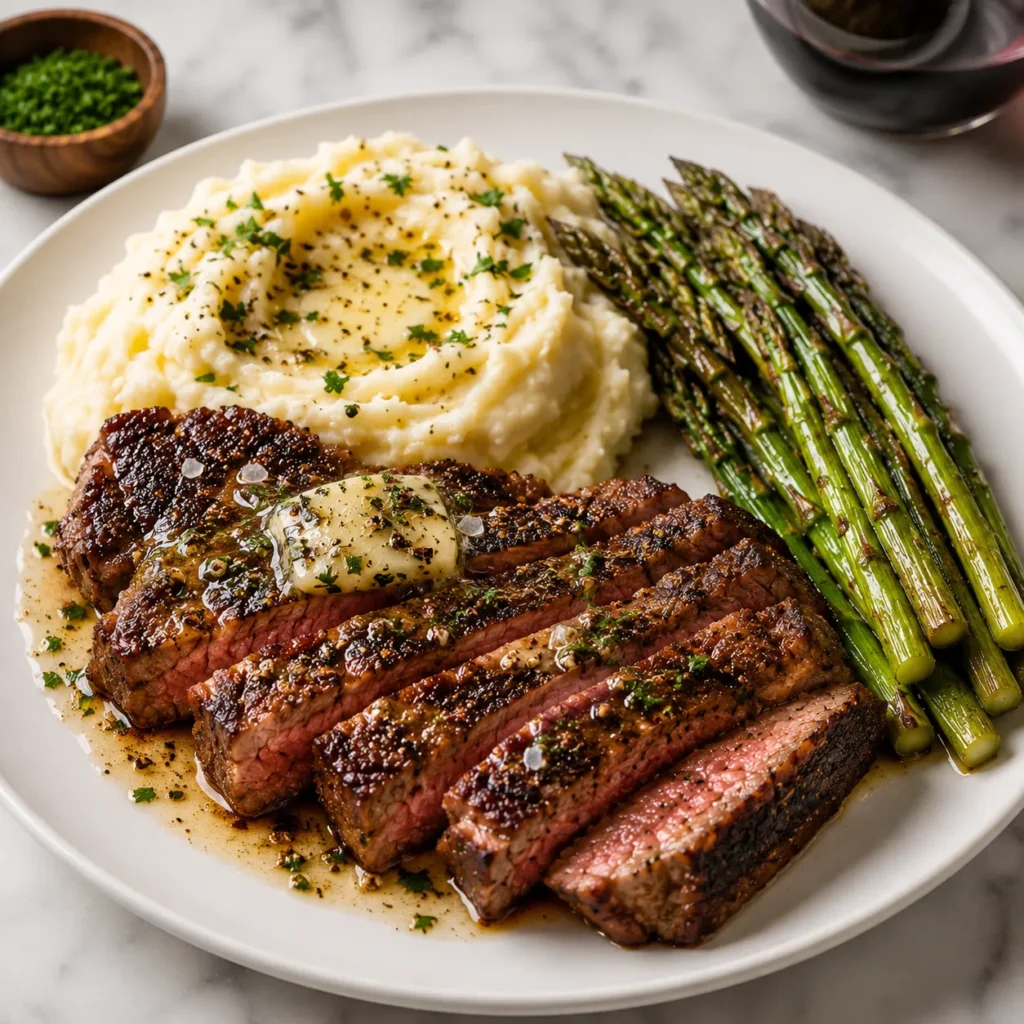
- Serve the pan seared steak with creamy mashed potatoes and roasted asparagus for a classic steakhouse-style dinner that feels comforting and balanced.
- Pair sliced steak with garlic butter pasta or parmesan fries if you want a richer restaurant-inspired meal for special occasions or gatherings.
- Add the steak over a fresh salad with arugula, cherry tomatoes, and balsamic dressing for a lighter but still protein-packed dinner option.
- Use leftover steak in steak sandwiches with caramelized onions and melted provolone cheese for an easy next-day lunch with plenty of flavor.
- Serve alongside roasted mushrooms and crispy Brussels sprouts because earthy vegetables pair especially well with the savory butter-basted steak.
Healthier Alternatives and Ingredient Swaps
- Replace ribeye with sirloin steak if you want a leaner cut that still delivers great flavor while lowering the overall fat content.
- Use avocado oil instead of olive oil because it has a higher smoke point and works especially well for high-heat cooking methods like searing.
- Reduce the butter slightly and increase fresh herbs if you want a lighter version while still maintaining strong flavor from rosemary and thyme.
- Try a low-sodium seasoning blend instead of extra salt if you are watching sodium intake but still want a well-seasoned steak.
- Pair the steak with roasted vegetables or cauliflower mash instead of fries for a lower-carbohydrate dinner that still feels hearty and satisfying.
Storage and Meal Prep Tips
- Store leftover steak in an airtight container in the refrigerator for up to 3 days. Keeping the steak sealed tightly helps preserve moisture and prevents it from drying out.
- Reheat steak gently in a skillet over low heat with a small amount of butter. High heat during reheating can quickly overcook the meat and make it tough.
- Slice leftover steak thinly for wraps, salads, grain bowls, or sandwiches because thinner slices stay tender and warm more evenly.
- If meal prepping, slightly undercook the steak initially so it stays juicy after reheating later in the week.
- Avoid microwaving steak for too long because rapid heating can ruin the crust and create a rubbery texture. Short intervals work much better if using a microwave.
Conclusion
This juicy pan seared steak recipe gives you everything you want from a steakhouse dinner right at home: a crisp golden crust, rich buttery flavor, and a tender center that stays perfectly juicy. With a hot skillet, simple ingredients, and a few reliable techniques, you can confidently cook steak like a pro and customize it with your favorite sides and seasonings every time.