
Moist Coconut Cake Recipe for Tropical Layered Dessert
Soft coconut sponge, creamy coconut frosting, and a rich tropical flavor make this moist coconut cake recipe a standout dessert for birthdays, brunches, and spring gatherings. You get a bakery-style layered cake with simple ingredients and beginner-friendly steps that deliver reliable results every time.
Timing
- Prep Time: 30 minutes
- Cook Time: 30 minutes
- Cooling and Frosting Time: 1 hour
- Total Time: 2 hours
- Servings: 10–12 slices
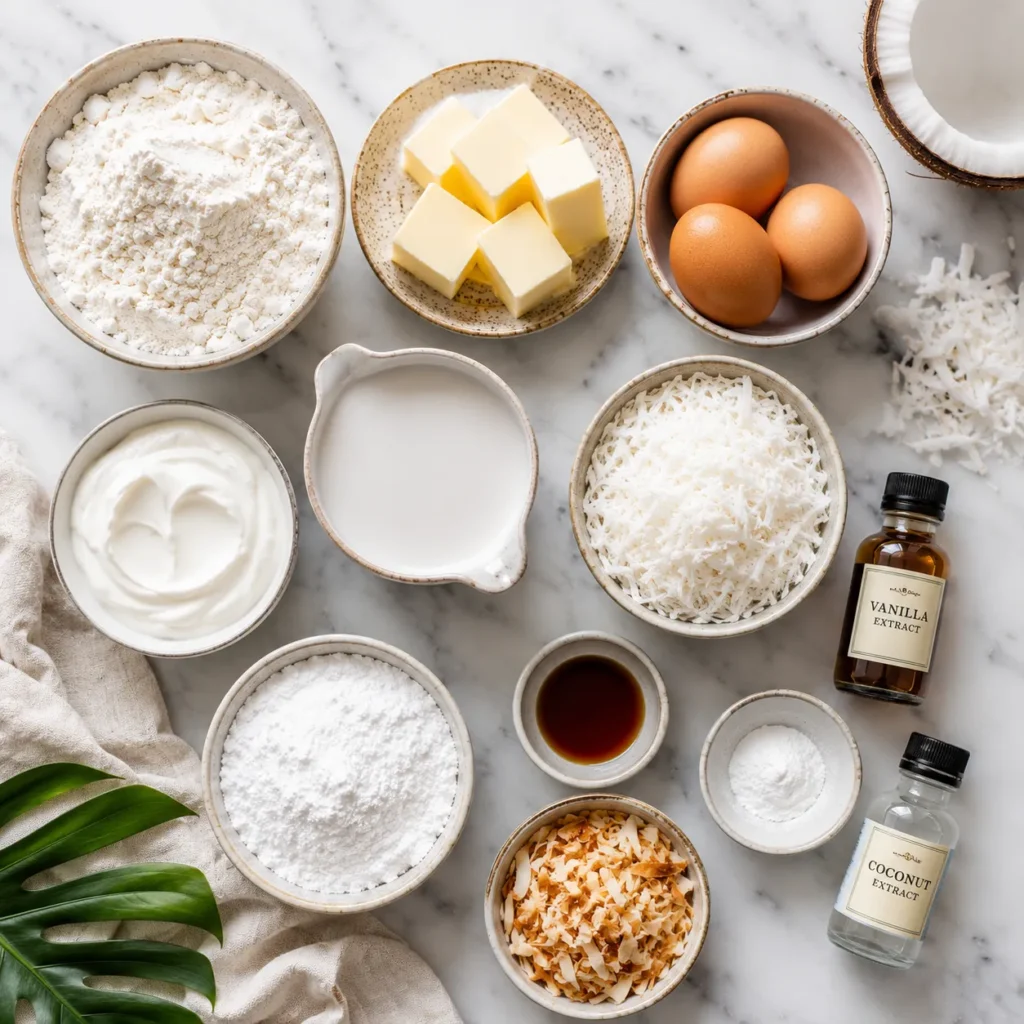
Ingredients for Coconut Cake Recipe
For the Coconut Cake Layers
- 2 ½ cups all-purpose flour
- 2 teaspoons baking powder
- ½ teaspoon baking soda
- ½ teaspoon salt
- 1 cup unsalted butter, softened
- 1 ¾ cups granulated sugar
- 4 large eggs
- 1 tablespoon vanilla extract
- 1 teaspoon coconut extract
- 1 cup canned coconut milk
- ¾ cup sour cream
- 1 cup sweetened shredded coconut
For the Coconut Frosting
- 1 cup unsalted butter, softened
- 4 cups powdered sugar
- 3–4 tablespoons coconut milk
- 1 teaspoon vanilla extract
- ½ teaspoon coconut extract
For Garnish
- 1 ½ cups shredded coconut, lightly toasted
- Thin coconut flakes for decoration
- Fresh mint leaves or edible flowers (optional)
How to Make Moist Coconut Cake
Step 1: Prepare the Cake Pans and Oven
Preheat your oven to 350°F (175°C). Grease two 9-inch round cake pans, then line the bottoms with parchment paper to prevent sticking. In a medium bowl, whisk together the flour, baking powder, baking soda, and salt for about 1 minute so the leavening agents distribute evenly throughout the batter.
This preparation step matters because evenly mixed dry ingredients help the cake rise properly and create a light, fluffy texture instead of dense layers.
Chef’s Tip: Let your refrigerated ingredients sit at room temperature for about 30 minutes before baking. Soft butter, eggs, and sour cream blend more smoothly into the batter and prevent a lumpy texture that can affect the cake crumb.
Step 2: Cream the Butter and Sugar
In a large mixing bowl, beat the softened butter and granulated sugar for 3–4 minutes until pale and fluffy. Add the eggs one at a time, mixing well after each addition. Stir in the vanilla extract and coconut extract.
Creaming introduces air into the batter, which gives your coconut layer cake a softer texture and better rise during baking. Rushing this step can leave the cake heavy and compact.
Chef’s Tip: Scrape down the sides of the bowl several times while mixing. Butter often sticks to the edges, and leaving it unmixed can create uneven pockets in the finished cake.
Step 3: Combine the Wet and Dry Ingredients
Add half of the dry ingredients into the butter mixture, then mix on low speed. Pour in the coconut milk and sour cream, followed by the remaining dry ingredients. Fold in the shredded coconut gently with a spatula until everything is combined.
This method keeps the batter smooth without overmixing, which is important for maintaining a moist coconut cake texture. The coconut milk and sour cream add richness and help the cake stay tender for days.
Chef’s Tip: Stop mixing as soon as the flour disappears into the batter. Overmixing develops gluten in the flour, which can make your cake chewy instead of soft and delicate.
Step 4: Bake the Coconut Cake Layers
Divide the batter evenly between the prepared cake pans and smooth the tops. Bake for 28–32 minutes or until a toothpick inserted into the center comes out clean. Let the cakes cool in the pans for 10 minutes before transferring them to a wire rack to cool completely.
Cooling properly prevents the layers from breaking apart during frosting. Warm cakes can also melt the frosting and create a messy finish.
Chef’s Tip: Rotate the cake pans halfway through baking if your oven heats unevenly. This helps both layers bake evenly and prevents one side from browning faster than the other.
Step 5: Make the Coconut Frosting
In a clean bowl, beat the softened butter until creamy and smooth. Gradually add the powdered sugar, then mix in the coconut milk, vanilla extract, and coconut extract. Beat for another 2–3 minutes until light and fluffy.
The frosting should be creamy enough to spread easily but thick enough to hold its shape between the cake layers. Adjust with a little extra coconut milk if needed.
Chef’s Tip: Sift the powdered sugar before adding it to the butter. This simple step removes lumps and gives your frosting a much smoother bakery-style finish.
Step 6: Assemble and Decorate the Cake
Place one cooled cake layer on a serving plate and spread a thick layer of frosting over the top. Add the second layer and frost the top and sides evenly. Press toasted shredded coconut onto the outside of the cake and decorate with coconut flakes or mint leaves if desired.
Let the cake chill for about 20 minutes before slicing so the frosting sets properly and the layers stay neat when served.
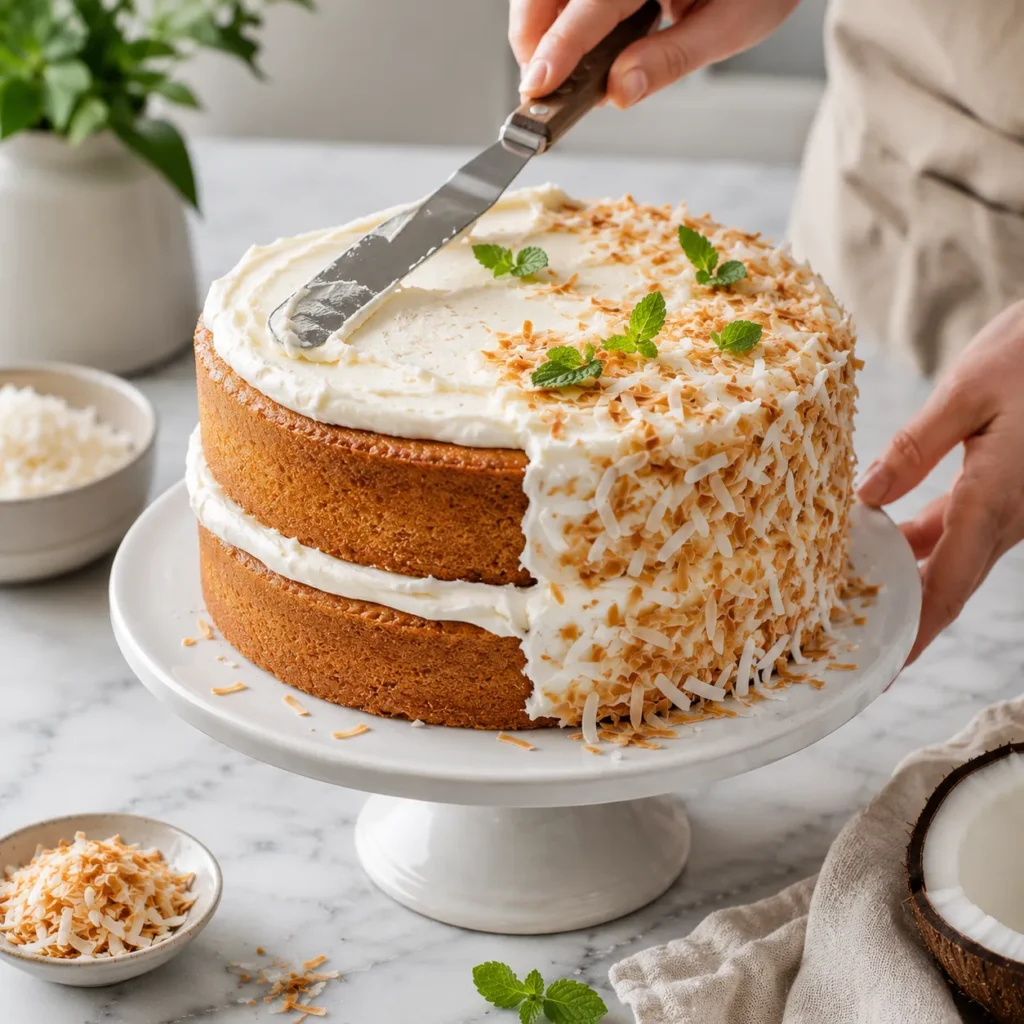
Chef’s Tip: Use an offset spatula or the back of a spoon dipped in warm water to smooth the frosting cleanly. Warm tools glide across the frosting more easily and create a polished finish.
Nutritional Information for Moist Coconut Cake Recipe
| Nutrient | Per Serving |
| Calories | 540 |
| Protein | 5g |
| Carbohydrates | 58g |
| Total Fat | 33g |
| Saturated Fat | 22g |
| Fiber | 2g |
| Sugar | 42g |
| Sodium | 260mg |
Why You’ll Love This Recipe
- You get a soft and fluffy coconut cake with a rich tropical flavor that tastes homemade yet elegant enough for celebrations and special occasions.
- The combination of coconut milk, sour cream, and shredded coconut keeps the cake moist for several days without becoming greasy or overly heavy.
- Beginner-friendly mixing techniques make this layered dessert approachable even if you have never baked a homemade cake from scratch before.
- The coconut frosting balances sweetness with creamy texture, creating a bakery-style finish that pairs perfectly with the tender cake layers.
- This recipe works well for birthdays, Easter desserts, spring brunches, and summer gatherings because the tropical flavor feels light and refreshing.
Common Mistakes to Avoid
- Overmixing the batter is one of the most common baking mistakes because it develops too much gluten in the flour, which can make the cake dense and rubbery instead of soft.
- Using cold butter or eggs can prevent the batter from mixing properly and may create curdled or uneven texture in the finished cake layers.
- Frosting warm cake layers often causes the frosting to melt and slide off the cake, so always allow the cake to cool completely before decorating.
- Adding too much flour by scooping directly from the bag can dry out the cake. Spoon the flour into your measuring cup and level it off gently for better accuracy.
- Skipping parchment paper in the pans increases the chance of sticking, which can tear the delicate coconut cake layers during removal.
Serving Suggestions
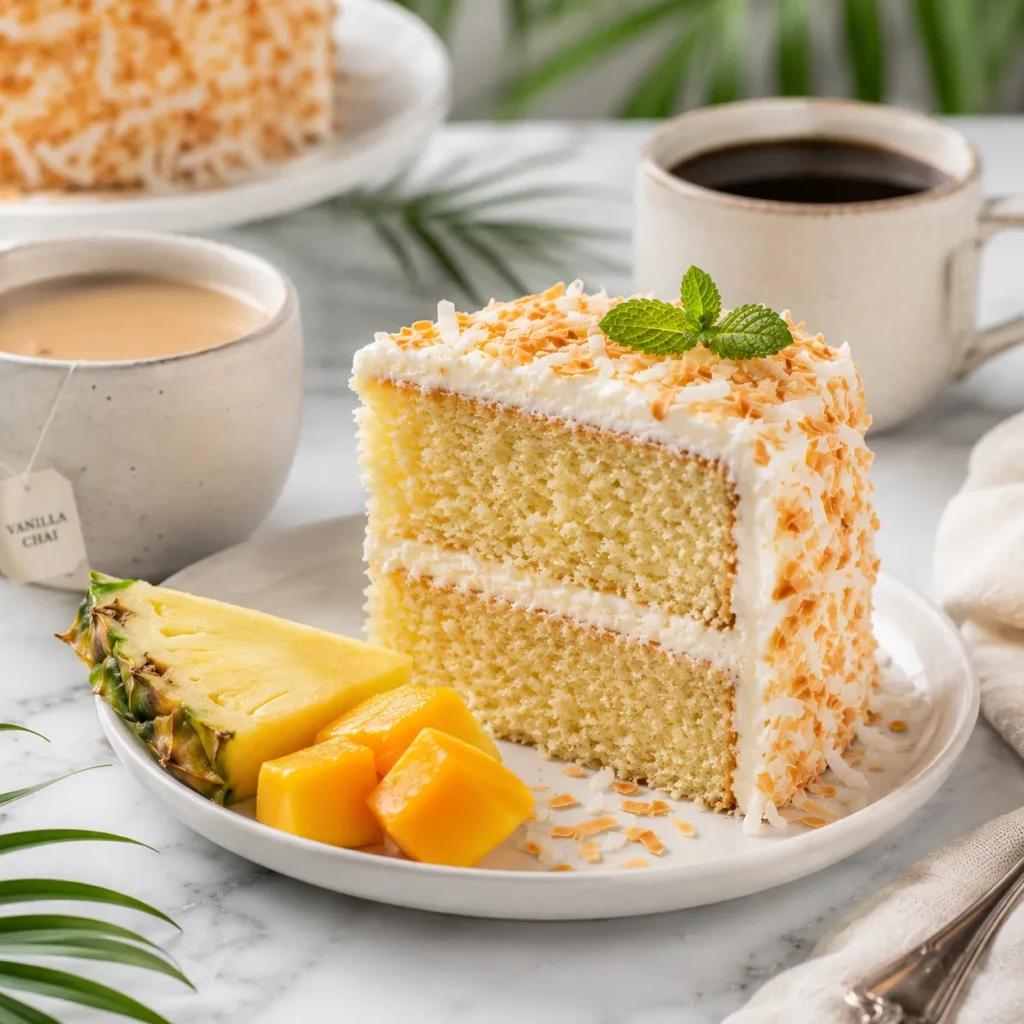
- Serve this moist coconut cake recipe chilled with fresh pineapple slices or mango for a tropical dessert presentation that feels bright and refreshing.
- Pair a slice with hot coffee or vanilla chai tea because the creamy coconut flavor balances beautifully with warm spiced drinks.
- Turn leftover slices into mini parfaits by layering cake cubes with whipped cream and fresh berries in dessert glasses.
- Add a scoop of vanilla bean or coconut ice cream alongside the cake for a richer dessert that works especially well during warmer months.
- Garnish each slice with toasted coconut flakes and a small mint sprig to create a bakery-style presentation for parties and celebrations.
Healthier Alternatives and Ingredient Swaps
- Replace part of the all-purpose flour with whole wheat pastry flour if you want slightly more fiber while still keeping the cake tender and soft.
- Use reduced-fat cream cheese frosting instead of buttercream if you prefer a tangier and slightly lighter topping for the coconut cake.
- Swap granulated sugar with coconut sugar for a deeper caramel-like flavor that pairs naturally with the tropical coconut notes.
- Choose unsweetened shredded coconut if you want to reduce overall sweetness without sacrificing texture and coconut flavor.
- Use dairy-free butter and coconut yogurt in place of sour cream for a lactose-free version that still stays moist and creamy.
Storage and Meal Prep Tips
- Store the frosted coconut cake in an airtight container in the refrigerator for up to 5 days to keep the frosting fresh and the layers moist.
- Let refrigerated cake sit at room temperature for about 20 minutes before serving so the frosting softens and the cake texture becomes tender again.
- Wrap unfrosted cake layers tightly in plastic wrap and freeze them for up to 2 months if you want to prepare the dessert ahead of time.
- Toast the coconut garnish a day in advance and store it in an airtight jar so decorating the cake becomes quicker and easier later.
- Slice leftover cake into individual portions before storing because single servings are easier to thaw and serve for quick desserts throughout the week.
Conclusion
This moist coconut cake recipe gives you soft layers, creamy frosting, and rich coconut flavor without complicated techniques or hard-to-find ingredients. Each step is simple enough for beginners while still creating a layered dessert that looks polished and impressive. Once you master the base recipe, you can customize it with tropical fruit, citrus zest, or different frosting styles to make it completely your own.