
Golden French Toast Recipe for Sweet Morning Breakfast
Golden French toast gives you crisp buttery edges, a soft custardy center, and just enough sweetness to make breakfast feel special without much effort. You can make this comforting morning favorite for busy weekdays, weekend brunch, or even a simple breakfast-for-dinner meal.
Timing
- Prep Time: 10 minutes
- Cook Time: 15 minutes
- Total Time: 25 minutes
- Servings: 4 servings
Ingredients for French Toast Recipe
For the French Toast Custard
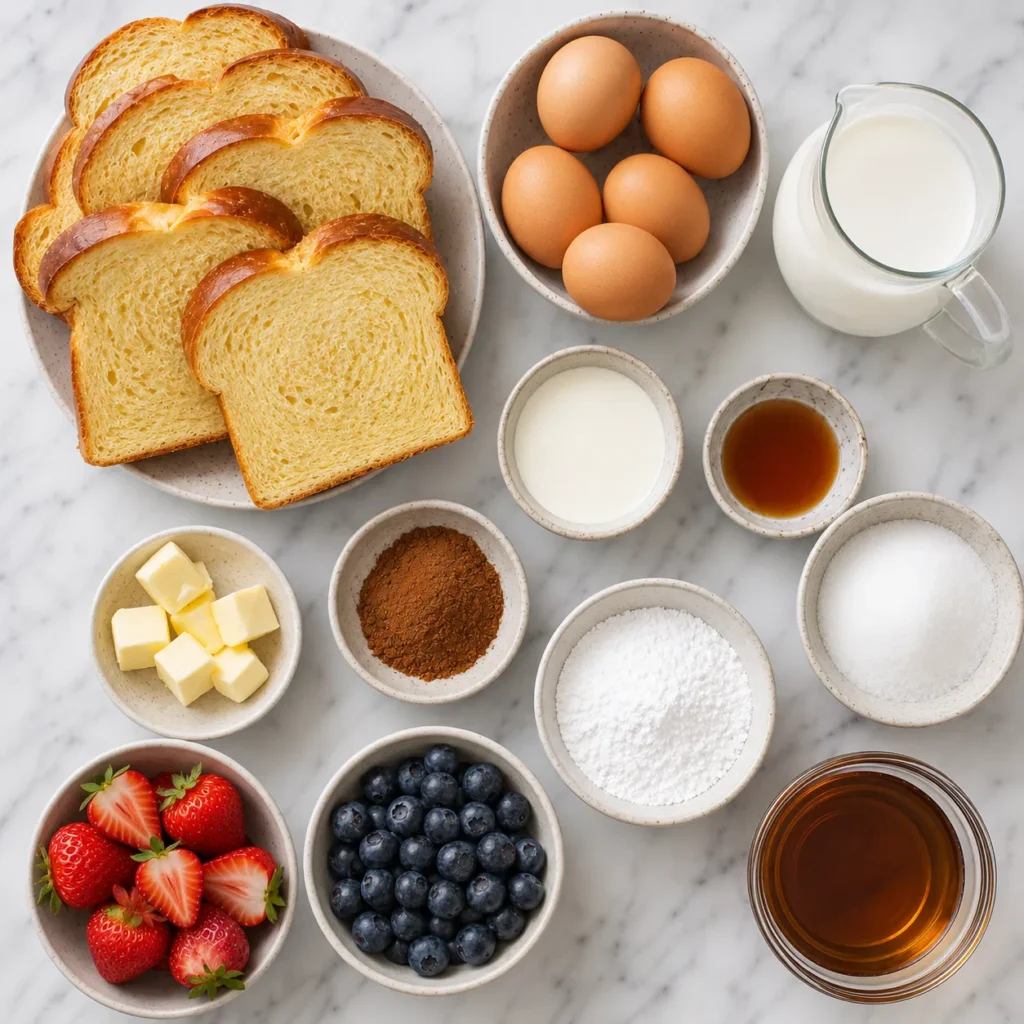
- 4 large eggs
- 1 cup whole milk
- 2 tablespoons heavy cream
- 2 tablespoons granulated sugar
- 1 teaspoon vanilla extract
- 1 teaspoon ground cinnamon
- 1/4 teaspoon salt
For the Bread
- 8 slices thick-cut brioche or Texas toast bread
- 2 tablespoons unsalted butter for cooking
For Serving
- Maple syrup
- Powdered sugar
- Fresh strawberries or blueberries
- Extra butter if desired
How to Make Golden French Toast
Step 1: Prepare the Custard Mixture
Crack the eggs into a shallow mixing bowl and whisk them with milk, heavy cream, sugar, vanilla extract, cinnamon, and salt for about 2 minutes until completely smooth. The mixture should look creamy and evenly blended without streaks of egg whites. This custard is what gives your golden French toast its rich flavor and soft texture inside.
Chef’s Tip: Whisking thoroughly matters because uneven egg mixture can create scrambled egg spots while cooking. Taking an extra minute to fully blend the custard helps the bread soak evenly and gives you a smooth, bakery-style finish.
Step 2: Dip the Bread Properly
Place one slice of bread into the custard and let it soak for about 15–20 seconds per side. Thick bread works best because it absorbs flavor without falling apart. Repeat with the remaining slices while making sure each piece is coated evenly.
Chef’s Tip: Avoid soaking the bread too long or it may become overly wet in the center and difficult to flip in the pan. Slightly stale bread actually works better because it absorbs the custard without turning mushy during cooking.
Step 3: Heat the Pan and Add Butter
Place a large nonstick skillet or griddle over medium heat and melt 1 tablespoon of butter. Allow the butter to coat the surface evenly before adding the soaked bread. Properly heated butter helps create the signature golden crust while keeping the inside soft and fluffy.
Chef’s Tip: If the skillet gets too hot, the outside will brown before the center cooks through. Medium heat gives you enough time to develop a crisp exterior while allowing the custard inside to set gently.
Step 4: Cook Until Golden Brown
Cook the French toast slices for 3–4 minutes on the first side until deep golden brown. Flip carefully using a spatula and cook the second side for another 2–3 minutes. Add the remaining butter as needed while cooking additional batches.
Chef’s Tip: Resist the urge to flip the bread too early. Letting the toast stay undisturbed during the first few minutes helps build a caramelized crust that adds flavor and keeps the slices from tearing.
Step 5: Keep Warm and Finish with Toppings
Transfer the cooked French toast to a warm plate or baking sheet while you finish the remaining slices. Dust with powdered sugar, drizzle with maple syrup, and top with fresh berries before serving. The warm toast absorbs syrup beautifully while the fruit adds freshness and balance.
Chef’s Tip: Warming the serving plates keeps your French toast crisp longer and prevents the butter from cooling too quickly. This small step helps your breakfast taste freshly cooked from the first bite to the last.
Step 6: Serve Immediately for Best Texture
Serve your golden French toast while still warm and slightly crisp around the edges. Pair it with coffee, fresh juice, or scrambled eggs for a complete breakfast that feels satisfying without being overly heavy.
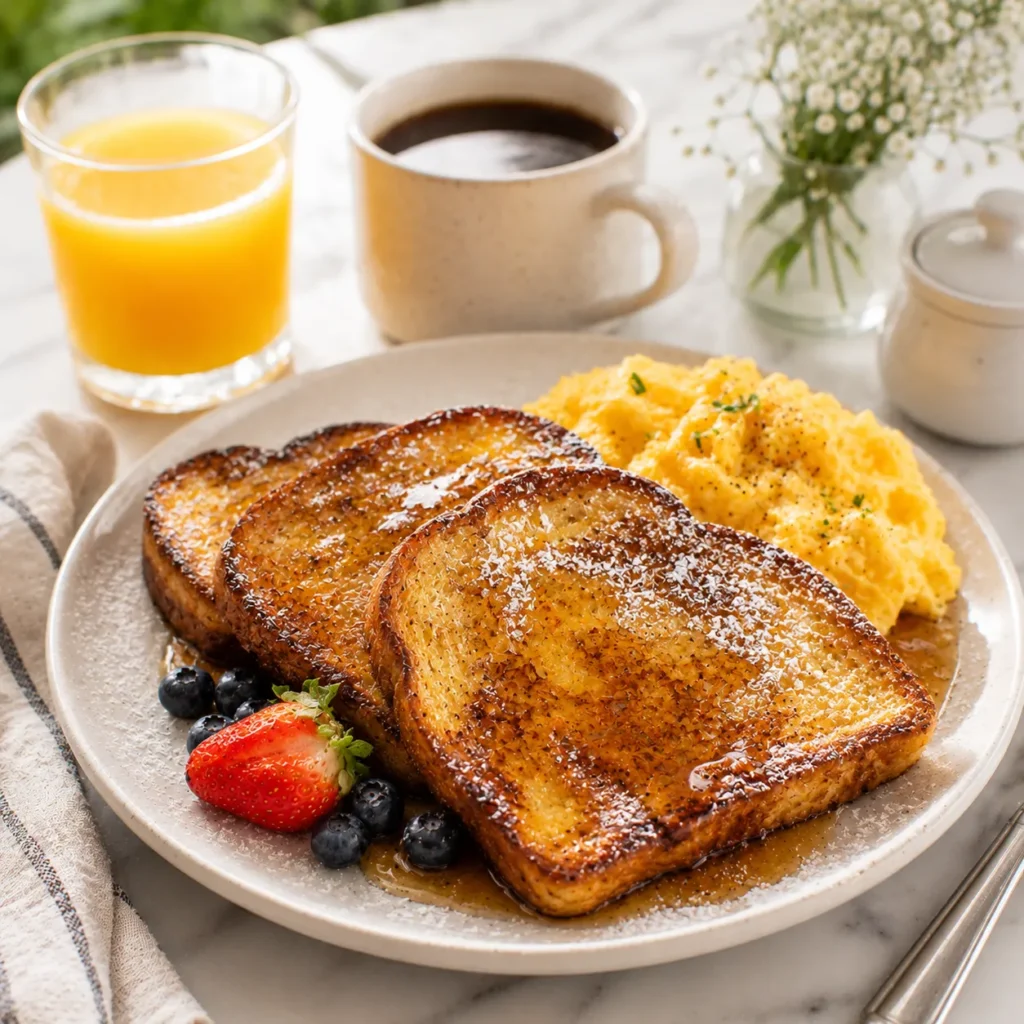
Chef’s Tip: French toast tastes best fresh off the skillet because the texture changes as it cools. If you need to hold it briefly, place the slices on a wire rack instead of stacking them so steam does not soften the crust.
Golden French Toast Nutrition
| Nutrient | Per Serving |
| Calories | 390 |
| Protein | 12g |
| Carbohydrates | 38g |
| Total Fat | 20g |
| Saturated Fat | 9g |
| Fiber | 2g |
| Sugar | 11g |
| Sodium | 370mg |
Why You’ll Love This Recipe
- You only need simple pantry ingredients, but the finished golden French toast tastes rich and restaurant-quality. The balance of vanilla, cinnamon, and buttery bread creates a comforting breakfast without complicated techniques.
- Thick slices of bread stay soft and custardy inside while developing crisp golden edges in the skillet. That contrast in texture makes every bite more satisfying and keeps the recipe from feeling soggy.
- This recipe is beginner-friendly because the steps are straightforward and forgiving. Even if you have never made homemade French toast before, you can follow the timing and visual cues easily.
- You can customize the toppings depending on the season or what you already have at home. Fresh berries, bananas, whipped cream, or maple syrup all work beautifully with the warm cinnamon flavor.
- Golden French toast works for more than breakfast because it also makes an easy brunch centerpiece or comforting breakfast-for-dinner option when you want something quick and cozy.
Common Mistakes to Avoid
- Using thin sandwich bread often leads to soggy French toast that tears easily during cooking. Thick bread like brioche or Texas toast holds the custard better and gives you a more structured texture.
- Cooking over high heat is one of the biggest beginner mistakes because the outside burns before the center fully cooks. Medium heat gives the custard enough time to set properly while creating an even golden crust.
- Skipping the salt may seem harmless, but it can make the French toast taste flat and overly sweet. A small amount balances the sweetness and enhances the warm vanilla and cinnamon flavors.
- Over-soaking the bread can leave the middle raw and heavy even after cooking. You only need enough time for the bread to absorb flavor without becoming saturated all the way through.
- Crowding the skillet lowers the temperature and creates steaming instead of browning. Leave space between slices so the bread cooks evenly and develops crisp edges.
Serving Suggestions
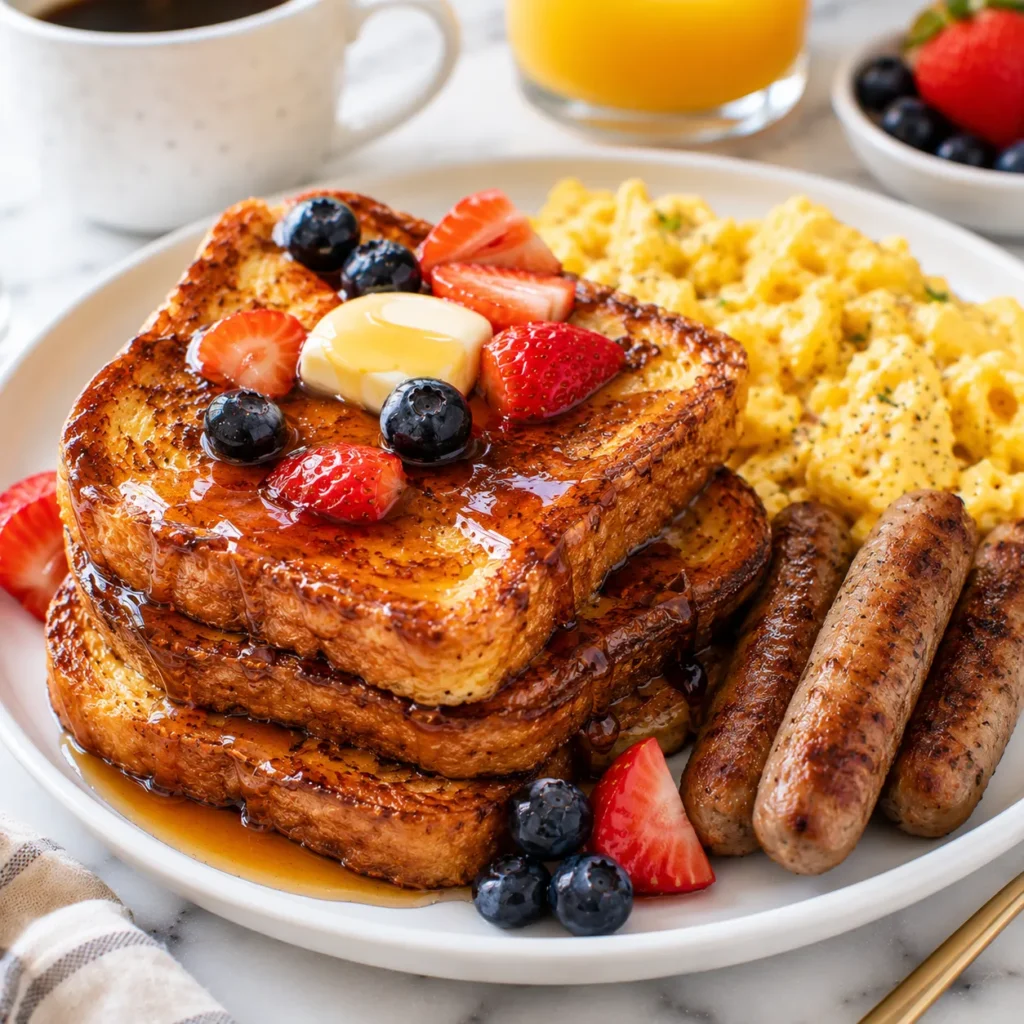
- Serve your golden French toast with fresh strawberries, blueberries, and warm maple syrup for a classic breakfast plate that feels balanced and colorful without much extra effort.
- Pair the toast with scrambled eggs and turkey sausage if you want a heartier brunch that keeps you full longer. The savory side dishes balance the sweetness perfectly.
- Add sliced bananas, chopped pecans, and a drizzle of honey for a cozy fall-inspired breakfast with extra texture and natural sweetness.
- Turn leftovers into French toast sandwiches by layering peanut butter or cream cheese between slices. This creates an easy grab-and-go breakfast for busy mornings.
- Serve smaller slices as part of a brunch spread alongside yogurt parfaits, fruit salad, and coffee when hosting family or friends at home.
Healthier Alternatives and Ingredient Swaps
- Replace whole milk and heavy cream with low-fat milk or unsweetened almond milk if you want a lighter version that still keeps the custard creamy.
- Use whole grain bread instead of brioche for added fiber and a more filling breakfast. The nutty flavor pairs especially well with cinnamon and maple syrup.
- Swap granulated sugar with honey or maple syrup for a more natural sweetness that blends smoothly into the custard mixture.
- You can use coconut oil instead of butter for cooking if you prefer a dairy-free option. It still helps create crisp edges while adding subtle richness.
- Add extra protein by serving the French toast with Greek yogurt or spreading a thin layer of nut butter on top before adding fruit.
Storage and Meal Prep Tips
- Store leftover golden French toast in an airtight container in the refrigerator for up to 3 days. Allow the slices to cool completely before storing so condensation does not soften the texture.
- Reheat the slices in a skillet or toaster oven instead of the microwave whenever possible. Dry heat helps restore the crisp edges while the microwave can make the bread rubbery.
- Freeze cooked French toast in a single layer on a baking sheet before transferring to a freezer-safe bag. This prevents the slices from sticking together and makes reheating easier.
- Prepare the custard mixture the night before if you want a faster breakfast in the morning. Keeping it chilled overnight also allows the cinnamon and vanilla flavors to blend more deeply.
- Batch-cook extra slices for meal prep because French toast reheats surprisingly well. Having ready-to-warm portions can save time during busy weekday mornings.
Conclusion
This golden French toast recipe works because it combines simple ingredients with beginner-friendly techniques that consistently give you crisp edges and a soft, flavorful center. Once you master the basic method, you can easily customize the toppings, bread, and flavors to match your favorite breakfast style.