
Classic Shakshuka Recipe for Rich Tomato Breakfast Flavor
A bubbling skillet of shakshuka gives you bold tomato flavor, soft eggs, and warm spices in one simple pan. You’ll love how this classic Middle Eastern breakfast feels comforting, filling, and surprisingly easy to make for brunch, lunch, or even a quick weeknight dinner.
Timing
- Prep Time: 15 minutes
- Cook Time: 30 minutes
- Total Time: 45 minutes
- Servings: 4 servings
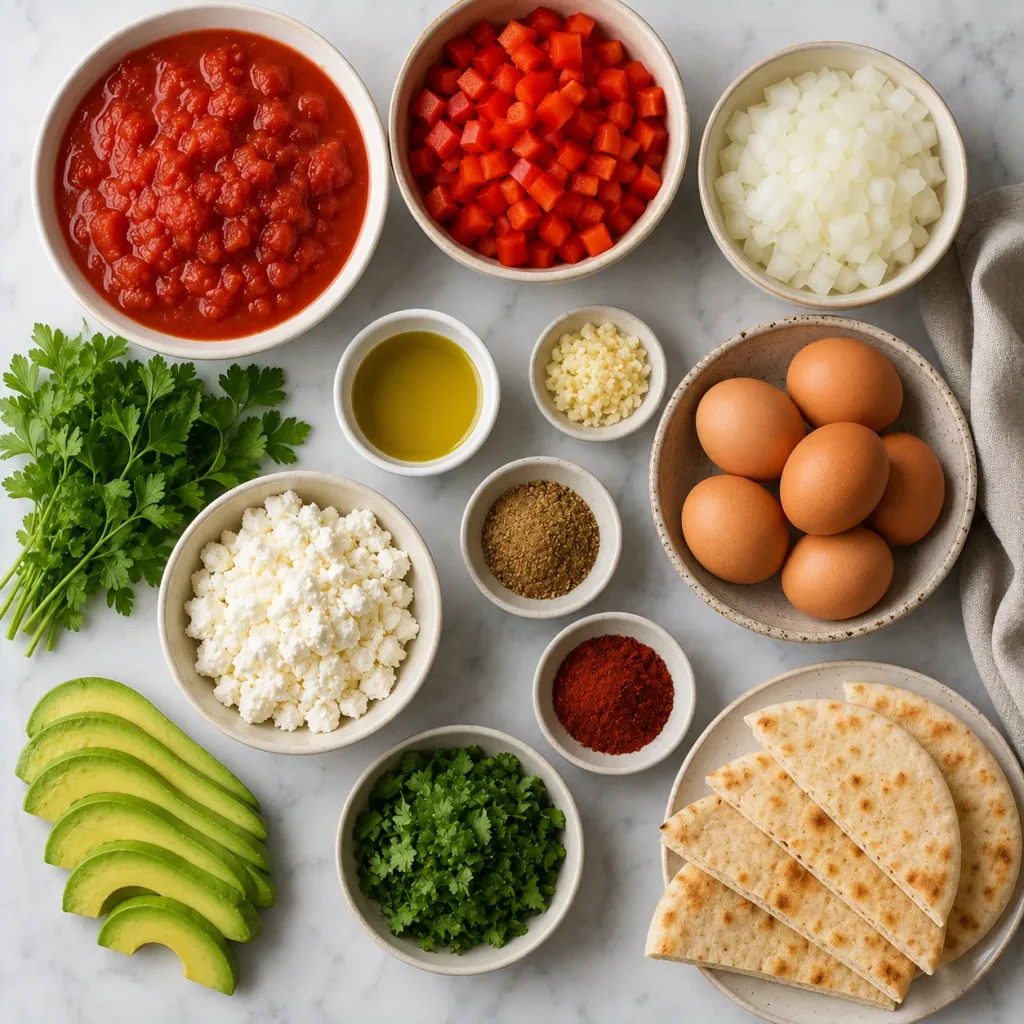
Ingredients for Shakshuka Recipe
For the Tomato Base
- 2 tablespoons olive oil
- 1 medium yellow onion, finely diced
- 1 red bell pepper, diced
- 4 garlic cloves, minced
- 1 can (28 ounces) crushed tomatoes
- 2 tablespoons tomato paste
For the Seasoning
- 1 teaspoon ground cumin
- 1 teaspoon smoked paprika
- ½ teaspoon ground coriander
- ¼ teaspoon red pepper flakes
- 1 teaspoon salt
- ½ teaspoon black pepper
For the Eggs and Garnish
- 6 large eggs
- ¼ cup crumbled feta cheese
- 2 tablespoons chopped fresh parsley
- 1 tablespoon chopped fresh cilantro
- 1 small avocado, sliced
- Warm pita bread or crusty bread for serving
Step-by-Step Instructions
Step 1: Sauté the Vegetables
Heat the olive oil in a large skillet over medium heat for about 1 minute. Add the diced onion and bell pepper, then cook for 7–8 minutes until softened and lightly golden. Stir occasionally so the vegetables cook evenly without burning. This step builds the sweet, savory foundation that gives shakshuka its deep flavor.
Chef’s Tip: Let the onions cook slowly instead of rushing the process over high heat. Properly softened onions create natural sweetness and help balance the acidity of the tomatoes later in the recipe.
Step 2: Add Garlic and Spices
Stir in the minced garlic, cumin, smoked paprika, coriander, red pepper flakes, salt, and black pepper. Cook for 1–2 minutes while stirring constantly. The heat wakes up the spices and helps them blend into the oil, which gives the sauce a richer and more layered flavor.
Chef’s Tip: Keep the garlic moving in the pan while the spices toast. Garlic burns quickly, and once it becomes bitter, the entire tomato sauce can lose its smooth, balanced taste.
Step 3: Build the Tomato Sauce
Add the crushed tomatoes and tomato paste to the skillet. Stir everything together until fully combined, then lower the heat to medium-low. Let the sauce simmer uncovered for 12–15 minutes until slightly thickened. Stir occasionally to prevent sticking. The sauce should look rich and concentrated, not watery.
Chef’s Tip: If your tomatoes taste overly acidic, add a tiny pinch of sugar while the sauce simmers. This small adjustment softens harsh acidity without making the shakshuka taste sweet.
Step 4: Create Wells for the Eggs
Use the back of a spoon to create 6 small wells in the sauce. Crack one egg into each well carefully so the yolks stay intact. The sauce should gently surround the eggs while keeping them slightly separated for even cooking.
Chef’s Tip: Crack each egg into a small bowl before adding it to the skillet. This makes it easier to remove shell fragments and helps you place the eggs neatly without breaking the yolks.
Step 5: Cover and Cook the Eggs
Cover the skillet with a lid and cook the eggs over low heat for 6–8 minutes. Check after 6 minutes for softer yolks or cook slightly longer if you prefer firmer eggs. The whites should be fully set while the yolks stay slightly runny for the best texture.
Chef’s Tip: Avoid cooking the eggs over high heat because the bottoms can become rubbery before the tops finish setting. Gentle heat keeps the eggs tender and creamy.
Step 6: Garnish and Serve
Remove the skillet from the heat and sprinkle the shakshuka with feta cheese, parsley, and cilantro. Add sliced avocado on the side and serve immediately with warm pita bread or crusty bread for dipping into the rich tomato sauce and soft eggs.
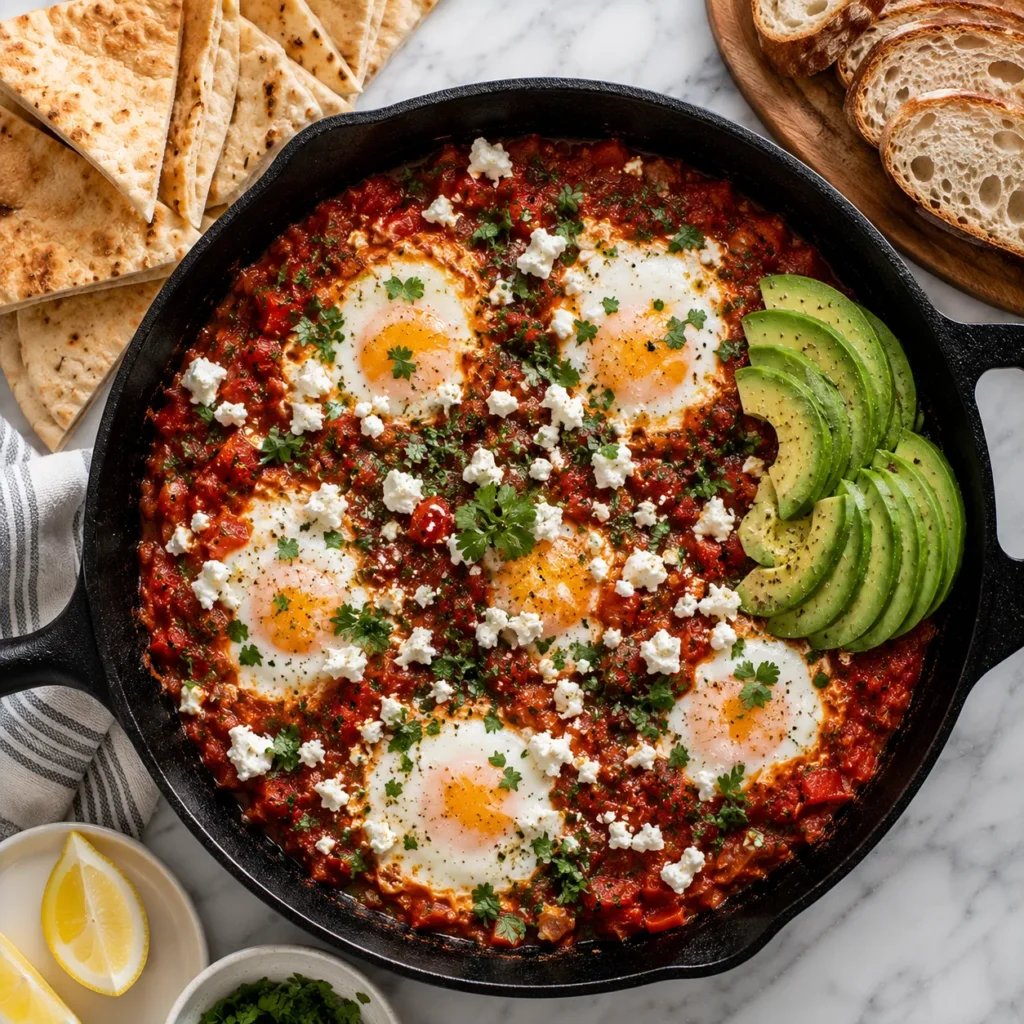
Chef’s Tip: Let the shakshuka rest for 2 minutes before serving. This short resting time allows the sauce to settle slightly and helps the flavors taste more balanced and cohesive.
Nutrition Information
| Nutrient | Per Serving |
| Calories | 320 |
| Protein | 16g |
| Carbohydrates | 16g |
| Total Fat | 21g |
| Saturated Fat | 5g |
| Fiber | 5g |
| Sugar | 8g |
| Sodium | 760mg |
Why You’ll Love This Recipe
- You only need one skillet to make this shakshuka recipe, which means cleanup stays simple while the flavors develop beautifully in a single pan. The ingredients cook together naturally, creating a richer and more comforting dish.
- The tomato sauce tastes deeply savory and slightly smoky thanks to the warm spices and slow simmering process. Even beginner cooks can create restaurant-style flavor without complicated techniques.
- Eggs gently poached in the sauce give the dish a creamy texture that pairs perfectly with crusty bread. Every bite feels hearty and satisfying without being overly heavy.
- This classic shakshuka recipe works for breakfast, brunch, lunch, or dinner, making it one of the most flexible meals you can keep in your recipe collection.
- You can easily customize the dish with extra vegetables, cheese, herbs, or spice levels depending on what you already have in your kitchen.
Common Mistakes to Avoid
- Cooking the vegetables too quickly over high heat can leave the onions raw and the peppers unevenly cooked. Taking a few extra minutes to soften them properly creates a sweeter and more flavorful base.
- Adding the eggs before the sauce thickens enough often leads to watery shakshuka. The sauce should simmer until slightly reduced so the eggs stay nestled in place while cooking.
- Overcooking the eggs is one of the most common beginner mistakes. Once the whites are set, remove the skillet from the heat because the eggs will continue cooking slightly from residual heat.
- Using a skillet that is too small can crowd the eggs and prevent even cooking. A wide skillet gives each egg enough space to poach gently in the sauce.
- Skipping seasoning adjustments at the end may leave the dish tasting flat. Tomatoes vary in acidity, so tasting the sauce before adding the eggs helps you balance the flavors properly.
Serving Suggestions
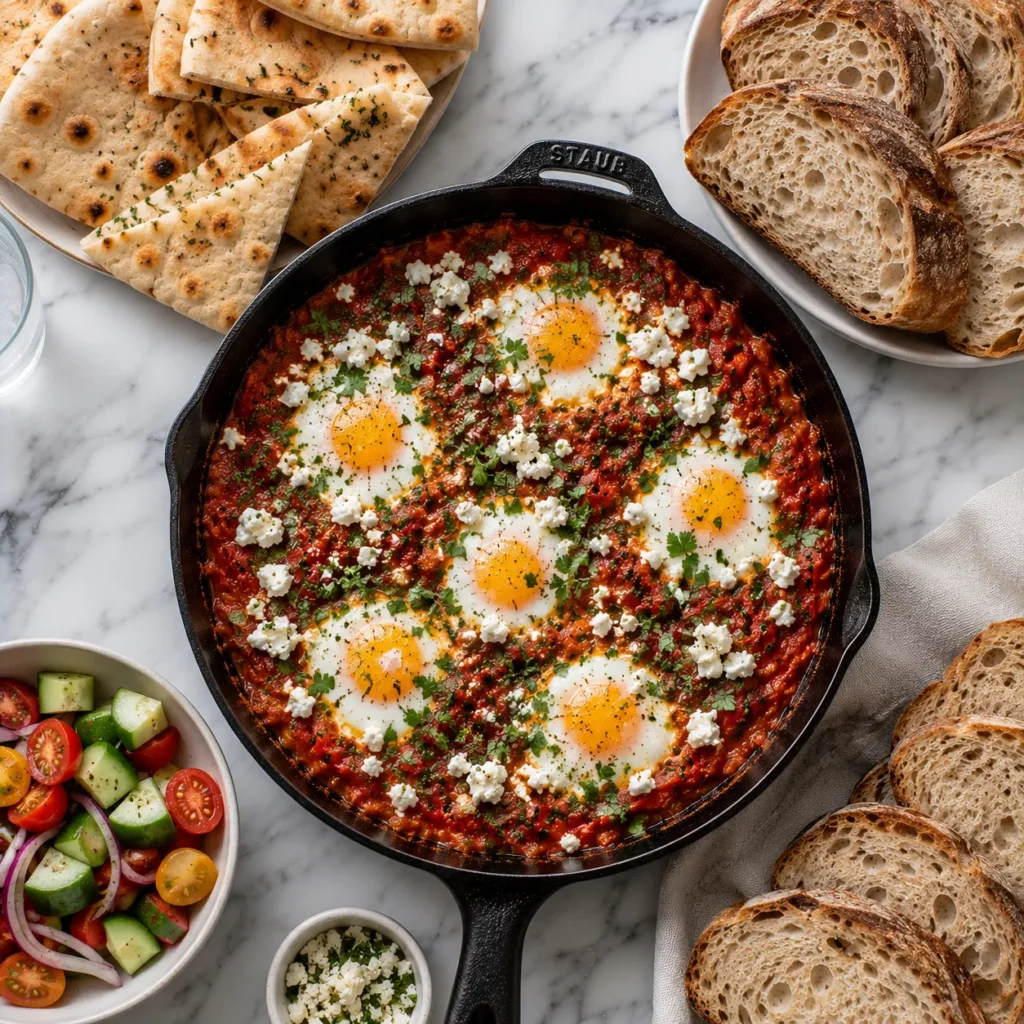
- Serve shakshuka with warm pita bread, sourdough toast, or crusty artisan bread because the thick tomato sauce is perfect for scooping and dipping straight from the skillet.
- Pair the dish with a fresh cucumber and tomato salad to add a cool, crisp contrast to the warm and richly spiced sauce.
- Add grilled sausages or roasted chickpeas on the side if you want a more filling brunch spread that feels substantial enough for guests.
- Spoon leftover shakshuka over cooked rice or quinoa for a simple lunch that transforms the dish into a hearty grain bowl with extra texture.
- Top each serving with extra feta cheese, avocado slices, or a drizzle of chili oil to create a more vibrant and restaurant-style presentation.
Healthier Alternatives and Ingredient Swaps
- Replace feta cheese with a reduced-fat cheese option if you want to lower the saturated fat while still keeping a creamy and salty finish.
- Add spinach, kale, or zucchini to the tomato sauce for extra vegetables that increase fiber and nutrients without changing the overall flavor too much.
- Use whole grain pita or seeded bread instead of white bread to make the meal more filling and balanced with additional fiber.
- If you prefer a dairy-free shakshuka, simply skip the feta cheese and finish the dish with extra herbs and avocado for richness.
- Swap regular eggs with egg whites if you want a lighter version that still keeps the comforting texture of the dish intact.
Storage and Meal Prep Tips
- Store leftover shakshuka in an airtight container in the refrigerator for up to 3 days. The tomato sauce actually develops deeper flavor after resting overnight.
- Reheat the dish gently over low heat on the stovetop to prevent the eggs from becoming rubbery. Add a small splash of water if the sauce has thickened too much.
- For meal prep, make the tomato sauce ahead of time and refrigerate it separately. When ready to serve, reheat the sauce and add fresh eggs directly into the skillet.
- Avoid freezing fully cooked shakshuka because the eggs can develop a tough texture after thawing. The tomato sauce alone freezes much better for future use.
- If you plan to serve shakshuka for brunch guests, prepare the sauce in advance so you only need to cook the eggs fresh before serving.
Conclusion
This classic shakshuka recipe gives you rich tomato flavor, perfectly cooked eggs, and warm spices in a dish that feels comforting without being complicated. The simple cooking process makes it approachable for beginners, while the bold flavor keeps it impressive enough for sharing with family or guests. Once you master the basic technique, you can easily make the recipe your own with different vegetables, herbs, cheeses, or spice levels.