
Savory Vegan Sausage Recipe for Plant Based Protein Meals
This savory vegan sausage recipe gives you a firm, flavorful, protein-packed alternative to traditional sausages without relying on meat or highly processed fillers. You get a satisfying bite, smoky depth, and meal prep versatility that works beautifully for breakfast plates, sandwiches, or hearty dinner bowls.
Timing
- Prep Time: 20 minutes
- Cook Time: 35 minutes
- Total Time: 55 minutes
- Servings: 6 sausages
Ingredients for Vegan Sausage Recipe
Base Protein
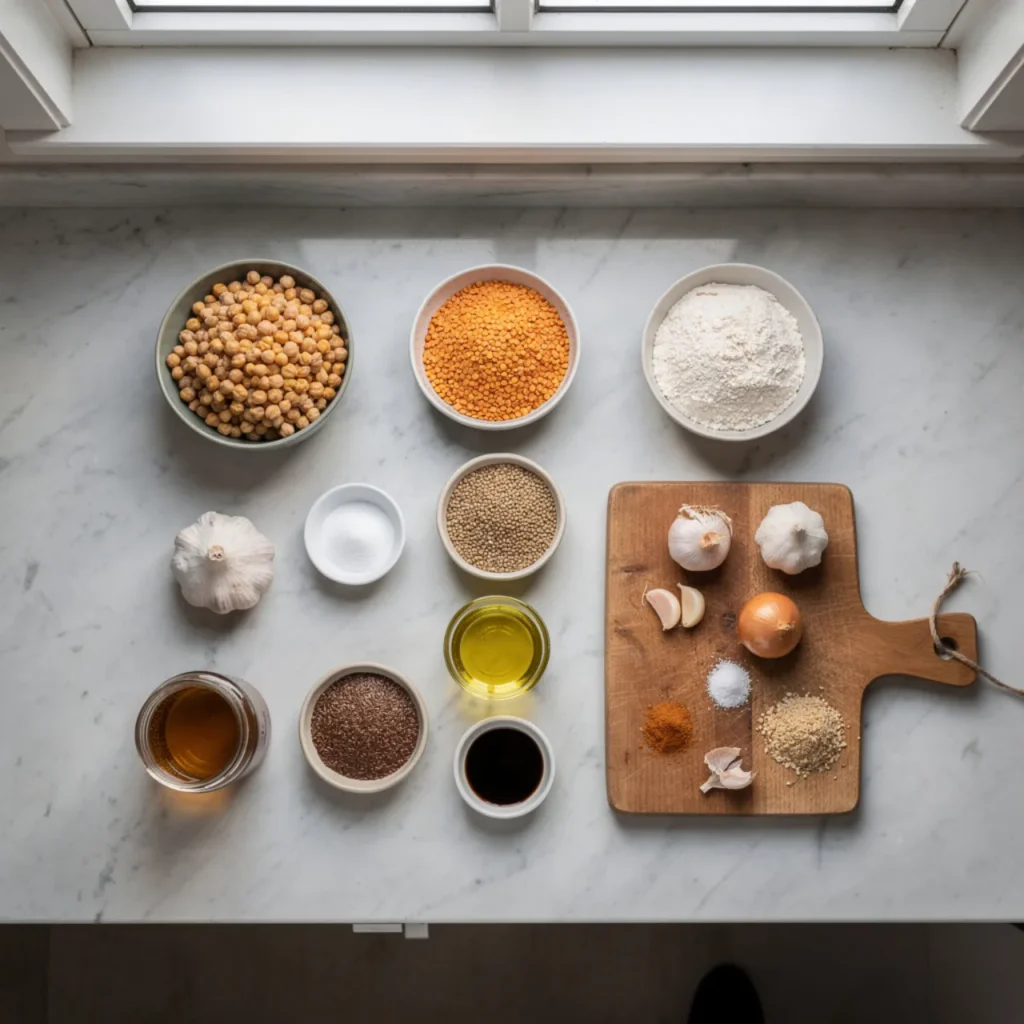
- 1 cup cooked chickpeas (well-drained)
- 1 cup cooked lentils (brown or green, drained and cooled)
Binding & Structure
- 1 cup vital wheat gluten
- 2 tablespoons ground flaxseed + 5 tablespoons water (flax egg)
Flavor Base
- 3 tablespoons soy sauce or tamari
- 2 tablespoons olive oil
- 3 cloves garlic, minced
- 1 small onion, finely grated
Seasonings
- 2 teaspoons smoked paprika
- 1 teaspoon dried thyme
- 1 teaspoon fennel seeds, lightly crushed
- 1 teaspoon black pepper
- 1/2 teaspoon chili flakes (optional for heat)
Liquid & Moisture
- 1/2 cup vegetable broth (adjust as needed)
Step-by-Step Instructions
Step 1: Build the Flavor Base
Start by heating a small pan and lightly sautéing the grated onion and garlic for about 3–4 minutes until soft and fragrant. This step removes raw sharpness and builds a deep savory base that defines your vegan sausage flavor.
Chef’s Tip: Cooking the aromatics first helps release natural sugars, which makes your sausage taste richer instead of flat or earthy.
Step 2: Prepare the Flax Binder
Mix the ground flaxseed with water and let it sit for 10 minutes until it thickens into a gel-like texture. This acts as your egg substitute and holds the sausage mixture together during shaping and cooking.
Chef’s Tip: Always allow enough time for the flax mixture to fully gel; an under-set binder will cause your sausages to crumble later.
Step 3: Mash the Protein Base
In a large bowl, mash the chickpeas and lentils until mostly broken down but still slightly textured. You don’t want a puree; small chunks create a realistic sausage bite.
Chef’s Tip: Leaving a bit of texture mimics traditional sausage grain and improves both mouthfeel and structure.
Step 4: Combine Dry and Wet Ingredients
Add vital wheat gluten, sautéed onion-garlic mixture, soy sauce, olive oil, spices, and flax gel into the bowl. Slowly pour in vegetable broth while mixing until a dough forms. Knead for 3–5 minutes until elastic.
Chef’s Tip: Kneading activates the gluten, which is essential for giving your vegan sausage a firm, sliceable texture instead of a soft loaf.
Step 5: Shape the Sausages
Divide the dough into 6 equal portions and shape each into a tight log. Wrap each sausage tightly in parchment paper or foil, twisting the ends securely to hold shape.
Chef’s Tip: A tight wrap is important because it prevents steam from expanding the sausage unevenly during cooking.
Step 6: Steam for Structure
Place wrapped sausages in a steamer and cook for 25–30 minutes. This gentle cooking method firms up the protein without drying it out, locking in flavor and moisture.
Chef’s Tip: Avoid boiling or direct frying at this stage, as steaming ensures the interior cooks evenly while maintaining a meaty texture.
Step 7: Finish with a Sear (Optional but Recommended)
Unwrap the sausages and lightly pan-fry them for 2–3 minutes per side in a hot skillet. This step creates a crisp outer layer and enhances smoky depth.

Chef’s Tip: A quick sear after steaming mimics the grilled finish of traditional sausages and improves visual appeal dramatically.
Nutrients (Per Serving)
| Nutrient | Amount |
| Calories | 210 kcal |
| Protein | 18 g |
| Carbohydrates | 16 g |
| Total Fat | 8 g |
| Fiber | 5 g |
| Sodium | 420 mg |
| Iron | 3.2 mg |
Why You’ll Love This Recipe
- You get a high-protein plant-based sausage that actually holds its shape and slices cleanly, making it perfect for meal prep and sandwiches.
- The smoky, savory seasoning blend gives you a deep, satisfying flavor that feels close to traditional sausage without any meat.
- It works across multiple meals, so you can use it for breakfast, lunch wraps, or dinner bowls without changing the base recipe.
- You control the ingredients completely, which helps you avoid preservatives and excess sodium often found in store-bought vegan sausages.
Common Mistakes to Avoid
- Over-blending the mixture can turn your sausages mushy instead of textured, so always aim for a coarse mash with visible bits of chickpeas and lentils.
- Skipping the steaming step often leads to undercooked or crumbly sausages because the vital wheat gluten needs controlled heat to set properly.
- Adding too much liquid at once can make the dough sticky and unworkable, so always pour vegetable broth gradually while mixing.
- Not wrapping the sausages tightly can cause them to expand unevenly and lose their classic cylindrical shape during steaming.
Serving Suggestions
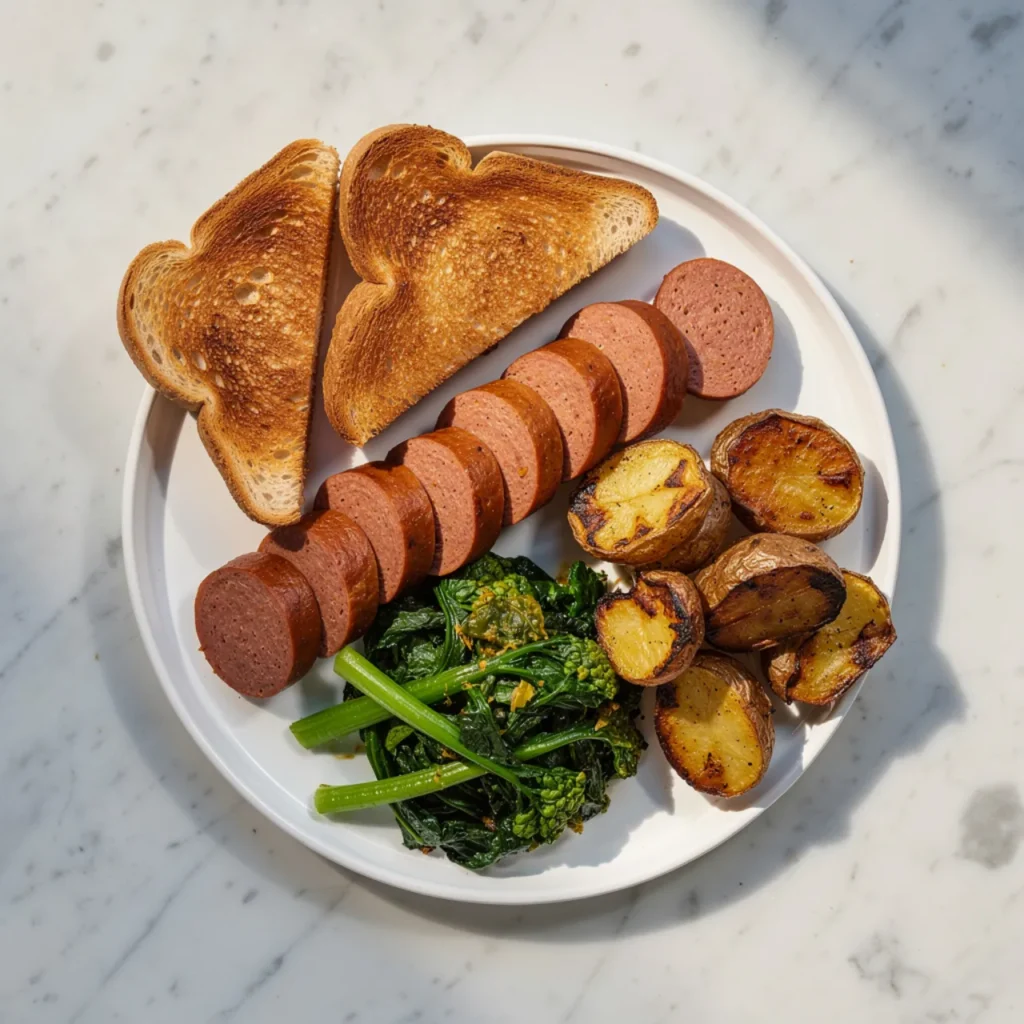
- Slice the vegan sausage and serve it in breakfast platters with toast, sautéed greens, and roasted potatoes for a balanced morning meal.
- Add it to sandwiches or wraps with mustard, pickles, and lettuce for a quick, protein-rich lunch option.
- Chop and mix it into pasta dishes or grain bowls where it adds a smoky, savory bite that enhances simple sauces.
- Serve alongside roasted vegetables and hummus for a plant-based dinner plate that feels complete and satisfying.
Healthier Alternatives and Ingredient Swaps
- Replace soy sauce with low-sodium tamari to reduce salt content while keeping the umami flavor strong and balanced.
- Swap olive oil with avocado oil for a lighter fat profile that still supports browning and moisture retention.
- Use gluten-free flour blends combined with chickpea flour instead of vital wheat gluten for a gluten-free variation, though texture will be softer.
- Add grated carrots or zucchini to increase fiber and micronutrients without affecting the savory flavor profile.
Storage and Meal Prep Tips
- Store cooked sausages in an airtight container in the refrigerator for up to 5 days, ensuring they stay firm and flavorful.
- Freeze individually wrapped sausages for up to 2 months so you can pull out portions as needed without waste.
- Reheat in a skillet for the best texture, as microwaving can soften the exterior and reduce the crisp finish.
- Prepare a double batch and freeze half before searing so you always have ready-to-cook vegan sausage on hand for busy days.
Conclusion
This savory vegan sausage recipe gives you a reliable, flavorful plant-based protein option that fits into almost any meal plan. Once you understand how the texture builds through mashing, binding, and steaming, you can easily adjust spices and seasoning to create your own signature version that works for breakfast, lunch, or dinner.