
Rustic Chicken Cacciatore Recipe for Italian Tomato Braised Flavor
Rustic chicken cacciatore brings together tender chicken, slow-simmered tomatoes, peppers, onions, and herbs in one comforting Italian-style skillet meal. You’ll love this recipe when you need a hearty dinner that feels homemade, rich in flavor, and surprisingly easy for beginners to master.
Timing
- Prep Time: 20 minutes
- Cook Time: 50 minutes
- Total Time: 1 hour 10 minutes
- Servings: 4–6 servings
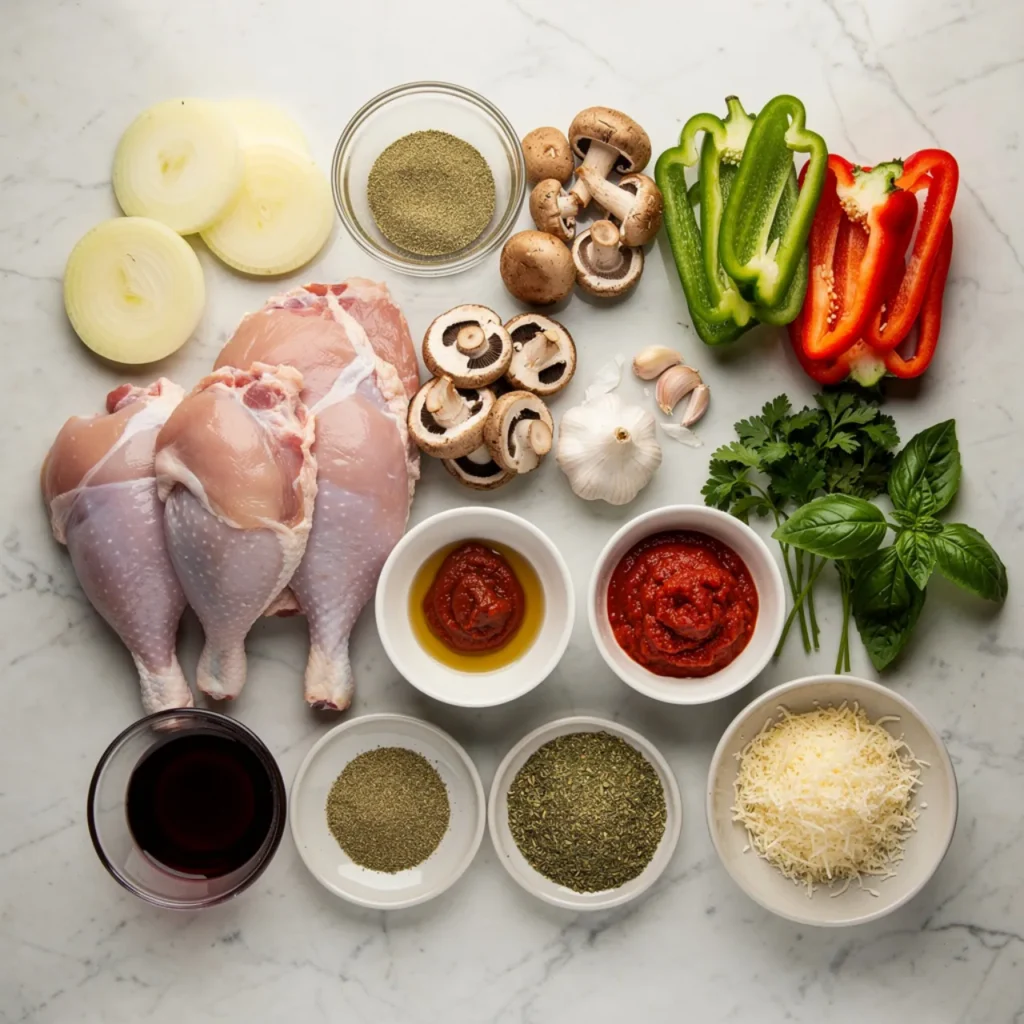
Ingredients for Chicken Cacciatore Recipe
For the Chicken
- 2 pounds bone-in, skin-on chicken thighs
- 1 teaspoon salt
- 1/2 teaspoon black pepper
- 1/2 teaspoon garlic powder
- 3 tablespoons all-purpose flour
For the Vegetables
- 1 medium yellow onion, sliced
- 1 red bell pepper, sliced
- 1 green bell pepper, sliced
- 8 ounces cremini mushrooms, sliced
- 4 garlic cloves, minced
For the Tomato Braised Sauce
- 1 can (28 ounces) crushed tomatoes
- 1/2 cup dry red wine or chicken broth
- 1 cup chicken broth
- 2 tablespoons tomato paste
- 1 teaspoon dried oregano
- 1 teaspoon dried basil
- 1/2 teaspoon crushed red pepper flakes
- 2 tablespoons olive oil
For Finishing
- 2 tablespoons chopped fresh parsley
- Fresh basil leaves for garnish
- Grated Parmesan cheese for serving
Step 1: Season and Brown the Chicken
Pat the chicken thighs dry with paper towels, then season both sides with salt, black pepper, and garlic powder. Lightly coat the chicken with flour, shaking off the excess. Heat olive oil in a large Dutch oven or deep skillet over medium-high heat. Place the chicken skin-side down and cook for 5–6 minutes per side until golden brown.
This browning step creates deep flavor and helps the chicken stay juicy during braising. Once browned, transfer the chicken to a plate and set aside.
Chef’s Tip: Avoid overcrowding the pan while browning the chicken because trapped steam prevents the skin from developing a rich golden crust. Work in batches if necessary so every piece browns evenly.
Step 2: Cook the Vegetables
Reduce the heat to medium and add the sliced onions, bell peppers, and mushrooms to the same pan. Cook for 8–10 minutes, stirring occasionally, until the vegetables soften and begin to caramelize slightly. Stir in the minced garlic and cook for another 30 seconds.
The vegetables absorb all the flavorful browned bits left behind by the chicken, which builds the rustic Italian flavor that makes chicken cacciatore so satisfying.
Chef’s Tip: Let the vegetables sit undisturbed for short periods while cooking instead of stirring constantly. This allows natural sugars to caramelize and gives the sauce a deeper, sweeter flavor.
Step 3: Build the Tomato Braised Sauce
Add the tomato paste to the vegetables and cook for 1 minute to remove its raw taste. Pour in the red wine or chicken broth and scrape the bottom of the pan with a wooden spoon to loosen any browned bits. Stir in the crushed tomatoes, chicken broth, oregano, basil, and crushed red pepper flakes.
Bring the sauce to a gentle simmer and let it cook for about 5 minutes so the flavors can combine before adding the chicken back in.
Chef’s Tip: Simmering the sauce briefly before returning the chicken helps concentrate the tomato flavor and prevents the finished dish from tasting watery or flat.
Step 4: Braise the Chicken Until Tender
Return the browned chicken thighs to the pan, nestling them into the sauce skin-side up. Cover partially with a lid and reduce the heat to low. Let the chicken simmer gently for 35–40 minutes until fully cooked and tender.
During this time, the chicken slowly absorbs the tomato braised sauce while releasing flavor back into the pan. The result is juicy chicken with rich Italian seasoning throughout.
Chef’s Tip: Keep the sauce at a gentle simmer instead of a rapid boil. High heat can toughen the chicken and reduce the sauce too quickly before the meat becomes tender.
Step 5: Finish and Serve
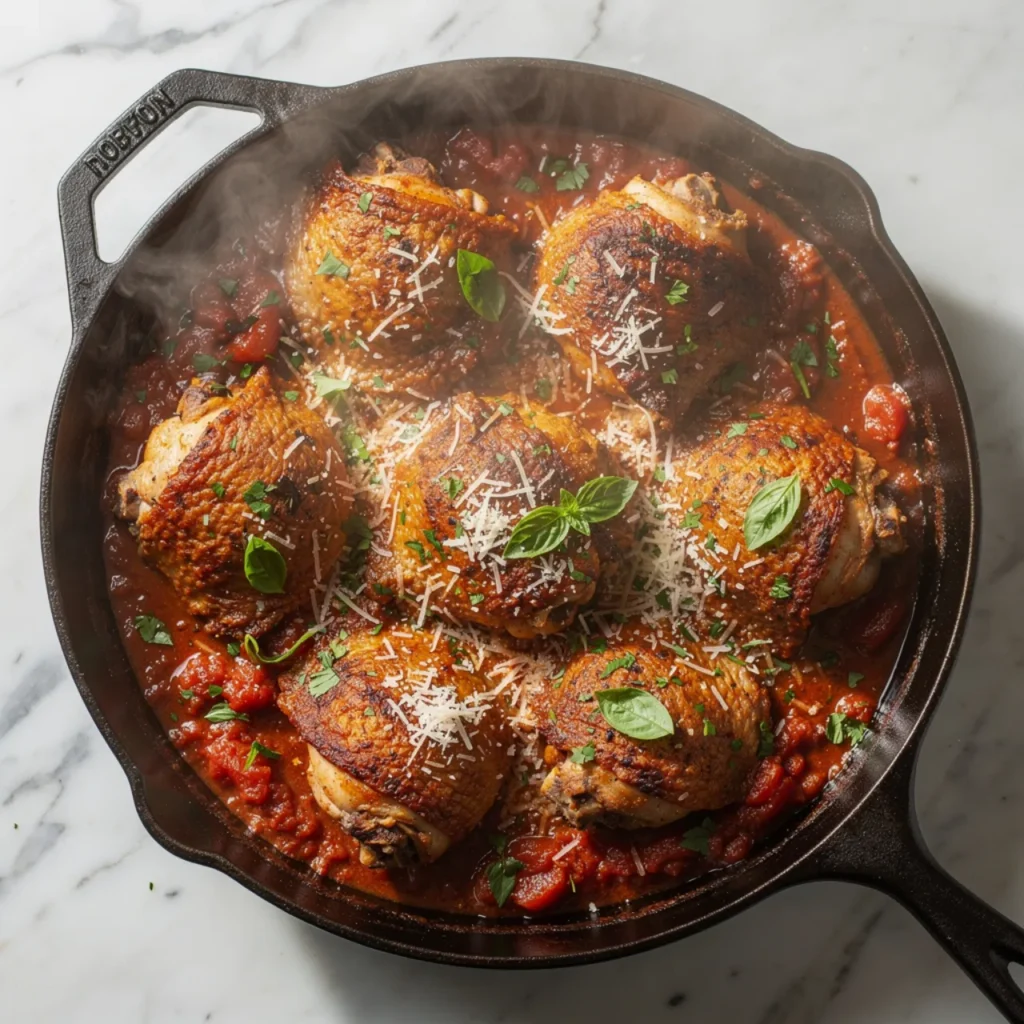
Taste the sauce and adjust seasoning if needed with additional salt or black pepper. Sprinkle chopped parsley over the top and garnish with fresh basil leaves. Serve hot with grated Parmesan cheese if desired.
The finished rustic chicken cacciatore should have tender chicken, soft vegetables, and a thick tomato sauce perfect for spooning over pasta, mashed potatoes, or crusty bread.
Chef’s Tip: Let the dish rest for 5 minutes before serving so the sauce slightly thickens and the flavors settle together for a more balanced bite.
Chicken Cacciatore Nutrition
| Nutrient | Per Serving |
| Calories | 420 |
| Protein | 32g |
| Carbohydrates | 14g |
| Total Fat | 25g |
| Saturated Fat | 6g |
| Fiber | 4g |
| Sugar | 7g |
| Sodium | 690mg |
Why You’ll Love This Recipe
- This rustic chicken cacciatore recipe uses simple pantry ingredients, but the slow braising process creates a deeply savory Italian tomato flavor that tastes like it cooked all day.
- You only need one large skillet or Dutch oven, which keeps cleanup manageable and makes the cooking process less intimidating for beginner home cooks.
- The tomato braised sauce becomes rich and hearty without needing heavy cream or complicated ingredients, making the dish comforting while still feeling balanced.
- Chicken thighs stay tender and forgiving during cooking, so you don’t have to worry as much about the meat drying out while learning the recipe.
- This recipe works well for family dinners, meal prep, or casual gatherings because the flavors actually improve after resting for a few hours.
Common Mistakes to Avoid
- Skipping the browning step can leave the chicken cacciatore tasting flat because much of the recipe’s savory depth comes from properly caramelized chicken skin and pan drippings.
- Adding garlic too early may cause it to burn before the vegetables finish cooking, which creates bitterness in the tomato sauce and affects the overall flavor.
- Cooking the sauce at a rolling boil instead of a gentle simmer can make the chicken tough and reduce the sauce too quickly before the flavors fully develop.
- Using boneless skinless chicken breasts often leads to dry meat because they cook faster and do not stay as juicy during the longer braising process.
- Underseasoning the sauce is common because tomatoes naturally need enough salt and herbs to balance their acidity and highlight the Italian flavors.
Serving Suggestions
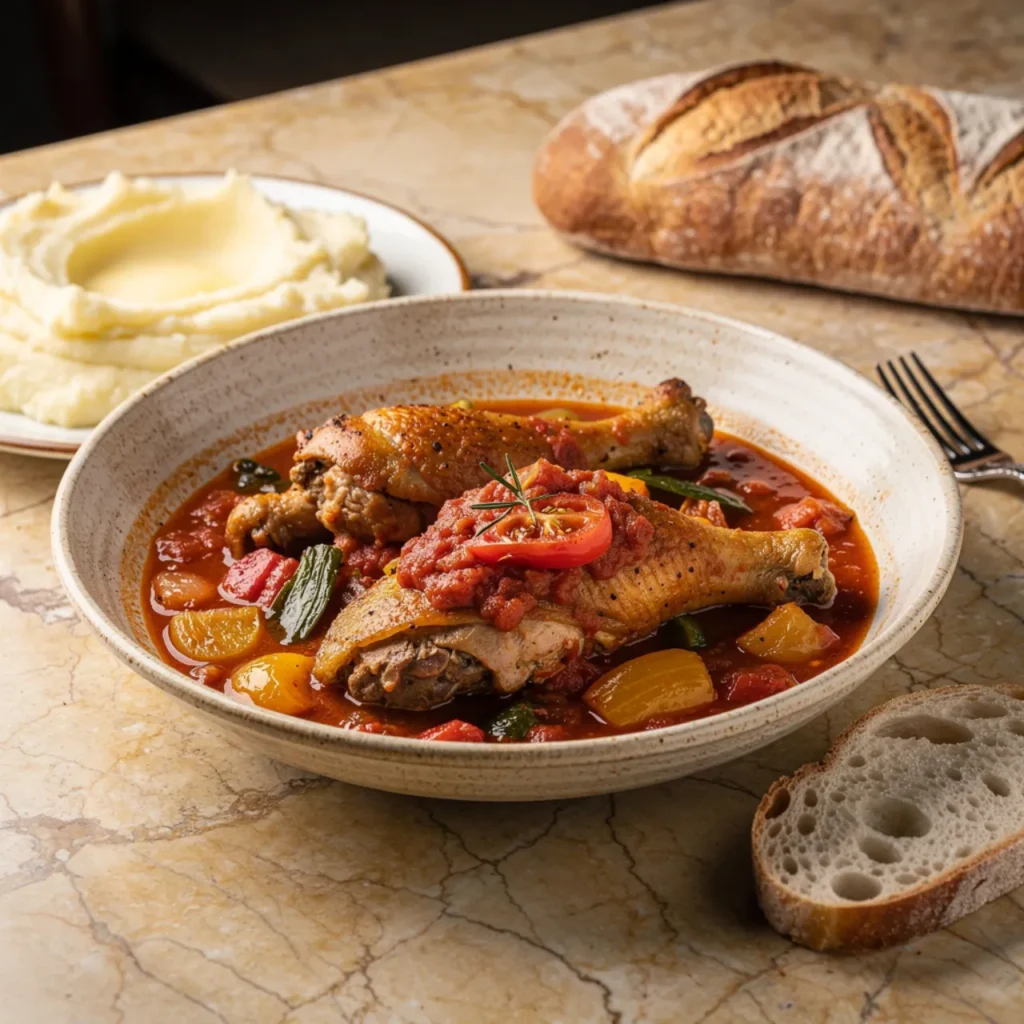
- Serve your chicken cacciatore over buttery mashed potatoes because the creamy texture absorbs the rich tomato braised sauce beautifully and makes the meal extra comforting.
- Spoon the chicken and sauce over cooked pasta like pappardelle, fettuccine, or spaghetti for a classic Italian-style dinner that feels hearty and satisfying.
- Pair the dish with crusty artisan bread so you can soak up every bit of the slow-simmered tomato sauce without wasting any flavor.
- Add a simple green salad with lemon vinaigrette on the side to balance the richness of the braised chicken and create a complete dinner.
- Leftover chicken cacciatore also works well shredded into toasted sandwiches or served over creamy polenta for a completely different meal the next day.
Healthier Alternatives and Ingredient Swaps
- Use skinless chicken thighs if you want to reduce fat while still keeping the chicken moist and flavorful during the braising process.
- Replace regular pasta with zucchini noodles, spaghetti squash, or cauliflower mash for a lower-carbohydrate version that still pairs well with the sauce.
- Swap the flour coating for almond flour or gluten-free flour if you need a gluten-free chicken cacciatore recipe without changing the cooking method.
- You can add extra vegetables like spinach, zucchini, or carrots to increase fiber and nutrients while stretching the sauce further for meal prep.
- Use low-sodium chicken broth and reduce added salt if you prefer a lighter version with better control over sodium levels.
Storage and Meal Prep Tips
- Store leftover chicken cacciatore in an airtight container in the refrigerator for up to 4 days because the tomato sauce helps keep the chicken moist during storage.
- Reheat gently on the stovetop over low heat with a splash of broth or water to loosen the sauce and prevent it from becoming too thick.
- This recipe freezes very well for up to 3 months, making it a practical option for batch cooking and busy weeknight dinners.
- Prepare the vegetables a day ahead and store them in sealed containers so the cooking process moves faster when you are ready to make dinner.
- The flavors become even richer after sitting overnight, so leftovers often taste better the next day once the herbs and tomato sauce fully develop.
Conclusion
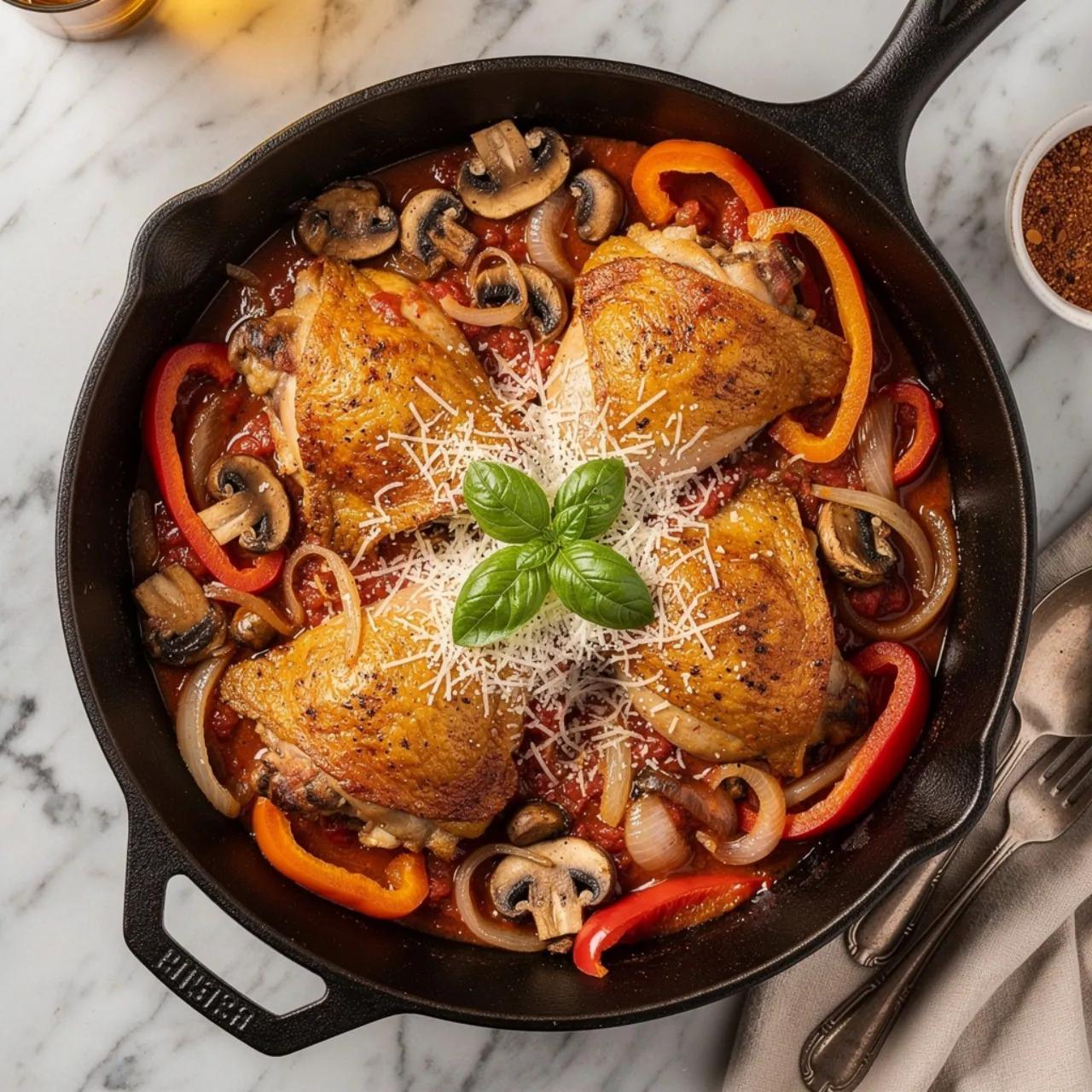
This rustic chicken cacciatore recipe delivers everything you want from a comforting Italian dinner: tender braised chicken, rich tomato sauce, and layers of slow-cooked flavor built from simple ingredients. You do not need advanced cooking skills to make it successfully, and the flexible ingredients allow you to adapt the recipe to your own taste and pantry. Once you master this tomato braised chicken dish, it easily becomes one of those dependable homemade dinners you return to again and again.
Rustic Chicken Cacciatore Recipe
Ingredients
Method
- Pat the chicken thighs dry, season with salt, pepper, and garlic powder, then lightly coat with flour. Brown the chicken in olive oil for 5–6 minutes per side until golden and crisp before setting aside.
- Cook the onions, bell peppers, and mushrooms in the same pan for 8–10 minutes until softened and lightly caramelized. Add minced garlic and cook briefly until fragrant.
- Stir in tomato paste and cook for 1 minute. Deglaze the pan with red wine or broth, scraping up the browned bits before adding crushed tomatoes, chicken broth, and dried herbs.
- Return the chicken to the pan and simmer partially covered over low heat for 35–40 minutes until the chicken becomes tender and fully cooked through.
- Taste and adjust seasoning before garnishing with parsley, basil, and Parmesan cheese. Serve hot with pasta, mashed potatoes, or bread.
Notes
- Drying the chicken before browning helps the skin crisp properly and creates a richer flavor base for the sauce during cooking.
- Allowing the vegetables to caramelize slightly instead of rushing the process gives the finished chicken cacciatore a naturally sweeter and deeper flavor.
- Keeping the heat low during braising ensures the chicken stays tender while the tomato sauce thickens slowly without burning.
- Fresh herbs added at the end brighten the heavy braised flavors and make the finished dish taste fresher and more balanced.
- Letting the dish rest briefly before serving helps the sauce settle and cling better to the chicken and side dishes.