
Savory Miso Soup Recipe for Traditional Japanese Flavor
Warm, delicate, and deeply comforting, this savory miso soup recipe gives you the classic Japanese restaurant flavor right from your own kitchen. You’ll love how quickly it comes together, making it perfect for light lunches, cozy dinners, or a soothing side dish any time of year.
Timing
- Prep Time: 10 minutes
- Cook Time: 15 minutes
- Total Time: 25 minutes
- Servings: 4 servings
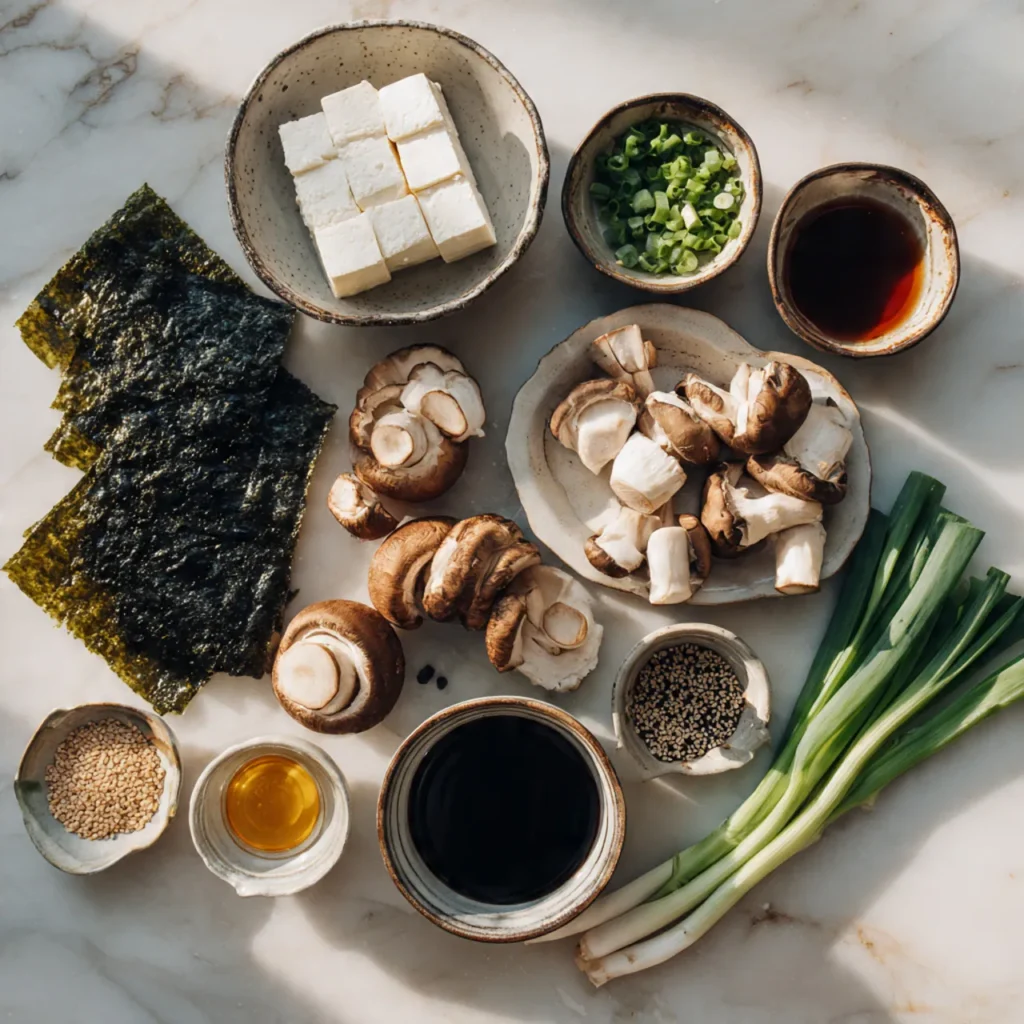
Ingredients for Miso Soup Recipe
For the Dashi Broth
- 4 cups water
- 1 piece kombu seaweed (about 4 inches)
- 1 tablespoon bonito flakes (optional for traditional flavor)
For the Miso Soup
- 3 tablespoons white miso paste
- 4 ounces soft tofu, cut into small cubes
- 2 green onions, thinly sliced
- 1 sheet nori seaweed, cut into strips
- 1/2 cup sliced mushrooms (shiitake or button mushrooms)
- 1 teaspoon soy sauce
- 1/2 teaspoon sesame oil
Optional Garnishes
- Toasted sesame seeds
- Extra green onions
- Chili oil
- Fresh cilantro or microgreens
How to Make Savory Miso Soup
Step 1: Prepare the Dashi Base
Pour the water into a medium saucepan and add the kombu seaweed. Let it sit for about 5 minutes before turning on the heat. Warm the water over medium heat until it nearly simmers, then remove the kombu. If using bonito flakes, stir them in and let them steep for 2 minutes before straining the broth.
This step builds the foundation of authentic Japanese flavor and gives your miso soup its signature savory depth.
Chef’s Tip: Avoid boiling kombu because high heat can create bitterness in the broth. Gentle heating keeps the dashi clean, smooth, and balanced in flavor.
Step 2: Add the Mushrooms and Tofu
Place the sliced mushrooms into the hot broth and simmer for 4–5 minutes until tender. Add the tofu cubes carefully and cook for another 2 minutes so they warm through without breaking apart.
The mushrooms add earthy richness while tofu gives the soup a soft, delicate texture that balances the savory broth.
Chef’s Tip: Soft tofu can break easily if stirred aggressively. Use a spoon to gently move the pieces through the broth so they stay intact and visually appealing.
Step 3: Dissolve the Miso Paste
Scoop the miso paste into a small bowl and add a few spoonfuls of warm broth. Stir until smooth and fully dissolved, then pour the mixture back into the pot.
This prevents clumps and helps the miso blend evenly throughout the soup for a silky texture.
Chef’s Tip: Never add miso paste directly into boiling liquid because excessive heat weakens its delicate flavor and can reduce some of its beneficial fermented qualities.
Step 4: Season the Soup
Add soy sauce and sesame oil, then taste the broth carefully. Adjust with a little extra miso paste if you prefer a stronger flavor or add a splash of water if the soup tastes too salty.
This step lets you customize the balance of savory, salty, and nutty flavors to suit your taste.
Chef’s Tip: Different miso brands vary in saltiness, so tasting before serving is important. Small adjustments make a huge difference in creating restaurant-quality flavor.
Step 5: Finish with Seaweed and Green Onions
Turn off the heat and stir in the sliced green onions and nori strips. Let the soup rest for 1 minute before serving so the flavors settle together naturally.
The fresh onions brighten the broth while seaweed adds traditional Japanese texture and umami flavor.
Chef’s Tip: Adding green onions at the end keeps their flavor fresh and vibrant instead of dull and overcooked.
Step 6: Garnish and Serve
Ladle the savory miso soup into bowls and finish with sesame seeds, extra green onions, or a drizzle of chili oil if desired. Serve immediately while hot.
Fresh garnishes add texture, color, and extra layers of flavor that make the soup feel complete and satisfying.
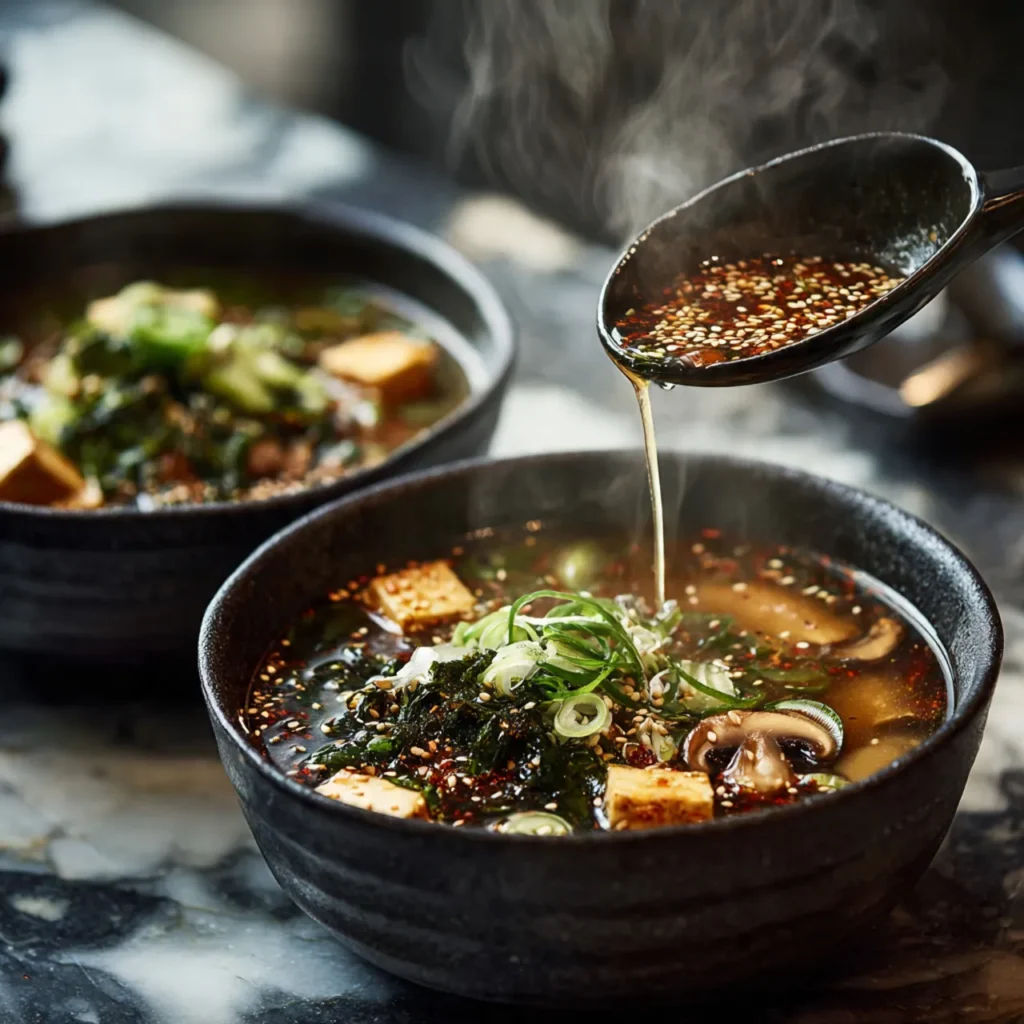
Chef’s Tip: Warm your serving bowls with hot water before plating. This simple restaurant technique helps the soup stay hot longer at the table.
Nutritional Information
| Nutrient | Per Serving |
| Calories | 110 |
| Protein | 8g |
| Carbohydrates | 7g |
| Total Fat | 5g |
| Saturated Fat | 1g |
| Fiber | 2g |
| Sodium | 780mg |
| Sugar | 2g |
| Calcium | 90mg |
Why You’ll Love This Recipe
- This savory miso soup recipe comes together in under 30 minutes, making it perfect for busy weeknights when you still want something warm, homemade, and comforting without spending hours cooking.
- The recipe uses simple ingredients while still delivering authentic Japanese flavor, so even beginner cooks can create restaurant-style soup confidently at home.
- Miso soup is incredibly versatile because you can easily add vegetables, noodles, seafood, or proteins depending on what you already have in your kitchen.
- The light but satisfying broth makes this dish ideal as an appetizer, healthy lunch, or side dish alongside rice bowls, sushi, or grilled meals.
- The naturally savory umami flavor feels rich and comforting without relying on heavy cream or complicated cooking techniques.
Common Mistakes to Avoid
- Boiling the miso paste after adding it can make the soup taste harsh and overly salty. Always lower the heat before stirring in the miso so the flavor stays smooth and balanced.
- Using too much miso paste too quickly can overpower the broth and create an unpleasantly salty soup. Start with less and adjust gradually after tasting.
- Overcooking tofu causes it to fall apart and lose its delicate texture. Gentle simmering and careful stirring help maintain clean, attractive cubes.
- Skipping the dashi base can leave the soup tasting flat or watery. Even a simple kombu broth creates the savory depth that gives traditional miso soup its signature flavor.
- Adding green onions too early reduces their freshness and bright color. Stir them in just before serving for the best flavor and presentation.
Serving Suggestions
- Serve this savory miso soup alongside steamed rice and grilled salmon for a balanced Japanese-inspired dinner that feels light yet satisfying.
- Pair the soup with sushi rolls, vegetable tempura, or dumplings to create a comforting restaurant-style meal at home without much extra effort.
- Add cooked soba noodles or udon noodles directly into the broth if you want to turn the soup into a heartier lunch or simple dinner bowl.
- Top the soup with soft-boiled eggs, shredded chicken, or sautéed shrimp for extra protein that still complements the delicate broth beautifully.
- Serve small bowls before heavier dishes because the warm umami broth helps prepare the palate and adds a comforting start to the meal.

Healthier Alternatives and Ingredient Swaps
- Replace traditional white miso with low-sodium miso paste if you want to reduce salt while still keeping the soup flavorful and savory.
- Add spinach, bok choy, napa cabbage, or zucchini for extra fiber and nutrients without significantly changing the classic flavor profile.
- Use silken tofu for an even softer texture or firm tofu if you prefer cubes that hold their shape more clearly during cooking.
- Swap bonito-based dashi for vegetable broth and kombu to create a fully vegan miso soup recipe with rich umami flavor.
- Add brown rice noodles or quinoa to make the soup more filling while still keeping it relatively light and nutritious.
Storage and Meal Prep Tips
- Store leftover miso soup in an airtight container in the refrigerator for up to 3 days. The flavors often deepen slightly overnight, making leftovers especially delicious.
- Reheat the soup gently over low heat instead of boiling it. This protects the delicate miso flavor and keeps the tofu from becoming rubbery.
- If meal prepping, store green onions and garnishes separately so they stay fresh and vibrant when serving later.
- Prepare the dashi broth ahead of time and refrigerate it for quick weeknight cooking. Having the base ready makes homemade miso soup incredibly fast to assemble.
- Avoid freezing miso soup with tofu because the texture can become grainy after thawing. Fresh preparation gives the best consistency and flavor.
Conclusion
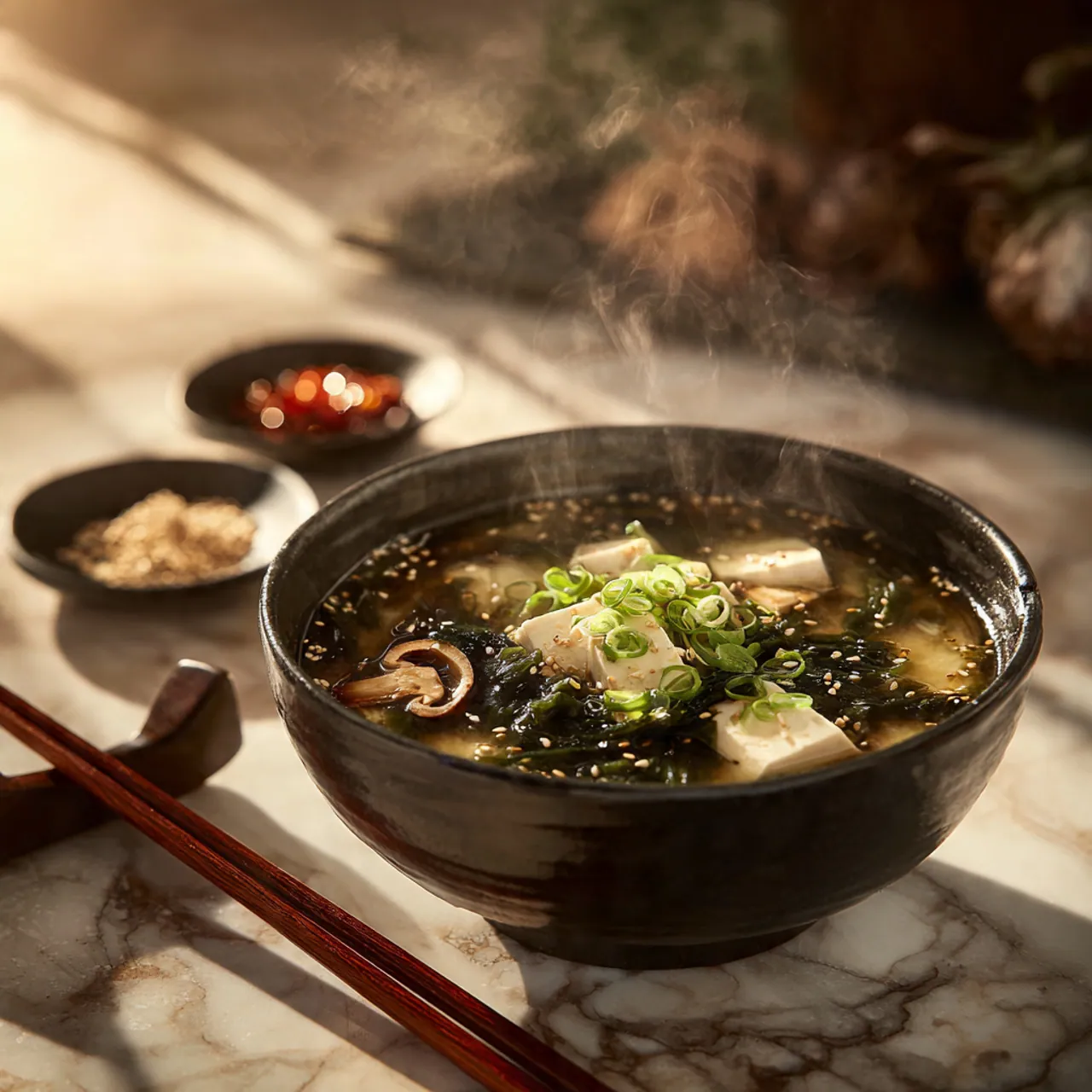
This savory miso soup recipe proves that simple ingredients can create deeply comforting flavor with very little effort. The rich umami broth, tender tofu, and fresh garnishes make every bowl feel warming and satisfying. Once you master the basics, you can easily customize the soup with vegetables, proteins, or noodles to suit your taste and turn it into your own signature version.
Savory Miso Soup Recipe
Ingredients
Method
- Prepare the dashi broth by gently heating water with kombu seaweed until nearly simmering, then remove the kombu and steep bonito flakes if using. This creates the savory base that gives the soup authentic Japanese flavor.
- Add mushrooms to the broth and simmer until tender before carefully adding tofu cubes. Gentle cooking keeps the tofu soft while allowing the mushrooms to release their earthy flavor into the broth.
- Dissolve the miso paste in a small bowl with warm broth before stirring it into the pot. Mixing it separately prevents clumps and helps the soup stay smooth and balanced.
- Season the soup with soy sauce and sesame oil, tasting carefully as you go. Small adjustments help you create the perfect savory balance without overpowering the broth.
- Stir in green onions and nori strips just before serving so they stay fresh and flavorful. Serve the soup hot with extra garnishes if desired.
Notes
- Heating the kombu slowly instead of boiling it creates a cleaner, smoother broth with less bitterness and better overall flavor.
- Dissolving miso paste separately before adding it to the soup helps it blend evenly and prevents salty clumps from forming.
- Soft tofu is delicate, so use gentle stirring motions during cooking to keep the cubes intact and visually appealing.
- Fresh green onions added at the end provide brighter flavor and color compared to onions cooked for too long in the broth.
- Warming your serving bowls before ladling the soup helps maintain the perfect serving temperature for longer.