
Fresh Greek Salad Recipe for Light Mediterranean Sides
Crisp vegetables, briny olives, and creamy feta come together in this fresh Greek salad recipe that feels vibrant without effort. You’ll love how quickly it comes together, making it perfect for light lunches, side dishes, or warm-weather meals.
Timing
- Prep Time: 15 minutes
- Cook Time: 0 minutes
- Total Time: 15 minutes
- Servings: 4 servings
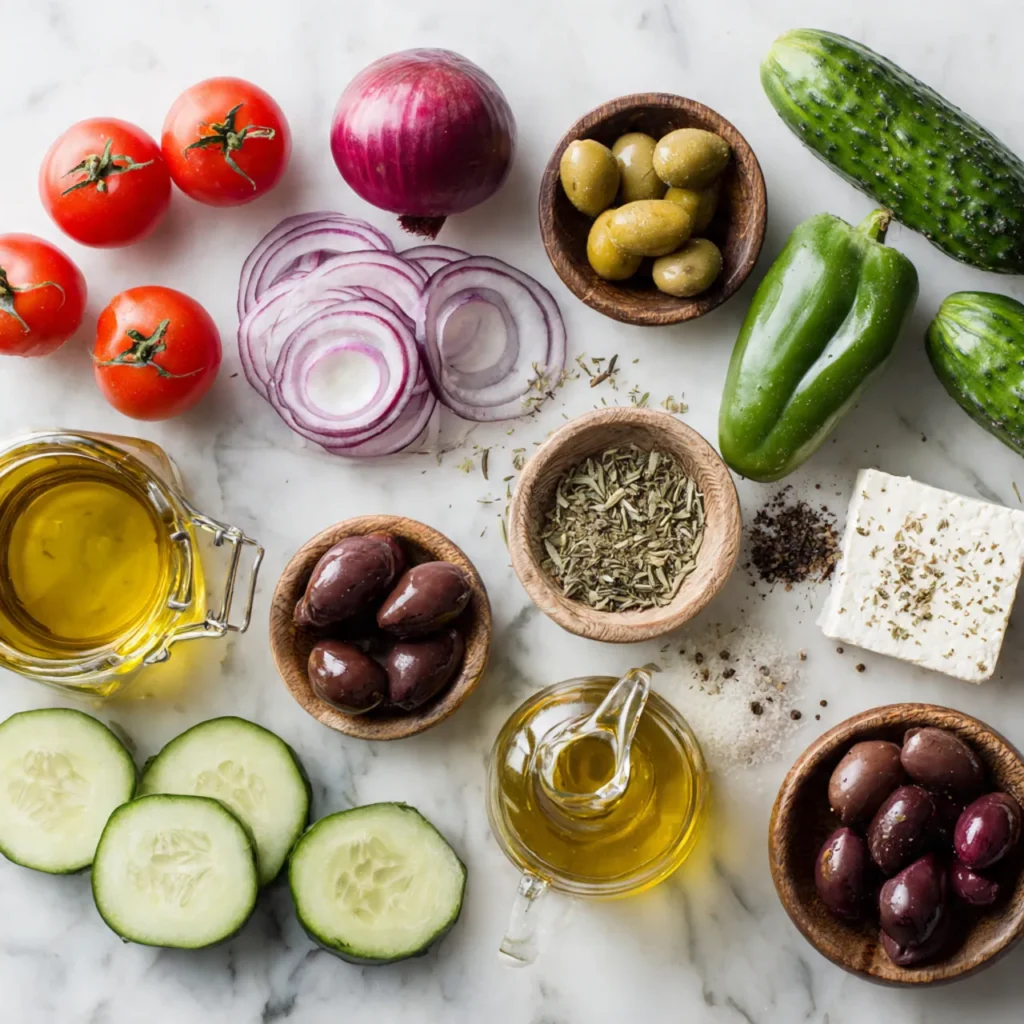
Ingredients for Greek Salad Recipe
Fresh Vegetables
- 3 cups cucumbers, sliced (about 2 medium)
- 2 cups cherry tomatoes, halved
- 1 cup red onion, thinly sliced
- 1 green bell pepper, sliced
Briny & Creamy Elements
- ½ cup Kalamata olives, pitted
- 150g feta cheese, cut into cubes or crumbled
Dressing
- 3 tablespoons extra virgin olive oil
- 1 tablespoon red wine vinegar
- 1 teaspoon dried oregano
- ½ teaspoon salt
- ¼ teaspoon black pepper
Optional Additions
- 1 teaspoon lemon juice (for extra brightness)
- Fresh parsley for garnish
Step-by-Step Instructions
Step 1: Prepare the Vegetables (5 minutes)
Start by washing all your vegetables thoroughly. Slice the cucumbers into bite-sized pieces, halve the cherry tomatoes, thinly slice the red onion, and cut the bell pepper into strips. Keeping everything evenly sized ensures a balanced bite every time.
Chef’s Tip: If your red onion tastes too sharp, soak the slices in cold water for 5 minutes. This reduces bitterness and makes the salad more pleasant without losing flavor.
Step 2: Combine the Base Ingredients (3 minutes)
Place the cucumbers, tomatoes, onion, and bell pepper into a large mixing bowl. Add the Kalamata olives and gently toss everything together to distribute the ingredients evenly.
Chef’s Tip: Use a large bowl with extra space so you can toss without crushing the vegetables. This keeps everything looking fresh and appetizing rather than soggy.
Step 3: Make the Dressing (2 minutes)
In a small bowl, whisk together the olive oil, red wine vinegar, oregano, salt, and black pepper until well combined. This simple dressing is what gives the fresh Greek salad its signature Mediterranean flavor.
Chef’s Tip: Whisk vigorously for about 30 seconds to emulsify the dressing. This helps the oil and vinegar blend properly, so every bite tastes balanced instead of oily.
Step 4: Toss the Salad (2 minutes)
Pour the dressing over the vegetables and toss gently until everything is evenly coated. Take your time here so the dressing lightly coats every ingredient without breaking them apart.
Chef’s Tip: Toss using your hands or salad tongs rather than a spoon. This gives you better control and prevents the tomatoes from getting crushed.
Step 5: Add the Feta Cheese (2 minutes)
Place the feta cheese on top of the salad, either in cubes or crumbled. Gently fold it in or leave it on top for a more traditional presentation.
Chef’s Tip: Add the feta at the end instead of mixing it aggressively. This keeps its creamy texture intact and prevents it from dissolving into the dressing.
Step 6: Rest and Serve (1–3 minutes)
Let the salad sit for a couple of minutes before serving. This short resting time allows the flavors to meld together beautifully.
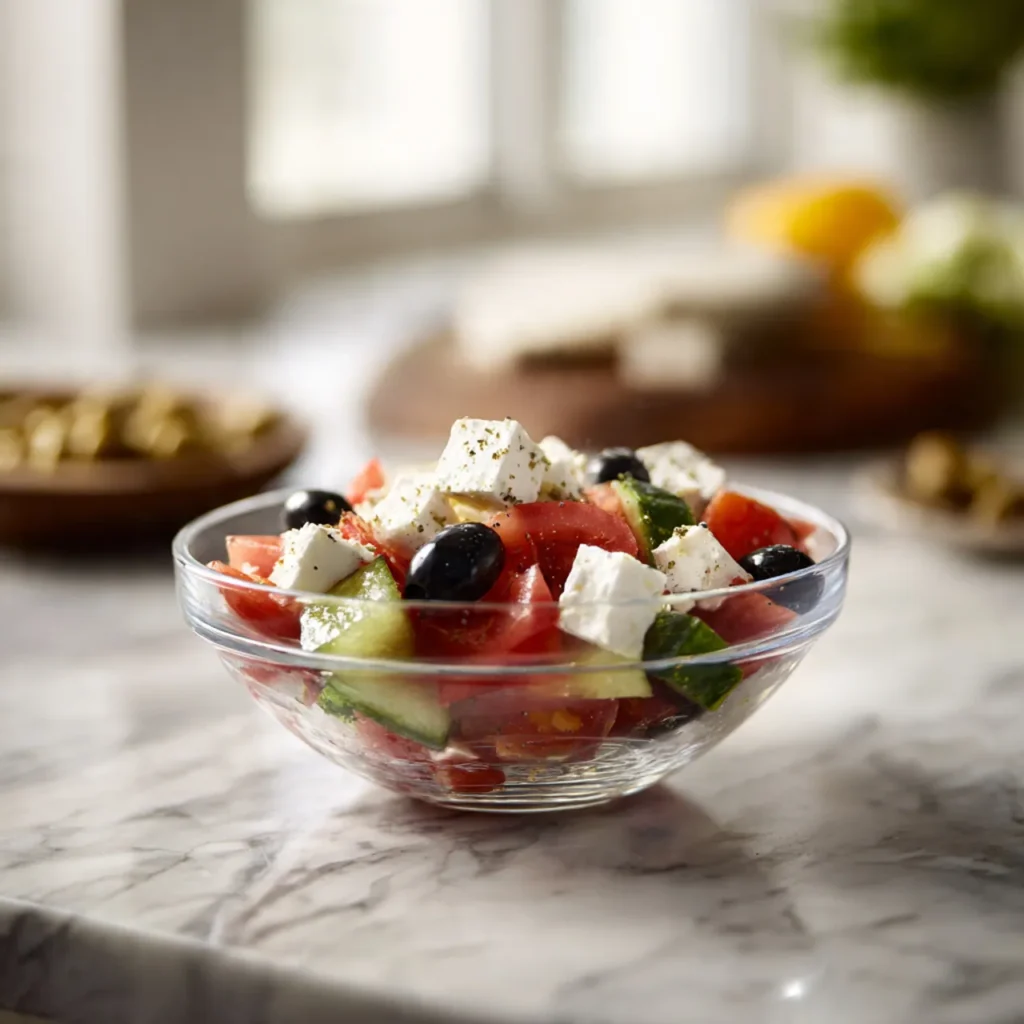
Chef’s Tip: Avoid letting the salad sit too long, especially after adding salt, as it can draw moisture out of the vegetables and make the salad watery.
Nutritional Information (Per Serving)
| Nutrient | Amount |
| Calories | 220 kcal |
| Protein | 6 g |
| Carbohydrates | 10 g |
| Total Fat | 18 g |
| Saturated Fat | 5 g |
| Fiber | 3 g |
| Sodium | 480 mg |
Why You’ll Love This Recipe
- You get a quick and reliable dish that comes together in under 20 minutes, making it ideal when you need something fresh without spending much time in the kitchen.
- The combination of crunchy vegetables and creamy feta creates a satisfying texture contrast that feels both light and filling.
- It uses simple, everyday ingredients, yet delivers bold Mediterranean flavors that feel restaurant-quality.
- You can easily adapt it to different meals, whether as a side dish, light lunch, or part of a larger spread.
Common Mistakes to Avoid
- Adding too much dressing at once can overwhelm the vegetables and make the salad soggy, so it’s better to start with less and add more if needed.
- Cutting vegetables unevenly leads to inconsistent texture, so take a moment to slice everything into similar sizes for a balanced bite.
- Mixing feta too aggressively causes it to break down and disappear into the salad, so always add it gently at the end.
- Letting the salad sit too long before serving can release excess water from the vegetables, so aim to serve it shortly after assembling.
Serving Suggestions
- Serve this fresh Greek salad recipe alongside grilled chicken or fish to create a complete and balanced Mediterranean-style meal.
- Pair it with warm pita bread and hummus for a simple yet satisfying light lunch that feels fresh and wholesome.
- Use it as a topping for wraps or sandwiches to add crunch, acidity, and brightness to heavier fillings.
- Add it to a mezze platter with dips, olives, and flatbreads for a visually appealing and flavorful spread.

Healthier Alternatives and Ingredient Swaps
- Swap feta cheese with a reduced-fat version to lower the overall calorie content while still keeping the creamy texture.
- Replace part of the olive oil with lemon juice if you want a lighter dressing without sacrificing freshness.
- Use low-sodium olives to reduce salt intake while maintaining the briny flavor that defines the dish.
- Add extra vegetables like lettuce or spinach to increase volume and fiber without adding many calories.
Storage and Meal Prep Tips
- Store the salad in an airtight container in the refrigerator for up to 2 days, but keep the dressing separate if possible to maintain freshness.
- If meal prepping, chop all vegetables ahead of time and assemble just before serving to avoid sogginess.
- Avoid freezing this salad, as the fresh vegetables will lose their texture and become mushy when thawed.
- Refresh leftovers with a small splash of olive oil and vinegar before serving to bring back the flavor.
Conclusion
This fresh Greek salad recipe works because it keeps things simple while focusing on bold, clean flavors. You can rely on it for quick meals or elegant sides, and once you master the basics, you can easily customize it to suit your taste.