
Savory Chicken Stir Fry Recipe for Quick Weeknight Meals
Busy evenings call for something fast yet satisfying, and this savory chicken stir fry recipe delivers exactly that. You get tender chicken, crisp vegetables, and a flavorful sauce all in one pan, perfect when time is tight but you still want a homemade meal.
Timing
- Prep Time: 15 minutes
- Cook Time: 15 minutes
- Total Time: 30 minutes
- Servings: 4 servings
Ingredients for Chicken Stir Fry Recipe
Protein
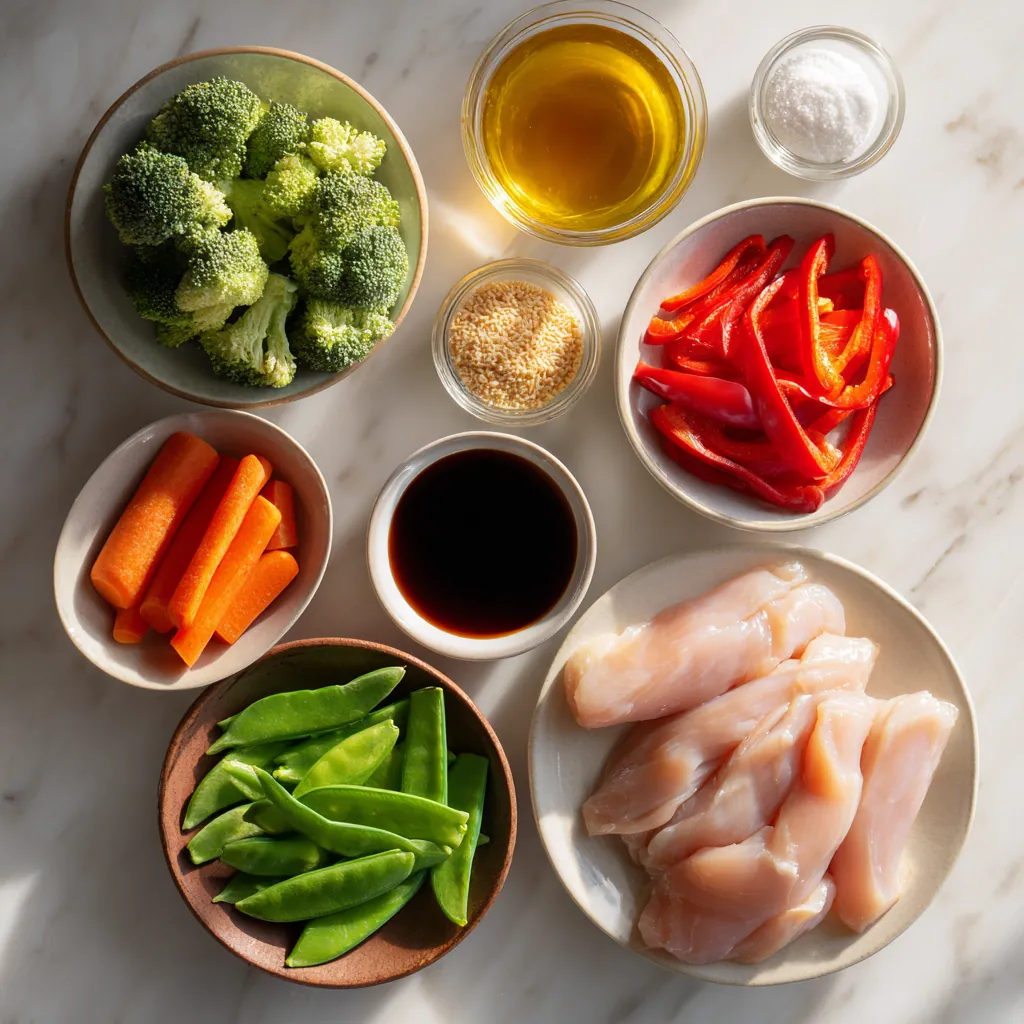
- 2 boneless, skinless chicken breasts, sliced into thin strips
Vegetables
- 1 cup broccoli florets
- 1 red bell pepper, sliced
- 1 carrot, thinly sliced
- 1 cup snap peas
- 3 cloves garlic, minced
- 1 tablespoon fresh ginger, grated
Sauce
- ¼ cup soy sauce
- 2 tablespoons oyster sauce
- 1 tablespoon honey
- 1 tablespoon cornstarch
- ½ cup water or chicken broth
Cooking Essentials
- 2 tablespoons vegetable oil
- Salt and black pepper, to taste
Step-by-Step Instructions
Step 1: Prep All Ingredients (10–15 minutes)
Start by slicing your chicken into thin, even strips and chopping all vegetables into bite-sized pieces. Keeping everything uniform ensures even cooking and helps the stir fry come together quickly once you start cooking.
Chef’s Tip: Take your time with slicing the chicken evenly, because thicker pieces cook slower and can turn dry while waiting for thinner ones to finish.
Step 2: Mix the Sauce (2–3 minutes)
In a small bowl, whisk together soy sauce, oyster sauce, honey, cornstarch, and water until smooth. This sauce is the backbone of your savory chicken stir fry recipe, giving it that glossy, flavorful finish.
Chef’s Tip: Make sure the cornstarch is fully dissolved before cooking, because lumps will prevent the sauce from thickening evenly later.
Step 3: Cook the Chicken (5–6 minutes)
Heat 1 tablespoon of oil in a large pan or wok over medium-high heat. Add the chicken in a single layer and cook until browned and fully cooked through. Remove it from the pan and set aside.
Chef’s Tip: Avoid overcrowding the pan, because crowded chicken steams instead of browns, and you lose that rich, savory flavor.
Step 4: Stir Fry the Vegetables (4–5 minutes)
In the same pan, add another tablespoon of oil. Toss in garlic and ginger first, cooking for about 30 seconds until fragrant. Then add all vegetables and stir fry until they are tender-crisp.
Chef’s Tip: Keep the vegetables moving constantly in the pan, because high heat can quickly burn them if left still for too long.
Step 5: Combine and Simmer (3–4 minutes)
Return the cooked chicken to the pan and pour in the prepared sauce. Stir everything together and let it cook until the sauce thickens and coats the chicken and vegetables evenly.
Chef’s Tip: Stir continuously as the sauce thickens, because this helps distribute the glaze evenly and prevents it from sticking to the bottom.
Step 6: Taste and Adjust (1–2 minutes)
Season with salt and pepper if needed, and give everything one final toss. Your savory chicken stir fry is now ready to serve hot.
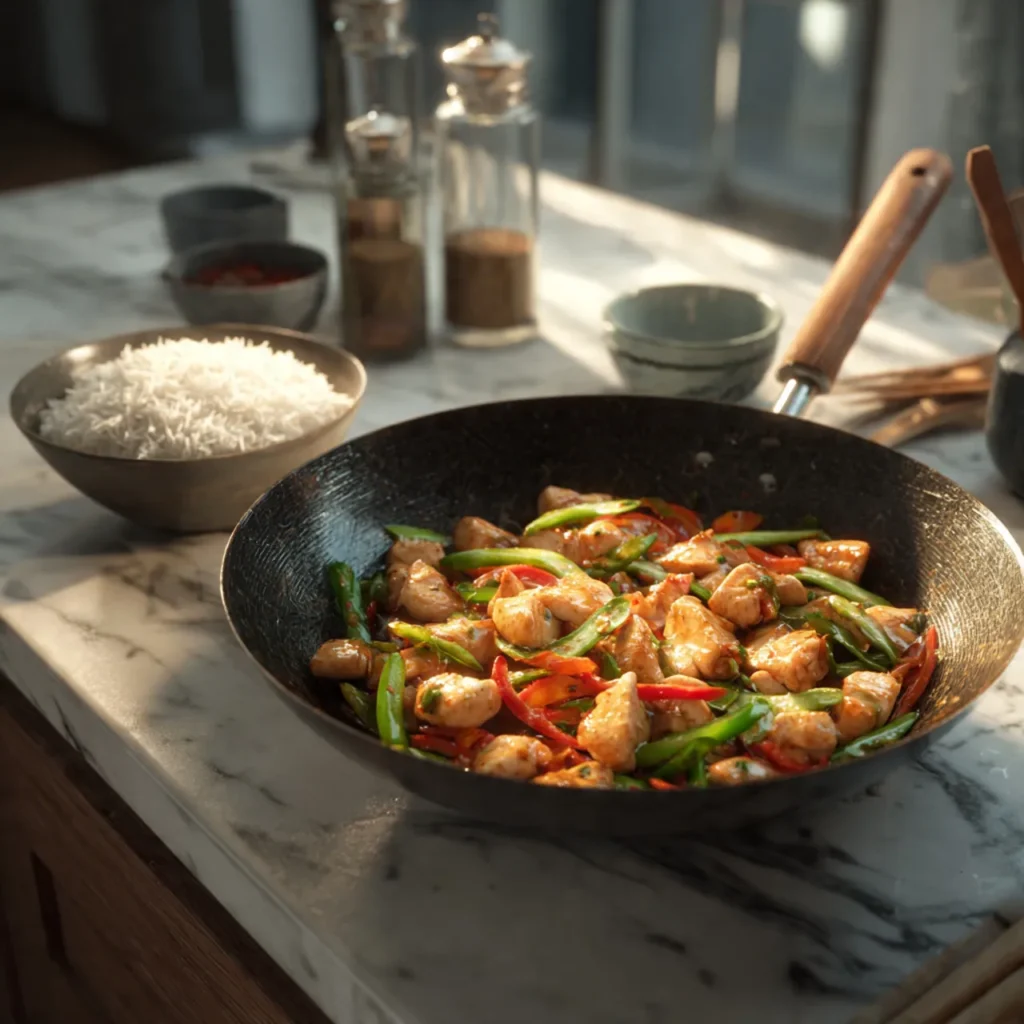
Chef’s Tip: Taste before adding extra salt, because soy sauce already brings a lot of saltiness and you don’t want to overpower the dish.
Nutritional Information (Per Serving)
| Nutrient | Amount |
| Calories | 320 kcal |
| Protein | 30 g |
| Carbohydrates | 18 g |
| Total Fat | 12 g |
| Fiber | 3 g |
| Sodium | 780 mg |
Why You’ll Love This Recipe
- This savory chicken stir fry recipe comes together in just 30 minutes, making it ideal for weeknight dinners when you need something quick but still homemade and nourishing.
- You get a perfect balance of protein, vegetables, and sauce, so it feels like a complete meal without needing complicated sides.
- The ingredients are flexible and easy to find, allowing you to adjust based on what you already have in your kitchen.
- The cooking method is simple and beginner-friendly, helping you build confidence while still delivering restaurant-quality flavor.
Common Mistakes to Avoid
- Cutting chicken into uneven pieces often leads to inconsistent cooking, where some pieces become dry while others remain undercooked, so always aim for uniform slices.
- Using low heat might seem safer, but it prevents proper stir frying and results in soggy vegetables instead of crisp, vibrant ones.
- Adding sauce too early can make vegetables overcook and lose their texture, so always add it at the final stage.
- Overcrowding the pan traps moisture and prevents browning, so cook in batches if necessary for the best flavor.
Serving Suggestions
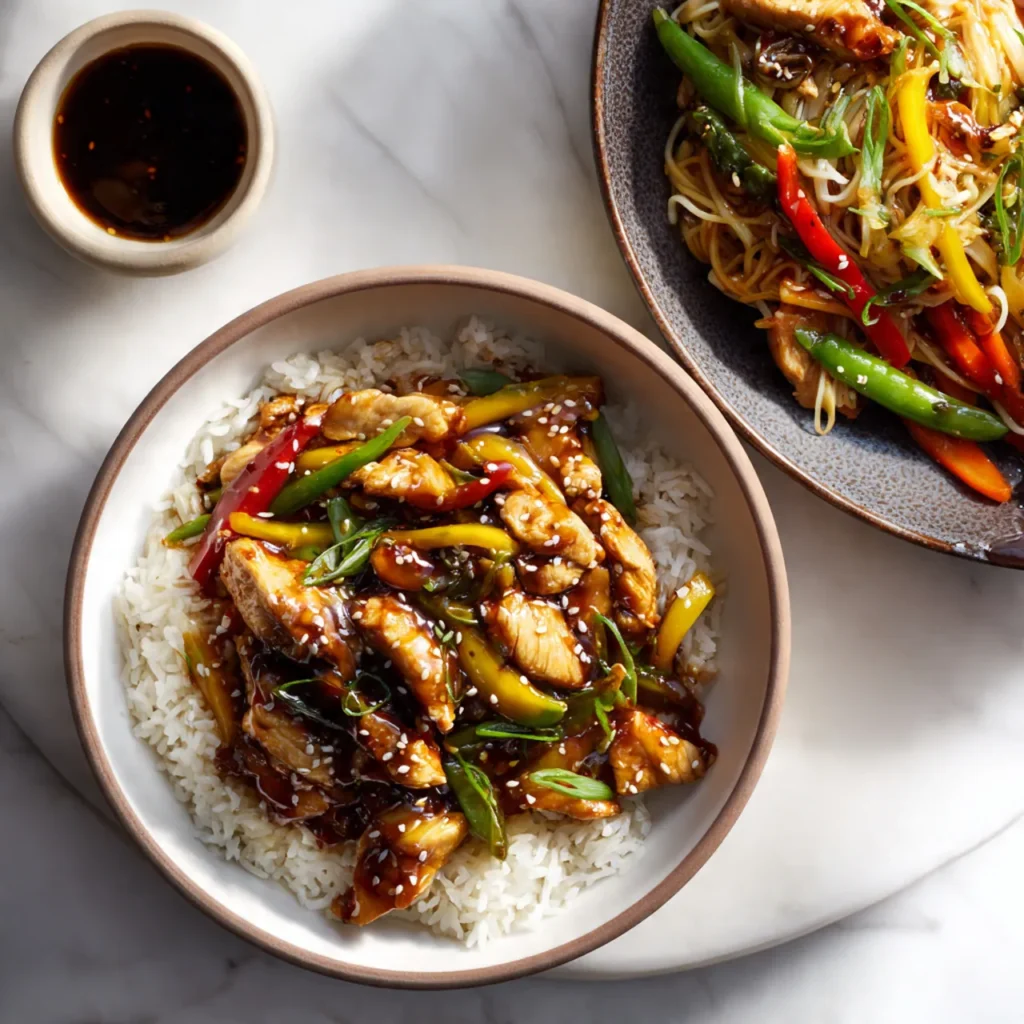
- Serve your savory chicken stir fry over steamed white rice or brown rice to soak up the flavorful sauce and create a satisfying, balanced meal.
- Pair it with noodles for a different texture, turning it into a quick stir fry noodle dish that feels hearty and comforting.
- Add a sprinkle of sesame seeds or chopped green onions on top to enhance both presentation and flavor.
- Wrap leftovers in lettuce leaves for a light and fresh serving option that works well for lunch.
Healthier Alternatives and Ingredient Swaps
- Swap regular soy sauce for low-sodium soy sauce to reduce salt intake while maintaining flavor.
- Replace honey with a small amount of maple syrup or skip it entirely if you prefer a less sweet dish.
- Use chicken thighs instead of breasts if you want a juicier texture, or opt for tofu for a vegetarian version.
- Increase the amount of vegetables and slightly reduce the chicken to make the dish lighter and more fiber-rich.
Storage and Meal Prep Tips
- Store leftovers in an airtight container in the refrigerator for up to three days, ensuring the dish stays fresh and safe to eat.
- Reheat in a pan over medium heat instead of a microwave to preserve the texture of the vegetables and avoid sogginess.
- If meal prepping, keep the sauce separate until reheating to maintain the best texture and flavor.
- Freeze only the cooked chicken portion if needed, as vegetables tend to lose their crispness after thawing.
Conclusion
This savory chicken stir fry recipe proves that quick meals don’t have to sacrifice flavor or quality. With simple techniques and fresh ingredients, you can create a dish that’s both satisfying and versatile. Once you master the basics, you can easily adapt it with your favorite vegetables and sauces to make it your own.